
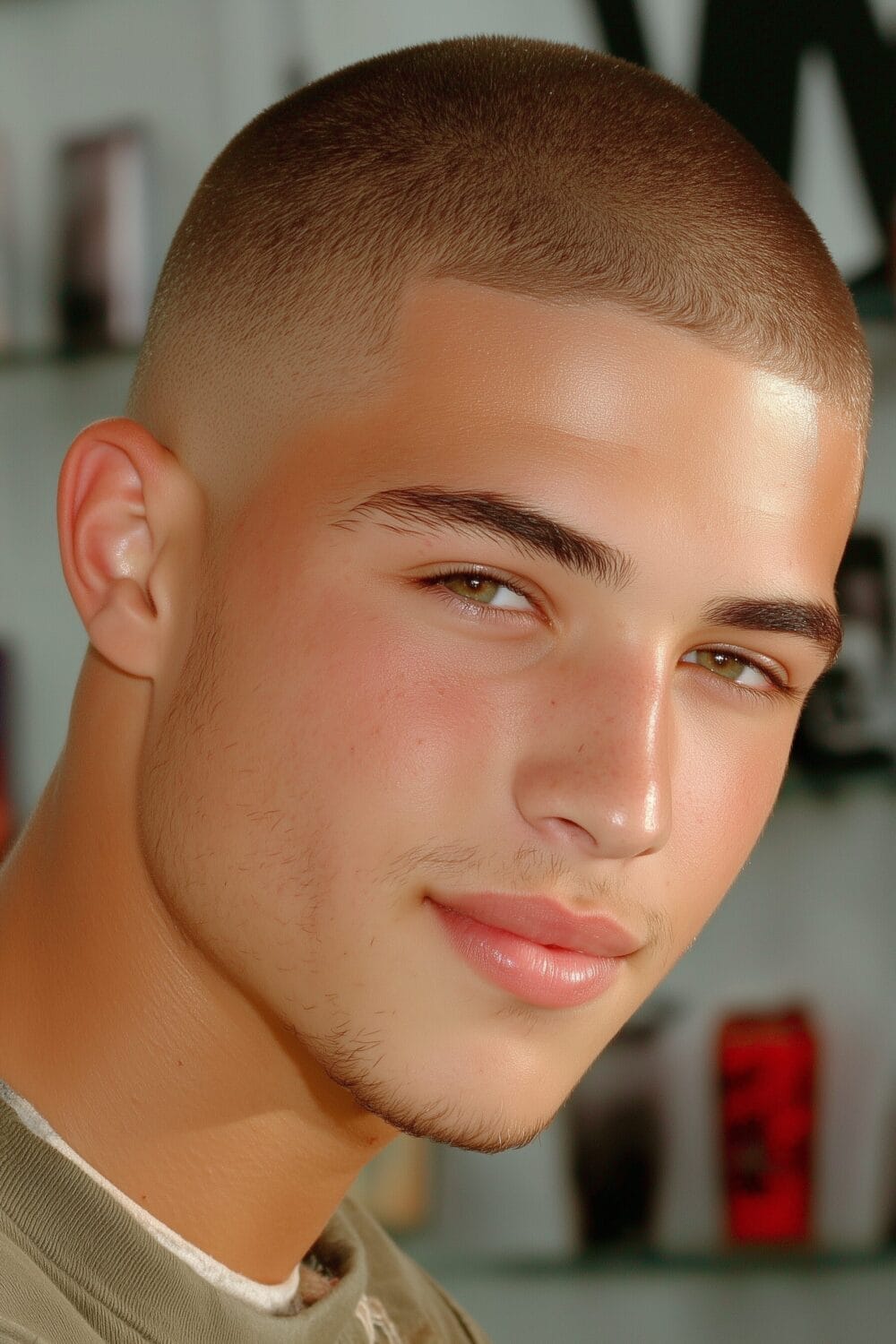
The buzz cut is the most honest haircut there is — no hiding behind length or styling tricks. I’ve cut thousands of them, and what most guys don’t realize is how many variations exist beyond the basic all-over clipper job. Here’s every version worth considering.
- Buzz cuts aren’t one-size-fits-all — variations range from induction cuts to textured buzzes with fades
- Head shape matters more with a buzz cut than any other style — flat spots and bumps become visible
- The easiest haircut to maintain at home between visits — just one clipper guard
- Pairs naturally with every fade type — adding a fade transforms a basic buzz into a styled cut
- Best for men with strong jawlines, oval faces, or defined facial features
Walk into any barbershop today and you’ll spot at least three different buzz variations.
Your barber has 30+ ways to customize this “simple” cut. I’ve lost count of how many clients sit down asking for a basic buzz and leave with something completely tailored to their head shape.
Not sure which style suits you best? Our Haircut Finder Quiz matches you with the right cut based on your face shape and hair type — takes 60 seconds.
From induction cuts to textured fades, each variation serves a specific purpose.
Understanding Modern Buzz Cut Variations
Modern buzz cuts have evolved into a sophisticated menu of options. Each variation works differently with your hair texture and face shape.
Your barber can adjust guard lengths, fade heights, and edge details to create dozens of unique looks from one basic concept.
- Classic: Uniform length all over
- Faded: Gradual taper from top to sides
- Textured: Multiple lengths for dimension
- Hybrid: Combines buzz with other styles
The Classic Induction Cut (#0.5 Guard)
The induction cut leaves just 1/16 inch of hair, revealing your scalp’s natural contours. This military-grade trim requires zero styling and dries instantly after showers.
For a deep dive into the shortest buzz option, see my no-guard buzz cut guide where I cover what 0.5mm actually looks and feels like, plus who should think twice before going this short.
Perfect for athletes and anyone seeking the ultimate low-maintenance option during hot summers.

The Burr Cut (#1-#2 Guard)
A burr cut provides 1/8 to 1/4 inch coverage, adding subtle texture without hiding your head shape. The slight length difference from an induction makes skin appear less exposed.
I’ve written dedicated breakdowns for both lengths in this range: my number 1 buzz cut guide covers what 3mm really looks like across different head shapes, while the number 2 buzz cut guide explains why this is the length most barbers actually recommend to first-timers.
Most men find this length ideal for professional settings that allow minimal grooming.
🧠 Expert Advice
Request a #1.5 guard if you’re between decisions — it splits the difference perfectly and grows out evenly. Many barbers stock half-sizes that aren’t displayed on standard clipper sets, giving you more precise control.
The Butch Cut (#3-#4 Guard)
Butch cuts maintain 3/8 to 1/2 inch length, enough to show your hair’s natural grain and growth patterns.
For specific length breakdowns, I cover the number 3 buzz cut (the 10mm sweet spot most guys should start with), the number 4 buzz cut (the half-inch bridge between buzz and short hair), and the number 5–8 guide for longer guard options. If you want the shortest version of a short buzz, see my short buzz cut guide covering everything from 0–6mm.
This length allows minor styling with pomade while still qualifying as a genuine buzz cut. The extra coverage also provides some sun protection.

⚠️ Common Mistake
Going straight from long hair to a butch cut often disappoints because the contrast feels too dramatic. Start with a #4 guard, live with it for two weeks, then decide whether to go shorter at your next appointment.
Buzz Cut with Skin Fade
Skin fades blend your buzz cut down to bare skin at the neckline and ears. The gradient creates visual interest while maintaining the simplicity of short hair.
I’ve put together a complete buzz cut fade guide that breaks down how each fade height — low, mid, and high — changes the entire personality of the cut, including which fade works best for each face shape.
The blend usually runs through five guard lengths—starting at no guard or a #0 at the skin line, then stepping up through #0.5, #1, #1.5, and finally meeting the top length. Each step needs to be invisible, which is why a clean skin fade takes longer in the chair than a standard buzz.

Mid Fade Buzz Style
The fade starts halfway up your head, right at temple level, creating a balanced proportion between faded and full-length areas.
This versatile placement works for both casual and business environments. Most barbers recommend mid fades for first-timers exploring fade options.

High Fade Buzz Cut
High fades begin above the temples, leaving minimal full-length hair on the sides. This aggressive style maximizes the contrast between your top and sides.
Athletes and younger professionals often choose this bold variation for its modern, edgy appearance.
🧠 Expert Advice
Ask your barber to keep the fade line parallel to your eyebrows for the most flattering high fade placement. This creates natural symmetry that complements your facial features rather than competing with them for attention.

Low Fade Buzz Variation
Low fades start just above the ears, creating subtle graduation that’s barely noticeable from a distance. Conservative workplaces often prefer this understated approach.
The minimal contrast makes growing out easier if you decide to change styles later.
⚠️ Common Mistake
Requesting a low fade that’s too low creates an awkward disconnect at the neckline. Keep the fade at least one finger-width above your ear tops to maintain proper proportions and avoid that amateur appearance.

Buzz Cut with Line Up
Sharp edges transform a basic buzz into a precision masterpiece. Your barber uses a straight razor to create perfect angles around your hairline and temples.
Line-ups are just the starting point — for shaved lines, geometric patterns, and custom artwork, see my full buzz cut designs guide covering what works, what doesn’t, and how to communicate your idea to your barber.
The geometric lines require touch-ups every 7-10 days to maintain their crisp appearance.
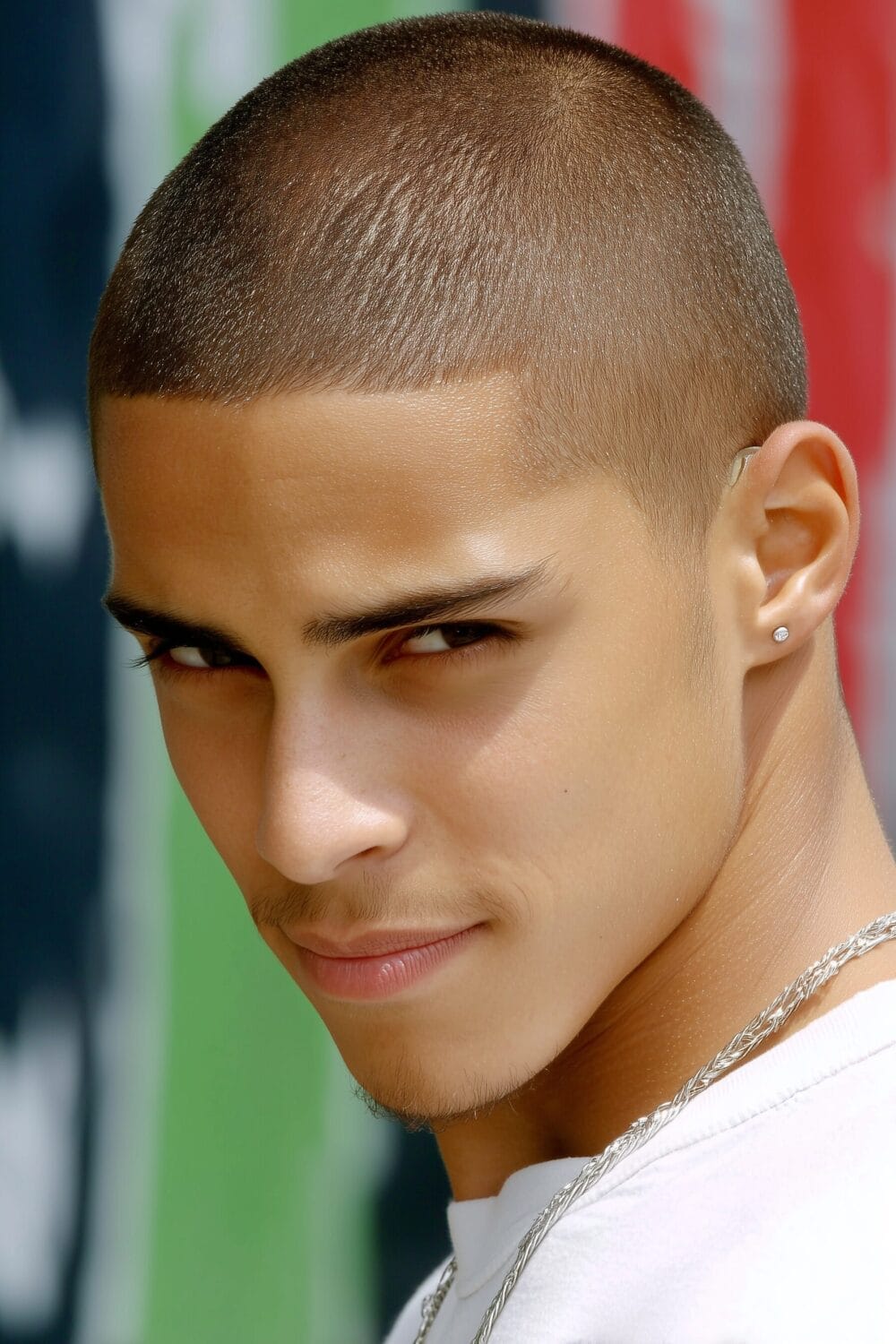
Textured Buzz Cut
Textured buzzes use multiple guard lengths to create depth and movement. Your barber might use a #2 on sides with a #4 on top.
The varying lengths catch light differently, making thin hair appear fuller and thick hair less helmet-like.
🧠 Expert Advice: Choosing Your Guard Length
Match your guard length to your hair density — thick hair looks great with a #2, while thin hair needs a #3 or #4 to avoid showing too much scalp. Test different lengths on small sections first.

Buzz Cuts for Round Faces
Round faces benefit from extra height on top with shorter sides. Keep a #4 guard up top while dropping to #2 on sides.
I go much deeper on this topic in my buzz cut for round/fat face guide, where I cover exactly which fades create a slimming effect and how hair texture changes the result.
This vertical emphasis creates the illusion of a longer, more oval face shape that photographs better.
Square Face Buzz Styles
Square jaws need softer transitions to avoid looking too harsh. Use uniform lengths all around or add gentle temple fades.
Avoid high fades or sharp line-ups that emphasize your already angular features.

Oval Face Buzz Options
Oval faces can experiment with any buzz variation without worry. Your balanced proportions work with induction cuts, fades, and textured styles equally well.
For the complete breakdown including beard pairings and texture advice, read my dedicated buzz cut for oval face guide.
This versatility lets you choose based on lifestyle and maintenance preferences rather than facial restrictions.

Buzz Cuts for Receding Hairlines
Shorter lengths minimize the visual gap between hair and skin, creating a more uniform appearance. A #1 or #2 guard works best for camouflaging recession.
This is one of my most in-depth topics. I cover it across three dedicated guides: buzz cut for receding hairline (with Norwood scale matching), buzz cuts for thinning hair, and buzz cut for balding crown. If you’ve had a transplant, see my post-transplant buzz cut guide for safe timelines.
Many men find buzz cuts actually make them look younger by eliminating the contrast between thinning areas and the rest. The trick is keeping the sides the same length or shorter than the top—never longer. If the sides are thicker than what’s on top, it draws attention upward to the thin spots. A uniform #1 or #2 all over removes that problem entirely.
Diamond Face Shape Considerations
Diamond faces need width at the temples to balance narrow foreheads and chins. Maintain a #3 guard on sides rather than tight fades.
For the full breakdown of guard lengths and fade heights for diamond faces, see my buzz cut for diamond face guide. I also cover buzz cuts for big foreheads and widow’s peak buzz cuts for other challenging face features.
This fuller approach softens your angular cheekbones while creating better overall proportion.

⚠️ Common Mistake: Ignoring Growth Patterns
Cutting against your natural cowlicks creates stubborn patches that stick up within days. Always cut with the grain, especially around crown whorls, to ensure even growth and avoid that porcupine effect.
The Crew Cut Buzz Hybrid
Crew cuts maintain an extra quarter-inch on top compared to standard buzzes. This slight difference allows for minimal styling with pomade or wax.
Wondering whether a buzz or crew cut is right for you? I compare them side by side in my buzz cut vs crew cut guide. I also cover buzz cut vs caesar and buzz cut vs long hair for guys weighing their options.
The hybrid approach bridges the gap between ultra-short and styled cuts.
Buzz Cut with Disconnected Undercut
Disconnected styles skip the blending process entirely, creating a stark line between top and sides. The dramatic contrast makes a bold statement.
This modern variation works best with dense hair that can handle the visual weight difference.
The Regulation Cut Style
Military regulations specify exact lengths: #2 guard on sides, #4 on top, with a subtle taper at the neckline.
This precise formula creates a clean, professional appearance that works in any setting. Veterans often maintain this familiar style post-service.
Not sure what your face shape is? Our Face Shape Detector figures it out in 4 quick questions.

Buzz Cut Maintenance Schedule
Touch up edges and necklines every two weeks to maintain sharpness. Schedule full cuts monthly to reset the overall shape and length.
Home maintenance between appointments keeps you looking fresh without overspending at the barbershop.
“The difference between a good buzz cut and a great one is two weeks of growth.” – Master Barber James Chen
Best Clippers for Home Maintenance
Professional clippers with self-sharpening blades deliver consistent results for years. Look for models with multiple guard sizes and cordless operation for flexibility.
If you’re buzzing at home, my DIY buzz cut guide covers the step-by-step process a barber would follow, plus the back-of-the-head technique that prevents the most common home-cut disaster. For guys without clippers, see buzz cut without clippers for alternative methods.
Investing $60-100 in quality equipment pays for itself after three home touch-ups.

Scalp Care After Buzzing
Exposed scalps need daily SPF 30+ protection and weekly moisturizing treatments. The sun hits differently when you lose that hair coverage.
For age-specific buzz cut advice, I’ve put together guides for toddler buzz cuts, buzz cuts for boys, and buzz cuts for teenagers. For professional settings, see my professional buzz cut guide and buzz cut and glasses pairings.
Use lightweight, non-comedogenic products to avoid clogged pores and ingrown hairs on newly exposed skin.
Buzz Cut Styling Products
Light-hold pomades add subtle texture without creating buildup or grease. Sea salt sprays work for slightly longer buzzes that need volume.
Skip heavy waxes and gels that make short hair look wet or crispy throughout the day.

Growing Out a Buzz Cut
The awkward phase peaks around weeks four through six when hair lacks direction. Book shaping appointments every two weeks during this transition.
My growing out a buzz cut guide maps every stage from week 1 to month 6, including the awkward phase strategies and strategic trim schedule that keeps the grow-out looking intentional.
Strategic trimming around ears and necklines maintains structure while the top grows out naturally.
Seasonal Buzz Cut Adjustments
Summer calls for shorter lengths like #1 or #2 guards to maximize cooling and minimize sweat retention.
Buzz cuts pair brilliantly with facial hair year-round. For combinations, see my buzz cut with beard guide (25 combos by face shape) and buzz cut and mustache pairings. For bolder hybrid styles, check out the buzz cut mullet and buzz cut mohawk.
Winter buzzes can maintain #3 or #4 lengths for extra warmth without sacrificing the clean aesthetic. Adjust your schedule accordingly.

Buzz Cuts for Different Hair Types
Coarse hair shows beautiful texture at #3 or #4 guard lengths. Fine hair looks fuller with shorter #1 or #2 guards that prevent wispy appearances.
Hair texture changes everything about how a buzz cut looks. I cover this in detail across several guides: buzz cut on curly hair, buzz cut for Asian hair (thick, straight strands that change the rules), buzz cut for Black men (lineups, fades, and wave maintenance), and buzz cut with a cowlick for taming stubborn growth patterns.
Curly hair creates unique patterns when buzzed, adding natural dimension to the style.
The Jarhead Buzz Style
Marines popularized this high-and-tight variation with nearly bald sides and a narrow strip on top. The extreme contrast demands confidence and regular maintenance.
Modern versions soften the harsh lines while maintaining that disciplined military aesthetic.
European Buzz Cut Trends
European barbers emphasize precise fade work and subtle design elements over basic uniformity. These refined touches elevate simple buzzes into artisan cuts.
Expect to pay premium prices for this level of craftsmanship and attention to detail.
Buzz Cut Color Enhancements
Bleaching creates platinum buzz cuts that turn heads. Subtle tints add dimension to uniform lengths without looking unnatural.
For the full colour treatment, my bleached buzz cut guide covers the platinum process from start to finish. I also cover how colour affects the look in my blonde buzz cut, ginger buzz cut, and how to dye buzzed hair any colour guides.
Color-treated buzzes need extra conditioning to prevent scalp irritation from processing chemicals.
Explore More Fade Styles
Fade Haircuts (Complete Guide)
Low Fade
High Fade
Mid Fade
Skin Fade
Drop Fade
Taper Fade
Low Fade for Black Men
Blonde Low Fade
Low Fade Designs
Short Hair + Low Fade
Long Hair + Low Fade
Curly Hair + Low Fade
High Fade for Boys
Asian Low Fade
Taper vs Fade
Looking for celebrity inspiration? See which buzz cut actors made this style iconic, plus how to recreate the Zayn Malik buzz cut and John Cena haircut at your barber.
🎬 7 Buzz Cut Styles To Choose From | 2024 Guide
Ready to Find Your Perfect Cut?
You’ve read about the styles. Now find the one that fits YOUR face shape, hair type, and lifestyle.
FAQs
How short is too short for my first buzz cut?
Start with a #3 or #4 guard for your first buzz cut — this length provides coverage while letting you adjust to the dramatic change. You can always go shorter on your next visit if desired.
Will a buzz cut make my head shape more noticeable?
Yes, buzz cuts reveal your natural head shape, but a good barber works around it. Flat spots at the back can be disguised by leaving that area slightly longer. A bump at the crown becomes less obvious with a skin fade that draws the eye to the sides instead. Mention any concerns before the cut starts—your barber has seen every head shape and knows how to adjust.
How often should I wash my hair with a buzz cut?
Buzz cuts require washing every 2-3 days since natural oils distribute differently on short hair, and the exposed scalp produces more oil than longer styles.
Can I fix an uneven buzz cut at home?
Minor touch-ups are possible with quality clippers, but fixing significant unevenness requires professional expertise to avoid making the problem worse.
What’s the cost difference between maintaining a buzz cut versus longer styles?
While individual cuts cost the same, buzz cuts need refreshing every 2-3 weeks versus 4-6 weeks for longer styles, potentially doubling your annual barbershop investment.
Was this article helpful?

Khamis Maiouf is a professional barber who graduated from Hinckley College in England with a Level 3 qualification in hairdressing. With over 20 years of experience, he is an award-winning barber who has mentored numerous students and styled thousands of clients. A recognised expert featured on StyleCraze (20M+ readers).
Credentials: Level 3 Hairdressing (Hinckley College, UK) • 20+ Years Professional Experience • Featured Expert on StyleCraze • Founder of Book of Barbering