

— Award-Winning Barber · 20+ Years Experience · Level 3 Qualified
Diamond faces are the face shape most guys don’t even know they have — narrow forehead, wide cheekbones, pointed chin. When a client with a diamond face sits in my chair, the goal is always the same: complement those cheekbones without making the forehead or chin look too narrow by comparison. The right buzz cut does exactly that.
The wrong one makes you look all cheekbone and nothing else. Here’s how I approach it after two decades of matching cuts to face shapes.
Key Takeaways
Not sure what your face shape is? Our Face Shape Detector figures it out in 4 quick questions.
- Mid fades work best for diamond faces — they balance the width at your cheekbones
- Guards 3–4 on top add enough volume to widen the appearance of a narrow forehead
- Avoid ultra-short all-over buzz cuts — they over-emphasise angular features
- Pairing a buzz cut with stubble or a short beard softens the pointed chin
- A textured top with faded sides is the most flattering combination for this face shape
Quick Diamond Face Assessment: Know Your Angles
Diamond faces showcase prominent cheekbones with narrower forehead and chin areas. The widest point sits at cheekbone level, creating that distinctive angular silhouette.
Grab a measuring tape and check these proportions yourself. Your cheekbones should measure wider than both forehead and jawline for a true diamond classification.

The 3-Point Check for True Diamond Faces
First, measure across your cheekbones from outer edge to outer edge. Next, check forehead width at the hairline’s midpoint.
Finally, measure jawline width at its broadest point. Diamond faces show cheekbones winning by at least an inch over both measurements.

Measuring Your Cheekbone Width vs. Forehead
Place the tape horizontally across your cheekbones’ highest points, typically below your eyes’ outer corners. Record this measurement first.
Move the tape to your forehead’s center, measuring temple to temple. Diamond faces show a 15-20% difference favoring cheekbone width.

Why Diamond Faces Need Strategic Buzz Cut Planning
Angular features demand thoughtful guard selection and fade placement. Random buzzing emphasizes sharp angles instead of balancing them.
Smart buzz cuts create optical illusions that widen narrow areas while softening prominent cheekbones. The right approach transforms harsh geometry into masculine sophistication.
- Temple width: Creates balance at eye level
- Fade height: Controls where shadows fall on cheekbones
- Top texture: Softens angular features naturally
Working With Your Natural Geometry
Your diamond shape offers sharp, defined features that photograph beautifully. Embrace these angles while adding strategic width where needed.
Think of your buzz cut as architectural design. You’re building volume at temples and crown while maintaining clean lines everywhere else.
Common Diamond Face Buzz Cut Mistakes
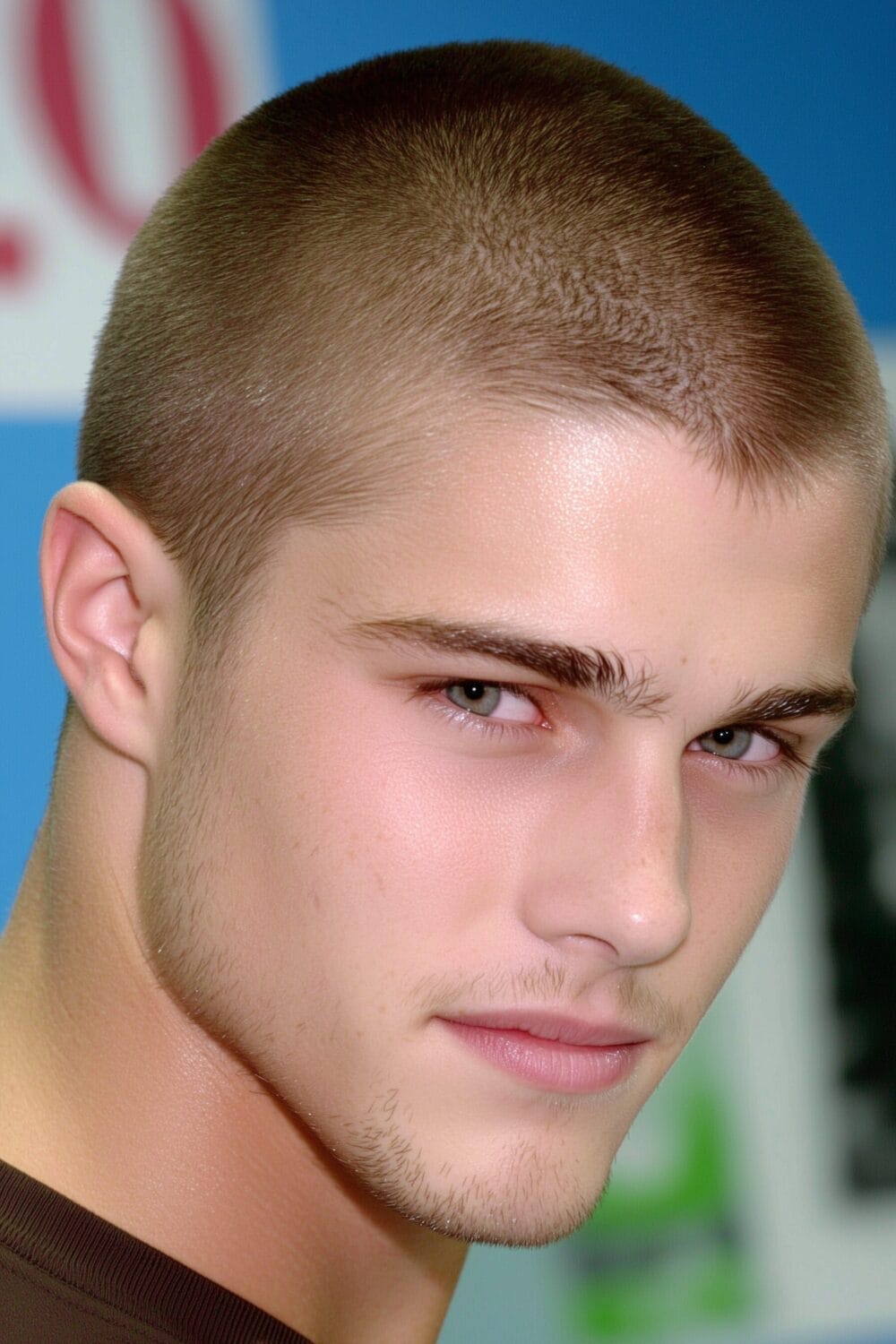
Going too short all over ranks as the biggest error diamond faces make. Ultra-short cuts eliminate the texture needed to balance proportions.
High fades starting above temple level create an elongated appearance. This placement removes width exactly where diamond faces need it most.

🧠 Expert Advice
Request a “drop fade” that curves down behind your ears instead of straight across. This technique maintains temple width while cleaning up the neckline, creating perfect balance for diamond faces without sacrificing the clean buzz cut aesthetic you want.
🎯 Perfect For: Mid-Fade Buzz Cuts
Mid-fades starting at temple level create ideal proportions for diamond faces. This placement adds perceived width exactly where your face naturally narrows.
The gradual blend from longer top hair through the fade softens cheekbone prominence. You maintain clean lines while achieving balanced proportions throughout.
Creating Width at Temple Level
Keep your fade line running horizontally through the temple area. This straight line creates an optical widening effect at eye level.
Ask your barber to leave slightly more bulk at the temples before blending. Even an extra millimeter here makes a noticeable difference in overall balance.

Optimal Guard Sizes: #3 Top, #1 Sides
The #3 guard on top provides enough length for subtle texture without looking unkempt. This length softens your crown while maintaining buzz cut practicality.
Dropping to #1 on sides creates contrast without going skin-tight. The graduation between these lengths happens gradually through your perfect mid-fade placement.

The Textured Top Buzz: Softening Sharp Cheekbones
Adding texture on top transforms a basic buzz into a diamond-face masterpiece. Request point-cutting or texturizing shears across the crown area.
This technique creates micro-variations in length that catch light differently. The result softens angular features while maintaining that clean, military-inspired aesthetic.

Pro tip: Ask for “choppy texture” rather than uniform length—this single request changes everything for diamond faces.
Adding Subtle Length for Balance
Keep the crown area slightly longer than the rest, using a #4 or #5 guard. This extra quarter-inch creates vertical balance against wide cheekbones.
The additional length doesn’t require styling products or maintenance. Natural texture does the work, softening your silhouette automatically throughout the day.

⚠️ Common Mistake
Many diamond faces request uniform length across the entire top, thinking it looks cleaner. This actually emphasizes cheekbone width and creates an unbalanced, top-heavy appearance. Always maintain slight length variation, even just one guard size difference, to create proper proportional harmony.
❌ Avoid If: Ultra-Short All-Over Buzzes
Induction cuts and #1 all-over buzzes spell disaster for diamond faces. These lengths eliminate any texture that could soften your angular features.
Without strategic length variation, your cheekbones become the sole focal point. The result emphasizes exactly what you’re trying to balance out.

Why #1 Guards Emphasize Diamond Angles
Ultra-short lengths create a uniform surface that highlights bone structure underneath. Diamond faces need texture and shadow play to achieve balance.
The #1 guard removes all styling options and optical illusions. Your natural geometry stands alone, creating an exaggerated angular appearance most men want to avoid.
🧠 Expert Advice
If military regulations require a #1 buzz, ask for a “tight taper” instead of uniform length. This creates subtle graduation from crown to neckline, maintaining regulation length while adding just enough variation to soften diamond angles through strategic shadow placement.
Complementary Beard Styles for Diamond Face Buzz Cuts
Facial hair becomes your secret weapon for perfecting diamond face proportions. The right beard style adds crucial width at jaw level.
Focus on creating volume below the cheekbone line. This approach balances your widest facial point while adding masculine definition where you need it.

Square-Bottom Beards: Your Best Friend
Maintain a horizontal line across your beard’s bottom edge. This square shape adds visual width to your narrow chin area perfectly.
Keep the sides slightly shorter than the chin area. This technique maximizes width addition without creating unwanted bulk at cheekbone level where you‘re already wide.
Not sure which style suits you best? Our Haircut Finder Quiz matches you with the right cut based on your face shape and hair type — takes 60 seconds.

Stubble Length That Works
Heavy stubble between 4-6mm offers ideal balance for diamond faces. This length adds definition without overwhelming your buzz cut‘s clean lines.
Maintain consistent length across jaw and chin, avoiding fades into the cheeks. The uniform coverage creates that crucial width-adding effect at your face’s narrow point.

⚠️ Common Mistake
Diamond faces often fade their beards too high on the cheeks, thinking it looks cleaner. This removes width from the jaw area where you desperately need it. Keep your beard line lower, following your natural growth pattern to maintain maximum width-balancing potential.
The Graduated Buzz: Diamond Face Game-Changer
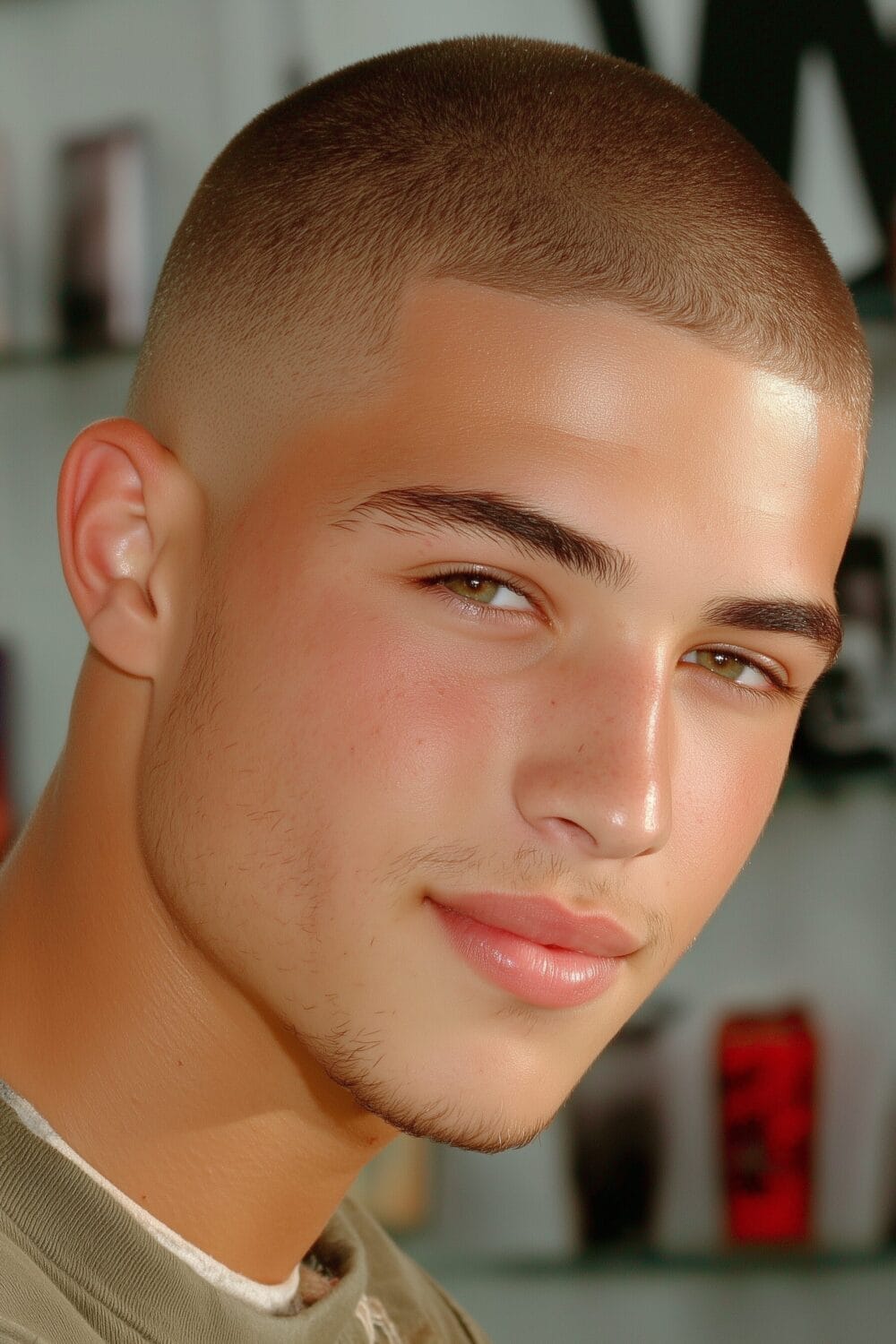
Graduated buzzes blend multiple guard lengths seamlessly from crown to nape. This technique creates dimension that standard buzzes can’t achieve.
Start with #4 at the crown, dropping through #3 and #2 as you move down. The gradual change adds vertical interest while maintaining clean, manageable length.
Building Volume Where You Need It
Concentrate the longest lengths at crown and temple areas. These zones need extra bulk to balance your prominent cheekbones effectively.
The graduation technique allows natural volume without requiring products. Your hair’s growth pattern creates automatic lift in strategic areas throughout the growing-out process.

Visual Proportion Guide: Balancing Your Features
Understanding proportion helps you communicate effectively with your barber. Diamond faces need width at temples and jaw while minimizing cheekbone emphasis.
Think in thirds: forehead, mid-face, and jaw should appear roughly equal. Your buzz cut adjustments create this illusion through strategic length and fade placement.

- Upper third: Maintain texture for width
- Middle third: Keep sides tight and clean
- Lower third: Add beard volume strategically
- Never go shorter than #2 on top
Creating Optical Illusions With Fade Heights
Low fades starting at ear level maintain maximum width through your temple area. This placement keeps volume where diamond faces need it most.
Mid-fades work when kept perfectly horizontal through temples. High fades should be avoided unless you’re adding significant top length for balance.

Strategic Shadow Lines for Width
Request hard parts or subtle lines at temple level to create horizontal emphasis. These details draw the eye sideways, adding perceived width.
Shadow effects from proper fade placement create depth without actual bulk. The interplay between lengths generates visual interest that softens angular features naturally.

Frequently Asked Questions
What’s the best buzz cut length for my diamond face to minimize sharp cheekbones?
For diamond faces, a #3 or #4 guard on top with a mid-fade starting at temple level works best. This length adds enough texture to soften sharp cheekbones while the fade placement creates width where your face naturally narrows. Avoid going shorter than #2 on top as it emphasizes angular features.
Should I pair my diamond face buzz cut with facial hair?
Absolutely! A square-bottom beard or even heavy stubble (4-6mm) complements a diamond face buzz cut perfectly.
The facial hair adds width to your narrow chin area, creating better overall balance. Keep the beard fuller at the jaw and slightly shorter on the cheeks to maximize the balancing effect.
How does age affect buzz cut choices for diamond faces?
As you age, slightly longer buzz cuts (#4-5 guard) tend to be more flattering for diamond faces, as they soften features that may become more pronounced over time. Men over 40 often benefit from keeping more texture on top and opting for lower, softer fades rather than high, sharp ones.
Can I do a skin fade with a diamond face shape?
Skin fades can work for diamond faces, but placement is crucial. Start the skin fade low (below ear level) and keep more length through the temple area.
This maintains width where you need it most. High skin fades can make diamond faces appear even more angular, so proceed with caution.
Hair Texture Considerations for Diamond Faces
Diamond faces are defined by wide cheekbones with a narrower forehead and chin — and hair texture affects how a buzz cut interacts with those proportions.
Straight hair at buzz length lies close to the skull, which can emphasise the angular cheekbones. This works well if your cheekbones are a feature you want to highlight. Curly or wavy hair adds a slight buffer of volume that softens the angular look, which some diamond-faced guys prefer. If you’re unsure, start with a number 3 — it gives you enough length to see how your texture interacts with your face shape before committing to something shorter.
One detail I always mention to diamond-faced clients: the temple area is critical. Diamond faces have narrower temples, and leaving slightly more length at the temples (or avoiding a high fade that exposes them further) helps maintain proportional balance. A low or mid fade is usually more flattering than a high skin fade on this face shape.
Explore More Buzz Cut Guides
Was this article helpful?
Discover Your Face Shape
The right haircut starts with knowing your face shape. Most guys get it wrong — find out yours in seconds.

Khamis Maiouf is a professional barber who graduated from Hinckley College in England with a Level 3 qualification in hairdressing. With over 20 years of experience, he is an award-winning barber who has mentored numerous students and styled thousands of clients. A recognised expert featured on StyleCraze (20M+ readers).
Credentials: Level 3 Hairdressing (Hinckley College, UK) • 20+ Years Professional Experience • Featured Expert on StyleCraze • Founder of Book of Barbering