✓ Written & Reviewed by Khamis Maiouf — Award-Winning Barber · 20+ Years Experience · Level 3 Qualified
Asian hair is some of the thickest and straightest hair I work with, and that changes everything about how a buzz cut looks and behaves. At certain lengths, straight, coarse strands stand straight up instead of lying flat. At other lengths, the density creates a fuller appearance than the same guard on finer hair. I’ve been cutting buzz cuts on Asian hair types for over 20 years, and the key is understanding which lengths work with the texture and which ones fight it.
Key Takeaways
Asian hair tends to stand upright at number 3–4 lengths — go shorter (1–2) or longer (5+) to avoid the spiky phase
The thickness means buzz cuts look fuller at every length compared to finer hair types
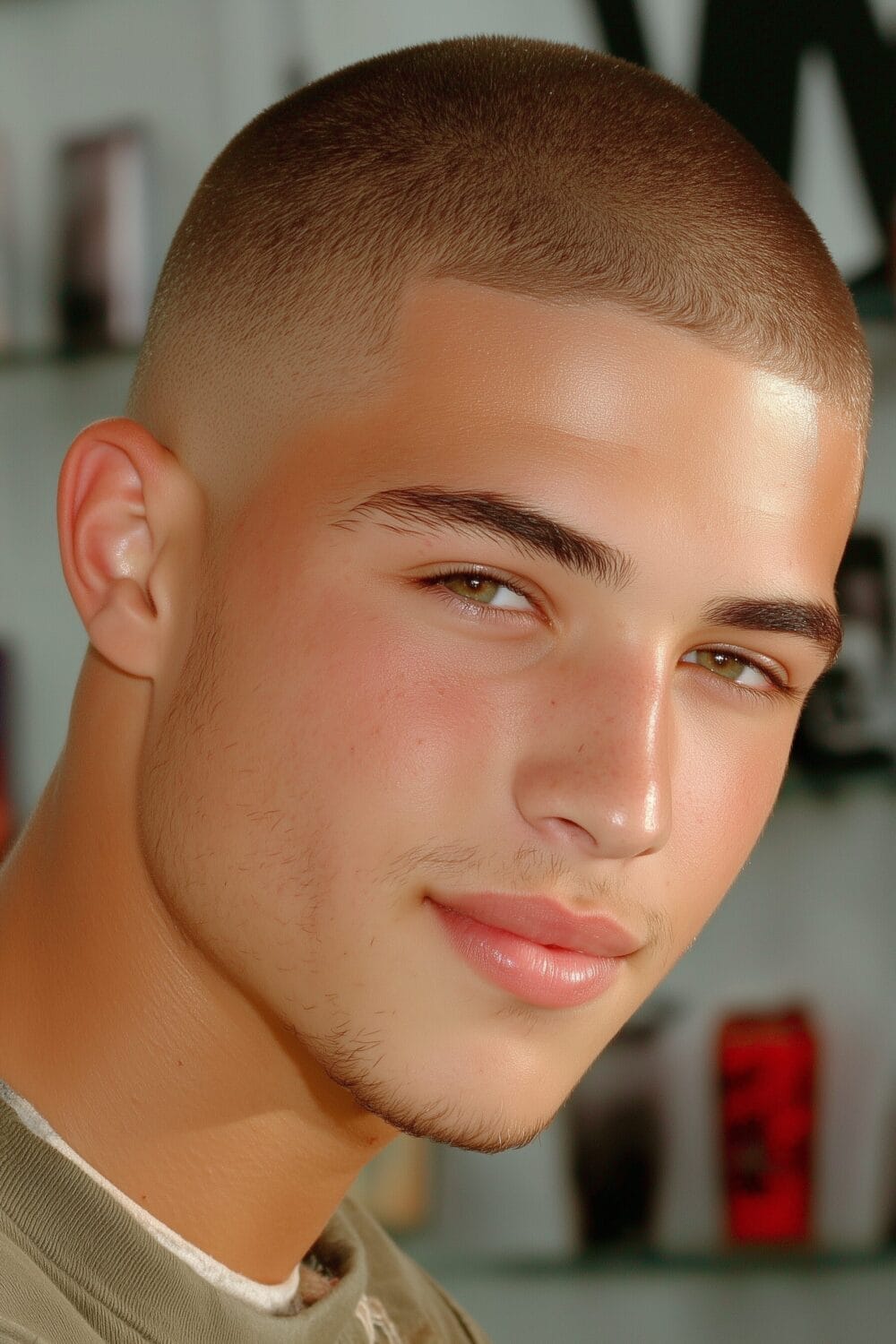
A skin fade works exceptionally well because the contrast between dense top and clean sides is dramatic
Straight hair shows every unevenness — precise, overlapping clipper passes are essential
A textured crop at number 4–5 with product can tame the natural stiffness while keeping length
Asian hair grows perpendicular from the scalp, creating natural volume even at short lengths. This unique growth pattern means your buzz cut will stand differently than other hair types.
The density factor changes everything – Asian hair averages 80,000-120,000 follicles versus 100,000 for Caucasian hair, but each strand is thicker.
Asian Hair Texture Reality
Your hair shaft is typically 50% thicker than European hair, measuring 80-120 microns in diameter. This thickness creates distinct shadow patterns when buzzed.
The cuticle layer lies flatter on Asian hair, producing that signature shine even at 1/8 inch lengths.
Straight Hair Considerations
Straight Asian hair reveals every clipper line and uneven spot – precision becomes non-negotiable. Your hair won’t curl to hide mistakes.
The benefit: clean geometric shapes stay sharp for weeks. Straight strands maintain crisp edges better than any other hair type.
Asian Face Shape Buzz Strategies
Asian facial structures require specific buzz proportions to enhance rather than emphasize roundness. The key lies in strategic length variations.
Most Asian faces benefit from slightly longer crown hair – even an extra 2mm creates vertical illusion.
Round Asian Features
Keep sides at #1 guard while maintaining #2 or #3 on top. This contrast adds instant angles to softer facial structures.
Square off the neckline instead of rounding it – geometric shapes counterbalance circular features effectively.
Angular Asian Structures
Sharp jawlines pair perfectly with uniform buzz lengths. A consistent #2 all over emphasizes your natural bone structure.
Avoid excessive fading on angular faces – it can create an overly aggressive appearance in professional settings.
🎯 Proportion Keys
The golden ratio for Asian buzz cuts: sides should be 40-50% shorter than the crown. This formula works across all face shapes.
Temple points should align with your eyebrow arch, not your ear top – this placement suits Asian facial proportions.
🧠 Expert Advice
Request your barber use closed guards on Asian hair – the plastic spacing prevents those horizontal lines that show prominently on straight, thick strands. Most barbers default to open guards, but closed guards glide smoother through dense Asian hair texture for seamless blending.
Fresh Asian Buzz Fade Techniques
Asian skin tones require adjusted fade techniques because contrast shows differently than on lighter complexions. Standard Western fading often looks patchy.
The solution involves tighter graduation between lengths – use half-guard increments instead of full guard jumps.
Asian Skin Tone Fading
Warm undertones in Asian skin make fades appear darker than intended. Start one guard higher than you think you need.
Yellow and olive undertones reflect light differently – adjust your fade line 3mm higher for optimal visual balance.
Mid Fade for Asian Hair
Position your mid fade at the temple bone, not the ear midpoint. Asian head shapes typically sit higher, requiring adjusted placement.
Blend through at least four guard sizes for seamless transition – Asian hair density exposes harsh lines immediately.
Temple Fade Precision
Temple fades on Asian hair need diagonal angles, not vertical. Follow your natural hairline curve for authentic results.
Use trimmer-over-comb technique for final blending – guards alone won’t achieve the precision Asian hair demands.
Asian Buzz Length Selection
Length selection determines whether your Asian buzz looks professional or prison-style. The difference between #2 and #3 is dramatic on thick hair.
Consider your hair’s weight – heavier Asian hair lies flatter at longer lengths but spikes naturally when short.
Number 2 for Asian Hair
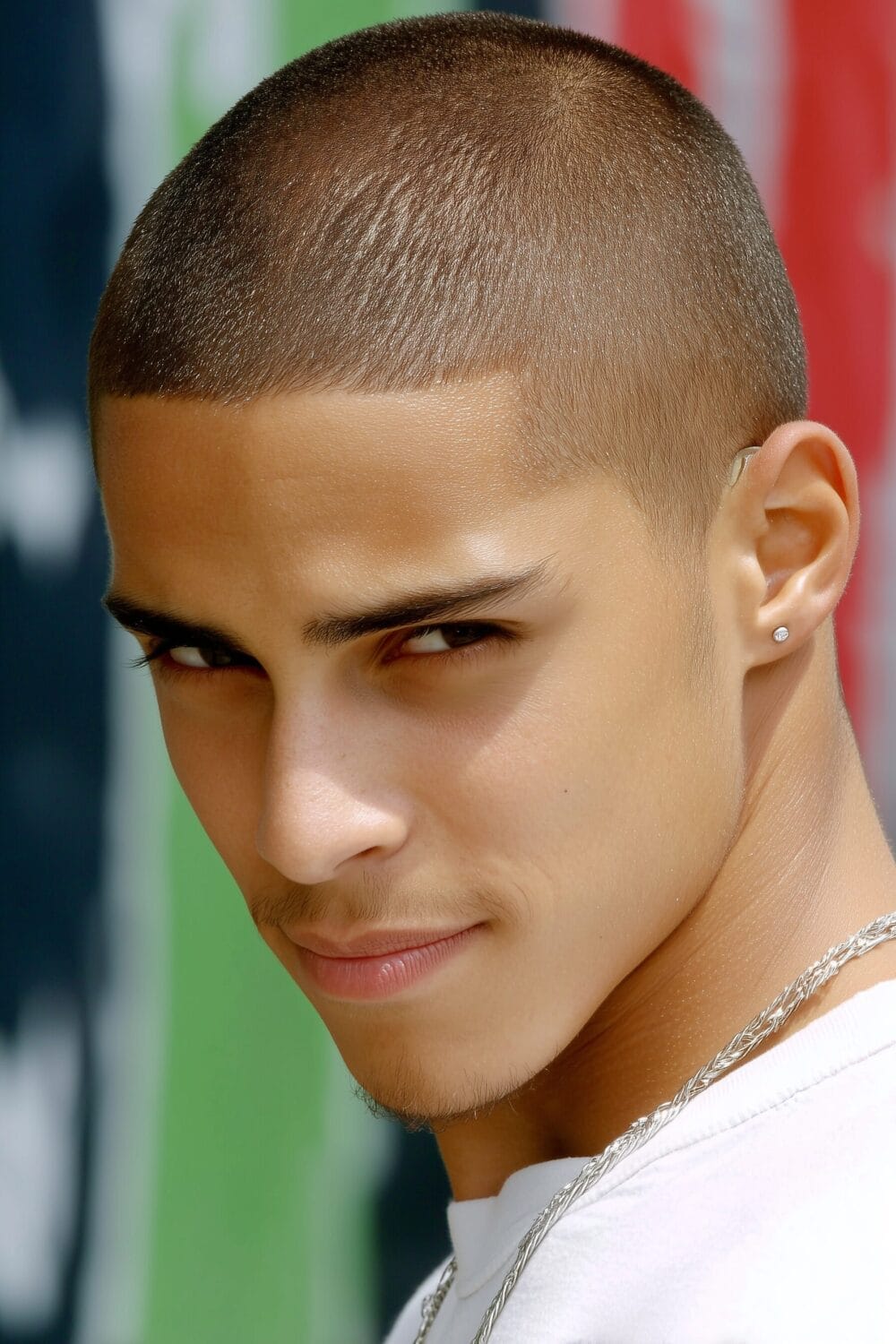
A #2 guard (6mm) provides ideal balance for most Asian hair types. It’s short enough for easy maintenance yet long enough to avoid scalp visibility.
This length works year-round and transitions well between casual and formal settings without adjustment.
Number 3 Asian Results
The #3 guard (10mm) offers movement and texture options unavailable at shorter lengths. You can still style with light product.
Perfect for first-time buzz cuts – it feels less dramatic while delivering the low-maintenance benefits you want.
📏 Length Guidelines
Fine Asian hair: stick to #1-#2 guards for volume. Thick Asian hair: #2-#4 guards prevent helmet effect.
Summer cuts: go one guard shorter. Winter cuts: maintain extra length for warmth and styling versatility on cold days.
Oval faces: Any length works, experiment freely
Round faces: #1 sides with #3 top
Square faces: Uniform #2 all over
Long faces: Avoid too short, minimum #3
⚠️ Common Mistake
Going too short initially ruins the Asian buzz experience – your thick hair becomes prickly and uncomfortable below #1.5 guard length. Start with #3, then gradually go shorter over multiple cuts to find your ideal length without the shock factor.
Modern Asian Buzz Variations
Contemporary Asian buzz styles blend traditional precision with street culture influence. These cuts respect hair texture while pushing creative boundaries.
The key difference: Asian variations focus on subtle detail work rather than dramatic contrasts.
K-Pop Inspired Buzz
K-Pop buzzes feature disconnected tops with sharp side parts. The crown stays at #4 while sides drop to skin.
Add subtle design lines at the temples – nothing elaborate, just clean geometric accents that photograph well.
Japanese Minimalist Cuts
Japanese buzz aesthetics emphasize perfect uniformity over fading. One length all over, executed with obsessive precision.
The power lies in flawless execution – every hair exactly the same length creates meditative visual harmony.
Asian Street Style Buzz
Street versions incorporate textured tops using point cutting on longer buzz lengths. This adds movement to typically straight Asian hair.
Combine with subtle color – ash brown or blue-black tints enhance the cut without looking unnatural.
Asian Buzz Texture Solutions
Texture challenges unique to Asian hair include extreme density, stubborn growth patterns, and prominent cowlicks. Standard solutions often fail.
The approach: work with your hair’s natural tendencies instead of fighting them.
Coarse Asian Hair Management
Coarse strands require sharp blades changed every 3-4 cuts. Dull blades pull and create uneven results on thick Asian hair.
Not sure what your face shape is? Our Face Shape Detector figures it out in 4 quick questions.
Apply light coconut oil post-cut to reduce prickliness – it softens sharp ends without adding visible product.
Cowlick Control Methods
Asian cowlicks grow stronger than other hair types. Buzz against the growth direction, not with it.
Leave cowlick areas slightly longer – an extra 2mm prevents them from sticking straight up.
⚠️ Common Mistakes
Buzzing Asian hair when wet creates uneven results – the weight of water makes thick hair lie unnaturally flat. Always cut Asian hair completely dry for accurate length assessment. Wet cutting leads to shorter-than-expected results once hair dries and lifts.
🧠 Expert Advice
Use ceramic blade clippers for Asian hair – they stay cooler during the extended cutting time thick hair requires. Metal blades heat up quickly on dense Asian hair, causing discomfort and potential irritation. Ceramic blades also maintain sharpness longer against coarse Asian strands.
Asian Buzz Maintenance Schedule
Asian hair grows faster than average – expect 15-17mm monthly versus the typical 12mm. This impacts your maintenance timeline significantly.
Plan appointments around your growth rate, not arbitrary schedules.
Growth Rate Factors
Genetics determine 80% of growth speed, but diet influences the remainder. Higher protein intake accelerates Asian hair growth.
Seasonal changes affect growth – expect 20% faster growth in summer months versus winter.
Touch-Up Frequency
Professional touch-ups every 2-3 weeks maintain crisp lines on fast-growing Asian hair. DIY neck cleanups extend this to monthly.
Invest in quality trimmers for home maintenance between cuts – it saves money long-term.
Professional Asian Buzz Styles
Corporate environments in Asia have specific buzz cut expectations that differ from Western standards. Length and precision matter more than creativity.
Understanding these nuances prevents workplace style conflicts.
Corporate Asian Standards
Asian corporate culture accepts buzzes at #3 guard minimum. Anything shorter reads as aggressive or unprofessional in traditional offices.
Maintain natural black color – even subtle highlights can violate conservative Asian workplace policies.
Conservative Length Options
The safe zone: #3 on sides, #4 on top, with subtle taper blending. This satisfies both modern style and traditional expectations.
Avoid hard parts or design elements in conservative fields like banking or law.
Professional Asian buzzes prove that restriction breeds creativity – masters find innovation within tight parameters.
⚠️ Common Mistake
Copying Western business buzz styles ignores Asian corporate culture norms – what’s acceptable in Manhattan may be inappropriate in Tokyo or Singapore. Research your specific industry and region’s standards. Conservative Asian markets require longer, more uniform buzz cuts than Western counterparts.
The Spiky Phase: Managing Numbers 3–4
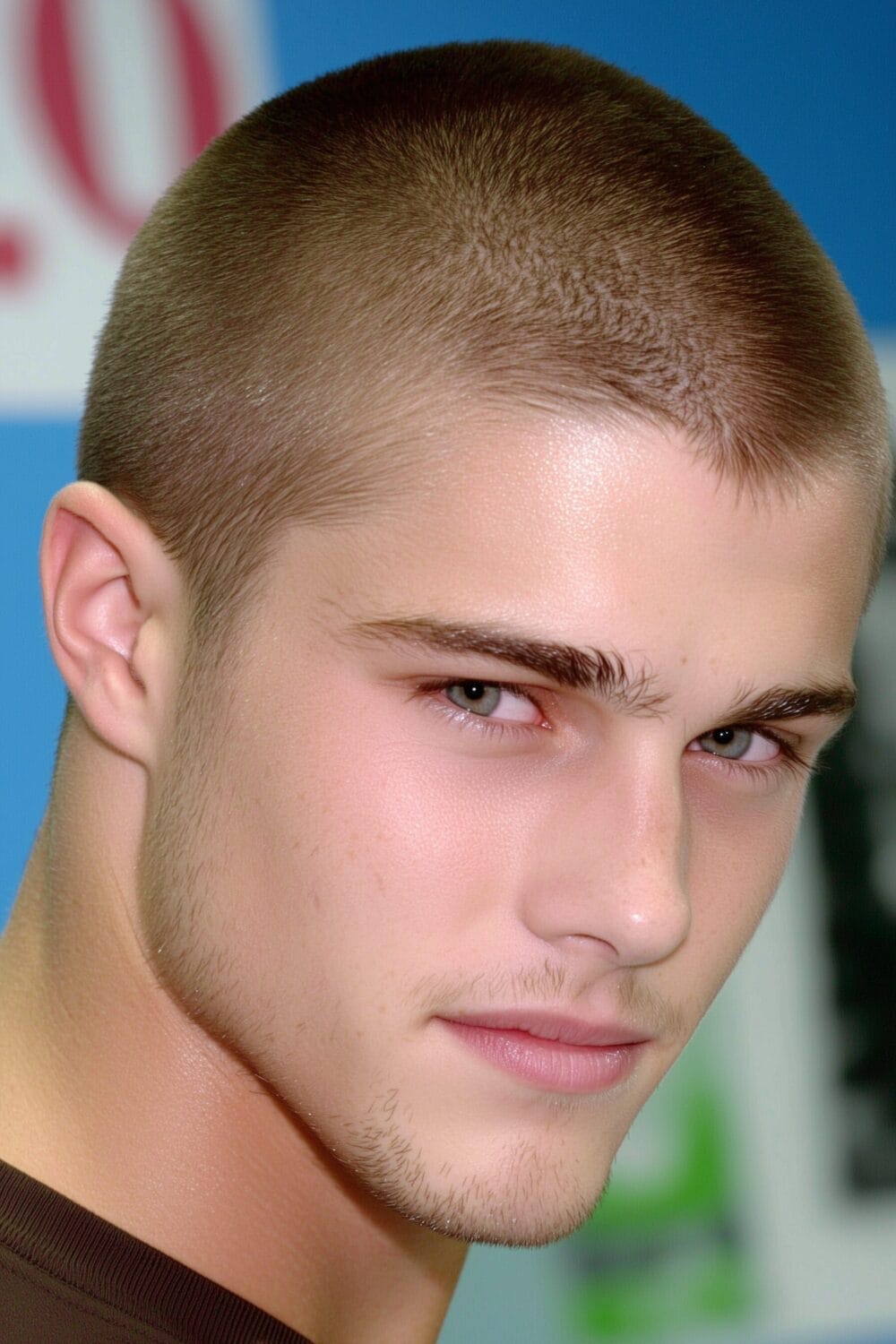
The single most important thing I tell Asian-hair clients is to be aware of the spiky phase. Thick, straight Asian hair has a tendency to stand straight up at guard lengths 3–4 (10–13mm). The strands are too short to lie flat under their own weight but too stiff to bend. This creates a look that’s either intentionally textured (if you style it with product) or unintentionally messy (if you don’t).
You have three options: go shorter (number 1–2, where the hair is too short to stand up), go longer (number 5+, where gravity takes over), or manage the spiky phase with a matte clay or texture paste that controls direction without shine. If you’re getting a buzz cut for the first time and have thick, straight hair, start at number 2 to avoid the spiky surprise.
K-Pop and J-Pop Influence on Buzz Cut Styling
The rise of buzz cuts in Korean and Japanese pop culture has shifted perceptions significantly. Artists and actors in East Asia have popularised the textured buzz cut with fade, making it aspirational rather than purely practical. If you’re looking for inspiration, search for specific looks rather than generic “Asian buzz cut” — the range spans military-clean to bleached-and-textured, and each requires a different conversation with your barber.
Ready to Find Your Perfect Cut?
You’ve read about the styles. Now find the one that fits YOUR face shape, hair type, and lifestyle.
The #3 guard buzz with mid-fade works best for thick Asian hair. This length prevents the helmet effect while the fade removes bulk from sides.
Request thinning shears on top if density remains excessive. The combination balances thickness without sacrificing the clean buzz aesthetic.
How short for Asian features?
Most Asian featureslook best with #2 guard minimum on sides, #3 on top. Going shorter than #1.5 can emphasize round faces unfavorably.
Test with longer lengths first, then gradually decrease. Your facial structure, not trends, should determine final length.
Asian buzz cut maintenance cost?
Expect $30-50 monthly for professional maintenance in major cities, $20-30 in suburban areas. Asian hair‘s fast growth requires bi-weekly touch-ups for optimal appearance.
DIY neck cleanups between visits reduce costs by 40%. Premium Asian barbershops charge $60-80 but deliver superior precision.
Khamis Maiouf is a professional barber who graduated from Hinckley College in England with a Level 3 qualification in hairdressing. With over 20 years of experience, he is an award-winning barber who has mentored numerous students and styled thousands of clients. A recognised expert featured on StyleCraze (20M+ readers).
Credentials: Level 3 Hairdressing (Hinckley College, UK) • 20+ Years Professional Experience • Featured Expert on StyleCraze • Founder of Book of Barbering