✓ Written & Reviewed by Khamis Maiouf — Award-Winning Barber · 20+ Years Experience · Level 3 Qualified
Every buzz cut guide on the internet covers the number 1 through 4, then drops off like the higher guards don’t exist. But in my shop, guards 5 through 8 are some of the most useful tools on the rack. These are the lengths that give you actual hair to work with — texture, movement, the ability to style it differently on a Friday night versus a Monday morning — while keeping your routine under two minutes. Here’s what each one really looks like.
Key Takeaways
Number 5 (16mm) to number 8 (25mm) give you progressively more styling flexibility
Guard 6 at 19mm is ideal for softening round faces and adding natural texture
Guard 8 at one inch is the longest standard clipper guard — full coverage with subtle styling options
These lengths need edge cleanup every 3–4 weeks but are very forgiving on top
Best for guys who want the speed of a buzz cut without the ultra-short look
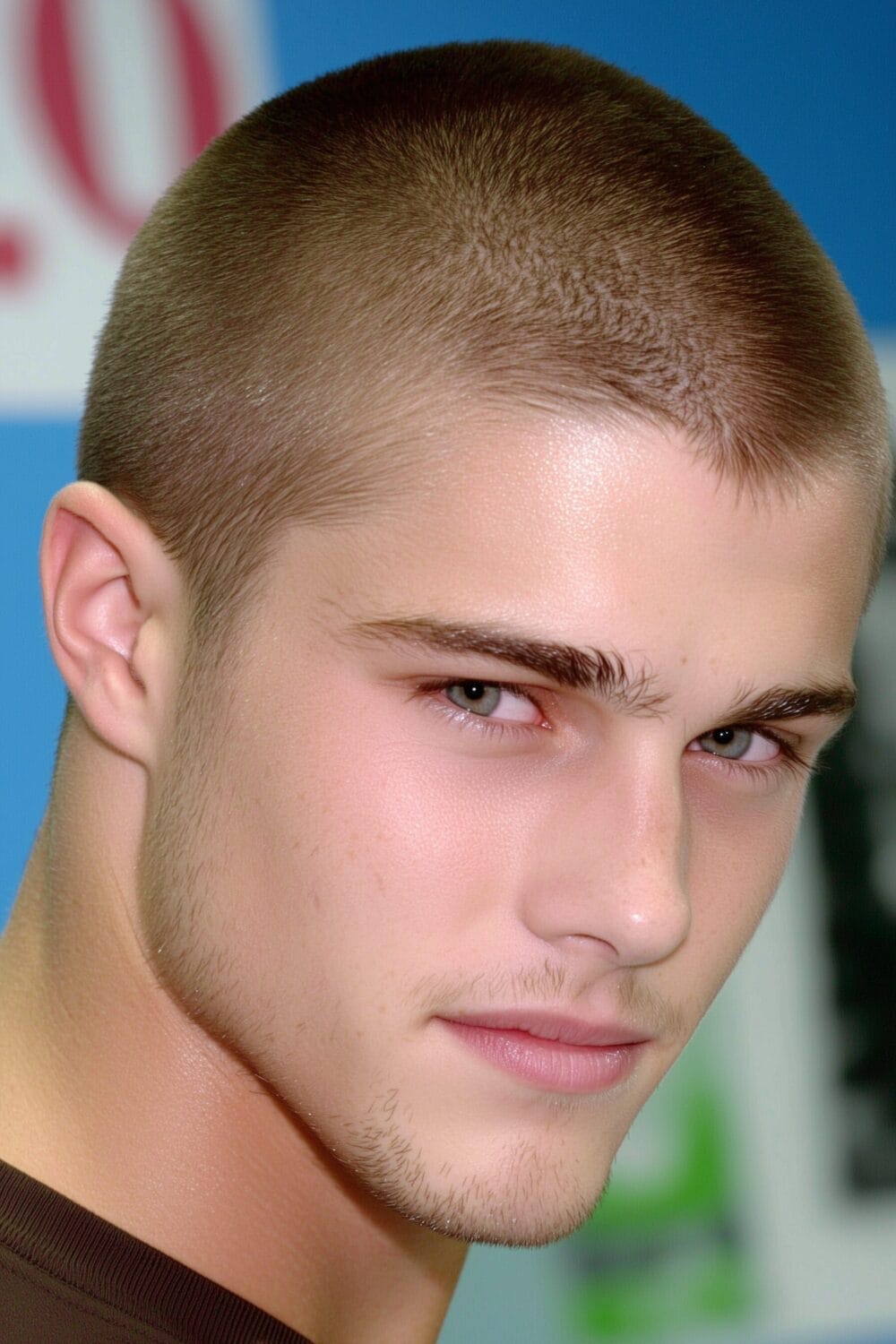
The number 5guard creates a distinct military-inspired look that bridges the gap between ultra-short and moderate length cuts. At this length, your scalp shows through clearly but maintains enough coverage to avoid the completely exposed feeling.
This cut works particularly well for guys transitioning from longer styles who aren’t ready for extreme shortness. The texture remains visible enough to show your natural hair pattern.
📏 Number 5 Length Specs
A number 5 guard cuts hair to exactly 5/8 inch or 16mm in length. This measurement stays consistent across all professional clipper brands, from Wahl to Andis.
The actual appearance varies based on your hair density—thick hair looks fuller while fine hair appears more sparse at this length.
Number 5 Visual Impact
Your scalp remains clearly visible through the hair, creating a shadowed effect rather than complete exposure. The cut produces clean, uniform lines that emphasize your head shape.
Dark hair creates stronger contrast against skin, while blonde or gray hair blends more subtly at this length.
Who Suits Number 5
Guys with oval or rectangular faces excel with number 5 cuts since the length maintains proportional balance. Dense, coarse hair types achieve the best coverage and visual weight.
Athletes and active professionals choose this length for its zero-maintenance appeal combined with professional acceptability in most workplace settings.
Number 6 Buzz Cut Essentials
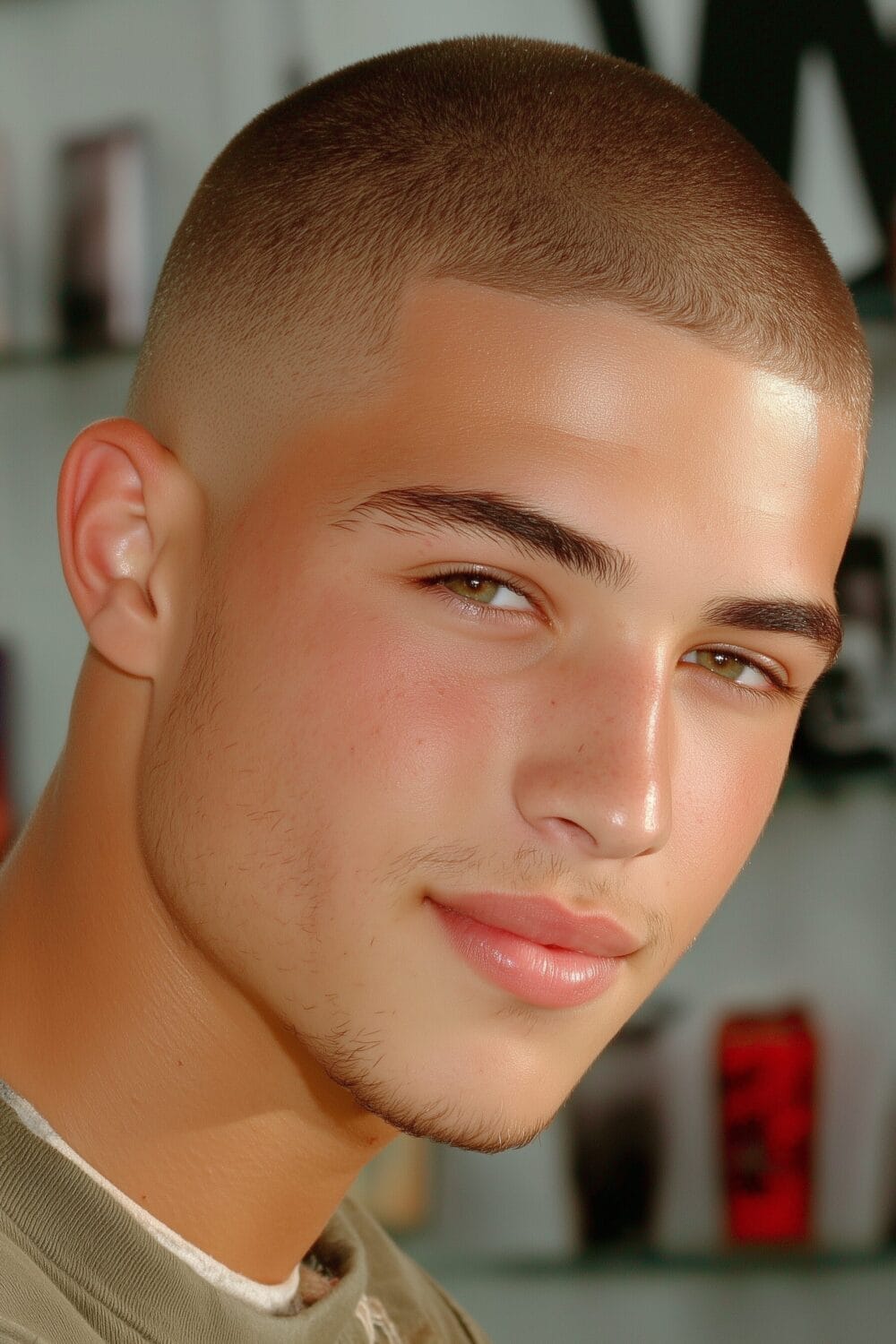
Number 6 represents the sweet spot where buzz cut convenience meets actual hair coverage. This length gives you legitimate texture while maintaining that signature buzz cut simplicity.
Many barbers recommend starting here if you’re nervous about going shorter—you can always drop down but growing back takes weeks.
Coverage: Scalp visibility reduces by 40% compared to number 5
Texture: Natural wave patterns become slightly visible
Maintenance: Extends haircut intervals to 3-4 weeks
📏 Number 6 Measurements
The number 6 guard delivers 3/4 inch or 19mm of consistent length across your entire head. This three-millimeter jump from number 5 creates surprisingly dramatic visual difference.
Professional clippers maintain this exact measurement regardless of cutting speed or angle, ensuring perfectly uniform results.
Number 6 Coverage Reality
Your scalp becomes significantly less visible, appearing only as subtle shadows in bright lighting. The hair creates actual dimension rather than just surface texture.
Thinning areas blend better at this length since surrounding hair provides more camouflage than shorter numbers.
Number 6 Face Shapes
Round faces benefit from number 6’s added height, which creates vertical elongation without excessive volume. Square jaws soften slightly with this length’s subtle texture.
Narrow faces should proceed cautiously—the extra length can emphasize vertical proportions unless balanced with facial hair.
🧠 Expert Advice
Request your barber to slightly taper the neckline even with a number 6 all-over cut. This subtle graduation prevents the blocky appearance that makes buzz cuts look amateur while maintaining the simplicity you want.
⚠️ Common Mistake
Assuming number 6 requires zero styling because it’s still a buzz cut leads to shapeless, mushroom-like results. Apply a tiny amount of matte clay with fingertip pressure—this defines texture without creating obvious styling.
Number 7 Buzz Cut Breakdown
Number 7 enters territory where “buzz cut” becomes debatable—some barbers call this a short crop cut instead. The length provides genuine styling flexibility while keeping maintenance minimal.
This guard suits guys who want buzz cut convenience but need more professional versatility for client meetings or formal events.
📏 Number 7 Specifications
A number 7 guard precisely cuts hair to 7/8 inch or 22mm, approaching the one-inch threshold. This length sits exactly between typical buzz cuts and short scissor cuts.
The measurement allows natural hair direction to influence the final look rather than forcing uniform straightness.
Number 7 Texture Results
Natural wave patterns fully express themselves at number 7 length, creating organic movement without requiring product. Straight hair develops subtle bends that add visual interest.
Cowlicks become noticeable but manageable—they add character rather than creating awkward spots like with shorter guards.
Number 7 Styling Options
Forward brushing creates a subtle fringe effect perfect for minimizing forehead size or recession. Side-parting becomes possible with light hold product and finger placement.
The length responds well to texture powder, which adds grip and volume without shine or stiffness.
Number 8 Buzz Cut Analysis
Number 8 pushes the absolute boundary of buzz cut classification—many professionals consider this a short haircut rather than a true buzz. The full inch of length opens up genuine hairstyling possibilities.
Guys choose number 8 when they want ultra-low maintenance but refuse to sacrifice all styling options.
📏 Number 8 Length Details
The number 8 guard cuts exactly to 1 inch or 25mm, the longest standard clipper guard available. Some brands require guard attachments to achieve this length reliably.
This measurement provides enough length for hair to lay down naturally rather than standing straight up.
Number 8 Versatility
You can create multiple distinct looks from one haircut—messy texture, side part, or slicked back styles all work. The length accommodates both professional and casual styling approaches.
Product application becomes essential for definition since the hair won’t maintain shape through length alone.
Number 8 Growing Phase
Growing from number 8 to longer styles happens smoothly without awkward intermediate stages plaguing shorter cuts. The transition takes 4-6 weeks to reach short scissor cut territory.
Monthly trims keep the shape clean while allowing strategic length accumulation where you want it most.
Comparing Numbers 5, 6, 7, 8
Each single-digit jump creates dramatically different aesthetics despite seeming like minor measurement changes. Understanding these visual gaps prevents disappointment when you sit in the barber chair.
The comparison points below highlight the critical differences that photos can’t fully capture until you experience them.
Pro tip: Ask to see each guard size on a small test patch behind your ear before committing to the full cut.
Visual Differences 5 vs 6
Number 5 shows clear scalp visibility with hair appearing as dark stubble, while number 6 creates actual coverage that obscures skin. The three-millimeter difference transforms the cut from military to civilian.
Photography struggles to capture this subtle but significant jump—in person, the difference feels dramatic.
Coverage Gap 6 vs 7
Moving from 6 to 7 shifts from textured coverage to actual hair length with movement possibilities. Number 6 lies flat uniformly while number 7 develops natural direction patterns.
The coverage increase helps tremendously with crown thinning or temporal recession camouflage.
Styling Jump 7 vs 8
Number 7 offers subtle styling throughnatural movement, but number 8 enables deliberate manipulation with products. The extra 3mm transforms passive texture into active styling potential.
This jump marks the transition from wash-and-go convenience to minimal but necessary daily styling.
🎯 Decision Factors
Choose based on scalp visibility comfort—numbers 5-6 expose skin clearly while 7-8 provide genuine coverage. Consider your hair density too since fine hair needs longer guards for equivalent visual weight.
Maintenance frequency drops significantly with each number increase, from weekly touch-ups to monthly trims.
🧠 Expert Advice
Start with number 7 if you’re unsure—it’s long enough to drop down gradually over multiple cuts while giving you time to adjust psychologically. Most guys regret going too short initially rather than too long, and growing back takes patience.
Face Shape Match for 5, 6, 7, 8
Your face shape determines which number creates optimal proportion and balance with your features. The wrong length either exaggerates problem areas or creates new imbalances.
These specific recommendations come from analyzing thousands of client results across different facial structures.
Round Faces: 5 or 8?
Number 5 actually helps round faces by creating sharp contrast that implies angular structure beneath. Number 8 adds unwanted volume that emphasizes circular proportions unless styled upward.
Skip numbers 6-7 entirely—they create awkward middle ground that neither sharpens nor properly frames round features.
Square Faces: 6 or 7?
Numbers 6 and 7 soften harsh jaw angles without eliminating masculine structure completely. The slight texture breaks up geometric severity while maintaining strong presence.
Number 6 works better for prominent jaws, while 7 suits moderate square faces needing subtle softening.
Oval Faces: All Numbers
Oval faces handle any number from 5 through 8 since proportions remain balanced regardless of length. Choose based on lifestyle and maintenance preferences rather than facial structure concerns.
This versatility lets you experiment freely without worrying about proportion disasters.
⚠️ Shape Warnings
Oblong faces should avoid numbers 7-8 which add vertical height that elongates already stretched proportions. Triangle faces need caution with number 5 since minimal top coverage emphasizes narrow foreheads while highlighting wider jaws.
⚠️ Common Mistake
Choosing your number based on your friend’s great-looking buzz cut ignores crucial differences in head shape and hair density. What looks perfect as number 6 on someone with thick hair might require number 8 on your finer texture for equivalent coverage.
Not sure what your face shape is? Our Face Shape Detector figures it out in 4 quick questions.
Maintenance Reality 5, 6, 7, 8
Each number demands different upkeep frequencies and techniques to maintain its intended appearance. Understanding these requirements prevents that awkward overgrown phase between cuts.
Budget both time and money accordingly since shorter numbers need more frequent professional touch-ups.
Number 5 Upkeep Schedule
Number 5 requires trimming every 10-14 days to maintain its crisp military appearance. After two weeks, the grown-out length starts looking messy rather than intentionally short.
Home maintenance works well with quality clippers since precision matters less at this minimal length.
Numbers 6-7 Sweet Spot
Numbers 6 and 7 extend maintenance to 3-4 week intervals while still looking intentional when slightly grown. This sweet spot balances appearance with practical scheduling and budget.
The extra length forgives minor growth better than ultra-short numbers without entering awkward territory.
Number 8 Growing Timeline
Number 8 needs reshaping every 4-5 weeks but handles growth gracefully between appointments. The length transitions smoothly into longer styles if you decide to grow it out.
Regular neck and ear cleanup every two weeks keeps the style looking fresh between full cuts.
Professional vs Home: 5, 6, 7, 8
Some numbers work perfectly for DIY maintenance while others demand professional expertise for proper execution. Knowing the difference saves money without sacrificing appearance quality.
The right tools and techniques make home cutting viable for specific lengths but dangerous for others.
DIY Numbers 5-6
Numbers 5 and 6 suit home cutting since minor mistakes blend into the overall short length. Quality clippers with sharp blades deliver professional results with basic mirror setup and patience.
Practice the motion on longer settings first before committing to your target length across your entire head.
Barber-Needed 7-8
Numbers 7 and 8 require professional blending and shaping to avoid helmet-like uniformity. Barbers create subtle graduation and texture that elevates these lengths beyond basic buzz cuts.
The longer length magnifies every mistake, making DIY attempts risky unless you have significant experience.
💡 Pro Tips
Invest in professional clippers with metal guards rather than plastic for consistent cutting at any number. Always cut against hair growth direction first, then with grain for smoothness regardless of chosen length.
Transitioning Between 5, 6, 7, 8
Moving between numbers requires strategic planning to avoid awkward intermediate phases. Each transition presents unique challenges depending on direction and speed.
These specific timelines help you plan haircuts around important events or seasons.
Growing 5 to 6
The jump from 5 to 6 takes approximately 10-14 days of growth with no trimming required. The intermediate stage looks intentionally textured rather than accidentally overgrown if you maintain clean edges.
Resist trimming during this transition even if it feels messy around day seven.
Jumping 6 to 8
Bypassing number 7 when growing from 6 to 8 takes three weeks but avoids an awkward middle phase. Keep sides and back cleaned up while letting the top accumulate length.
This approach creates subtle shape variation that looks intentional throughout the growing process.
Dropping 8 to 5
Cutting from 8 directly to 5 creates dramatic transformation best done professionally for even results. The shocking difference might feel extreme initially—consider stopping at 6 first for adjustment.
This dramatic drop works well for summer transitions or lifestyle changes requiring minimal maintenance.
🧠 Expert Advice
Document each number with photos from multiple angles to build your personal reference library for future cuts. Most guys forget which exact number looked best, leading to repeated trial-and-error cycles that waste time and money discovering preferences you already identified.
⚠️ Common Mistake
Panicking during the day 5-10 growth phase and trimming too early ruins your transition timeline completely. That awkward fuzzy stage between numbers is temporary—trimming resets the clock back to zero, forcing you to endure the awkward phase all over again.
Pairing Guard Numbers 5–8 With Beard Styles
At these longer buzz lengths, your beard and hair are closer in length than at shorter guards — which means the pairing needs to be intentional to avoid everything blending into one shapeless mass.
Number 5–6 With Stubble
Stubble with a number 5–6 can look slightly unfinished because the lengths are so similar. If you go this route, keep the stubble shorter than the hair — a 3-day growth against a number 5 creates just enough contrast to read as two separate grooming choices. A clean lineup at the cheeks and neckline is essential here.
Number 7–8 With a Short Beard
Numbers 7 and 8 pair best with a short, shaped beard (15–25mm). At these lengths, you have enough hair on top to create real contrast with the beard below. The result looks balanced and intentional — particularly on oval and square face shapes. I recommend a low taper on the sides to add structure and prevent the overall shape from looking too uniform.
Ready to Find Your Perfect Cut?
You’ve read about the styles. Now find the one that fits YOUR face shape, hair type, and lifestyle.
Number 5 actually minimizes contrast between thinning and thick areas by keeping everything uniformly short. Numbers 7-8 can emphasize thin spots unless you have mild, evenly distributed thinning where longer length provides coverage.
Number 6 strikes the balance—short enough to minimize contrast but long enough for some camouflage effect.
How long is number 7 exactly?
Number 7 measures precisely 7/8 inch or 22mm across all professional clipper brands worldwide. This standardization means you’ll get identical length whether visiting barbers in New York or London.
The measurement refers to cutting length from scalp, not the guard’s physical size which varies by manufacturer.
Can number 8 be styled differently?
Number 8’s full inch enables multiple styling options—use matte clay for textured spikes, pomade for slicked looks, or sea salt spray for beachy waves. The length responds to heat styling too, though most guys find product alone sufficient.
Experiment with different partings and directions since the length accommodates various arrangements.
Best number 5, 6, 7, 8 for first buzz?
Start with number 7 for your first buzz since it maintains familiar hair presence while delivering buzz cut simplicity. This length avoids shocking transformation trauma while letting you gradually work shorter if desired.
Numbers 5-6 can feel too extreme initially, potentially creating regret that prevents future experimentation.
Khamis Maiouf is a professional barber who graduated from Hinckley College in England with a Level 3 qualification in hairdressing. With over 20 years of experience, he is an award-winning barber who has mentored numerous students and styled thousands of clients. A recognised expert featured on StyleCraze (20M+ readers).
Credentials: Level 3 Hairdressing (Hinckley College, UK) • 20+ Years Professional Experience • Featured Expert on StyleCraze • Founder of Book of Barbering