

The high fade is the boldest cut in my rotation — it makes a statement from across the room. I recommend it to clients who want maximum contrast and a clean, commanding look. Here’s every high fade variation I cut, plus which face shapes they actually flatter.
- The high fade starts near the temples, creating dramatic contrast between scalp and longer hair on top
- Best for round and oval face shapes — the height creates the illusion of a longer, more angular face
- Requires more frequent touch-ups than low or mid fades — plan for every 1-2 weeks
- Pairs well with hard parts, line-ups, and textured tops for a modern, editorial look
- Not ideal if you want a subtle, conservative style — this fade is meant to stand out
Your face shape matters more than you think when choosing fade height.
I see guys coming in every week for high fade touch-ups when they really don’t need to. With the right home care between visits, a well-cut high fade can look sharp for two to three weeks—it’s about knowing when the grow-out stops looking intentional versus when it still works.
Not sure which style suits you best? Our Haircut Finder Quiz matches you with the right cut based on your face shape and hair type — takes 60 seconds.
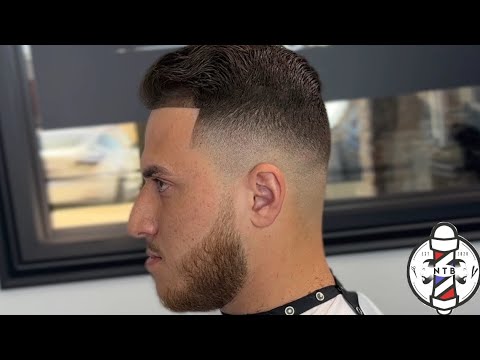
What Is A High Fade?
A high fade is a precise barbering technique where hair gradually transitions from skin or very short length starting above the temples, typically 2-3 inches from the top of the head.
The fade line sits at or above the temple points, creating maximum contrast between the sides and top. This dramatic gradient makes your facial features pop while elongating the appearance of your head shape.
When you sit in the chair, point to the exact spot where you want the fade to start—don’t just say “high.” Everyone’s temples sit at different heights, and what one barber considers high another might call mid. Showing the line removes any guesswork.
Military High Fade
Military high fades demand razor-sharp precision with zero room for error. The fade starts extremely high, often just an inch from the top, creating that signature military crispness.
This cut requires weekly maintenance to maintain regulation standards and that fresh-from-the-barber appearance.
 fade haircuts – military high fade” class=”wp-image-53443″/>
Business Professional High Fade
Business professional high fades balance edge with office appropriateness by keeping the gradient subtle. The fade starts high but maintains slightly more length through the transition zone.
Perfect for client meetings, this style projects confidence without drawing unnecessary attention to your haircut.

Clean Executive High Fade
Clean executive high fades elevate professional styling with meticulous attention to detail and perfect symmetry. The fade line sits precisely at temple height, creating a distinguished frame for mature faces.
This sophisticated cut pairs exceptionally well with grey or salt-and-pepper hair colors.

Modern High Fade Innovations
Modern high fades push creative boundaries while maintaining technical precision. These contemporary styles incorporate texture, disconnection, and artistic elements.
Today’s barbers blend traditional techniques with Instagram-worthy flair, creating cuts that photograph beautifully from every angle.
- Texture: Adds movement and dimension to flat hair
- Disconnection: Creates bold contrast between sections
- Hard parts: Defines natural part lines with razored precision
- Asymmetry: Breaks conventional rules for artistic effect

Textured High Fade
Textured high fades combine choppy, piece-y styling on top with ultra-clean faded sides. Point-cutting techniques create natural movement that contrasts beautifully against the precise fade work.
This style works best with medium-density hair and a quality texturizing paste.

Disconnected High Fade
Disconnected high fades eliminate the gradual transition, creating a stark line between the faded sides and longer top. This bold choice makes a statement, especially with dramatic length differences.
The disconnection line can be softened slightly or kept razor-sharp depending on personal preference.

High Fade With Hard Part
High fades with hard parts use a razor or trimmer to carve a definitive part line into the hair. This permanent part stays visible between cuts, eliminating daily styling guesswork.
The hard part typically runs from the front hairline to the crown, creating geometric precision.
Asymmetric High Fade
Asymmetric high fades intentionally create different fade heights on each side of the head. One side might start at the temple while the other begins higher, adding unexpected visual interest.
This avant-garde approach requires a skilled barber who understands facial balance and proportion.

🧠 Expert Advice
Request your barber use a half-guard increment between standard sizes when blending your high fade transition zones. This extra step eliminates harsh lines and creates that buttery-smooth gradient you see on professional athletes, taking only two extra minutes but delivering weeks of better-looking growth patterns.
High Fade Variations By Hair Length
Hair length variations determine how dramatic your high fade appears from different angles. Each technique creates distinct visual effects.
Understanding these variations helps you choose the right fade intensity for your lifestyle and maintenance preferences.
High Skin Fade
High skin fades take the sides down to bare skin using foil shavers or straight razors. This maximum-contrast style creates the sharpest possible transition from nothing to everything.
Expect to visit your barber every 10-14 days to maintain that fresh skin fade look.
High Taper Fade
High taper fades maintain more length throughout the sides while still creating gradual transitions. The shortest point rarely goes below a #2 guard, keeping coverage around the ears.
Conservative offices often prefer this subtler approach to the high fade trend.

High Burst Fade
High burst fades concentrate the fade effect around the ears in a semicircular pattern. The fade radiates outward like a sunburst, leaving more length at the neckline.
Mohawk and faux-hawk styles particularly benefit from this targeted fading technique.

Texture-Specific High Fade Styles
Hair texture dramatically impacts how your high fade looks and behaves throughout the day. Different textures require specialized cutting techniques.
Your barber should adjust their approach based on your specific hair type for optimal results.
High Fade For Straight Hair
Straight hair showcases high fades with laser-sharp precision since every line and gradient shows clearly. The lack of natural texture means your barber’s technique becomes the star of the show.
Adding texturizing products helps create visual interest on top.
High Fade For Curly Hair
Curly hair creates stunning volume contrast when paired with a high fade‘s tight sides. The curls spring upward and outward, emphasizing the dramatic difference between lengths.
Ask your barber to cut curly hair dry—wet curls stretch and give a false read on length. A #3 on curly hair looks closer to a #2 once it springs back, so going one guard longer than you’d use on straight hair prevents the “too short” surprise. A lightweight curl cream applied while the hair is still damp keeps definition without weighing the curls flat against the fade.
High Fade For Coily Hair
Coily hair benefits tremendously from high fades that remove bulk while maintaining the signature texture on top. The tight coils create incredible geometric shapes against the faded sides.
Regular moisturizing prevents dryness along the fade line where hair is shortest.

High Fade For Thick Hair
Thick hair requires aggressive thinning and texturizing on top to balance the high fade properly. Without proper weight removal, thick hair can create mushroom-like proportions.
Your barber should use thinning shears strategically to maintain shape while reducing bulk.

Top Style Combinations With High Fades
Top styling options transform your high fade from basic to extraordinary. Each combination creates a distinct personality and vibe.
Matching the right top style to your high fade depends on hair type and lifestyle.
“The high fade is just the canvas—what you do on top makes it a masterpiece.” – Marcus, Master Barber, Brooklyn

High Fade With Quiff
High fades with quiffs create maximum drama by sweeping hair upward and backward from the forehead. The voluminous quiff contrasts beautifully against the tight fade, drawing eyes upward.
Strong-hold pomade keeps that quiff standing tall all day.
High Fade With Pompadour
High fades modernize the classic pompadour by replacing traditional full sides with contemporary faded edges. This combination balances vintage style with current trends perfectly.
The key lies in maintaining enough length on top for that signature pompadour sweep.
High Fade With Crew Cut
High fades with crew cuts deliver military-inspired precision with minimal maintenance requirements. The short, uniform top length creates a no-nonsense aesthetic that works anywhere.
This combination suits active lifestyles and wash-and-go morning routines.
Not sure what your face shape is? Our Face Shape Detector figures it out in 4 quick questions.

High Fade With Buzz Cut
High fades with buzz cuts create subtle dimension on extremely short hairstyles. The fade adds visual interest to what would otherwise be a uniform length all over.
Perfect for hot climates or anyone seeking the ultimate low-maintenance style.

High Fade With Slick Back
High fades with slick backs offer sophisticated style suitable for formal occasions. The hair sweeps straight back from the forehead, creating a sleek, polished appearance.
Water-based pomades provide hold without the greasy residue of traditional products.

High Fade With Comb Over
High fades refresh the traditional comb over with modern barbering techniques. The deep side part combined with faded sides creates a contemporary professional look.
This versatile style transitions seamlessly from office to evening events.

Afro High Fade
Afro high fades showcase natural texture on top while maintaining clean faded sides. The spherical afro shape creates dramatic contrast against the tight fade for iconic visual impact.
Pick maintenance keeps the afro shaped between appointments.

Maintenance And Styling Tips
Proper maintenance extends the life of your high fade between barber visits. Daily care and smart product choices make the difference.
These practical tips keep your cut looking professionally done for weeks.

Daily High Fade Styling
Daily styling starts with damp hair and the right product for your desired finish. Work product through from roots to ends, then style using a blow dryer for added volume.
Finish with a light misting of hairspray to lock everything in place.
Product Selection For High Fades
Product selection depends on your hair type and desired finish. Pomades offer shine and strong hold, while clays provide texture with a matte finish.
Start with less product than you think you need—you can always add more.

Touch-Up Frequency Guidelines
Touch-up frequency varies based on how quickly your hair grows and your tolerance for fuzzy edges. Most high fades need refreshing every 2-3 weeks to maintain crispness.
The tell-tale sign you need a touch-up: a visible line where the fade ends and longer hair begins. Once that line appears, the grow-out has passed the point where it looks intentional. If you’re on a budget, ask for a “fade cleanup” rather than a full cut—most barbers charge less since they’re only re-blending the sides and back.

Explore More Fade Styles
Fade Haircuts (Complete Guide)
Low Fade
Mid Fade
Skin Fade
Drop Fade
Taper Fade
Low Fade for Black Men
Blonde Low Fade
Low Fade Designs
Short Hair + Low Fade
Long Hair + Low Fade
Curly Hair + Low Fade
High Fade for Boys
Asian Low Fade
Buzz Cut
Taper vs Fade
High Fade vs. Low Fade: Which One Should You Choose?
I get this question daily, and the answer depends on two things: your face shape and your lifestyle. A low fade keeps things subtle — the blend starts near the ear and grows out gracefully over 2-3 weeks. A high fade is the opposite: maximum contrast, maximum impact, but it needs attention every 1-2 weeks to stay sharp.
If you work in a conservative office or prefer a laid-back look, start with a low fade. If you want your haircut to be the first thing people notice — go high. Still not sure? Check my full taper vs fade breakdown.
🎬 HOW TO DO A PERFECT HIGH FADE!
Ready to Find Your Perfect Cut?
You’ve read about the styles. Now find the one that fits YOUR face shape, hair type, and lifestyle.
FAQs
How Often Should I Get My High Fade Touched Up?
Most high fades require touch-ups every 2-3 weeks to maintain that fresh appearance. Fast growers might need weekly visits, while slower growth allows monthly appointments.
Your personal standards and lifestyle determine the ideal frequency.
What’s The Difference Between A High Fade And Mid Fade?
High fades start above the temples, typically 2-3 inches from the top. Mid fades begin at temple level, creating a less dramatic but still clean look.
The choice depends on face shape and desired contrast level.
Can A High Fade Work With Thinning Hair?
High fades actually help thinning hair by removing bulk from sides and focusing attention on fuller top areas. The contrast creates an illusion of density where it matters most.
Keep the top at a #3 or #4 maximum—anything longer tends to lie flat and show scalp through the hair. A textured crop paired with a high fade is one of the best combinations for thinning hair because the short, choppy texture creates the illusion of fullness where it counts.
What Guard Sizes Are Used For High Fades?
High fades typically start with no guard (0) at the bottom, progressing through #1, #1.5, and #2 guards. Some barbers use half-guards for smoother blending between lengths.
The exact progression depends on desired gradient and hair density.
REFERENCES:
Fades have been around forever and they’re not going anywhere soon, so you might be curious about trying one out for the first time. Source
One of the coolest haircuts of all time. Made famous by Big Daddy Kane and Kid from Kid N’ Play in the late 80’s. source
High Fade Haircut: Explore our specially curated collection focusing on high fade haircuts for men. source
Was this article helpful?

Khamis Maiouf is a professional barber who graduated from Hinckley College in England with a Level 3 qualification in hairdressing. With over 20 years of experience, he is an award-winning barber who has mentored numerous students and styled thousands of clients. A recognised expert featured on StyleCraze (20M+ readers).
Credentials: Level 3 Hairdressing (Hinckley College, UK) • 20+ Years Professional Experience • Featured Expert on StyleCraze • Founder of Book of Barbering