
— Award-Winning Barber · 20+ Years Experience · Level 3 Qualified
A receding hairline doesn’t need to be hidden — it needs to be managed. And a buzz cut is the single most effective way to do it. When the hair around your recession is long, every thin spot and uneven temple gets amplified.
Shorten everything to a uniform length and suddenly the recession blends into the overall shape of your head. I’ve been helping guys work with receding hairlines for over 20 years, and the ones who go shorter always wish they’d done it sooner.
Key Takeaways
Concerned about thinning? Our Hair Loss Risk Quiz helps you understand where you stand — 8 quick questions, no email needed.
- A uniform buzz cut minimises recession by removing the length contrast around temple areas
- Number 1–2 guards make mild to moderate recession virtually invisible
- A high fade with a short buzz on top redirects the eye to the sharp fade line, not the hairline
- Avoid comb-overs or longer tops that create obvious contrast with a receding front
- Pair with a well-groomed beard to shift the focal point of your face downward
High Fade Hairline Solutions
High fades create optical illusions that minimize temple recession instantly. The fade starts above your temples, essentially erasing the contrast between receded and non-receded areas.
Your barber should begin the fade at temple height or slightly above. This placement makes recession look intentional rather than genetic.
- Temple blend: Start fade 1 inch above ear tops
- Gradient control: Use #1.5 guard for smooth transitions
- Keep crown length at #3 maximum
- Request diagonal fade lines, not horizontal
Temple Recession Blending
Temple blending requires clipper-over-comb technique at the recession points. Your barber should create a curved transition that follows your natural hairline shape.
The key is gradual length reduction from #2 at the crown to skin at temples. This eliminates harsh lines where recession meets fuller hair zones.

Strategic Fade Heights
Position your fade start point exactly where recession begins for maximum camouflage. Most men need the fade initiated 2-3 inches above ear level.
Ask for a “drop fade” variation if your recession is asymmetrical. This technique adjusts fade height on each side independently for balanced appearance.

🎯 Precision Points
Target three critical zones: temple corners, crown transition, and nape blend point. Each zone needs different guard lengths for seamless integration.
Temple corners get #0.5 guard, crown transitions use #2, nape blends with #1. These specific measurements create professional-grade recession disguise every time.

Sharp Line-Up Techniques
Line-ups redefine your hairline artificially, creating sharp angles that distract from natural recession. The technique involves precise razor work along forehead and temple edges.
Skip curved line-ups entirely—straight edges with slight angles work better for receding hairlines. Your barber should create subtle corners rather than dramatic shapes.

Natural Hairline Enhancement
Enhancement means working with your existing hairline, not against it. Follow your natural growth pattern but sharpen the edges for definition.
Request “soft line-up” technique where edges are defined but not carved deeply. This maintains authenticity while adding structure to receded areas naturally.

Edge Control Methods
Edge control starts with proper trimmer angle—45 degrees against the skin creates cleanest lines. Your barber should use T-outliner trimmers exclusively for precision.
Daily maintenance requires edge brush and light pomade application. Brush edges forward each morning, applying product only to the hairline perimeter.

🧠 Expert Advice
Request your barber to create a “floating line-up” that sits slightly behind your natural hairline. This technique prevents further recession from trimmer trauma while maintaining sharp edges. The 2mm setback gives you cleaner lines that last longer between cuts.
Optimal Buzz Cut Lengths
Length selection determines whether recession stands out or blends seamlessly. The sweet spot sits between #1.5 and #2.5 guards for most recession patterns.
Shorter lengths minimize contrast between thin and thick areas. Going too short exposes scalp irregularities, while too long emphasizes density differences.
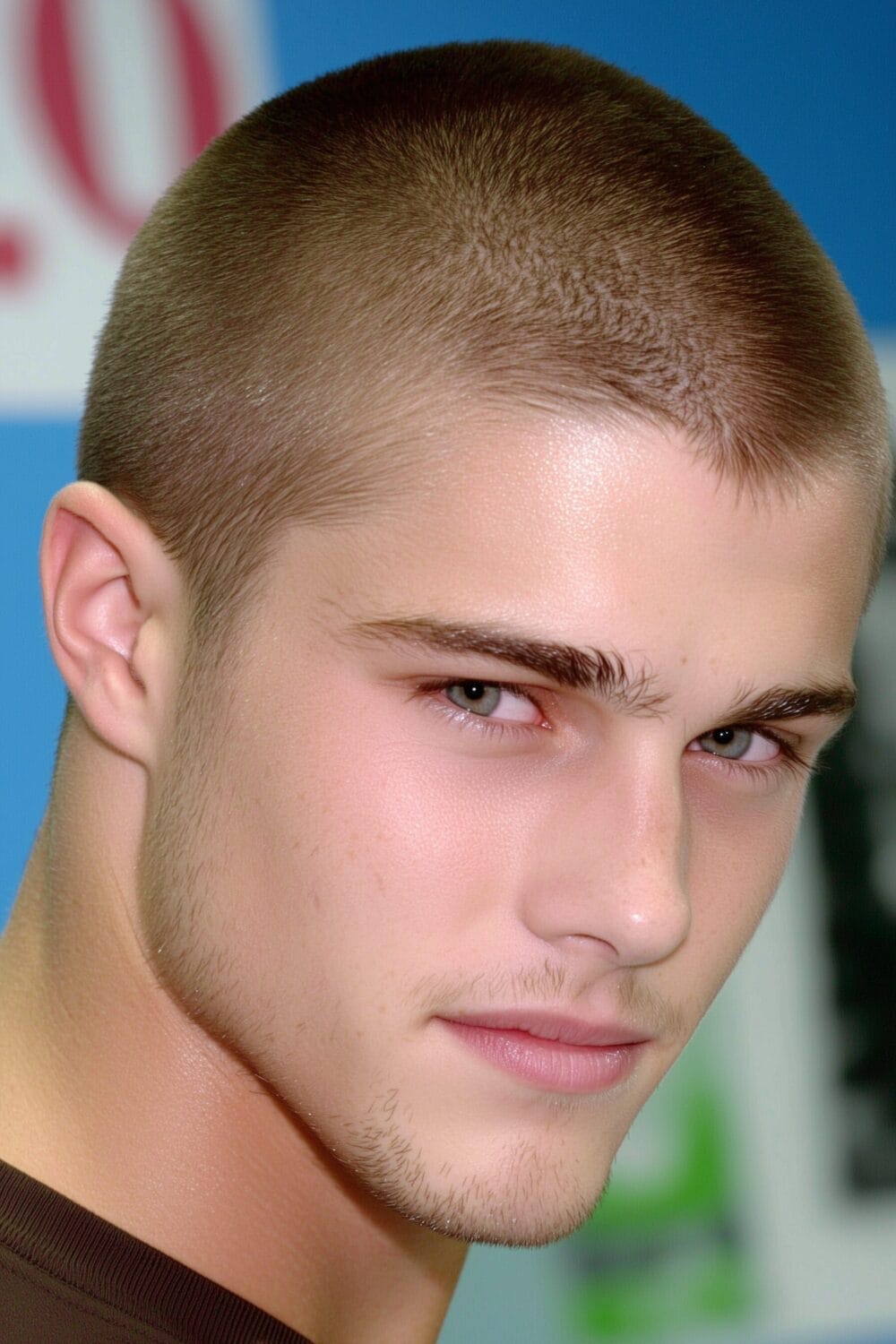
Number 2 for Recession
Number 2 guard (6mm) offers ideal recession coverage for most men. This length maintains enough density to avoid scalp show-through while keeping maintenance simple.
The #2 creates uniform appearance across varying hair densities. Temple areas blend naturally with crown coverage at this specific length setting.

Gradual Length Transitions
Transitions should flow from #2.5 on top to #1 at sides seamlessly. Each guard change represents a half-step reduction for smoothest gradient possible.
Your barber needs three different guards minimum: #2.5 for crown, #1.5 for middle transition, #1 for lower sides and back areas.

⚠️ Common Mistake
Going too short everywhere creates a “tennis ball” effect that highlights recession worse than longer cuts. Many men request #1 all over thinking shorter hides more, but this exposes every imperfection. Stick with #2 minimum on top, then fade sides gradually.
Mid Fade Recession Fix
Mid fades offer perfect balance for moderate recession patterns. The fade starts at temple level, creating natural continuity with receding areas.
This technique works best when recession hasn’t progressed past mid-scalp. The gradual blend masks density changes without dramatic contrast shifts.
“Mid fades are the Swiss Army knife of recession solutions—versatile enough for any pattern.” – Master Barber testimonial
Blending Receded Areas
Blending requires feathering technique using clipper rocking motions. Your barber should create micro-transitions every 2mm through the recession zone.
The blend zone spans from highest recession point down to ear level. This extended gradient eliminates obvious demarcation lines between hair densities.

Shadow Effect Creation
Shadow effects use strategic length variations to create depth illusion. Slightly longer hair at recession edges casts subtle shadows that minimize apparent hair loss.
Keep recession borders at #1.5 while dropping to #1 immediately adjacent. This quarter-guard difference generates enough shadow for effective camouflage.

🧠 Expert Advice
Ask your barber to “float” the mid fade by starting it exactly where your recession begins, not at a predetermined height. This customization ensures the fade works with your specific pattern. Mark the spot with your finger during consultation for precision.
Skin Fade Transformations
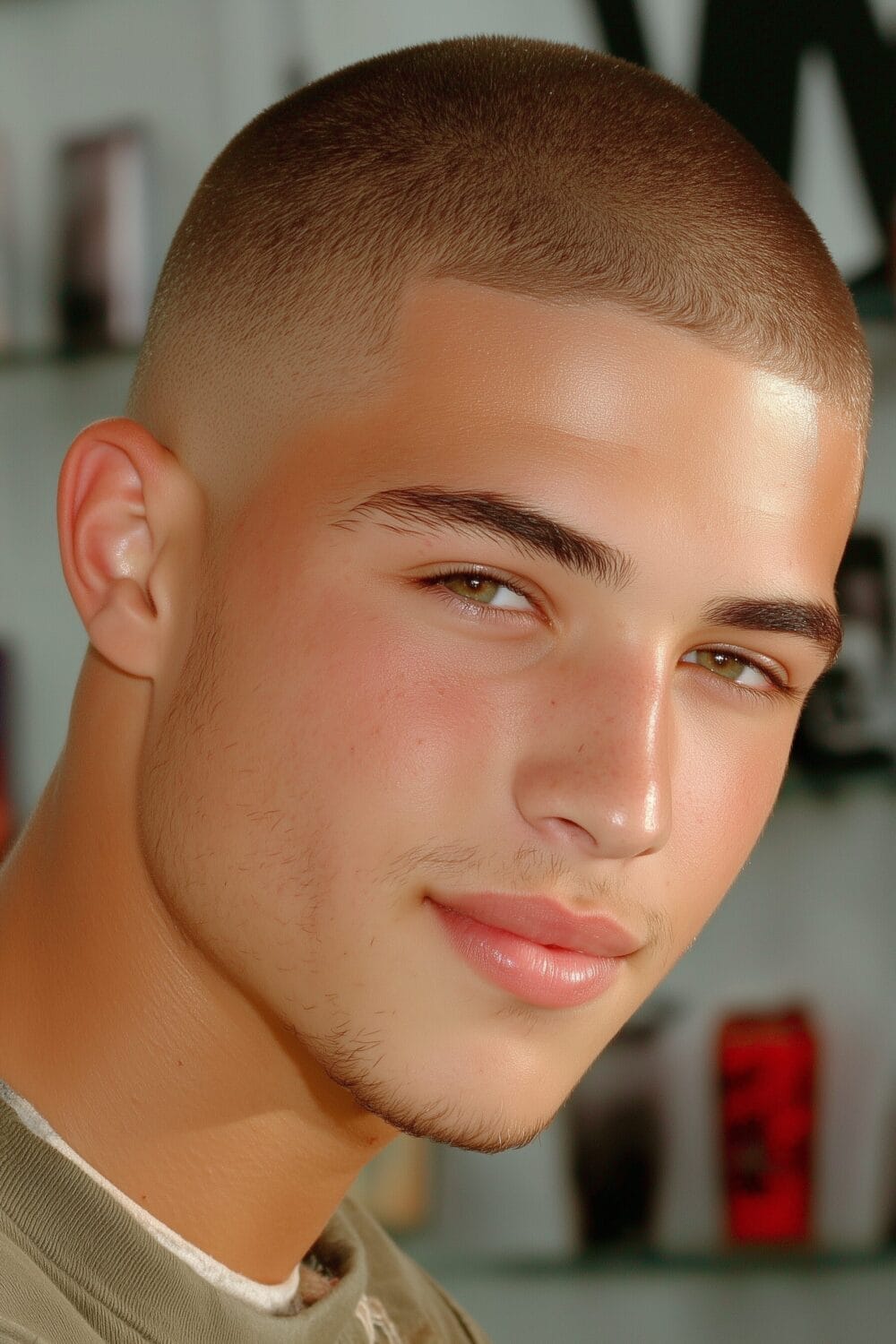
Skin fades eliminate recession visibility by removing the reference point entirely. When sides blend to skin, temple recession becomes part of the intended style.
The transformation works through contrast elimination—no hair at sides means no comparison point for thinning temples. This creates cohesive, intentional appearance.

Complete Recession Camouflage
Complete camouflage happens when skin fade extends past recession points. Your barber should fade to skin starting 1 inch below highest recession.
This technique makes recession indistinguishable from the fade itself. The bald gradient appears deliberate rather than genetic, changing the entire narrative.

✅ Success Indicators
Successful skin fades show zero harsh lines between recession and fade zones. The transition should feel smooth when you run your hand upward.
Check mirror angles—if recession disappears from side view, the fade works. Front view should show balanced proportions without obvious thin spots.
Buzz Cut Styling Fixes
Styling transforms basic buzz cuts into textured, professional looks. The right products and techniques add dimension where recession creates flatness.
Focus on creating movement and texture rather than coverage. Strategic product placement enhances remaining hair without highlighting what’s missing.

Texture Addition Methods
Add texture using matte clay applied with fingertips in circular motions. This technique lifts hair slightly, creating fuller appearance despite shorter length.
Work product into dry hair for maximum texture. Wet application flattens the buzz cut, emphasizing scalp visibility and recession patterns.
Not sure which style suits you best? Our Haircut Finder Quiz matches you with the right cut based on your face shape and hair type — takes 60 seconds.

Product Application Zones
Apply product primarily to crown and front-center areas where hair remains densest. Skip temple zones entirely—product there emphasizes thinness.
Use dime-sized amount maximum, focusing on hair tips only. Root application weighs down short hair, creating flat, sparse appearance overall.
⚠️ Common Mistake
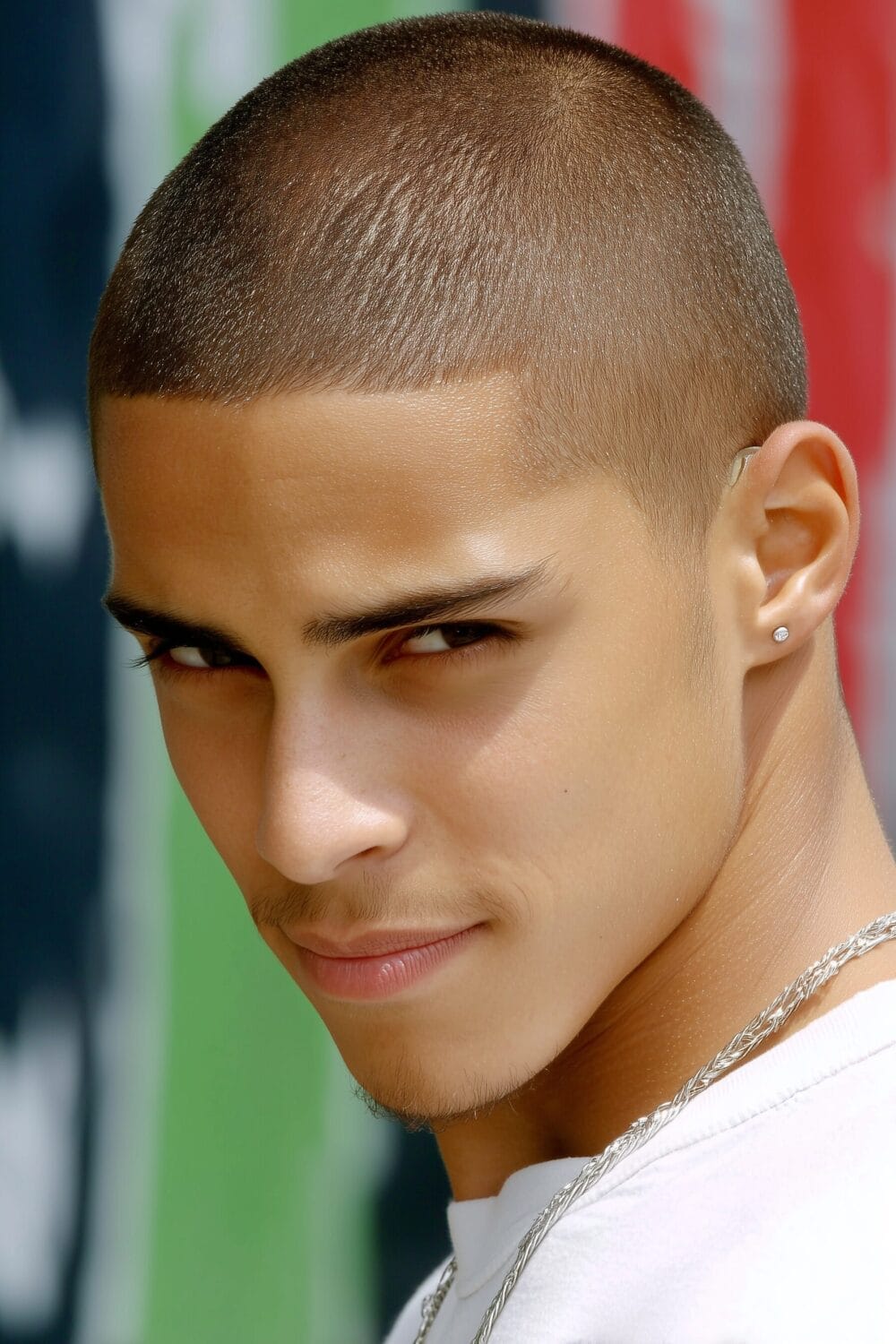
Using shine-based products on buzz cuts with recession makes thinning areas more obvious. Glossy finishes reflect light off the scalp, highlighting sparse zones. Choose matte products exclusively—they absorb light and create density illusion through texture.
Confidence-Building Cuts
Confidence comes from owning your recession rather than hiding it. Military and executive buzz variations project authority while managing hair loss.
These cuts signal intentional grooming choices, not compromise. The precision required shows attention to detail and self-care investment.

Military-Inspired Precision
Military cuts feature exact specifications: #2 on top, high-and-tight sides, squared neckline. This uniformity creates powerful, controlled appearance regardless of hairline.
Request “regulation cut” for authentic military precision. Barbers know this means zero deviation from standard measurements and razor-sharp lines.

Executive Buzz Variations
Executive buzzes add subtle length variation for sophistication. Keep #3 on top transitioning to #1.5 on sides with soft taper.
This variation works in conservative environments while managing recession. The slightly longer top maintains professional appearance without requiring styling effort.

Maintaining Your Transformation
Maintenance determines whether your recession solution looks fresh or grown-out. Consistent upkeep prevents the awkward in-between phase that exposes thinning.
Schedule cuts based on growth rate, not calendar dates. Most men need adjustments every 10-14 days for optimal recession management.

Weekly Touch-Up Schedule
Weekly touch-ups focus on neckline and edges exclusively. These areas grow fastest and show recession first when neglected.
Invest in quality trimmers for home maintenance between cuts. Clean up edges twice weekly, saving full cuts for biweekly professional visits.

Fade Refresh Timeline
Fades need refreshing every 2 weeks maximum to maintain recession camouflage. After 14 days, growth reveals density differences between zones.
Book standing appointments to ensure consistency. Same-day, same-time scheduling means your fade never reaches the obvious grow-out stage.

Norwood Scale: Matching Buzz Length to Recession Stage
The Norwood scale classifies male pattern baldness from stage 1 (minimal recession) to stage 7 (extensive loss). Knowing your stage helps you choose the right buzz length.
Norwood 1–2 (minor temple recession): A number 3–4 buzz cut makes recession virtually invisible. The slightly longer length provides enough coverage that the temples don’t stand out.
Norwood 3–4 (noticeable recession, possible crown thinning): Number 2 is ideal. Short enough to minimise contrast between thick and thin areas, long enough to maintain some texture. A high fade amplifies the effect by drawing the eye to the clean edges rather than the hairline.
Norwood 5+ (significant loss on top): Number 1 or no guard. At this stage, the goal shifts from hiding recession to embracing a clean, minimal look. The shorter you go, the less noticeable the pattern becomes. Many of my clients at this stage combine the buzz with a well-groomed beard to shift the visual focal point entirely.
Check Your Hair Loss Risk
Wondering if what you’re seeing is normal? Get a personalised assessment in under 2 minutes.
🎬 Top 5 Actors Who Are Receding Hairline Masters! Steal their 4 key tricks!
FAQs
Best fade for receding temples?
High skin fade works best for receding temples. Start the fade exactly where recession begins, typically 2-3 inches above the ears.
This placement eliminates the contrast between thinning temples and fuller sides. Ask for a gradual taper from skin to #2 guard for smoothest results.

How short for hairline recession?
Use #2 guard (6mm) as your minimum length for hairline recession. This length provides enough coverage to minimize scalp visibility while maintaining easy maintenance.
Going shorter than #1.5 often emphasizes thinning areas rather than concealing them. Combine with a fade for best results.
Will buzz cut hide recession?
Buzz cuts minimize recession appearance by reducing contrast between thin and thick areas. While they don’t hide recession completely, they make it less noticeable by creating uniform length. The key is choosing the right length (#2-#3) and adding a complementary fade technique.
Explore More Buzz Cut Guides
Was this article helpful?

Khamis Maiouf is a professional barber who graduated from Hinckley College in England with a Level 3 qualification in hairdressing. With over 20 years of experience, he is an award-winning barber who has mentored numerous students and styled thousands of clients. A recognised expert featured on StyleCraze (20M+ readers).
Credentials: Level 3 Hairdressing (Hinckley College, UK) • 20+ Years Professional Experience • Featured Expert on StyleCraze • Founder of Book of Barbering