

Most guys who walk in asking for a military haircut actually want one of about seven completely different styles — and picking the wrong one can mean looking like you just shipped out to boot camp when all you wanted was a clean professional cut.
This guide breaks down every military-inspired style from regulation high-and-tights to modern civilian fades, so you can tell your barber exactly what you need.
Key Takeaways
- Military haircuts range from skin-tight induction cuts to civilian-friendly regulation fades — each branch has different length requirements
- The high-and-tight remains the most recognized military style, but mid-fades and crew cuts pass inspection while looking less extreme
- Face shape matters more than you think — round faces benefit from high fades that add vertical length, while square faces work with almost any military style
- Expect weekly barber visits for true regulation cuts or biweekly for civilian adaptations — these styles demand the highest maintenance of any men’s cut
- Tell your barber the specific guard numbers and fade height you want — “give me a military haircut” is too vague and leads to inconsistent results
How To Ask Your Barber For a Military Cut
Walking in and saying “give me a military haircut” is the fastest way to leave disappointed. That phrase means something different to every barber, and you’ll get whatever their default interpretation is.
Instead, bring a reference photo and use specific language. Tell your barber the exact fade height (low, mid, or high), the guard number for the sides (usually #0 to #1 for true military), and how much length you want on top in inches — not vague terms like “short” or “a little off the top.”
Here’s what works in my chair: “I want a high fade starting two fingers above the ear, skin on the sides blending to a #1, with half an inch on top.” That gives your barber zero room for interpretation.
If you have thin or thinning hair, mention it upfront. Military cuts expose the scalp more than most styles, and your barber may recommend a slightly longer guard to avoid showing too much skin through the hair.
Best Military Haircut For Your Face Shape
I tell every client the same thing before we start: your face shape determines which military cut will actually look good on you versus which one will make your head look like a tennis ball.
Oval faces have the easiest time — nearly every military style works, from buzz cuts to regulation fades. You can go as short as you want without worrying about proportion issues.
Round faces need height on top to create the illusion of length. A high-and-tight or high fade with 1-2 inches on top works best. Avoid uniform buzz cuts that emphasize the circular shape — check our men’s haircuts for round faces guide for more options.
Square faces work well with almost any military cut because the angular jawline provides natural structure. Mid-fades and crew cuts complement the jaw without competing with it.
Oblong faces should avoid too much height on top. Keep the crown shorter and the sides slightly longer than standard military length. A low fade or military taper prevents your face from looking stretched.
If you have wavy or textured hair, factor that into your decision — wavy hair adds natural volume on top, which means you can go shorter than you think and still get a full look.
Military Haircut Foundation Standards
Military haircuts follow strict protocols that go beyond simple length requirements. Each branch enforces specific measurements that barbers must execute with zero margin for error.
The foundation starts with understanding bulk versus length. Military regulations measure both the hair’s thickness when combed and its actual extended length.
- Army (AR 670-1): 2 inches max on top, tapered sides similar to classic army buzz cuts — the most common military low fade standard
- Marines (MCO 1020.34H): 3 inches max, zero-fade mandatory — see our full marine haircuts guide for USMC-specific styles
- Navy (NAVPERS 15665): 4 inches max, clean neckline required
- Air Force (AFI 36-2903): 2.5 inches max, natural taper — the most relaxed branch standard

Regulation Length Requirements
Military length standards specify exact measurements for top, sides, and back. The top cannot exceed prescribed limits when fully extended, measured from the scalp.
Side lengths must graduate from skin to no more than 1/8 inch at the temples. This creates the signature military silhouette that maintains uniformity across all service members.

📏 Precision Measurements
Guards determine everything in military cuts—#000 for skin fades, #1 for regulation sides. The transition zone between lengths spans exactly 1/2 inch for proper blending.
Understanding haircut numbers and guard sizes is essential — each number corresponds to a specific blade length that determines your final look.
Barbers use tension techniques to ensure consistent length. Pull hair perpendicular to the head, measure, then cut at the regulation point without variance.

Sharp Military Fade Techniques
Military fades require mechanical precision that civilian cuts rarely achieve. The gradient must be invisible to pass inspection, with no visible lines or weight buildup.
Clippers become surgical instruments in military work. Each guard change creates a micro-transition that builds the overall fade architecture from skin to regulation length.

High-and-Tight Military Execution
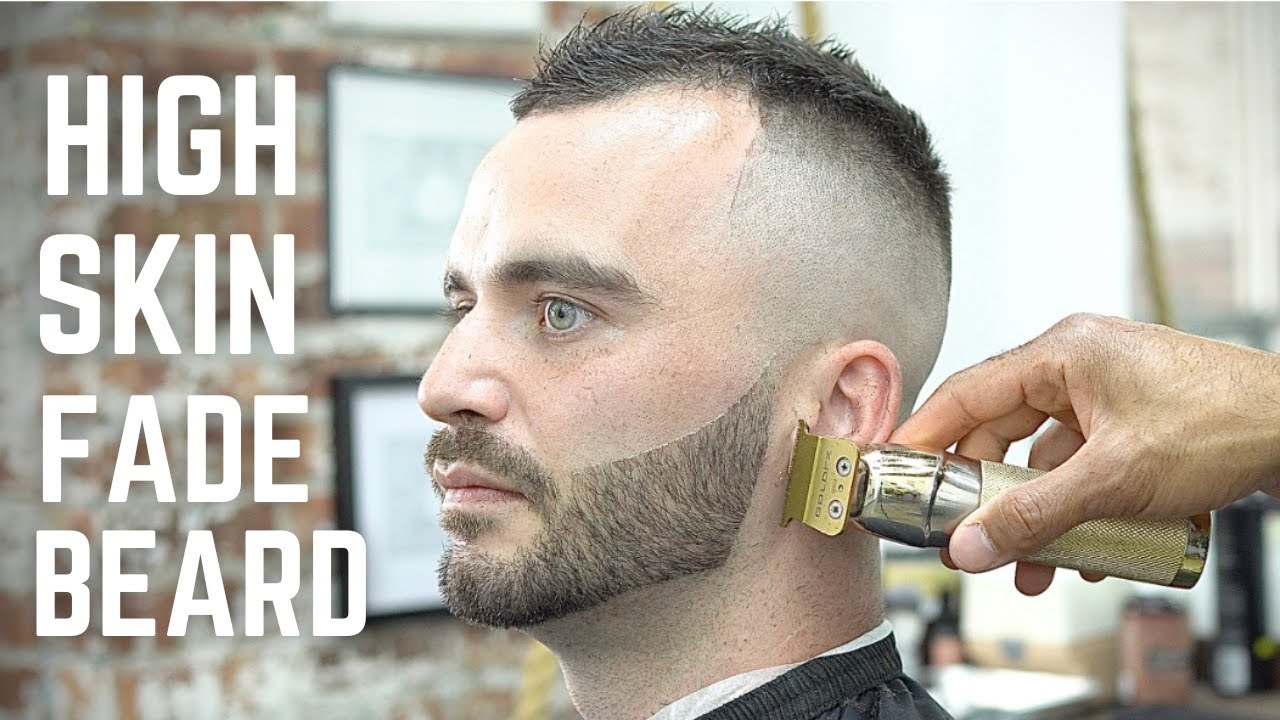
High-and-tights start with a #00000 blade creating complete skin exposure from ears down. The transition line sits exactly two fingers above the ear top.
Top length stays uniform at 1/4 to 1/2 inch maximum. This extreme contrast defines the high-and-tight’s aggressive military aesthetic — explore more high and tight fade variations that eliminates all unnecessary bulk.

Military Taper Precision
Military tapers graduate from skin to #1 guard over a 2-inch vertical span. The fade line follows the head’s natural curve without deviation or creative interpretation.
Barbers must maintain consistent pressure throughout each pass. One heavy-handed stroke destroys the taper’s mathematical progression that inspectors check with calipers.

Military Haircut Line Work
Line work transforms a basic military cut into inspection-ready precision. Every edge must be razor-sharp, with corners squared to exact 90-degree angles.
Military line work follows geometric principles rather than natural hairlines. Trimmers become drafting tools that create architectural edges around the entire perimeter.
Perfect military edges last 72 hours maximum before requiring touch-ups—daily shaving maintains inspection standards.

Edge-Up Military Standards
Military edge-ups create straight lines from temple to temple across the forehead. Natural hairline curves get eliminated in favor of angular precision.
Trimmers must be zero-gapped for true skin contact. The lineup extends exactly 1/8 inch beyond the natural hairline to ensure longevity between cuts.

Professional Military Variations
Professional environments accept modified military cuts that maintain structure while softening extreme elements. These adaptations keep military discipline without intimidating civilian colleagues.
The key lies in preserving clean lines while allowing slightly more length. Professional military variations typically add 1/2 inch overall while maintaining fade precision.

Corporate Military Adaptation
Corporate military styles extend top length to 1-2 inches while keeping sides tight. The fade starts lower, creating a less aggressive silhouette for boardroom settings.
A modified crew cut is the most popular corporate military adaptation because it maintains structure without looking overly aggressive.
Edges stay clean but follow natural hairlines rather than geometric shapes. This balances military precision with approachable professional styling.

Business Military Styling
Business military cuts incorporate subtle texture on top through point cutting. Sides maintain military-grade fades but transition more gradually into longer top sections.
Styling products add controlled movement that regulation cuts prohibit. A matte paste provides hold without the wet look that violates military grooming standards.

⚠️ Common Mistakes
Civilians request “military cuts” but panic at true military lengths, asking barbers to leave extra length that destroys the style’s foundation. This creates an awkward hybrid that satisfies nobody. Commit to proper proportions or choose a different cut entirely—military styles don’t work halfway.
Military Haircut Maintenance Reality
Military cuts demand the highest maintenance commitment of any men’s hairstyle. Weekly barber visits become non-negotiable for maintaining regulation standards.
Between professional cuts, daily grooming prevents stubble accumulation that destroys clean lines. Military maintenance isn’t optional—it’s the price of precision.
Not sure what your face shape is? Our Face Shape Detector figures it out in 4 quick questions.

Weekly Military Touch-Ups
Weekly touch-ups focus on three areas: neckline cleanup, edge restoration, and fade refreshing. Each session takes 15-20 minutes when performed by skilled military barbers.
Necklines require complete reshaving every 3-4 days. Edges need trimmer work every 5 days to maintain geometric precision.

Home Military Maintenance
Home maintenance requires professional-grade tools: zero-gap trimmers, multiple guard sizes, and hand mirrors. Daily neckline shaving prevents stubble shadow below the fade line.
Edge touch-ups using trimmer corners maintain line crispness between appointments. Practice the rocking motion that prevents accidental line erosion.

Professional Military Schedule
Active military personnel visit barbers every 5-7 days without exception. Veterans maintaining military cuts schedule appointments every 10-14 days maximum.
Missing one appointment creates visible deterioration that requires complete recutting. Military cuts can’t be “stretched” like civilian styles—they’re either perfect or unacceptable.

Transitioning From Military Cuts
Growing out military cuts requires patience through awkward phases that test your commitment. The transition from skin-short to civilian length takes 8-12 weeks minimum.
Strategic trimming during growth maintains shape while adding length. Skip one maintenance cut to begin the transition, then reshape rather than reduce.

Growing Out Military Styles
Month one focuses on top growth while maintaining clean sides. Let the crown and front add length while keeping fades fresh through weekly edge work.
Month two introduces texture through point cutting as length permits. Sides can begin growing but require careful blending to avoid mushroom shapes.
✅ Transition Timeline
Weeks 1-2 feel identical to normal military maintenance. Weeks 3-4 bring awkward cowlicks as hair fights trained growth patterns.
Weeks 5-8 allow basic styling with light products. Weeks 9-12 achieve enough length for civilian cuts like textured crops or short quiffs.

Ready to Find Your Perfect Cut?
You’ve read about the styles. Now find the one that fits YOUR face shape, hair type, and lifestyle.
FAQs
How often for military haircut maintenance?
Active military requires weekly cuts to maintain regulation standards without exception. Veterans keeping military styles need appointments every 10 days maximum.
Daily home maintenance between cuts includes neckline shaving and edge touch-ups. Missing even one week creates visible deterioration that fails inspection standards.
Best military cut for civilians?
Mid-fade military cuts work best for civilians wanting military aesthetics without extreme commitment. Keep 1-2 inches on top with a gradual fade starting at temple level.
This provides military structure while allowing styling options. The maintenance drops to biweekly instead of weekly, making it sustainable for civilian schedules.
Military haircut at regular barbershop?
Most barbershops can execute basic military cuts, but precision varies dramatically. Ask specifically about zero-gapping their trimmers and experience with regulation measurements.
Military base barbershops remain the gold standard for authentic cuts. Civilian shops near bases often employ veterans who understand true military specifications versus approximations.
What is the standard military haircut called?
The standard military haircut goes by different names depending on the branch. In the Army, it’s called a regulation cut — tapered sides with up to 2 inches on top. Marines default to the high-and-tight with skin-shaved sides and minimal top length. The induction cut is what every recruit gets on day one of basic training regardless of branch — a uniform buzz at the shortest guard setting.
For civilians, “military haircut” usually means any clean fade with short sides and a structured top.
What is the difference between a military cut and a crew cut?
A crew cut is one specific style within the broader military haircut family. Crew cuts keep uniform length on top (usually 1/2 to 1 inch) with tapered sides and no hard lines.
Military cuts as a category include much more aggressive options like the high-and-tight, induction cut, and regulation fade — each with strict length requirements that crew cuts don’t follow. The crew cut is the most civilian-friendly military style because it requires less maintenance and works with nearly every face shape and hair type.
Related Guides
Was this article helpful?

Khamis Maiouf is a professional barber who graduated from Hinckley College in England with a Level 3 qualification in hairdressing. With over 20 years of experience, he is an award-winning barber who has mentored numerous students and styled thousands of clients. A recognised expert featured on StyleCraze (20M+ readers).
Credentials: Level 3 Hairdressing (Hinckley College, UK) • 20+ Years Professional Experience • Featured Expert on StyleCraze • Founder of Book of Barbering