
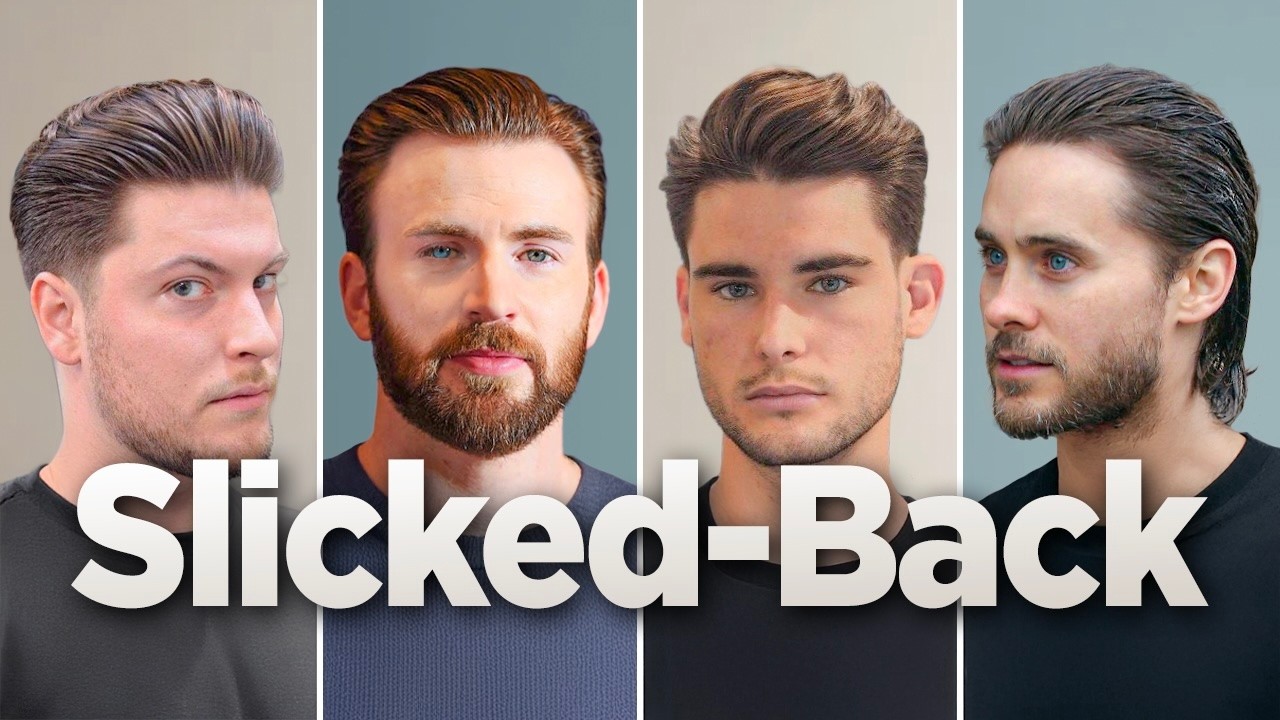
Nine out of ten guys who sit in my chair asking for a slick back are worried about the same thing: they don’t want to walk out looking like a helmet-headed 1920s throwback. That worry is fair — but outdated. The 2026 version of this cut is softer, matte, and pushed back with the fingers instead of glued down with a comb.
Below are the 20 slicked back hairstyles I actually recommend to clients today — from boardroom-quiet classics to burst-fade undercuts with real edge. Each one has a length range, a product I’d reach for, and what to say to your barber so you don’t end up with the wrong version.
Key Takeaways
- Slicked back hair works for every hair type — straight, wavy, curly, and even thin hair can pull it off with the right product and technique.
- You need at least 4–6 inches on top to slick back comfortably. Shorter than that and the hair won’t hold direction.
- Product choice determines the finish: pomade for shine, clay for matte texture, gel for maximum hold throughout the day.
- Modern slick backs don’t have to look greasy — textured, disconnected, and faded variations give a relaxed, current look.
- Bring a reference photo to your barber and specify exactly what you want on the sides (fade, undercut, or taper) for the best result.
Traditional Slick Back
The traditional slick back is the anchor every other version on this page borrows from. I’m leaving 4 to 6 inches on top, tapering the sides down to a #3 or #4 guard, and combing everything straight back from the front hairline. Damp hair, water-based pomade the size of a 10p coin, warm blow-dry to set direction, then a fine-tooth comb to close it up.
It suits square and oval faces best, and it’s still the safest option for interviews, weddings and formal work. If your hair is board-straight and fine, add a pre-styling cream underneath the pomade for grip — otherwise it slips forward by lunchtime.
Ask for: “Leave 4–6 inches on top, taper the sides on a #3, no fade — I’m styling it straight back with pomade.”
Modern Slick Back
This is the version 8 out of 10 clients want now. Same shape as the classic, but finished with matte clay or paste instead of shiny pomade — and pushed back with the fingers, not a comb. That single change is what separates a 2026 slick back from a 2016 one. It looks lived-in instead of lacquered.
I keep the top a touch shorter (3–5 inches) so the natural texture reads, and I’ll rough-dry it upside down for volume before applying product. Best product on the shelf right now for this: a matte medium-hold clay — Layrite Cement Clay, Uppercut Matt Clay, or American Crew Whip if the hair is fine.
Slicked Back Undercut
Full disconnect between top and sides — no gradient, no blend. Sides and back come down to a #1 or skin, and the top stays long enough (4–5 inches minimum) to slick straight back and cover the join. The contrast is the point.
This one has quietly stayed in demand for over a decade because it hides two things well: uneven density on top, and a slightly weaker jawline. The sharp visual line does the work. I recommend it most for straight-to-wavy hair — heavy curls don’t sit flat enough over a hard undercut.

Slick Back Fade
Same slick-back top, but the sides gradient down instead of dropping off a cliff. If the traditional cut is 2000s and the undercut is 2010s, the fade is where the style lives in 2026. Low fade for anyone in a conservative job, mid fade for most guys, high fade if you want the top to shout.
The current-year detail: ask your barber to keep the fade “soft blended, no line.” The sharp-lined skin fade of a couple of years ago has softened. Burst fades around the ear paired with a slick back are the single most-requested version in my chair right now.
Ask for: “Slick back on top, mid fade on the sides, keep it soft blended — no hard line.”

Short Slick Back
Keep 2–3 inches on top and you’ve got the low-maintenance option. Air-dry, one fingertip of clay, push it back — done in 40 seconds. Because there’s less length, you don’t need to fight the hair to hold direction, so it’s forgiving for beginners and for straight-hair guys whose slick backs tend to fall forward.
This is also the version I quietly recommend to clients who are early into a receding hairline. Shorter length on top brings the temples and the fringe into the same visual weight — the recession stops being the loudest thing in the mirror. See our receding hairline cut guide for the full playbook.
Medium Length Slick Back
4 to 5 inches is the sweet spot — enough length for the hair to flow back with real weight, not so much that it becomes a project. I use this length for most first-time slick-back clients because it’s reversible: on a lazy day you can wear it forward or side-parted without looking like you gave up.
Works with almost every hair type, though very coarse or afro-textured hair usually needs a blow-out step first. Skip a haircut every 4–5 weeks and you’re still in good shape.

Long Slick Back
Past the collar, real flow. This is the “old money” long slick back you’re seeing on Milan and TikTok feeds right now — deliberately soft, brushed back off the face, worn slightly damp-looking. Weight of the hair does most of the work; a small amount of light pomade or a leave-in cream is usually enough.
Commitment cost is real: 8–12 months of growing out, weekly deep conditioning, and honest maintenance trims every 6–8 weeks so the ends don’t split. Not a cut for someone who hates fuss — but on the right head shape it’s the most impressive version on this list.

Slicked Back Man Bun
Sides and top get slicked tight to the head, then everything from the crown back gets pulled into a low bun sitting around the occipital bone. It’s the version I recommend to long-haired clients who want to look professional at 9am and still have hair down for dinner — drop the elastic and the front is already styled.
Key detail: use a boar-bristle brush and a small amount of light hold pomade before you gather it. Wet-look gel makes the front look plastic. Match it to a groomed beard, never stubble — the bun by itself can drift boyish.

Wavy Slick Back
If you’ve got natural wave, don’t iron it out — use it. Damp hair, a shot of sea salt spray to enhance the pattern, then a medium-hold cream pushed through with the fingers going back. You want the wave to break the surface, not disappear under product.
Skip the fine-tooth comb entirely on wavy hair — a wide-tooth or just your fingers. And avoid heavy pomades: they weigh the wave down flat and you lose the exact texture that makes this version look good.

Curly Slick Back
Curls slick back — they just don’t slick back flat, and that’s the point. Start with a leave-in conditioner or curl cream on damp hair to define the pattern, then use a soft-hold gel or curl-defining cream to direct the curls backward without crushing them. The finished look is a slicked shape with the curls still visible, not a helmet.
Needs enough length for the curls to stretch under gravity — usually 5–6 inches minimum on medium curls, more on tight coils. Our full curly hairstyles guide covers the styling steps in detail.

Textured Slick Back
This is the 2026 headline trend in one section: piece-y, separated strands, matte finish, fingers not a comb. The direction is still back, but nothing about it reads “polished.” It’s the exact opposite of the wet 2018 look.
How I build it in the chair: rough-dry upside down for lift, warm a fingertip of matte clay between the palms, then rake it through from the front hairline back — deliberately breaking the surface with the fingers as I go. A quick dust of texturizing powder at the roots on fine hair adds grip without adding weight.
Disconnected Slick Back
Same idea as the undercut but with a shaved hard part — a razor-cut line separating the slicked top from the shorter sides. The line is usually cut into the natural parting or angled slightly forward. Sharp, geometric, high-attention.
Needs a barber who can cut a clean hard part — ask by name (many high-street chains don’t offer it). Touch-up every 2–3 weeks or the line fuzzes over. See our full hard part guide for maintenance details.

Slick Back Quiff
Height at the front, slicked through the back. It reads as a hybrid because it is one — the front third gets lifted with a round brush and blow-dryer, the back two-thirds gets slicked flat. On someone with thick hair, this is a huge, impressive shape. On fine hair, use a volumizing pre-styler or it collapses.
My rule: the quiff should be about 1.5–2 inches taller than the crown, no more, or it starts to look retro. Full method on our quiff hairstyle guide.

Side Part Slick Back
Not slicked straight back — slicked back from a defined side part. The part sits on your natural break (usually the left side, above the eyebrow), and everything flows diagonally back from there. This is the most quietly professional variation on the list.
Face shape adjustment: raise the part slightly for round faces (adds vertical length), lower it for long faces (balances proportions). If you don’t know your shape, our Face Shape Detector tells you in about a minute.

Slick Back Pompadour
Big volume at the front, everything from the mid-crown back gets slicked flat. Different from the quiff — the pompadour is taller, rounder at the top, and needs a strong-hold clay or pomade to hold the shape. This is the version I recommend to guys with thick, straight hair who want maximum impact.
Blow-dry the front section forward and up over a round brush, then push it back and set with product. Regular pompadour cut lets the front fall forward — this one commits everything backward.

Slick Back with Shaved Sides
Push the undercut further — sides at skin level instead of a #1 guard. The contrast becomes extreme, and the slicked top reads almost like a hat sitting on top. This is a look for creative jobs, not corporate.
Maintenance is high: skin sides fuzz over in 5–7 days, so you’re in the chair every couple of weeks or you’re shaping them yourself at home. Worth it only if you love the aesthetic — not a “try it out for the summer” choice.
Slick Back Mohawk
A strip of longer hair down the middle of the head, slicked backward, with everything either side taken down to a fade or skin. This is the modern “faux mohawk” version — the strip is wide enough (4–5 fingers across) to read as a haircut, not a costume. Straight and slightly wavy hair only.
Pair it with a low burst fade for the current-year version instead of the hard skin sides of the 2010s look. Full fade breakdown on our skin fade guide.

Slicked Back Top Knot
Higher-positioned than the man bun — the knot sits on the crown, not at the occipital. Front and sides are slicked tight, everything from the crown up gets gathered and wrapped. Reads more athletic and modern than the low man bun.
Two things I always tell clients: use a proper hair elastic, not a rubber band (rubber bands snap hair), and don’t pull it so tight that it strains the front hairline. Traction alopecia from tight top knots is a real thing I see in the chair. Our top knot guide has the full technique.

Two-Tone Slick Back
Color adds a whole other axis to this cut. Two-tone means a base color with either lighter money pieces at the front, a lighter mid-length balayage, or a lighter zone through the tips. The slicked shape shows off exactly where the color sits, which is why colorists love this cut — the placement is visible.
If you’re going in for a first color, keep the contrast subtle (2 shades apart, not 4) — you can always push it further next visit. On dark hair, a warm caramel or bronze reads sharper than a cool ash under most lighting.

Slick Back with Design
Etched line-work on the shaved sides — a razor line, a set of parallels, a shape. Kept subtle, it’s just a personal detail; taken far, it’s a statement. Currently seeing simple single or double-line designs coming back in 2026 after a couple of years of everyone going wild with full portraits.
Design work requires a specific skill: not every barber cuts it well. Ask to see photos of previous work before booking. Touch-ups every 10–14 days or the design blurs into stubble.
How to Ask Your Barber for a Slick Back
Knowing how to ask for a haircut matters more than most guys realize. Here’s exactly what to say for the five most-requested versions:
- Traditional slick back: “Leave 4–6 inches on top, taper the sides on a #3 — no fade. I’ll style it straight back with pomade.”
- Modern slick back: “Slick back on top, taper the sides, keep some texture. I’m using matte clay, not pomade.”
- Slick back fade: “Slick back on top, mid fade on the sides — soft blended, no hard line.”
- Slick back undercut: “Full disconnect — #1 or skin on the sides, leave the top long enough to slick straight back.”
- Burst fade slick back: “Slick back on top, burst fade around the ear — medium fade at the highest point.”
Bring a reference photo on your phone every time. Even experienced barbers appreciate a visual — “slick back” means five different things to five different people. And if you’re unsure how to style it once you’re back home, our step-by-step slick back styling guide walks through the exact product and blow-dry sequence.
FAQs: Slicked Back Hairstyles
What face shape suits slicked back hair?
Square and oval faces are the safest match — the flat, pulled-back shape balances a strong jaw and doesn’t exaggerate any single feature. Round faces should add height at the front (a slick back pompadour or quiff variation) to bring vertical length into the face. Long or oblong faces should avoid the tall versions and go for a side-parted slick back instead — the diagonal flow visually shortens the face. If you’re not sure of your shape, our face shapes guide covers all six with photos.
How do I keep my hair slicked back all day?
All-day hold is 70% prep, 30% product. Start with clean, towel-dried hair (about 70% dry, not soaking, not fully dry). Apply a pre-styling cream first to give the hair grip — this is the step most guys skip and it’s the reason their slick back falls at 2pm. Blow-dry backward with a round or paddle brush to train the direction, then apply your pomade or clay working from the crown forward. Finish with a light hairspray at the hairline only. Keep a small comb and a travel-size tin in your bag for a lunchtime refresh.
Can thin hair be slicked back?
Yes — but use light matte products, never heavy pomades. Heavy shine on thin hair magnifies exactly the thing you don’t want people looking at (the scalp showing through). Wash with a volumizing shampoo, blow-dry with a round brush for lift at the roots, then apply a small amount of matte clay or a dust of texturizing powder before pushing back with the fingers. A short or medium slick back with a subtle fade underneath is the best-looking version on thin hair — keep everything visually balanced instead of putting all the length on top.
What products do I need for a slick back?
Three products cover 95% of situations. First: a pre-styling cream or heat protectant — this is the foundation and the reason your style holds. Second: your main styling product — a water-based pomade for classic shine, or a matte clay/paste for the modern textured finish. Third: a light-hold hairspray for the hairline only. Add sea salt spray if you have wavy hair, and a small texturizing powder if your hair is fine or oily. Skip the “forever-hold” solvent-based pomades — they wash out badly and build up on the scalp.
What length do you need for slicked back hair?
You need at least 4 inches on top for a real slick back with flow — 4 to 6 inches is the standard range. Coarse or curly hair usually needs slightly more (5–6 inches minimum) to lay flat under product. Fine or straight hair can sometimes work with 3 inches, but the shape reads shorter and needs more product to hold direction. The sides depend on the version — a fade or undercut can be as short as a #0 skin, while a classic all-back grows everything out to the same length.
Is slicked back hair professional?
It’s one of the most professional cuts you can wear. Classic and modern slick backs are welcome in law firms, banks, interviews, weddings and formal events. Two rules for conservative environments: keep the finish matte or low-shine (skip glossy pomades), and keep the sides neat — a clean taper or low fade, never a shaved undercut or hard part. Ultra-wet gelled finishes and shaved sides both read as personal-style choices and can land wrong in the wrong room.
How do you slick back hair without gel?
Gel has largely been replaced — it flakes, it dries hard, and the wet-plastic finish is out. The modern gel-free options: a water-based pomade for classic shine and reworkable hold; a matte clay or paste for the textured 2026 look; a styling cream for lighter hold on cooperative hair; or on a really lazy day, just blow-drying the hair backward to train the direction and skipping product entirely. The blow-dry alone is often enough on straight, medium-length hair.
Was this article helpful?
Ready to Find Your Perfect Cut?
You’ve read about the styles. Now find the one that fits YOUR face shape, hair type, and lifestyle.
Ready to Find Your Perfect Cut?
You’ve read about the styles. Now find the one that fits YOUR face shape, hair type, and lifestyle.

Khamis Maiouf is a professional barber who graduated from Hinckley College in England with a Level 3 qualification in hairdressing. With over 20 years of experience, he is an award-winning barber who has mentored numerous students and styled thousands of clients. A recognised expert featured on StyleCraze (20M+ readers).
Credentials: Level 3 Hairdressing (Hinckley College, UK) • 20+ Years Professional Experience • Featured Expert on StyleCraze • Founder of Book of Barbering