

— Award-Winning Barber · 20+ Years Experience · Level 3 Qualified
Two chairs down from mine last week, a client asked for a taper fade and stopped mid-sentence — the guy in my chair had a scissor-cut Italian on top and clean scissor-length sides, and it looked more finished than any clipper cut in the shop. That is the shift happening in barbering right now. The aggressive American fade is losing ground to scissor work because scissors give hair something clippers physically cannot — natural graduation, soft edges, and texture that reads as grown, not machined.
Key Takeaways
- Scissor cuts are winning 2026. The Italian cut, textured crop, and modern mullet all rely on scissor work — the era of the extreme skin fade is easing off
- Best on 2+ inches of length. Anything shorter and clippers are more practical; the sweet spot for movement is 3–5 inches on top
- Ask for point cutting, not thinning shears. Point cutting removes bulk without those blunt lines that show two weeks later
- Grows out cleaner than a clipper cut. Blended layers hold shape for 6–8 weeks instead of getting shaggy in 3
- Costs 20–30% more and takes 30–45 minutes. Your barber is making individual cutting decisions for every section instead of running a guard over your head
Scissor Cut vs Clipper Cut: When to Choose Each
The difference lives in the finish. Clippers cut every hair to one length using a guard — a #2 leaves you at roughly a quarter inch, a #4 leaves you at half an inch, and everything is uniform. Scissors cut at varying angles and lengths, so the barber can leave weight where you need it and remove it where you don’t.
Choose scissors when: you want layers, texture, or any style with visible flow on top. Every trend I’m cutting the most of in 2026 — the Italian, the textured crop, the modern mullet, the bro flow — is scissor-driven on top. Even the sides are moving that way. Uniform-density scissor sides are quietly replacing the ultra-tight skin fade on clients who want to look styled instead of shaved.
Choose clippers when: you want a fade, a buzz cut, or any short back-and-sides that needs a uniform, precise length. Clippers are faster, cleaner, and cheaper for anything under an inch.
The best cuts use both. On most of my chair clients I run a clipper on the sides for a clean taper or low fade, then switch to shears the moment I hit the top. That gives you the sharpness of a clipper edge and the movement of a scissor-cut crown — which is exactly what the 2026 trend is chasing.
In Plain English: Men’s Scissor Cut Hairstyles
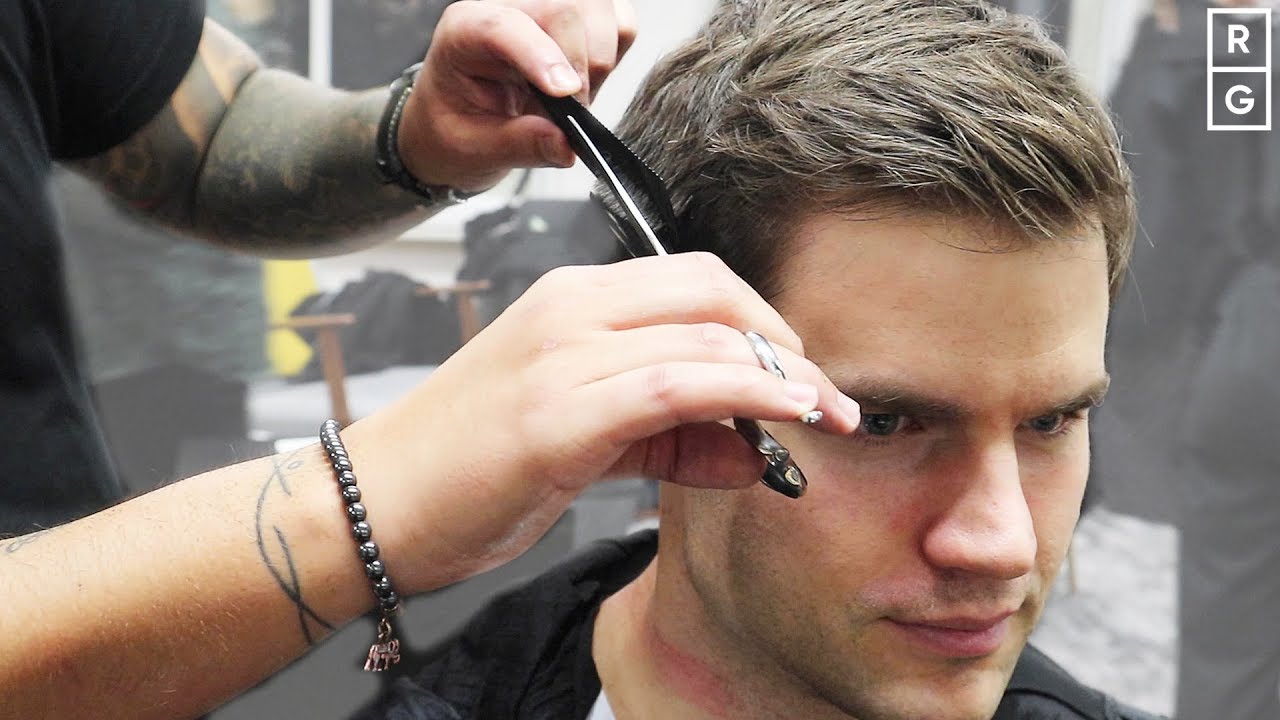
A scissor cut means the barber uses only shears on the section they’re working — no guards, no machine. Instead of buzzing the top down to one uniform length, they lift small sections with a comb, cut at an angle, and check how the hair falls before moving to the next section. It is slower on purpose. That slowness is what gives you the finish.
You will notice the difference the moment your barber puts down the blow dryer. Scissor cuts don’t sit flat and helmet-shaped — they move when you turn your head, they hold their shape through the workday, and when you wake up the next morning they still look intentional instead of slept-on.
Classic Scissor Cut Foundations
These are the cuts that keep working every year because they were never chasing a trend to begin with. Balanced proportions, clean lines, and scissor detailing instead of hard fades — this is the barbering that gets called “quiet luxury” or “old money” online but has been the same craft for fifty years.
All three of the styles below work in an office, at a wedding, and on a weekend. That is the point.
Traditional Side Part Scissor Cut
The reference cut for scissor work. Ask for 3 to 4 inches on top, scissor-cut and layered, with a defined side part on your natural parting. The sides should be scissor-tapered to roughly a #3 length — that reads clean but not shaved.
Say to your barber: “Side part, scissor cut top, tapered scissor sides, keep the parting sharp.” Style with a matte pomade or a light cream — anything too shiny fights the cut.
Classic Ivy League Scissor Cut
The Ivy League is a slightly longer, side-parted crew cut — think 2 inches on top, tapered scissor sides, and enough length up front to sweep. Where clippers would flatten this cut into a helmet, scissors keep the flow alive.
This one suits professionals who don’t want to look like they tried too hard. It is the cut you get if you want strangers to assume you have your life together.
Business Professional Scissor Cut
A conservative version of the side part — shorter overall, no dramatic length anywhere, but every edge scissor-finished so it grows out clean instead of shaggy. About 2 inches on top, tapered sides at a #2 length, no visible fade line.
The trick is asking for “no hard line on the sides” — that keeps the cut from looking corporate-severe. You want a soft graduation that photographs well on Zoom and holds shape between visits.
Modern Scissor Cut Styles
Modern scissor work leans into texture and controlled mess. This is where point cutting matters — instead of cutting straight across each section, the barber points the shears vertically into the ends of the hair. That is what creates the broken, un-blunted look the current-year trends are built on.
If your barber only does scissor-over-comb (cutting flat across a comb), the finish will be too neat for these three styles. Ask specifically for point cutting on top.
Messy Textured Scissor Cut
Also known right now as the textured crop — the single most-requested men’s cut in my shop this year. Ask for a scissor-cut layered top around 2 to 2.5 inches with a soft fringe, paired with a low taper fade on the sides. The layers on top should be point-cut to break up the ends.
Style it with a matte clay or paste — never wet-look pomade on this cut. A pea-sized amount rubbed between your palms, then raked forward with your fingertips.
Disconnected Scissor Cut
Long top, short sides, and no gradual blend between them — instead of a fade, the barber creates a soft scissor edge where the sections meet. It looks less severe than a clipper disconnect but still gives you that hard contrast.
Ask for 4 inches on top with sides at a #2, no fade, scissor-blended edge. This suits guys who want the modern-mullet or wolf-cut look without committing to length at the back.
Undone Natural Scissor Cut
The barber cuts with your hair’s growth pattern instead of against it — no forced parting, no styled direction, just enough length removed to keep the shape balanced. If you have a natural cowlick or a stubborn crown, this cut works with it instead of fighting it.
This is the wash-and-go cut. Towel-dry, run your fingers through it, done. Suits guys who wear caps often — the cut still sits right when the hat comes off.
Scissor Cuts For Short Hair
Short doesn’t have to mean clippered. Anything from about 1.5 inches upward is scissor territory — and scissor-cut short hair looks noticeably softer at the perimeter than the equivalent clipper cut. Every edge is intentional instead of buzzed to a stop.
Short scissor cuts are the quiet flex — most people can’t articulate why your hair looks better than theirs, but they’ll notice.
Short Crop Scissor Cut
About 1.5 to 2 inches on top, scissor-cut with a soft forward-swept fringe. Sides scissor-tapered to a #2 length so they blend into the top without a hard line. This is a shorter cousin of the textured crop — same silhouette, less commitment.
Great for thick or wavy hair because the barber can remove bulk section by section without leaving harsh clipper marks.
Short Side Swept Scissor Cut
Sides scissor-cut short and clean — no clipper. Top left at 2 inches, layered and pushed to one side. The whole cut is done with shears, which is what separates it from the standard side part with fade you see on every corner-shop menu.
The finish looks like a cross between the Ivy League and a modern textured crop. Say: “All scissor, short sides, 2 inches on top, side sweep.”
Scissor Cuts For Medium Length Hair
Medium length — call it 3 to 5 inches on top — is where scissor work really pays off. This is the length range for every trending cut in 2026: the bro flow, the modern mullet, the shag, the Italian cut. You need the length to see the layers.
If you’re growing out from a fade or a buzz, this is the awkward stage scissors fix. A skilled barber can shape mid-grow-out hair so it actually looks intentional instead of unfinished.
Medium Layered Scissor Cut
4 inches on top, layered in three or four graduated sections, scissor-tapered sides. This is the cut for anyone who wants their hair to move when they walk — the layers stop the top from sitting flat and dead.
Ask for “point-cut medium layers with a natural taper on the sides — no fade.” Then style with a light sea salt spray to keep the layers visible.
Medium Side Part Scissor Cut
The grown-up version of the traditional side part — 4 to 5 inches on top, side-parted, scissor-tapered sides sitting around a #3 length. Enough hair to comb over cleanly for a meeting, enough movement to look human at the pub after.
This is the closest current cut to the Cary Grant / Don Draper reference — the “old money” side part everyone is searching for. It only works with scissors, because clipper sides make it look dated instead of classic.
Medium Shaggy Scissor Cut
The shag and its cousin the modern mullet are the loudest current trends and both are pure scissor work. 4 to 5 inches on top, choppy point-cut layers throughout, sides left long enough to blend with the length behind the ears. If you want the mullet version, keep the back a half inch longer than the sides.
Suits straight and wavy hair best — curly hair gets triangular in this cut unless the barber knows what they’re doing. Style with sea salt spray and air-dry.
Scissor Cuts For Long Hair
Once you’re past six inches, clippers are useless anyway — scissors are the only tool. The whole game at this length is layering: cutting the internal weight out so the hair doesn’t sit heavy and lifeless. Long hair without layers is just long hair. Long hair with proper scissor layers is a haircut.
If you’re growing out for the first time, tell your barber how long you’re aiming for — a good one will cut around that goal instead of taking off length you want to keep.
Long Layered Scissor Cut
Ask for graduated layers through the length — the shortest layer around chin height, the longest at collarbone. That removes about 40% of the internal weight without shortening the overall silhouette. You keep the length; you lose the pyramid.
The bro flow lives here — long enough to tuck behind the ears, layered enough to hold shape when you push it back. Not sure what your face shape is? Our Face Shape Detector figures it out in 4 quick questions.
Long Side Swept Scissor Cut
Length kept intact, layers cut to encourage the hair to fall to one side. The barber sections the hair the way you’ll actually wear it and cuts to that pattern — so when you push it aside in the morning, it stays.
This one suits guys with heavier, straighter hair. Curly and coily hair usually needs looser layering to stay in a side sweep.
Textured Scissor Cut Variations
Textured scissor cuts are less a specific style and more a finishing choice — the barber can add texture to almost any cut on this page by switching from straight cuts to point cutting, slide cutting, or notching. That is why “textured” appears in the name of half the current trending haircuts.
The finish depends on hair type. Fine hair gets more visible movement with slide cutting (running the shears along the length of the hair). Thick hair needs point cutting into the ends to break up weight without leaving blunt lines. If your last cut felt “too clean” or “too helmet,” ask your next barber for more texture — they’ll know exactly which technique to reach for.
Scissor Cuts With Movement
Movement is what everyone means when they say a cut “looks expensive.” It is scissor layering, cut with your hair’s natural fall in mind, so that turning your head actually moves the hair instead of shifting a solid block.
Every trending cut in 2026 is chasing movement — the bro flow, the modern mullet, the shag, the Italian. It is not a specific style; it is the direction the whole industry is walking.
Layered Flow Scissor Cut
The purest version of a movement cut. 4 to 6 inches on top, three or four scissor layers cut with the parting you actually wear, sides left long enough to blend. The point is a cut you push once and forget about.
This works on straight and wavy hair from about 25 upward — younger guys tend to prefer the sharper textured crop, but flow reads more grown-up and holds up in professional settings.
Scissor Cut Styling Tips
A scissor cut asks a little more of you at home than a clipper cut. The good news is very little — the wrong product will ruin the finish faster than any technique mistake, so getting the product right is 80% of it.
Skip anything shiny or heavy. Skip anything you’re supposed to apply to soaking-wet hair unless you actually want the wet-look finish. Everything else is variations on the two products below.
Using Matte Pomade With Scissor Cuts
Matte pomade or matte clay is the default for every scissor cut on this page. Take a pea-sized amount, rub it fully between your palms until it turns almost transparent, then rake through damp hair with your fingertips — never with a comb, because a comb flattens the texture the barber built.
Too much product is the number-one styling mistake I see. If your hair looks stringy or greasy an hour later, you used twice what you needed. Start with less than you think and add more only if the shape isn’t holding.
Blow Drying Scissor Cuts For Shape
Blow drying is optional on shorter scissor cuts and mandatory on anything over 3 inches. Medium heat, not high — high heat kills the natural texture and leaves the hair looking dry within a week.
Always dry the crown first while the hair is still most pliable — once it air-dries even partway, you lose the ability to redirect those natural growth patterns. Point the nozzle in the direction you want the hair to sit and use your fingers instead of a brush for scissor cuts under 4 inches. Finish with a 3-second cold shot to set the shape.
Ready to Find Your Perfect Cut?
You’ve read about the styles. Now find the one that fits YOUR face shape, hair type, and lifestyle.
FAQs
What Is The Difference Between A Scissor Cut And A Clipper Cut?
A clipper cut uses a guard to shave every hair to one length — a #2 gives you a quarter inch, a #4 gives you half an inch, uniform across the whole section. A scissor cut lifts small sections with a comb and cuts each one at an angle, so the length varies deliberately and the hair falls with graduation instead of sitting flat.
Scissors are slower, harder to learn, and give you a finish that clippers physically cannot produce — soft edges, natural movement, and texture that grows out cleanly instead of turning shaggy in three weeks.
How Often Should I Get A Mens Scissor Cut Hairstyle Maintained?
Every 5 to 7 weeks for most scissor cuts — a full 2 weeks longer than the standard fade-cut cycle. Because the length is longer and the edges are soft, growth blends in for longer before the shape starts to fall apart.
If you have a shorter scissor cut like the textured crop, aim for 4 to 5 weeks. If you’re wearing a medium or long flow cut, you can push it to 8 weeks between visits without the cut looking overgrown.
Which Face Shapes Suit Scissor Cut Hairstyles Best?
Scissor cuts flatter every face shape because a good barber can adjust the internal weight to balance your features — you’re not stuck with a single guard length shaping the whole cut.
Round faces benefit from height on top and shorter, tapered sides to elongate. Square jawlines suit softer scissor layers to break the angular line. Oval faces can wear almost any scissor cut on this page. Long faces want less height on top and a bit more length on the sides for balance.
Do Scissor Cut Hairstyles Work Well With Thick Hair?
Thick hair benefits more from scissor cuts than any other hair type. The barber can remove internal weight precisely where the hair is heaviest — usually the crown and the sides above the ears — without shortening the overall silhouette.
With thick-haired clients I use point cutting rather than thinning shears. It removes weight without creating the blunt, choppy lines that show up two weeks later as your hair grows out.
How Do I Ask My Barber for a Scissor Cut?
Say: “Scissor cut on top, no clippers up there — leave about [length] inches with point-cut layers for texture.” Add the specific length in inches, not with a guard number, because scissor work isn’t measured in guards.
For the sides, you can be flexible — clippered sides are fine on most scissor cuts unless you specifically want the fully-scissored look. In that case say: “Scissor-tapered sides too, no machine.” That extra sentence changes the whole cut.
Do Scissor Cuts Cost More Than Clipper Cuts?
Usually 20 to 30% more, sometimes 50% more at a specialist shop. The barber is making individual cutting decisions for every small section of hair instead of running a guard over your head in three minutes — the time in the chair goes from 15 minutes to 30 or 45.
The offset is that scissor cuts grow out better, so you visit less often. A £45 scissor cut every 6 weeks costs less over a year than a £30 fade every 3.
How Long Should My Hair Be for a Scissor Cut?
At least 2 inches on top — below that, scissors have nothing to layer and clippers are the practical tool. The sweet spot for most of the styles above is 3 to 5 inches on top, which gives the barber enough length to build texture, movement, and shape.
If you’re growing out from short, you’ll cross into scissor territory around week 6 to 8 depending on your hair speed. That is the visit to book with a scissor-trained barber for the first proper shape.
Was this article helpful?

Khamis Maiouf is a professional barber who graduated from Hinckley College in England with a Level 3 qualification in hairdressing. With over 20 years of experience, he is an award-winning barber who has mentored numerous students and styled thousands of clients. A recognised expert featured on StyleCraze (20M+ readers).
Credentials: Level 3 Hairdressing (Hinckley College, UK) • 20+ Years Professional Experience • Featured Expert on StyleCraze • Founder of Book of Barbering