

Most guys who sit in my chair asking for a medium hairstyle have the same problem — they know they want more length than a buzz cut but have no idea which style actually works for their hair type and face shape. After cutting medium-length hair for over 20 years, I can tell you the sweet spot is 3-6 inches on top, which gives you enough length to style in multiple directions without the maintenance headaches of truly long hair.
These are the 25 medium hairstyles I recommend most often, with honest notes on which hair types and face shapes each one actually suits.
Key Takeaways
- Medium hair is typically 3-6 inches on top — long enough to style multiple ways, short enough to manage daily
- Face shape matters more than trends — oval faces suit most styles, while round faces benefit from height on top
- Your hair type determines which styles are realistic — thick hair holds volume naturally, fine hair needs strategic layering
- Expect trims every 4-6 weeks to keep medium styles looking intentional rather than overgrown
- The right product makes or breaks a medium cut — matte clays for texture, pomades for slick finishes, sea salt spray for waves
The Te
xtured Quiff
The textured quiff combines voluminous height at the front with shorter, tapered sides for a dynamic silhouette. This style works best with thick to medium density hair and requires moderate daily styling with a blow dryer and matte product. The key is creating that perfect balance between structured height and natural-looking texture that doesn’t appear overly styled.
Side Part
A side part remains the ultimate professional choice for medium length hair. This timeless style features a defined parting line with hair combed smoothly to either side, creating a polished appearance suitable for any business setting. It works particularly well with straight to slightly wavy hair and requires minimal morning maintenance beyond a quick comb-through and light hold product.
Slicked Back
The slicked back style uses pomade or gel to create a smooth, polished finish that sweeps hair directly backward from the forehead. This sophisticated look works best with straight or slightly wavy hair and offers excellent versatility—dress it up for formal events or loosen it slightly for a more relaxed vibe. Regular product application keeps everything in place throughout the day.

Pompadour
A pompadour creates dramatic height at the front that gradually decreases toward the crown, offering vintage-inspired elegance with modern appeal. This style requires dedicated styling time with a blow dryer and strong-hold product to achieve the signature volume and shape. It’s particularly flattering for oval and square face shapes, adding vertical dimension that elongates facial features.
Messy Fringe
The messy fringe embraces casual, tousled bangs that fall naturally across the forehead with intentional dishevelment. This relaxed style works brilliantly with wavy or straight hair textures and requires minimal effort—just apply texturizing product to damp hair and let it air dry. Perfect for creative professionals or anyone seeking that effortlessly cool aesthetic.

Mid Fade with Textured Top
Combining a gradual fade on the sides with textured length on top creates the perfect modern contrast. The fade typically starts at mid-temple level, blending seamlessly into longer hair that can be styled multiple ways—swept forward, pushed back, or tousled for texture. This versatile cut has become the go-to choice for men wanting contemporary style with easy maintenance.

Flow Hairstyle
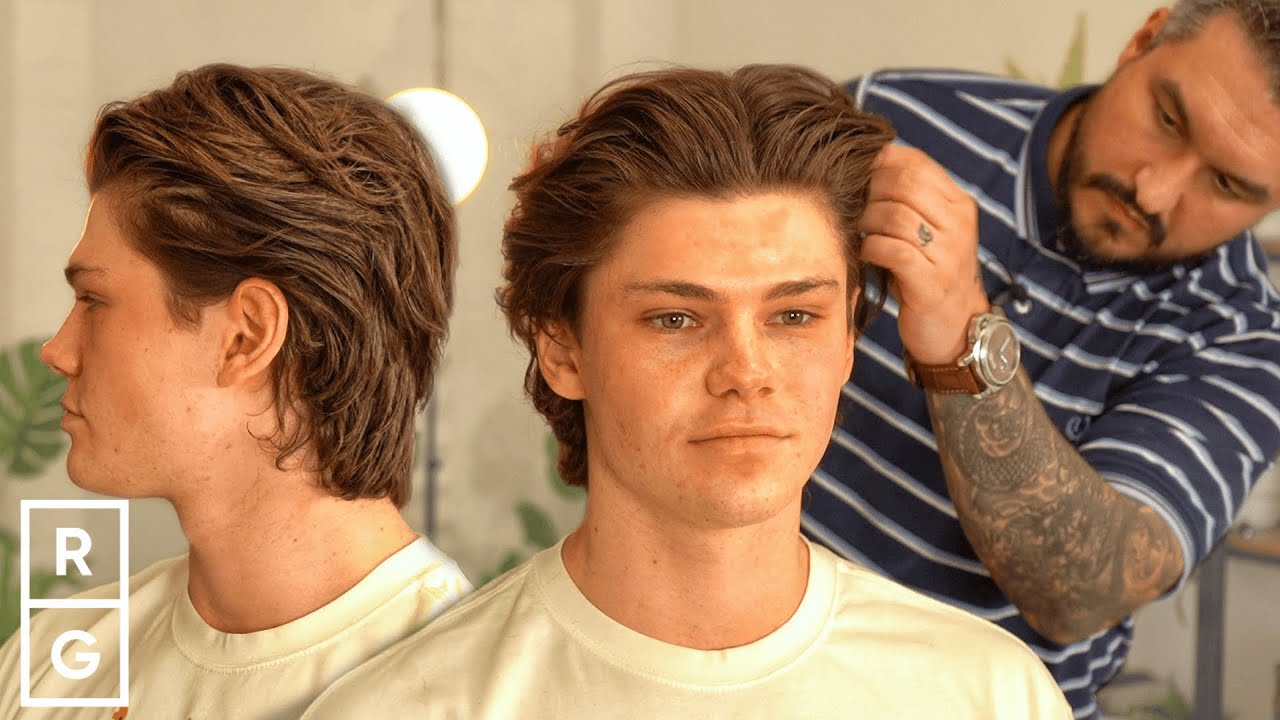
The flow hairstyle channels natural, swept-back movement reminiscent of surfer culture. This medium-length cut features hair that flows backward and slightly to the sides, creating organic movement without excessive styling. It works best with naturally wavy or straight hair that has some natural body, requiring just sea salt spray and occasional scrunching to maintain that beachy vibe.

Modern Mullet
Today’s modern mullet offers a subtle length difference between front and back without the extreme contrast of its retro predecessor. This updated version features textured layers throughout with a gradual length increase toward the nape, creating movement without looking dated. It’s particularly popular among creative types and musicians who want edge without full commitment to the classic mullet aesthetic.
Wavy Medium Cut
A wavy medium cut works with your natural wave pattern rather than fighting against it. This style typically features layers that enhance wave formation while preventing excessive bulk or triangle-shaped silhouettes. Using curl-enhancing products and diffuser drying brings out the best in your natural texture, creating effortless movement that looks styled without trying too hard.

Tousled Bedhead
The tousled bedhead look masters that just rolled out of bed appearance through strategic messiness. This deliberately disheveled style uses texturizing products to create piece-y separation and random directional flow. Despite its casual appearance, achieving the perfect bedhead actually requires thoughtful product application and hand-styling to avoid looking genuinely unkempt rather than fashionably tousled.

Layered Cut
A layered cut incorporates multiple length variations throughout to create dimension and movement in medium-length hair. These strategic layers remove bulk from thick hair while adding body to finer textures, making it universally flattering. The technique works especially well with wavy or curly hair, where layers help define natural texture patterns without creating pyramid shapes.

Choppy Fringe
The choppy fringe features uneven, textured bangs cut at varying lengths for an edgy, modern appearance. This style adds visual interest to the front hairline while maintaining medium length throughout the rest of the cut. Point-cutting techniques create the signature choppy texture, which works best with straight to slightly wavy hair and benefits from texturizing paste for definition.

Business Casual
Business casual medium length hair strikes the perfect professional balance—polished enough for client meetings yet relaxed enough for after-work socializing. This versatile style typically features clean lines with subtle texture, allowing for quick morning styling with minimal product. It adapts easily to different occasions by simply adjusting the amount of product and styling direction.

Ivy League
The Ivy League cut is essentially a longer crew cut with enough length on top to create a side part. This collegiate-inspired style offers professional polish with the option to add texture or sweep hair to the side for variety. It requires minimal maintenance beyond regular trims and works exceptionally well for men transitioning from longer styles to something more conservative.

Brushed Up
A brushed up style creates vertical height by directing all hair upward and slightly backward from the forehead. This modern professional look uses matte products to maintain texture while achieving impressive height without the slickness of traditional pompadours. The technique works best with thick, straight hair that naturally wants to stand up, requiring blow-drying in an upward direction for maximum lift.

Curtain Haircut
The curtain haircut splits hair down the middle or slightly off-center with both sides framing the face like — you guessed it — curtains. I’ve seen this blow up with guys in their twenties because it works with virtually any hair texture from straight to wavy. The key is getting the layers right so both sides fall naturally without constant fiddling. Oval and heart-shaped faces look best with this cut since the center part draws the eye vertically. Use a lightweight cream and blow dry each side away from the center for that effortless drape.
Textured Crop
The textured crop keeps things short and choppy on top with a fade or taper on the sides, sitting right at the border between short and medium territory. What makes it work is the crop top fade contrast — tight sides against a textured, forward-styled top. I recommend this to clients with thick or coarse hair because the point-cut texture keeps bulk under control. Square and oval face shapes benefit most from the forward fringe, which softens strong jawlines. Style with a matte paste for that lived-in look.
Comb Over
The modern comb over is nothing like the desperation move your dad might picture — today’s version features medium-length hair swept to one side with a clean fade underneath. This is one of the most requested styles in my shop because it bridges the gap between professional and stylish. It suits every hair type except very curly, and looks particularly sharp on oval and rectangular face shapes. A medium-hold pomade swept from the part line gives you that polished-but-not-stiff finish.
Shag Haircut
The shag haircut layers hair throughout the entire head, creating that effortlessly messy, rock-and-roll vibe that’s made a serious comeback. Heavy layering through the crown and sides creates movement without requiring much daily effort — this is genuinely one of the lowest-maintenance medium styles I cut. It works best with wavy or slightly curly hair because the natural texture does the styling for you. Round and oval face shapes wear this well. Apply texturizing spray to damp hair and let it air dry.
Middle Part
A middle part with medium-length hair creates symmetry that can look either clean-cut or relaxed depending on how you style it. The trick most guys miss is that a true middle part requires enough length on both sides to lay flat — if your hair is still at the early medium stage, it’ll stick out instead of draping. Straight and wavy hair types handle this best. Oval faces were basically made for center parts, while heart-shaped faces benefit from the way it narrows the forehead visually.
Surfer Hair
Surfer hair goes beyond the flow style by embracing visible texture and a tousled, beachy appearance. I tell clients this is the most “un-styled” looking style that actually requires a system — sea salt spray on damp hair, scrunch it, and leave it alone. Natural wave is a huge advantage here, but even straight hair can pull this off with the right layering and product. This style suits every face shape because the overall looseness avoids sharp geometric lines that clash with certain features.
French Crop
The French crop is a close cousin of the textured crop but with a defining feature: a blunt, forward-falling fringe that sits across the forehead. It’s one of the cleanest medium-length styles I cut because the short top and cropped fringe create a neat, angular frame. Works beautifully with all hair textures — straight hair gives a sharp finish, while wavy hair adds natural dimension. Particularly flattering for guys with larger foreheads since the fringe provides coverage without looking like a comb-forward.
Disconnected Undercut
The disconnected undercut creates a dramatic contrast between buzzed sides and medium-length top without any blending — there’s a hard line where the two lengths meet. This bold style makes a statement, and I’ll be honest, it’s not for everyone. The lack of gradual fade means the transition is abrupt and eye-catching. It works best with straight to wavy hair that has enough density to create volume on top. Oval and square face shapes handle the strong lines best.
Man Bun
If you’ve got medium hair that’s pushing toward the longer end (5-6 inches minimum), a man bun gives you the option to pull everything back for a clean, practical look. The key I tell every client is that a man bun should feel intentional, not like you just needed hair out of your face. Pair it with an undercut or taper on the sides for a sharper silhouette. This style works across all hair textures and most face shapes, though it really shines on guys with strong jawlines since pulling hair back exposes the entire face structure.
Swept Back Taper
The swept back taper combines medium-length hair on top pushed backward with a gradual taper on the sides and back. It’s basically a more relaxed cousin of the slicked back look — less product, more natural movement, and a softer feel overall. I cut this more than almost any other medium style because it transitions so easily from office to weekend. Thick and wavy hair types hold the swept-back shape naturally without needing heavy product. Works for virtually every face shape, but oval and diamond faces get the most benefit from the backwards volume.
How to Choose by Face Shape
Your face shape is the single biggest factor in whether a medium hairstyle looks great or just average on you. Here’s a quick breakdown from two decades of matching faces to cuts.
Oval face: You hit the genetic lottery — almost every medium style works. Try a textured quiff, curtain cut, or pompadour.
Round face: Add height on top to elongate your face. Pompadours, brushed-up styles, and quiffs work best. Avoid flat, wide styles like the surfer look.
Square face: Your strong jawline is an asset. Textured crops, side parts, and French crops complement angular features without competing with them.
Heart-shaped face: Medium styles with volume at the sides balance a wider forehead. Curtain cuts, layered cuts, and middle parts are your best options.
Oblong/rectangular face: Avoid adding too much height. Flow hairstyles, messy fringes, and side-swept styles add width and balance.
Not sure what face shape you have? Try our Face Shape Detector tool — it takes 60 seconds and gives you a personalized recommendation.
How to Style Medium Length Hair
Getting a great medium haircut is only half the equation — you need to know how to style it at home. Here’s what I tell every client before they leave my chair.
Start with damp hair. Most medium styles look best when shaped while slightly wet. Towel-dry until hair is about 80% dry, then apply product.
Use the right product for your finish. Matte clay for textured, natural looks. Pomade for slick, polished styles. Sea salt spray for beachy waves. Lightweight cream for soft, natural hold.
Blow dry with direction. Point the dryer in the direction you want your hair to go. Use a round brush for volume, a flat brush for smooth finishes.
Less product is more. Start with a dime-sized amount and add more only if needed — you can always add, but you can’t remove greasy over-application.
Maintain the shape. Visit your barber every 4-6 weeks. Between visits, trim neckline hair at home to keep things looking intentional.
FAQs: Medium Hairstyles
What defines a medium length hairstyle for men?
Medium length hairstyles typically feature 3-6 inches of hair on top, offering substantial styling versatility without long hair maintenance. This length range allows for various styling options—from slicked looks to textured styles—while remaining manageable for daily grooming. The sides can vary from faded to uniform length, but the top maintains enough length to style in multiple directions and create different looks for various occasions.
How often should I trim medium length hair?
Medium length hair requires trimming every 4-6 weeks to maintain shape and prevent awkward growing-out phases. Regular maintenance keeps the style looking intentional rather than overgrown, especially important for styles with faded or tapered sides. Between professional cuts, you can extend the style’s lifespan by trimming neck hair and sideburns at home, but leave major shaping to your barber for best results.
What products work best for medium length men’s hair?
The best products depend on your desired finish and hair type. Matte clays and pastes work excellently for textured, natural looks, while pomades create slicker, more polished styles.
Sea salt sprays add texture and volume to wavy hair, while lightweight creams control frizz without weighing hair down. Start with less product than you think you need—you can always add more, but over-application creates greasy, heavy-looking hair.
Is medium length hair professional for men?
Absolutely — medium-length hair is professional when it’s well-maintained and intentionally styled. Styles like the side part, comb over, Ivy League, and business casual are boardroom-appropriate while giving you more personality than a standard short cut. The key is keeping up with regular trims every 4-6 weeks and using the right product to keep everything in place throughout the day.
How long does it take to grow medium length hair?
Starting from a buzz cut or very short length, expect 4-8 months to reach true medium length (3-6 inches). Hair grows about half an inch per month on average, though this varies by genetics and overall health. The toughest part is the awkward phase around months 2-3 when hair is too long to stay put but too short to style — using product with strong hold and wearing hats gets you through it.
Was this article helpful?
Ready to Find Your Perfect Cut?
You’ve read about the styles. Now find the one that fits YOUR face shape, hair type, and lifestyle.

Khamis Maiouf is a professional barber who graduated from Hinckley College in England with a Level 3 qualification in hairdressing. With over 20 years of experience, he is an award-winning barber who has mentored numerous students and styled thousands of clients. A recognised expert featured on StyleCraze (20M+ readers).
Credentials: Level 3 Hairdressing (Hinckley College, UK) • 20+ Years Professional Experience • Featured Expert on StyleCraze • Founder of Book of Barbering