
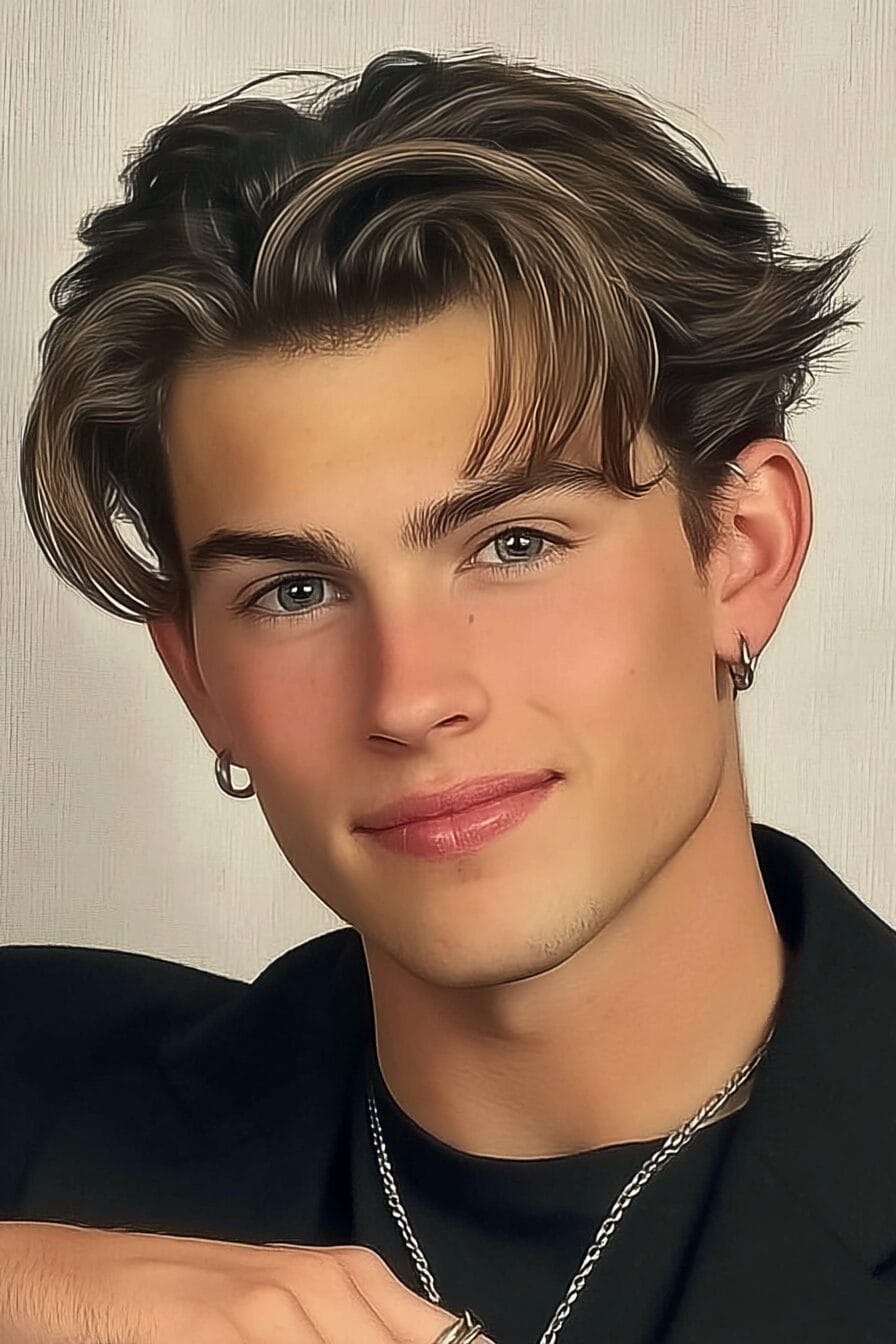
The most common mistake I see: guys with straight hair picking styles that need texture they don’t have, then fighting their hair every morning. Straight hair falls flat — and that’s not a problem, it’s a starting point. These 17 haircuts work with that tendency, not against it.
Not sure which cut is right for you? Try our free Haircut Finder tool — answer 5 quick questions and get personalised recommendations with barber instructions.
Think clean tapers for square jaws or controlled flow for medium density straight hair—each choice defines your look.
Not sure which style suits you best? Our Haircut Finder Quiz matches you with the right cut based on your face shape and hair type — takes 60 seconds.
Key Takeaways
- Straight hair falls flat by nature — the cut shape matters far more than any product
- Textured crops and fades add visual movement without fighting your natural texture
- Fine straight hair: go shorter with point-cut texture on top; thick straight hair: more length options including medium styles
- Avoid heavy blunt layers below the crown on fine hair — they emphasize thinness rather than fixing it
- Straight hair needs trimming every 4–6 weeks — the shape falls apart faster than curly or wavy styles
Looking beyond straight hair? Compare 25 haircuts for men across every hair type.
In Plain English: Men’s Haircuts For Straight Hair
Simplifying the concept helps you understand straight haircuts more clearly. It’s essentially about letting your strands behave naturally while using shape to sharpen your overall style.
Rather than forcing heavy styling, the best approach tailors proven cuts to emphasize straight hair’s clean structure. That allows sharp looks without unnecessary effort.
Classic Short Cuts
Short, timeless options remain popular because they’re clean and adaptable for straight textures. They emphasize natural neatness without complicating upkeep.
These cuts suit men seeking reliability. Straight hair lies naturally controlled, and these classic shapes can enhance facial symmetry with very low maintenance.

Timeless Crew Cut
The crew cut remains popular because it’s universal. Straight hair behaves predictably when trimmed evenly, producing sharp definition effortlessly.
This classic look also flatters most face shapes and density levels. Easy upkeep ensures men don’t struggle with styling routines daily.

Traditional Ivy League
The Ivy League cut offers slightly more length than the crew. This gives you side-part options, perfect for those aiming for polish.
Straight strands enhance its structure because they lie in place easily, creating professional balance while still allowing casual variation.

Clean Caesar Cut
Characterized by short uniform layers, the Caesar pairs exceptionally with straight hair’s natural direction. The forward fringe offers distinct character.
Its neat structure helps reduce styling needs daily. People with fine or dense straight hair benefit equally because it looks tidy consistently.

Modern Fades For Straight Hair
Fades sharpen straight haircuts by blending edges seamlessly while leaving definition up top. The structure contrasts length with clean sides.
These options combine classic barbering with modern finishes. Straight hair’s stiffness enhances the effect, presenting professional yet stylish energy.

Low Fade With Texture
A low fade keeps sides subtle. It balances straight hair by leaving focus on top while tapering toward the neckline.
This choice works well for versatility. You can style textured layers with matte products, which show off controlled sharpness smoothly.

Mid Fade Crop
The mid fade aligns right between subtle and bold, making it versatile. It complements straight hair’s neat, strong lines well.
This structure also benefits men who want tidy looks without severe contrast. It’s polished, consistent, and easy to maintain practically.

High Fade Pompadour
High fades rely on dramatic contrast. With straight hair, the style highlights longer top volume through sharp transitions at the sides.
The pompadour holds exceptionally because straight strands maintain upward shape readily. It’s expressive yet controlled depending on product used.

Skin Fade With Side Part
Skin fades carry boldness by completely exposing lower scalp. Pairing it with a side part adds discipline and sharpness to structure.
Straight hair ensures the part stays crisp, yielding a professional yet edgy look. Maintenance requires precision but results are striking.

Medium-Length Styles
Many men value medium lengths because they balance manageability with expressive options. Straight hair is especially manageable at this stage.
Smooth strands at moderate length showcase polished outcomes without requiring complicated styling. Shape and product choice create clear impact.

Classic Side Part
The side part remains timeless. Straight hair naturally falls into parting lines, ensuring both neatness and control effortlessly.
This style works across professions or occasions. It provides reliable structure while still appearing modern and masculine consistently.

Textured Quiff
Adding a quiff introduces dynamic lift to straight hair. The front lifts higher while retaining smoothness through controlled styling.
Done properly, it avoids flat looks. Matte paste or controlled blow-drying can emphasize volume while holding strands sharp and tidy.
Slicked Back Medium Cut
Slicked back cuts highlight straight hair’s natural sleekness. Medium lengths allow strands to fall backward smoothly with minimal effort.
Such styles often appear refined and polished, working perfectly in professional environments. Controlled shine is key, not heavy surface weight.
🧠 Expert Advice
You’ll get better results by blow-drying your straight medium-length cut backward at low heat. Use your fingers to guide natural flow.
Then finish with a matte clay scrunched lightly. This keeps alignment defined without weighing down strands or creating greasy heaviness.
Longer Straight Hair Looks
Long styles emphasize hair health and flow. Straight strands benefit from shape adjustments to prevent flat or lifeless outcomes.
Layering, tapering, or contrasting fades add movement. These longer cuts become highly expressive while still maintaining polish when desired.
The shag cut breaks up straight strands with layers. This relaxed design turns otherwise flat hair into intentional casual texture.
It’s especially appealing for men preferring low-structure looks. You get movement without strong styling products, just natural lived-in appeal.

Textured Finishes
Texture helps straight hair avoid appearing flat or lifeless. Crafted layering introduces dimension without challenging manageability significantly.
These styles work well for men seeking energy. Texture adds ruggedness while keeping cuts structured and controlled consistently strong.

Choppy Crop
Choppy cuts add broken layers. Straight strands show definition clearly, producing sharper edges and visual interest quickly.
It suits men preferring expressive short looks. Easy products like clays build separation further while still looking neat consistently.

Messy Fringe
Fringes push hair forward into relaxed frames. Straight textures soften by appearing more casual and approachable when worn messy.
Certain face shapes benefit from an intentional frame. Adding disorder creates balanced contrast against the hair’s natural straight order.
Disconnected Undercut
The disconnected undercut separates longer tops from clipped sides. This stark contrast appears stronger on straight hair’s predictable surface.
Many choose it to stand out. Styling keeps the top crisp while sides stay closely cut, producing visible dramatic separation effectively.

Spiky Top With Fade
Spiked textures energize straight hair significantly. Fade at the sides boosts the upward visual impact by sharpening the silhouette.
This style conveys confidence. Using matte wax produces durable spikes without stiffness, leaving the overall finish youthful and controlled.
Not sure what your face shape is? Our Face Shape Detector figures it out in 4 quick questions.

Low-Maintenance Options
Straight hair doesn’t require complication to look sharp. Simplified cuts still produce strong styles and save time consistently every week.
The following designs combine low effort upkeep with precise barbering. They’re dependable because they thrive without constant product application routine.

Classic Buzz With Line-Up
The line-up emphasizes edges. Straight hair combined with buzzing delivers sharp outlines contrasted with clean short top naturally.
Low maintenance defines this cut. Visiting your barber for quick upkeep trims ensures facial symmetry and professional neatness consistently.

Short Crop With Fade
A short fade crop strikes balance. Straight strands lie neatly against faded edges producing tidy presentation automatically every day.
Routines remain simple. A quick brush or light matte product suffices for consistency without slowing mornings before responsibilities appear.
Simple Tapered Cut
Tapered cuts scale length down gradually. On straight hair, this creates balance without visible harsh contrasts appearing throughout.
Practicality makes it widely chosen. A few barber visits yearly maintain structure while daily maintenance remains largely minimal overall.

Fine vs. Thick Straight Hair: Choosing the Right Style
Not all straight hair behaves the same — and that changes what actually works. The two variables that matter most are density (how many hairs per square inch) and thickness (the width of each strand). Getting this right is the difference between a cut that looks sharp all week and one that falls apart by day two.
Fine straight hair sits flat and shows every mistake in the cut. Shorter styles work best: the textured crop, crew cut, and French crop are the three I come back to most. Avoid heavy layers below the crown — they emphasize thinness rather than building shape.
A mid or skin fade on the sides creates structure and pulls focus to the top. Ask your barber to use point-cutting or texturizing scissors on the crown to create the illusion of volume without adding weight.
Thick straight hair has more options. Length holds shape and doesn’t pancake flat the way fine hair does. Medium-length styles like the slicked-back cut, classic side part, and textured quiff all perform well.
The one watch-out: if the cut is too blunt and too long, it gets boxy. Layering through the back and sides prevents that bulk from building up.
Styling Tips For Straight Hair
Knowing how to style your hair completes any haircut. Straight textures thrive with specific techniques and product strategies consistently applied.
Focus on defining direction, adding shape, and maintaining sharp outlines. Those steps keep natural structure enhanced rather than flattened daily.
Choosing The Right Product
Products matter for texture. Matte finishes and lighter creams help straight hair retain separation without greasy appearances forming quickly.
Avoid excessively heavy substances. Balanced hold enhances look while still leaving hair touchable, sharp, and intentionally styled every time.
Blow Drying For Volume
Heat styling builds structured volume. Blow-dry hair upward or backward depending on desired lift and visual effect intended properly.
Straight strands respond quickly to direction. Gentle airflow combined with round brushes creates long-lasting effective shape naturally.
Regular Trims For Sharpness
Edged precision comes from consistency. Scheduling barber visits every few weeks makes straight texture look neat constantly.
Trims prevent awkward phases. Stray strands stay aligned, so your style holds intentional form rather than collapsing into untidy growth.

Ready to Find Your Perfect Cut?
You’ve read about the styles. Now find the one that fits YOUR face shape, hair type, and lifestyle.
FAQs
What Is The Easiest Men’s Haircut For Straight Hair?
For simplicity, most barbers recommend a buzz cut or crew cut. Straight strands adapt easily to these minimalistic styles, reducing upkeep. You won’t need styling products daily, and trims every few weeks preserve their neat appearance consistently.
How Do I Add Volume To Straight Haircuts?
Blow-drying is your best friend for more lift. Use a round brush to direct roots upward, then apply a lightweight matte product for hold. These tools stop straight strands from lying flat while keeping shape controlled naturally.
Which Fade Works Best With Straight Hair?
A mid fade often blends best. Straight textures sit evenly when tapered at that level, so your cut appears balanced and sharp. It’s versatile enough for both business and casual looks, offering strong structure without full extremity necessarily required.
Are Long Straight Hairstyles Hard To Maintain?
They are not difficult, but discipline is key. Expect to brush daily and trim roughly every eight weeks.
Layers or tapers prevent bulk, making longer straight cuts manageable. With consistent care, long straight hair stays polished rather than heavy.
What’s the best haircut for fine straight hair?
Fine straight hair benefits from shorter cuts that build shape at the crown without relying on density. The textured crop and crew cut are the top choices — both work with the natural fall of the hair rather than fighting it. Avoid heavy layering below the crown, which can make fine straight hair look even thinner.
A mid fade or skin fade on the sides adds structure and draws attention to the top. Ask your barber to use point-cutting or texturizing scissors on the top to create the illusion of volume.
Was this article helpful?

Khamis Maiouf is a professional barber who graduated from Hinckley College in England with a Level 3 qualification in hairdressing. With over 20 years of experience, he is an award-winning barber who has mentored numerous students and styled thousands of clients. A recognised expert featured on StyleCraze (20M+ readers).
Credentials: Level 3 Hairdressing (Hinckley College, UK) • 20+ Years Professional Experience • Featured Expert on StyleCraze • Founder of Book of Barbering