

Most men with thick hair leave the barbershop looking okay — but they could look significantly better.
Thick hair has more styling potential than any other texture. The problem is that most generic cuts treat high density the same as fine hair, which is why the results never quite land.
Here are the cuts that account for what thick hair actually does, and the technique your barber needs to execute them right.
Not sure which style suits you best? Our Haircut Finder Quiz matches you with the right cut based on your face shape and hair type — takes 60 seconds.
Key Takeaways
- Thick hair is high-density or coarse-textured — both create volume that needs specific cutting techniques, not just ‘thinning’
- The right cut for thick hair depends on your texture: straight, wavy, and curly thick hair each respond differently to the same cut
- Point cutting removes weight without changing silhouette — always better than over-using thinning shears on thick hair
- Tell your barber exactly where the bulk bothers you — thick hair doesn’t bulk out evenly and needs targeted removal
- Most thick hair styles need trimming every 4–6 weeks, not every 8 — letting it grow out too long is where volume becomes unmanageable
What Thick Hair Really Means
When barbers say thick hair, they mean hair with high density (lots of follicles per square inch) or coarse texture with wider individual strands. This combination creates volume, weight, and styling challenges that need specific cutting techniques.
Understanding your specific type helps choose the right cut. Dense hair needs strategic thinning, while coarse strands require proper layering to reduce bulk.

Classic Cuts That Tame Volume
The Textured Crop
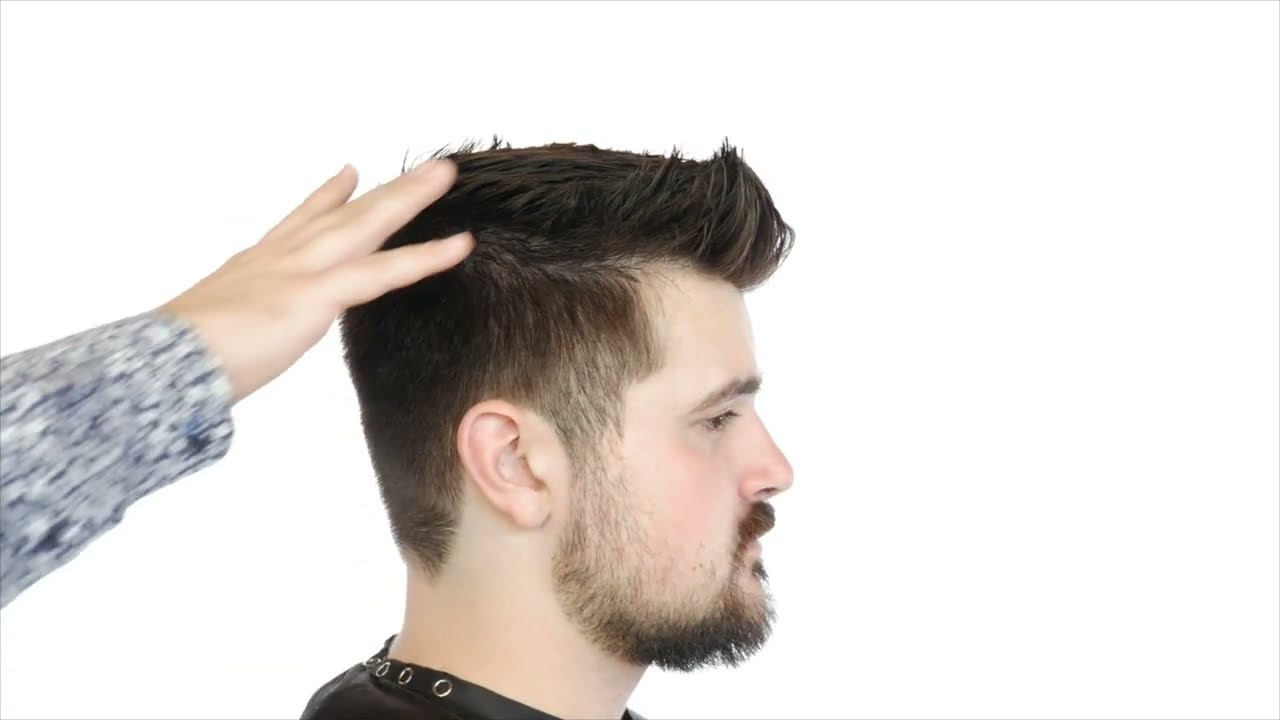
The textured crop excels at managing thick hair by keeping length short on top with choppy, piece-y layers. Your barber creates movement through point cutting, which removes weight without sacrificing style.
This cut works especially well for coarse hair that tends to stick straight up when short.

Modern Pompadour
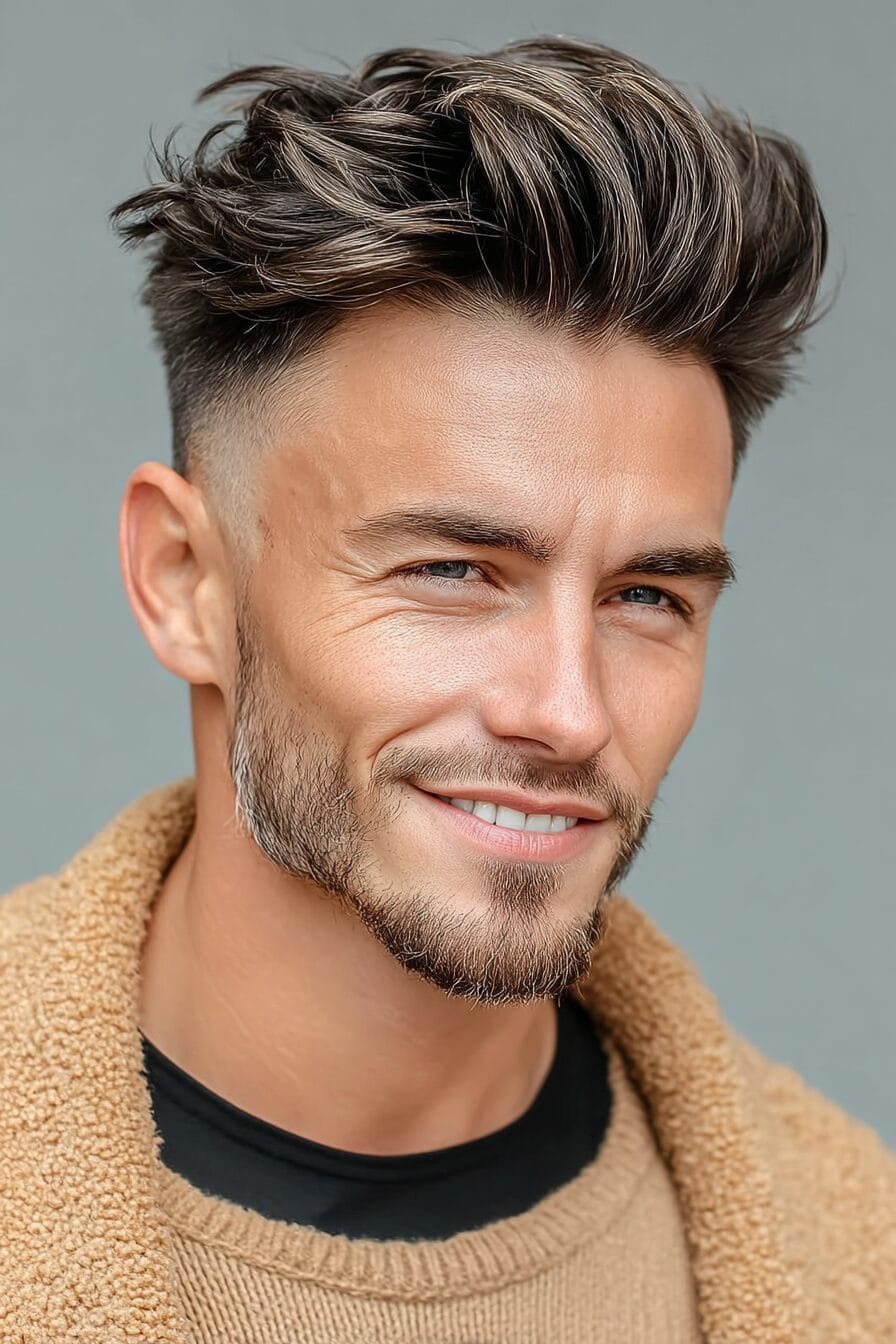
A modern pompadour uses your thick hair‘s natural volume as an advantage, creating height and drama at the front. The key is graduated length – longer in front, shorter toward the crown.
Ask for subtle thinning through the bulk areas to maintain shape without the helmet effect.

Slicked Back Undercut
Combining a disconnected undercut with slicked-back styling gives thick hair structure and control. The undercut removes weight from the sides while the top length provides styling versatility.
Strong-hold pomade becomes your best friend with this cut, keeping everything in place all day.

Classic Side Part
The side part works brilliantly for thick hair when your barber adds subtle layering throughout. Creating a defined part line helps distribute volume evenly across your head.
Request thinning shears only on the bulk areas, preserving the clean lines that make this style timeless.

Ivy League Cut
This collegiate classic manages thick hair through precise graduation and a slight quiff at the front. The cut maintains enough length for styling flexibility while controlling overall volume.
Your barber should blend the sides seamlessly, using clipper-over-comb technique for thick hair’s unique density.
- Length guide: Keep top at 1.5-2 inches for best control
- Styling tip: Use matte clay for natural texture without weight
- Maintenance: Schedule cuts every 3-4 weeks to maintain shape
🧠 Expert Advice
Ask your barber to use thinning shears strategically – never all over, just where bulk accumulates most (usually the crown and behind the ears). This targeted approach maintains your style’s structure while eliminating that mushroom effect thick hair creates.
Short Styles for Maximum Control
Buzz Cut Variations
Buzz cuts offer the ultimate low-maintenance solution for thick hair, with lengths from #1 to #4 guard. The uniform length eliminates bulk issues completely while showcasing your natural hairline.
Consider a slight fade on the sides to add dimension without complexity.

Crew Cut
The crew cut keeps enough length on top for minimal styling while tapering the sides short. This balance prevents the boxy look thick hair can create with uniform lengths.
Your barber should blend carefully, as thick hair shows harsh lines more obviously than fine hair.
High and Tight
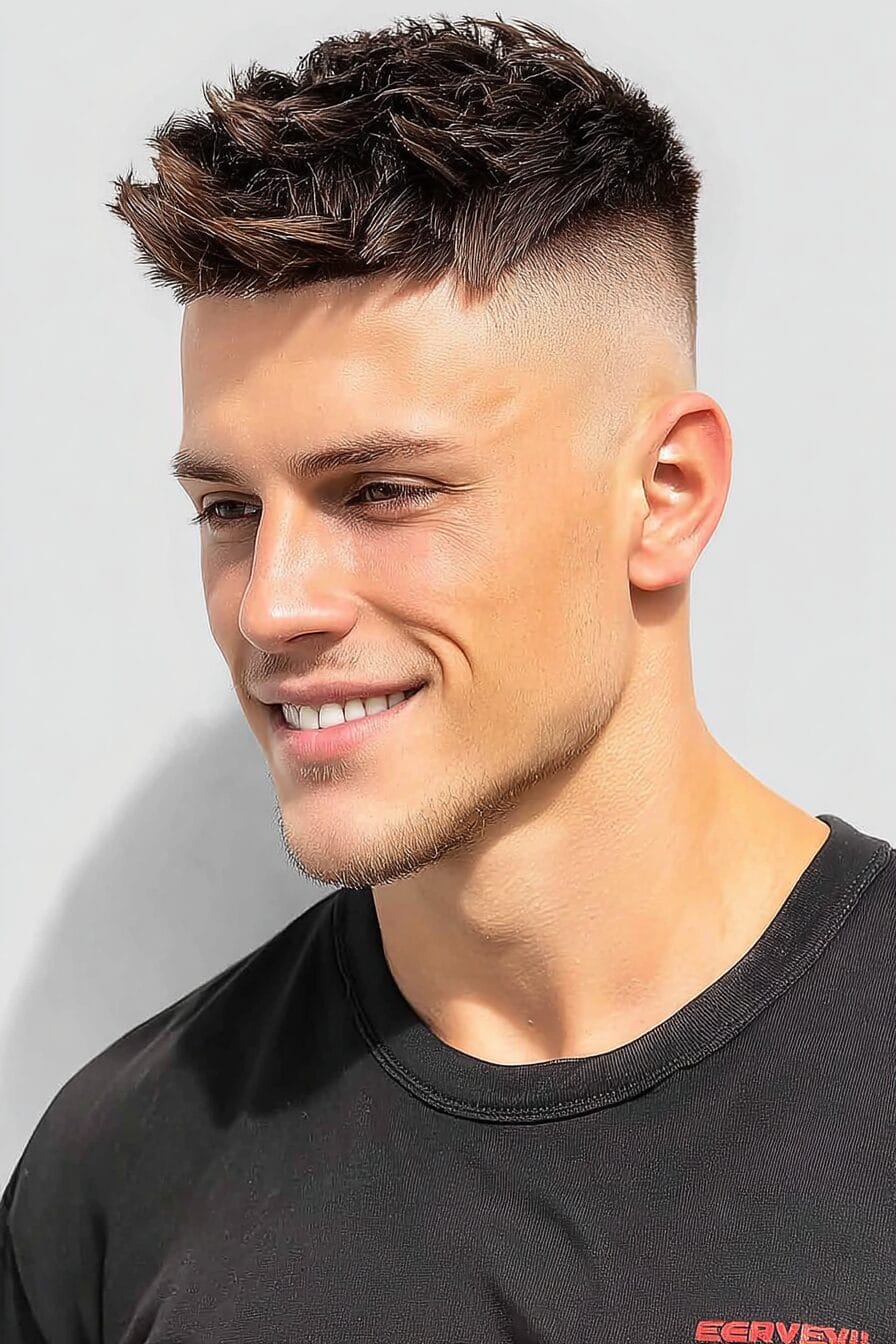
Military-inspired high and tight cuts remove bulk aggressively from the sides and back. The extreme contrast between top and sides makes thick hair manageable without daily styling effort.
This cut particularly suits guys with very coarse, wiry hair textures that resist styling products.
Burr Cut
Slightly longer than an induction cut, the burr uses a #2 or #3 guard for subtle texture. This length allows thick hair‘s natural grain patterns to show while maintaining easy upkeep.
Weekly touch-ups at home keep this cut looking fresh between professional visits.

🧠 Expert Advice
For thick-haired guys going super short, invest in your own quality clippers. You’ll save money long-term and can maintain that crisp look with quick touch-ups every 5-7 days, especially around the neckline and ears where thick hair grows fastest.
Fade Styles That Work With Thick Hair
Mid Fade With Textured Top
The mid fade starts at temple height, creating balance for thick hair‘s natural volume. Texturizing the top with point cutting adds movement while the fade removes bulk from problem areas.
This versatile cut suits most face shapes and hair types within the thick category.
Low Fade With Volume
A low fade begins just above the ears, preserving more length through the sides for gradual blending. This approach works exceptionally well for thick, straight hair that tends to stick out.
The subtle transition prevents the harsh contrast that can emphasize thick hair‘s density.

High Fade Contrast Cut
Starting the fade above the temples creates dramatic contrast that makes thick hair on top appear more manageable. The aggressive side removal balances out natural volume perfectly.
Request a #1 or #2 guard at the bottom for thick hair to avoid stubble-like appearance.

Skin Fade With Weight Removal
The skin fade takes sides down to zero, providing maximum contrast and weight reduction. Your barber must blend meticulously since thick hair shows every imperfection in the fade.
This bold choice requires touch-ups every two weeks to maintain that sharp appearance.
Taper Fade Balance
The taper fade offers the most conservative option, gradually shortening length without dramatic contrasts. Thick hair benefits from this subtle approach, maintaining professional appearance while controlling volume.
Perfect for workplace environments that frown upon aggressive fades but still need bulk management.

⚠️ Common Mistake
Many guys request their fade too high when they have thick hair, creating a top-heavy mushroom effect. Instead, start with a low or mid fade first – you can always go higher next cut, but you can’t add hair back once it’s gone.
Medium Length Options
Layered Shag Cut
The modern shag uses heavy layering to break up thick hair‘s density while maintaining touchable texture. Each layer removes weight strategically, creating movement without sacrificing overall length or style.
This cut especially suits wavy thick hair that needs shape definition.

Textured Quiff
A textured quiff transforms thick hair‘s volume into a statement style by directing growth upward and backward. Point cutting throughout creates separation, preventing that solid block look thick hair produces.
Blow-drying with a round brush becomes essential for achieving the signature quiff shape.

French Crop With Thick Hair
The French crop uses a blunt fringe to frame your face while keeping sides and back shorter. Thick hair needs extra texturizing through the fringe to prevent a harsh, straight line.
This cut works overtime, hiding receding hairlines while managing unruly thickness.

Pro tip: For medium-length cuts, thick hair responds best to blow-drying on medium heat with a pre-styling spray. This combination provides control without the crunch of heavy gels.
Not sure what your face shape is? Our Face Shape Detector figures it out in 4 quick questions.
Long Hairstyles for Thick Hair
Shoulder Length Layers
Long layers starting at the jawline break up thick hair‘s weight while maintaining overall length. Your stylist should use slide cutting techniques to create seamless blending between layers.
This approach prevents the pyramid shape thick hair naturally creates when grown long.

Man Bun Compatible Cuts
Growing thick hair for a man bun requires strategic thinning throughout the journey to prevent awkward bulky phases. Focus thinning on the sides and lower back while preserving top length.
Regular trims every 6-8 weeks keep the grow-out process looking intentional rather than neglected.

Flowing Locks With Thinning
Achieving flowing movement in thick hair requires extensive thinning and texturizing throughout all layers. Your stylist should work with your natural growth patterns, not against them.
Regular deep conditioning treatments prevent thick long hair from becoming dry and unmanageable.
- Growth time: Expect 12-18 months from short to shoulder-length
- Product must: Leave-in conditioner prevents tangling and breakage
- Styling tool: Wide-tooth comb preserves natural texture patterns

What to Tell Your Barber About Thick Hair
Most men with thick hair sit down and say “I just want to thin it out” — and that’s where things go wrong. Here’s what actually needs to happen in the chair, and the language that gets you better results every time. If you’re not sure whether your current barber understands thick hair technique, our guide on how to choose the right barber explains what to look for.
Ask for Point Cutting, Not Just Thinning
Point cutting means the barber cuts into the ends at an angle with scissors, removing weight while keeping density at the base. Thinning shears remove mass randomly throughout the hair shaft — and if overused on thick hair, they create a puffy, triangular shape instead of definition. Ask specifically for “point cutting on top” and “weight removal through the sides.” These are the words that get the right result.
Specify Where the Bulk Is
Thick hair doesn’t bulk out evenly. Most men carry extra weight at the crown, the occipital bone (back of the head), or along the sides. Point to the actual areas that bother you when you sit down. Your b
arber can then target bulk removal precisely rather than thinning the entire head and leaving it flat. If you’re unsure of your hair texture and where your density sits, understanding your specific hair type helps you communicate more clearly at every appointment.
Be Honest About Your Styling Effort Level
A thick-hair cut that requires a 15-minute blow-dry and three products every morning will only look right the first day you leave the shop. Tell your barber how much time you’ll actually invest in the morning. A skilled barber can shape thick hair so it looks controlled with minimal effort — but they need to know what “minimal” means to you before they make the first cut.
Maintenance and Styling Tips
Product Selection for Thick Hair
Thick hair demands stronger-hold products like clays, pastes, and fiber creams that provide control without weighing hair down. Avoid heavy gels that create helmet hair; choose matte finishes for natural appearance.
For a full routine built around your density and texture, our complete men’s hair care guide covers washing frequency, conditioner selection, and product layering for thick hair types.
Layer products sparingly – thick hair absorbs more than expected.

Blow Drying Techniques
Pre-dry thick hair to 80% before styling to reduce heat damage and improve control. Use medium heat with a concentrator nozzle, directing airflow against your desired style direction.
If your thick hair also frizzes when it dries, the issue is usually porosity rather than density. Our guide to frizzy hair for men explains the root causes and the fixes that actually hold.
A round brush helps create shape while the weight of thick hair maintains volume.
Morning Routine Shortcuts
Thick hair responds well to overnight preparation like loose braiding or silk pillowcases that reduce friction. Dry shampoo extends time between washes while maintaining texture and absorbing excess oils.
Keep a spray bottle handy for quick reshaping without full washing.

Between-Cut Care
Maintain thick hair between cuts with regular conditioning treatments and occasional DIY neck cleanups. Invest in quality scissors for split end maintenance, but leave major shaping to professionals.
Weekly scalp massages improve circulation and help manage thick hair‘s weight distribution.

Ready to Find Your Perfect Cut?
You’ve read about the styles. Now find the one that fits YOUR face shape, hair type, and lifestyle.
FAQs
How Often Should Men With Thick Hair Get Haircuts?
Thick hair typically needs cutting every 3-4 weeks to maintain shape, as the fast growth and density quickly obscure style lines. Shorter cuts like fades need bi-weekly touch-ups, while longer styles can stretch to 5-6 weeks.
What Guard Sizes Work Best for Thick Hair Fades?
Start with a #2 or #3 guard at the bottom of fades for thick hair, as anything shorter can look stubby. The density requires longer guards than fine hair would need for the same visual effect.
Can Thick Hair Be Thinned Too Much?
Yes, over-thinning creates frizzy, unmanageable texture and removes necessary weight for styling control. Thinning should remove bulk strategically, not uniformly, preserving structure while improving manageability and movement.
Which Pomade Holds Thick Hair Without Looking Greasy?
Water-based pomades with strong hold and matte finish work best, like Layrite Cement or Baxter Clay Pomade. These provide control without the shine that emphasizes thick hair‘s density, washing out easily without buildup.
Should Men With Thick Hair Get Layers?
Yes — but placement matters more than amount. Internal layers (added throughout the interior of the hair, not on the surface) remove bulk without changing your silhouette, creating movement and reducing morning styling time. Avoid heavy surface layering or perimeter feathering on thick hair — that creates width and puffiness rather than reducing it. Ask your barber for interior point cutting instead of external layers.
Is Thick Hair Good for Men?
Yes — thick hair is one of the most versatile and resilient textures a man can have. It holds styles longer than fine hair, tolerates more cutting techniques, and tends to resist thinning with age more effectively. The challenge isn’t the thickness itself — it’s finding the cuts and products that work with your density rather than against it. Once that’s sorted, thick hair becomes a clear advantage in the barber chair.
Was this article helpful?

Khamis Maiouf is a professional barber who graduated from Hinckley College in England with a Level 3 qualification in hairdressing. With over 20 years of experience, he is an award-winning barber who has mentored numerous students and styled thousands of clients. A recognised expert featured on StyleCraze (20M+ readers).
Credentials: Level 3 Hairdressing (Hinckley College, UK) • 20+ Years Professional Experience • Featured Expert on StyleCraze • Founder of Book of Barbering