
— Award-Winning Barber · 20+ Years Experience · Level 3 Qualified
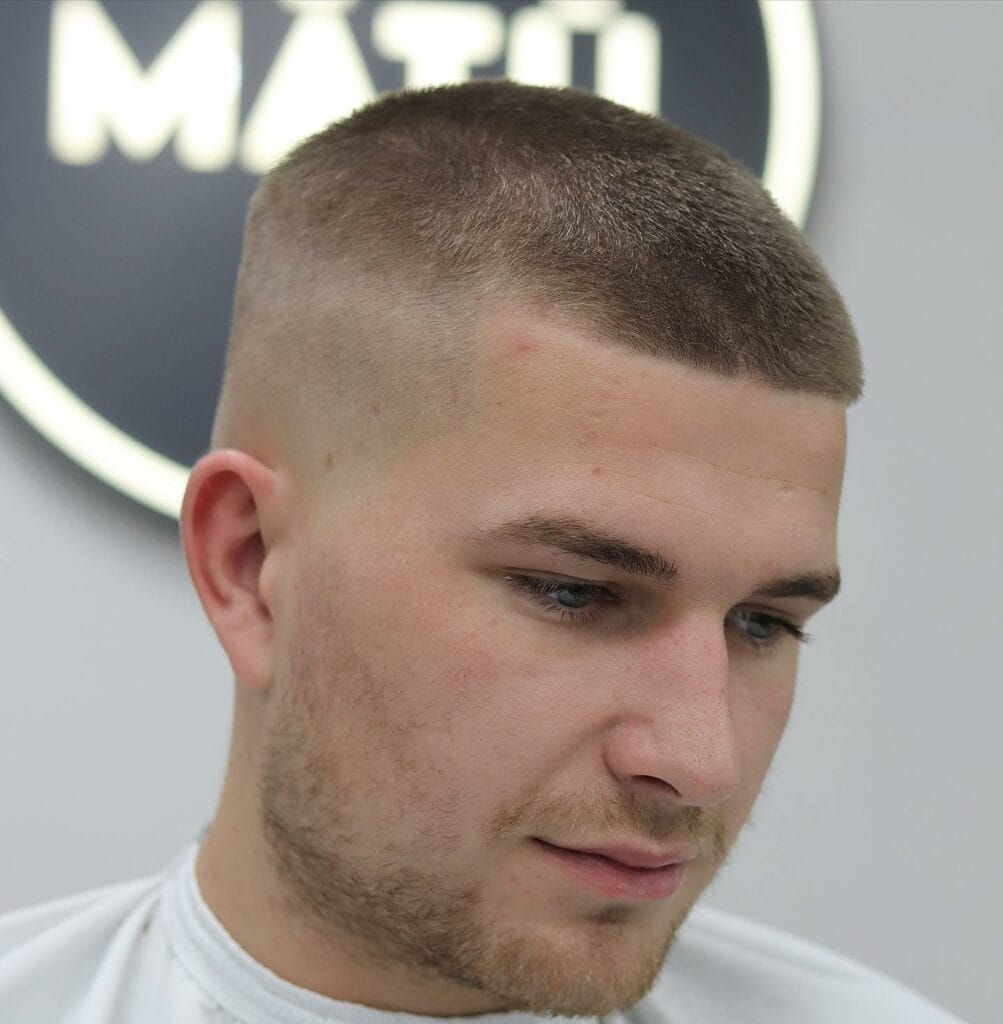
The French crop is the haircut I recommend most often to guys who want to look sharp without spending more than 60 seconds styling. I’ve been cutting crops for over 20 years, and what makes this style so effective is its simplicity — a textured top, a forward fringe, clean sides, done. It flatters almost every face shape, works on every hair type, and grows out gracefully instead of looking messy after two weeks. Here’s exactly how to get one that works for you.
Key Takeaways
- The French crop features a short textured top styled forward into a blunt or textured fringe — it’s one of the most versatile men’s cuts
- Suits every face shape: the fringe shortens long faces, the texture adds dimension to round faces
- Works on straight, wavy, curly, thick, and thin hair — each texture creates a different version of the same style
- One of the best cuts for thinning hair — the forward fringe disguises receding hairlines naturally
- Style in under 60 seconds with matte clay or texture paste — truly low maintenance
Essential French Crop Foundations
The French crop builds on classic barbering principles with modern precision. Your barber creates graduated layers through the crown while maintaining density up front.
This cut’s genius lies in its architectural balance. Short back sections transition smoothly into a defined fringe that frames your features without overwhelming them.

Defining French Crop Features
Three elements define every authentic French crop: textured fringe, graduated sides, and seamless blending. The fringe sits 1-2 inches forward, creating movement without bulk.
Your sides taper from #3 to #1, maintaining clean lines. The crown keeps strategic length for versatile styling options throughout your day.

French Crop vs Other Cuts
Unlike Caesar cuts‘ uniform length, French crops feature intentional graduation and texture. Buzz cuts lack the defining fringe that makes this style distinctive.
Crew cuts push hair upward; French crops direct everything forward. This forward motion creates face-framing geometry that works with your natural growth patterns.

📏 Key Measurements
Precision measurements separate amateur attempts from professional French crops. Fringe length runs 0.75-1.5 inches, depending on your forehead proportions and styling preference.
Side graduation starts at 12mm, fading to 3mm. Top sections maintain 1.5-2 inches for movement while avoiding excessive weight that kills the shape.

French Crop Hair Type Solutions
Hair texture determines your French crop‘s daily behavior and maintenance needs. Smart barbers adjust cutting techniques to work with your natural patterns.
Understanding your hair type eliminates morning styling battles. The right approach transforms problematic texture into your cut’s strongest asset.
Straight Hair French Crop
Straight hair requires aggressive texturizing to prevent helmet-like flatness. Point-cutting creates movement while maintaining clean fringe lines.
Add sea salt spray for grip and definition. Your natural sleekness becomes an advantage with proper product application and strategic layer placement throughout.

Wavy Hair Techniques
Wavy hair brings built-in texture that enhances French crop character. Work with wave patterns rather than fighting them through excessive product use.
Diffuse-dry while scrunching to amplify natural movement. Light creams control frizz while preserving your waves’ organic flow and dimension.

Curly French Crop Control
Curly French crops need length adjustments accounting for spring-back after cutting. Your barber should cut wet, then refine dry for accuracy.
Use curl-defining creams sparingly on damp hair. Finger-coil individual pieces for uniformity while maintaining your natural texture’s dynamic character throughout.

Thick Hair Management
Thick hair benefits from internal layering that removes bulk without sacrificing shape. Thinning shears used strategically prevent mushroom-like proportions.
Schedule cuts every 3 weeks to maintain control. Matte clays provide hold without adding weight that collapses your carefully crafted structure.

Modern French Crop Variations
Contemporary French crops push traditional boundaries through bold fades and artistic disconnections. Modern barbering tools enable precision previously impossible.
These variations let you personalize while maintaining the cut’s functional benefits. Choose modifications that align with your lifestyle and grooming commitment.
Textured French Crop
Textured variations maximize movement through aggressive point-cutting and varied lengths. Each strand moves independently, creating organic flow and visual interest.
Sea salt sprays enhance natural texture without stiffness. This approach suits casual lifestyles requiring minimal daily styling effort while maintaining deliberate appearance.

French Crop Fade
Fade integration modernizes classic French crops with contemporary edge. Skin fades create dramatic contrast while mid-fades offer subtle sophistication.
Blend points determine overall impact—higher blends elongate faces. Lower transitions maintain width for balanced proportions across all facial structures.

Disconnected French Crop
Disconnected versions eliminate blend zones between top and sides entirely. This creates bold geometric lines demanding confidence and regular maintenance.
The harsh transition amplifies facial features dramatically. Best suited for strong bone structures that handle high-contrast styling without appearing overwhelmed.

🎯 Precision Points
Critical precision points include temple corners, neckline shape, and fringe symmetry. Temple points should align with your eyebrow arch for natural framing.
Necklines follow natural hairlines without forced shapes. Fringe edges need daily attention—even 2mm asymmetry becomes obvious in this prominent position.
- Temple fade: Start 1cm above ear top for balance
- Neckline taper: Follow natural growth for longevity
- Fringe guide: Cut at eyebrow level when pulled down
- Weight removal focuses on crown density

French Crop Styling Mastery
Professional styling transforms good French crops into exceptional ones. Product selection and application technique determine your daily success rate.
Master these fundamentals before attempting advanced techniques. Consistent basics outperform sporadic complexity in real-world grooming scenarios.

Product Selection
Match products to your hair type and desired finish. Matte clays suit thick hair; lightweight creams work for fine textures.
Test products on dry hair first. This reveals true hold strength and finish without water dilution misleading your assessment.

Morning Routine
Start with towel-dried hair for optimal product distribution. Apply product to palms, emulsify thoroughly, then work through from crown forward.
Use a blow dryer on medium heat for control. Cold shots lock in your style while preventing heat damage accumulation.

Texture Creation
Build texture through strategic product placement rather than excessive amounts. Focus applications on mid-lengths while avoiding roots that need lift.
Pinch and twist individual sections for definition. This handcrafted approach beats aggressive scrunching that creates uniform, boring texture throughout.
Not sure what your face shape is? Our Face Shape Detector figures it out in 4 quick questions.
French Crop Maintenance
Strategic maintenance preserves your French crop‘s sharp architecture between cuts. Understanding growth patterns prevents awkward transition phases.
Develop a maintenance rhythm matching your hair’s growth rate. Consistency beats sporadic panic visits when shapes become unrecognizable.

Growth Timeline
Week one maintains perfect shape with minimal effort required daily. Week two introduces slight softening that many prefer for natural movement.
Week three demands increased styling attention as weight accumulates. Week four typically triggers booking your next appointment before losing control entirely.

⏱️ Trim Schedule
Fast-growing hair needs 2-3 week intervals for optimal appearance. Average growth rates handle 3-4 week spacing comfortably.
Book appointments in advance to maintain consistency. Waiting for obvious overgrowth means you’ve already spent a week looking suboptimal.
Home Touch-Ups
Invest in quality trimmers for neckline and sideburn maintenance between visits. Clean these areas weekly to maintain sharp definition.
Never attempt fringe trimming at home—this ruins proportions instantly. Save complex work for professionals while handling simple edges yourself.

Ready to Find Your Perfect Cut?
You’ve read about the styles. Now find the one that fits YOUR face shape, hair type, and lifestyle.
🎬 FRENCH CROP HAIRCUT
FAQs
How long for French crop fringe?
Ideal fringe length ranges from 0.75-1.5 inches depending on forehead size and personal preference. Longer fringes suit larger foreheads while shorter works for minimal foreheads.
Start at 1 inch for versatility. This length allows both forward and slightly upward styling while maintaining the cut’s characteristic clean lines.
French crop maintenance frequency?
Schedule cuts every 3-4 weeks for consistent appearance. Faster-growing hair needs 2-3 week intervals while slower growth handles monthly visits.
Book recurring appointments to maintain your rhythm. Waiting for obvious overgrowth means you’ve already spent 7-10 days looking less than optimal.
Best French crop for thick hair?
Thick hair benefits from aggressive internal layering and texturizing. Request point-cutting throughout to remove weight while maintaining your structured shape.
Combine with strong-hold matte products for control. Avoid heavy pomades that add unnecessary weight, causing thick hair to collapse flat.
French crop without styling?
Well-cut French crops require minimal styling for casual occasions. The architectural structure maintains basic shape through natural air-drying alone.
For polished appearance, invest 2 minutes using texture powder. This enhances your cut’s natural movement without formal styling routines or tools.
French Crop vs Other Short Styles
Guys often confuse the French crop with similar short cuts. Here’s how it stacks up against the most common alternatives.
The Caesar cut is the closest relative — both feature a forward fringe, but the Caesar has a uniform length throughout while the French crop uses more texture and a longer, varied top. See our Caesar cut French crop comparison for a deeper breakdown.
A crew cut is shorter overall and lacks the defined fringe. If you want the shortest possible version of the French crop, you’re basically looking at a textured Caesar. If you want more length and flow, you’re heading toward a crop top fade.
The Edgar cut shares the blunt fringe but has a more dramatic disconnect from a skin fade. The French crop blends more gradually and has a softer, more textured finish.
Is a French crop good for thinning hair?
Yes — it’s one of the best cuts for thinning hair. The forward-styled fringe naturally disguises a receding hairline, and the textured top creates the illusion of more density. Keep the top at 1.5–2 inches and use matte clay to add volume without showing scalp.
Was this article helpful?

Khamis Maiouf is a professional barber who graduated from Hinckley College in England with a Level 3 qualification in hairdressing. With over 20 years of experience, he is an award-winning barber who has mentored numerous students and styled thousands of clients. A recognised expert featured on StyleCraze (20M+ readers).
Credentials: Level 3 Hairdressing (Hinckley College, UK) • 20+ Years Professional Experience • Featured Expert on StyleCraze • Founder of Book of Barbering