
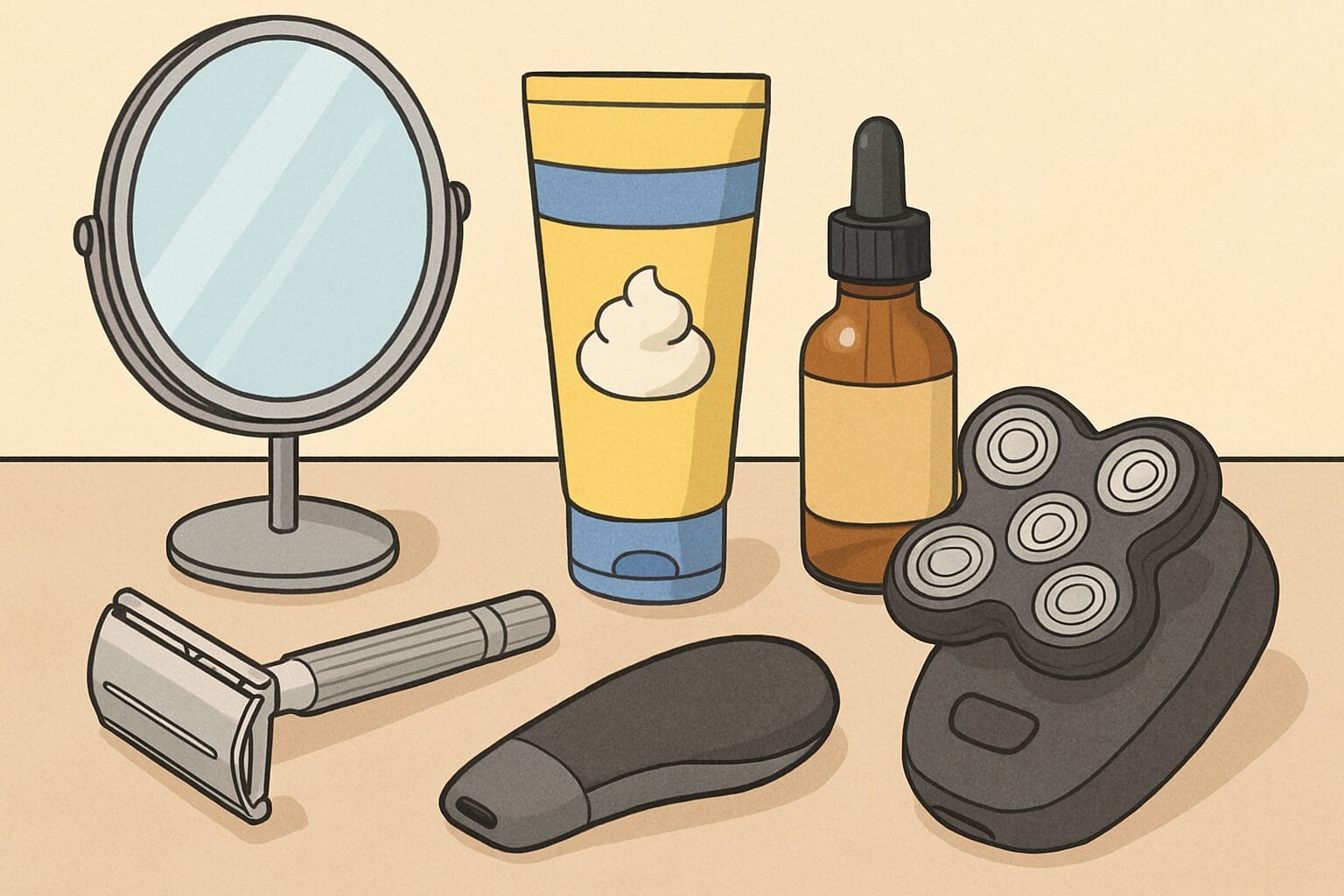
Most guys who try shaving their head at home end up with nicks, razor burn, and patchy spots — not the smooth dome they were after. After shaving hundreds of heads in the barber chair, I can tell you the difference comes down to preparation and technique, not expensive tools.
Here are the head shaving tips that consistently deliver a clean, irritation-free finish — and every one of them works just as well at home as in the shop.
Key Takeaways
- Always buzz hair down to stubble before using a razor — prevents clogging and pulling
- Shave with the grain first, then against for maximum smoothness without excessive irritation
- Replace blades every 5–7 shaves — dull blades cause most nicks and razor burn
- Apply SPF 30+ daily to your shaved scalp, even on cloudy days
- Moisturize morning and night to prevent dryness and ingrown hairs between shaves
Wet vs Dry Shaving
Wet shaving with a manual razor gives the closest possible finish — you can feel the smoothness immediately. It takes longer and requires cream, but the results are worth it for most men who want a completely smooth dome. For the full technique breakdown, check out our complete wet shave guide.
Electric dry shaving is faster and more forgiving on sensitive skin, but you won’t get that baby-smooth feel. Most of my clients who shave their heads regularly use wet shaving 2–3 times a week and an electric trimmer for quick touch-ups between sessions.
Tools and Preparation
Having the right equipment makes the difference between a comfortable shave and a painful experience.
Start with a quality multi-blade razor like the Gillette Fusion5 or a dedicated head shaver such as the Pitbull Gold. You’ll also need pre-shave oil, quality shaving cream or gel, and a moisturizing aftershave balm. Keep a handheld mirror ready for checking blind spots.
For electric options, rotary shavers work best on head curves while foil shavers provide closer results on flatter areas. Whichever you choose, ensure blades are sharp and replaced regularly. Dull blades cause irritation and require multiple passes that damage skin.
With proper tools assembled, you’re ready to begin the pre-shave routine.
Pre-Shave Routine

Proper preparation prevents 90% of shaving problems before they start.
Scalp Assessment

Run your fingers across your entire scalp, feeling for moles, bumps, or areas of irritation. Mark sensitive spots mentally to approach them carefully during shaving.
Check for any cuts, sunburn, or active acne that might worsen with shaving. If you find problem areas, consider postponing your shave or working around them with extra caution.
Hair Length Preparation

If your hair is longer than 1/4 inch, use clippers without a guard to buzz everything down first. This prevents razor clogging and reduces pulling that causes irritation.
Work systematically from front to back, using overlapping strokes to ensure even length. Pay special attention to the crown area where hair often grows in swirls requiring multiple pass directions.
Scalp Cleansing

Wash your scalp with warm water and a gentle shampoo to remove oils and dead skin cells. This softens remaining hair and opens pores for easier shaving.
After washing, apply a hot towel to your head for 2-3 minutes. The heat further softens stubble and relaxes the skin, making your razor glide more smoothly.
Now your scalp is perfectly prepped for the main shaving process.
The Head Shaving Process

The actual shaving requires patience and systematic technique for best results.
First Pass: With the Grain

Apply a thick layer of shaving cream, working it in circular motions to lift hair. Start at the front hairline, shaving in the direction of hair growth using smooth, controlled strokes.
Rinse your razor every 2-3 strokes to prevent clogging. Move systematically from front to sides, then tackle the back using your handheld mirror for guidance.
Second Pass: Against the Grain

Reapply shaving cream and shave against the grain for maximum smoothness. Use lighter pressure than the first pass since skin is now more sensitive.
Feel for missed spots with your free hand as you go. The sides often need diagonal strokes while the back typically requires upward motions for complete coverage.
💡 Pro Tip
Use short, overlapping strokes of 1-2 inches on curved areas like above the ears and around the crown. This maintains consistent blade contact and prevents nicks that longer strokes cause on uneven surfaces. In my experience, this technique alone reduces shaving accidents by half.
These fundamentals prepare you for tackling the trickiest parts of head shaving.
Navigating Difficult Areas

Certain scalp regions require special attention and modified techniques.
Back of the Head

Position a handheld mirror opposite your bathroom mirror to see the back clearly. Hold your razor at a 30-degree angle and use upward strokes from the nape.
Feel with your free hand continuously to check progress. Many men find success shaving the back in vertical sections, completing one strip fully before moving to the next.
Crown and Swirl Patterns

Hair at the crown often grows in circles or multiple directions. Shave from multiple angles – north, south, east, and west – to catch all growth patterns.
Apply extra cream to this area and use gentle pressure. The crown’s rounded shape makes it prone to nicks, so short strokes and frequent blade rinsing are essential.
With practice, these challenging areas become routine, leading us to crucial post-shave care.
Post-Shave Care

Proper aftercare determines whether you’ll enjoy smooth comfort or suffer irritation for days.
Immediate Aftercare

Rinse with cool water to close pores and remove all shaving cream residue. Pat dry gently with a clean towel – never rub, as fresh-shaved skin is extremely sensitive.
Apply an alcohol-free aftershave balm immediately, using upward motions to ensure complete coverage. Look for products with aloe vera or tea tree oil which naturally soothe and prevent infection.
⚠️ Common Mistake
Skipping sunscreen on your newly shaved head leads to painful burns within 15 minutes of sun exposure. Fresh-shaved scalps lack any natural protection, making them incredibly vulnerable to UV damage. Always apply SPF 30 or higher before going outside, even on cloudy days.
Consistent aftercare transitions naturally into long-term scalp maintenance.
Maintaining Your Smooth Scalp

Daily care keeps your scalp healthy between shaves while determining optimal shaving frequency.
Moisturize your scalp every morning and night with a lightweight, non-greasy lotion. This prevents dryness and flaking that makes your next shave uncomfortable. In my experience, men who moisturize daily can shave every 2-3 days comfortably versus daily for those who don’t.
Exfoliate twice weekly using a gentle scalp scrub or soft bristle brush. This removes dead skin cells and prevents ingrown hairs. Focus on areas prone to bumps like the back of your head and above the ears.
Most men find shaving every 2-4 days maintains smoothness without irritation. Your hair growth rate and skin sensitivity determine your ideal schedule. Start with every three days and adjust based on comfort.
Understanding maintenance helps you recognize and prevent common shaving issues.
Shaving Your Head for the First Time
Your first head shave takes twice as long as every one after it — and that’s completely normal. Most of my clients who come back frustrated after their first attempt made one mistake: they tried to finish in 10 minutes like they’d been doing it for years.
Start by buzzing everything down to stubble with no-guard clippers before touching a razor. This is non-negotiable for first-timers — trying to razor-shave longer hair clogs the blade instantly and pulls painfully. Once you’re down to stubble, follow the full prep routine above.
Expect your scalp to feel strange for the first few days. Temperature changes hit differently, wind feels unusual, and sun exposure becomes a real concern. Stock up on SPF 30+ before your first shave — most first-timers forget this and end up with a sunburned scalp within 48 hours.
By your third or fourth shave, you’ll have the angles memorized and your routine will drop to under 15 minutes. If you want a more detailed step-by-step walkthrough, our complete head shaving guide covers the entire process. And if you’re going fully bald, consider pairing it with a beard style that complements a shaved head.
Preventing Common Issues

Most head shaving problems are preventable with proper technique and product choices.
Razor burn occurs from excessive pressure, dull blades, or shaving dry skin. Always use sharp blades, plenty of lubrication, and let the razor’s weight do the work. If burn develops, apply cold compress immediately and avoid shaving that area for 48 hours.
Ingrown hairs form when cut hair curls back into skin. Prevent them by shaving with the grain first, exfoliating regularly, and avoiding multiple passes over the same area. For existing ingrowns, apply warm compress and gently extract with sterilized tweezers.
Dry, flaky scalp results from over-shaving or harsh products. Switch to sensitive-skin formulas and reduce shaving frequency if flaking persists. Overnight oil treatments with coconut or argan oil can restore moisture balance quickly.
Ready to Find Your Perfect Cut?
You’ve read about the styles. Now find the one that fits YOUR face shape, hair type, and lifestyle.
🎬 How To SAFELY Shave Your Head BALD – 5 HEAD SHAVING TIPS FOR BEGINNERS – Hair Loss & Balding Advice
FAQs
How often should I shave my head for best results?
Most men achieve optimal results shaving every 2-3 days, though this varies with hair growth speed. Start with every third day and adjust based on your comfort and desired smoothness level. Daily shaving works for some but often causes irritation.
What’s the best razor type for head shaving?
Multi-blade cartridge razors like the Gillette Fusion5 ProGlide offer the best balance of closeness and safety for beginners. Electric rotary shavers provide convenience but less closeness. Advanced shavers might prefer safety razors for cost efficiency and reduced irritation.
How do I prevent razor bumps on my scalp?
Always shave after a hot shower when pores are open, use sharp blades changed every 5-7 shaves, and avoid stretching skin while shaving. Apply witch hazel immediately after shaving and moisturize daily. If bumps persist, try shaving every other day instead of daily.
Is it better to shave your head wet or dry?
Wet shaving with a manual razor gives a closer, smoother finish but takes more time and requires shaving cream. Dry shaving with an electric head shaver is faster and gentler on sensitive skin, though you won’t get that completely smooth feel. Most men who shave their heads regularly use wet shaving 2–3 times a week and an electric trimmer for quick touch-ups between sessions.
How do you shave your head smooth without shadow?
A visible shadow means the first pass didn’t cut hair close enough to the skin. Shave with the grain first, then reapply shaving cream and make a second pass against the grain. Use a sharp multi-blade razor — dull blades are the most common reason for shadow. For the smoothest results, shave right after a hot shower when hair is softest and pores are open.
Was this article helpful?

Khamis Maiouf is a professional barber who graduated from Hinckley College in England with a Level 3 qualification in hairdressing. With over 20 years of experience, he is an award-winning barber who has mentored numerous students and styled thousands of clients. A recognised expert featured on StyleCraze (20M+ readers).
Credentials: Level 3 Hairdressing (Hinckley College, UK) • 20+ Years Professional Experience • Featured Expert on StyleCraze • Founder of Book of Barbering