

The number one reason a haircut looks wrong on a guy isn’t the style itself—it’s the mismatch with his face shape. After two decades behind the chair, I can spot an oval from a diamond before the cape goes on, and that assessment drives every decision from fade height to fringe length.
This guide breaks down all seven face shapes with specific cuts, beard pairings, and product picks that actually work for each one.
Not sure which cut is right for you? Try our free Haircut Finder tool — answer 5 quick questions and get personalised recommendations with barber instructions.
Not sure what your face shape is? Our Face Shape Detector figures it out in 4 quick questions.

- Oval faces are the most versatile—almost any cut works, but a textured crop or pompadour maximizes the balanced proportions
- Measure 4 points to identify your shape: forehead width, cheekbone width, jawline width, and face length
- Your beard pairing matters as much as the haircut—a full beard on a round face adds width you don’t want
- Fade height should complement your shape: high fades elongate round faces, low fades preserve width on long faces
- Revisit your barber every 3–4 weeks to maintain a shape-optimized cut—once the proportions grow out, the face-shape benefit disappears
Knowing your face shape is step one — step two is matching it to one of the 25 men’s haircuts ranked for face shape and hair type.
Understanding Face Shapes
Every great haircut begins with understanding the canvas—your face shape. Knowing whether your face is oval, square, round, or otherwise guides which styles enhance your natural features. It’s less about following trends and more about creating balance. When barbers assess shape, they think like architects: structure, proportion, and symmetry.
The right haircut doesn’t just look neat—it strengthens the presence of your entire face without unnecessary guesswork.
- Identify: Measure forehead, cheekbones, jawline, and face length.
- Compare proportions to standard face shape categories.
- Use your shape to guide haircut and beard decisions.

What Is a Face Shape?
A face shape refers to the geometric outline your facial structure forms when viewed straight on. It’s defined by the relative width of your forehead, cheekbones, and jawline compared to overall face length. Understanding yours helps determine which hairstyles will enhance symmetry.
For example, a wider jawline often benefits from volume on top, while rounder faces look sharper with angular cuts. Knowing this distinction gives you a strong foundation for styling choices.
How Barbers Assess Face Shapes
Barbers often use quick visual checks and subtle measurements to identify face shapes. They observe the widest points of the face, the angle of the jaw, and how the forehead compares to the chin. Sometimes they’ll trace an imaginary outline around the face to spot dominant proportions.
This assessment guides haircut recommendations, ensuring the chosen style balances rather than exaggerates natural features. It’s a practiced skill that separates routine trims from tailored grooming advice.

How to Measure Your Face Shape at Home
Grab a flexible tape measure and stand in front of a mirror. You need four measurements:
Forehead: Measure across the widest part, typically from one temple hairline to the other. Cheekbones: Measure from the outer corner of one eye to the other, across the bridge of your nose. Jawline: Measure from the tip of your chin to below your ear along the jaw edge, then double the number.
Face length: Measure from the center of your hairline straight down to the tip of your chin. Compare these four numbers—the widest measurement and the length-to-width ratio tell you your shape. If your face is longer than wide with balanced proportions, you’re oval. If all measurements are roughly equal, you’re round or square (the jawline angle decides which).
Oval Face Shape Styles
Oval faces are often considered the most adaptable, with balanced proportions that allow nearly any hairstyle to look natural. The trick is to avoid hiding the symmetry with overly heavy fringes.
Cuts that emphasize volume, texture, or clean fades all sit well. Barbers love working with this shape because it’s a versatile canvas. From casual textured crops to classic pompadours, oval faces provide endless opportunities to experiment without losing balance.
Oval faces are the “jack of all trades” in men’s haircutting.

Textured Crop for Oval Faces
A textured crop adds movement and definition without weighing the face down. The short back and sides keep everything neat, while the textured top enhances natural flow.
This style works well because it frames the oval shape without covering the forehead. It’s low-maintenance, requiring minimal daily effort—just a quick rub of matte product.
Think of it as controlled chaos: stylishly undone yet intentional, perfectly suited for men who want easy upkeep with modern flair.
Pompadour for Oval Faces
The pompadour brings height and refinement, which oval faces handle beautifully. By lifting the hair upward and slightly back, the style elongates the profile without distorting proportions.
It’s versatile too—worn sleek with pomade for formal settings or looser for casual looks. Oval faces benefit because the clean lines of the pompadour don’t overwhelm the balanced shape. It’s a bold option that still feels naturally suited, making it a classic yet adaptable choice.

Fade Variations for Oval Faces
Fade cuts sharpen the appearance of oval faces by emphasizing clean edges along the sides. Low fades keep it subtle, mid fades strike a balanced look, and high fades create striking contrast.
Each variation maintains the oval shape’s symmetry while adding definition. Pairing a fade with textured tops or quiffs lets you customize the effect. It’s the kind of adaptable cut that works for both professional settings and weekend outings without missing the mark.

Square Face Shape Styles
Square faces are all about strength—defined jawlines and broad foreheads that project confidence. The right haircut complements these bold angles rather than softening them too much.
Short, structured cuts emphasize masculinity while neat styling brings out symmetry. Whether you go ultra-short with a buzz or add sophistication with a side part, the goal is highlighting the natural bone structure. These cuts reinforce presence, giving square faces a sharper, commanding appearance that feels effortlessly confident.
- Highlight: Emphasize jawline with tight, neat edges.
- Structured styles complement strong facial features naturally.
- Keep volume controlled to avoid overwhelming proportions.

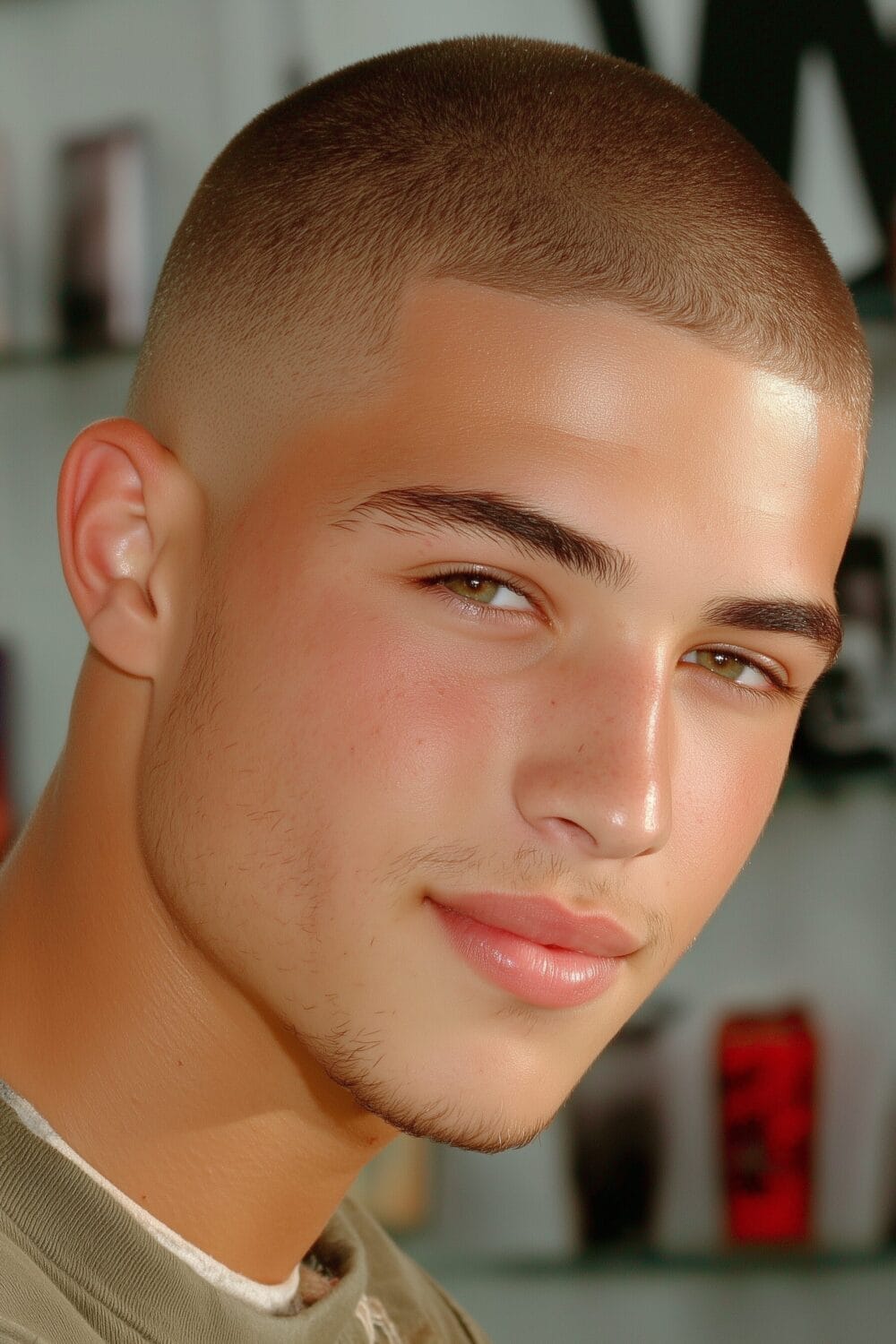
Buzz Cut for Square Faces
The buzz cut works like a spotlight for square faces, highlighting symmetry and jawline definition. Because the hair is uniformly short, attention shifts directly to bone structure.
This style carries a clean, masculine edge with almost no maintenance required. It’s ideal for men who want to project strength and simplicity without daily styling. Think of it as stripping things back to essentials—sharp lines, strong features, and a cut that never distracts from the face itself.
Crew Cut for Square Faces
The crew cut strikes a balance between minimalism and style for square faces.
Slightly longer on top than a buzz cut, it sharpens the edges while adding subtle shape. This classic look highlights the jawline and forehead without being extreme.
It’s also versatile: neat for work, easy-going on weekends. With its military roots, the crew cut conveys discipline and strength while remaining approachable—a timeless pairing for naturally bold bone structure.

Side Part for Square Faces
A side part introduces structure and sophistication, making it perfect for square faces. By creating a defined line, it draws attention to symmetry while giving a professional finish.
The extra length on top softens the heaviness of strong jawlines without losing masculine appeal. Barbers often recommend this style to men who want flexibility: slick it neatly for formal events or wear it looser for casual outings. It’s clean, adaptable, and always sharp-looking.

Round Face Shape Styles
Round faces benefit from styles that create angles, height, and sharper outlines. The goal is to elongate the appearance of the face while adding definition at the edges.
By introducing contrast—whether through volume on top or tighter fades at the sides—you counteract softness and bring balance. Hairstyles like quiffs, angular fringes, and undercuts do this effectively, carving structure into naturally curved features. These choices transform roundness into a sharper, more chiseled appearance.
Think of it as sculpting edges where nature gave curves.

High Fade with Quiff
The high fade with quiff brings vertical lift, which helps elongate a round face. By keeping the sides clipped short and tight, focus shifts to the styled top. The quiff adds angles and sharpness, balancing softer facial curves.
This style is flexible too: polished with strong hold product or textured for a relaxed feel. It’s especially effective for men wanting extra definition while keeping a youthful, confident look that adapts across settings.

Angular Fringe for Round Faces
An angular fringe introduces sharper lines across the forehead, helping to break the rounded outline of the face. By directing hair diagonally, it creates contrast and adds dimension.
This style works especially well with textured layers that sit neatly without overwhelming. It’s modern and expressive while still flattering proportions. The angular design subtly alters how the face is perceived, making it appear longer and more structured—a simple adjustment with a big impact.

Undercut for Round Faces
The undercut adds strong definition by creating sharp contrast between the sides and the top. This separation draws the eye upward, making the face look longer and slimmer.
With plenty of styling options—slicked back, textured, or voluminous—the undercut adapts easily to personal preference. It’s ideal for men with round faces who want a bold statement while carving in sharper edges. Think of it as chiseling out structure through hair alone.

Oblong Face Shape Styles
Oblong faces have more vertical length, so the right haircut reduces the impression of being too long. Styles that build width, volume, and texture across the sides are key. Medium layers, fringes, and tapered cuts all create this effect by balancing proportions.
The trick is avoiding excessive height on top, which exaggerates length. By focusing on flow and lateral volume, barbers help oblong faces achieve symmetry and a softer, more approachable profile.
- Balance: Add width through layers or fringe.
- Avoid excess vertical lift that elongates further.
- Choose versatile cuts that adjust between casual and formal.

Medium Length Layered Cut
Medium-length layered cuts add texture and width across the head, reducing the elongated feel of oblong faces. By introducing staggered lengths, the style softens vertical lines and brings proportion back.
It’s a great choice for men who enjoy movement and a slightly relaxed look. With minimal styling, layers fall naturally, providing flow without stiffness. This makes the cut both stylish and practical, striking the perfect balance between shape correction and easy upkeep.

Side Swept Fringe
A side swept fringe interrupts vertical length by drawing attention horizontally. It introduces softness across the forehead, which visually shortens the face. Combined with medium length sides, this style offers a controlled, stylish flow that frames the eyes.
It’s versatile, giving you the option of keeping it refined or casual. For oblong faces, this approach provides balance while still letting personal style shine through—offering control without looking overly forced.

Classic Taper for Oblong Faces
The classic taper works beautifully on oblong faces because it balances formality with proportion. By gradually reducing hair length from top to neckline, it adds structure without elongating.
The style looks sharp but not severe, making it perfect for everyday wear. It’s understated, yet delivers the balance oblong faces need. The taper avoids extremes, keeping features harmonious and adaptable for both professional environments and casual routines without demanding excessive styling effort.

Diamond Face Shape Styles
Diamond faces, marked by wider cheekbones and narrower foreheads and chins, look best with cuts that soften sharpness. The aim is to broaden narrower areas and reduce angular dominance.
Hairstyles with texture, volume, or softness around the forehead and jawline achieve this beautifully. Think textured fringes, slick backs, and quiffs—all of which balance the strong cheekbone structure. The result is a look that feels intentional, highlighting strengths while evening out proportions.
For diamond faces, the goal is balance over boldness.

Textured Fringe for Diamond Faces
The textured fringe widens the forehead while balancing the pointed chin area. By layering across the brow, it softens sharp angles from cheekbones. This style gives movement and casual character, keeping the look approachable rather than severe.
It’s especially effective for men wanting to reduce harshness without losing edge. The controlled texture creates proportion while maintaining a modern feel, making it a great option for everyday wear across settings.

Slick Back for Diamond Faces
A slick back enhances the natural angularity of diamond faces, highlighting strong cheekbones while narrowing the sides. By sweeping hair cleanly backward, it adds polish and control.
This look works particularly well with medium hair length and a product that delivers shine. The effect is sharp and deliberate, making it a powerful style statement.
For men with diamond shapes, it amplifies presence while still maintaining proportion through neatness and precision.
Messy Quiff for Diamond Faces
The messy quiff introduces playful volume that balances sharper features of the diamond face. By keeping height but allowing texture, it softens cheekbone dominance without feeling overly polished. It’s casual, approachable, and adaptable for different occasions.
This style offers structure without rigidity, giving men flexibility in how much definition they want day-to-day. The result is balance achieved through controlled dishevelment—deliberately stylish without being too contrived or overly neat.

Heart Face Shape Styles
Heart-shaped faces, characterized by broader foreheads and narrower chins, require styles that reduce width on top while adding balance below. Cuts that soften the forehead area or create downward flow work best.
Barbers often recommend longer fringes, side parts, or textured waves to achieve this. The effect is to balance proportions by shifting attention downward.
Done right, these cuts make heart-shaped faces look evenly proportioned and naturally flattering.
- Soften: Reduce forehead dominance with side-swept or layered styles.
- Balance width by drawing attention downward naturally.
- Introduce texture that feels natural, not rigid or heavy.

Medium Side Part
The medium side part works effectively for heart-shaped faces by creating structure across the forehead. This balances the broader upper portion with clean separation while not overwhelming the chin.
Medium length adds versatility for styling either sleek or slightly tousled. It’s a reliable cut that minimizes contrast between top and bottom of the face. The result is proportion that feels aligned, giving a neat, flattering appearance adaptable for many occasions.

Longer Fringe for Heart Faces
A longer fringe draws visual attention downward, helping offset the wide forehead and narrow chin. This style softens the overall outline, while keeping the look modern and fresh. With the right texturing, it avoids feeling heavy or flat.
Longer fringes also provide styling variety—whether swept aside or left forward. For heart-shaped faces, this subtle adjustment helps create balance and directs focus toward the middle features instead of the upper area.

Layered Waves for Heart Faces
Layered waves bring natural texture that softens the contrast of a wider forehead and slimmer chin. The movement draws eyes away from the top, balancing proportions beautifully.
This look works well for men with medium to longer hair lengths, as the layers flow naturally. It’s stylish without feeling forced, making it an approachable choice.
For heart-shaped faces, waves add dimension and balance while highlighting a more harmonious overall profile.

Triangle Face Shape Styles
Triangle faces, defined by narrower foreheads and wider jawlines, benefit from styles that add volume up top. The goal is to balance lower width by broadening the forehead area.
Cuts with lift, waves, or textured layering work particularly well. Avoiding too much weight around the jawline keeps focus upward. Done properly, these styles harmonize proportions and shift attention higher, turning a strong jaw into an asset without overwhelming balance.
Think “lift up top, soften below” as the triangle face rule.
Curly Top with Taper
A curly top paired with tapered sides helps broaden the forehead visually. The volume created by curls draws attention upward, balancing a heavier jawline. The taper keeps edges neat, preventing the style from feeling bulky.
This look works especially well for naturally curly or wavy hair types. It’s lively, structured, and adds proportion where it’s needed most. For triangle faces, it delivers balance while letting natural hair texture shine confidently.

Classic Pompadour for Triangle Faces
The classic pompadour is a smart match for triangle faces because it adds dramatic height. This upward lift creates balance, drawing eyes away from the jawline and toward the forehead.
Not sure which style suits you best? Our Haircut Finder Quiz matches you with the right cut based on your face shape and hair type — takes 60 seconds.
The style’s structure also broadens the upper proportions visually. It’s bold but controlled, easily tailored to casual or formal occasions. For triangle shapes, the pompadour works like an architectural fix—adding symmetry by elevating and expanding the top portion of the face.
Side Swept Layers
Side swept layers help soften a pronounced jawline while introducing gentle flow across the forehead. This style directs attention diagonally, balancing facial proportions without harshness.
It’s flexible in length, making it easy to adapt for different hair types. By combining movement with controlled structure, the cut prevents the lower face from looking too dominant. For triangle face shapes, side swept layers deliver balance while keeping the look natural and approachable.

Fade Styles for Face Shapes
Fade styles are universal but the trick lies in matching fade type with face shape. A fade isn’t just about short sides—it’s about how height, taper, and blending adjust facial proportions.
Low fades add subtle polish, mid fades offer versatility, and high fades carve sharper definition. By tailoring the fade, barbers reshape perception of balance, making it one of the most effective tools for customizing haircuts to specific facial structures.
- Low fades: Gentle, polished edge suited for round and oval faces.
- Mid fades: Balanced, versatile option for most shapes and styles.
- High fades: Bold, angular contrast that sharpens softer features instantly.

Low Fade for Balance
The low fade blends hair gradually at the bottom, creating subtle refinement. It works best on round and oval faces, where gentle tapering keeps proportions balanced. Unlike high fades, it doesn’t create sharp contrast, instead offering polish and neatness.
This style suits men who want professional versatility without committing to something bold. Think of it as the understated suit of fades—clean, versatile, and never out of place.

Mid Fade for Versatility
The mid fade strikes an ideal balance, starting the taper around the temple area. Its adaptability makes it effective for most face shapes, whether square, oval, or oblong.
It introduces structure without over-emphasizing sharpness. This makes it popular among men who want flexibility in both styling and formality.
It’s the middle ground: noticeable yet not overwhelming, sharp yet approachable. A reliable, all-purpose fade that consistently complements different haircuts and features.

High Fade for Angles
The high fade creates dramatic contrast by cutting hair very short above the temples. This sharp line introduces angles, perfect for round or softer faces needing definition.
By emphasizing the top, it elongates the profile and draws attention upward. It’s bold, modern, and instantly eye-catching.
High fades demand confidence but reward wearers with sharper presence. It’s essentially the sculptor’s chisel of barbering, carving angles into softer outlines for striking results.

Beard Pairings for Face Shapes
Beards play a crucial role in balancing face shapes, just as haircuts do. The right beard adds dimension, enhances features, or offsets imbalances. For oval faces, shorter beards preserve symmetry, while square faces benefit from fuller growth to amplify masculinity.
Round faces, on the other hand, use angular beards to create structure. Pairing hair and beard thoughtfully is a barber’s secret weapon, transforming overall appearance into a well-proportioned, cohesive look.
A haircut frames the head, but a beard frames the face itself.

Beard Styles for Oval Faces
For oval faces, the aim is maintaining balance, so simpler beard styles work best. Short boxed beards or subtle stubble preserve symmetry without overwhelming.
They provide just enough framing to complement haircuts, while keeping the naturally proportioned oval shape intact. This approach avoids overcomplicating, ensuring features remain harmonious. Oval faces already provide a versatile foundation, so restraint in beard style actually maximizes the overall effect, letting both hair and beard coexist smoothly.

Beard Styles for Square Faces
Square faces shine with fuller beards that emphasize masculine jawlines. By allowing more density along the chin and jaw, the style enhances natural strength. However, keeping edges well-groomed prevents the beard from looking bulky.
This creates a powerful frame without chaos. Fuller beards add depth while reinforcing bold bone structure. For men with square faces, this pairing communicates rugged confidence while keeping proportions crisp and well-balanced overall.

Beard Styles for Round Faces
Angular beard styles suit round faces because they create sharper lines and definition. Goatees, extended beards, or pointed trims direct focus downward, elongating the face.
Sharp cheek lines add structure, countering softness. The idea is to sculpt edges where natural curves dominate. With regular upkeep, these styles make round faces appear longer and more angular, pairing perfectly with high fades or angular haircuts for complete balance and refinement.

Styling Products by Face Shape
Styling products act as finishing tools that refine how hair complements your face shape. The right product can create volume, shine, or control where you need it most. Matte clays add texture without weight, pomades deliver sleek control, and sprays boost natural flow.
Matching product choice with face shape ensures the haircut sits as intended. Barbers use these tools strategically, knowing product selection can make or break the final outcome.
- Matte clay: Natural volume and texture, ideal for round faces.
- Pomade: Sleek shine and structure, best for square faces.
- Sea salt spray: Loose movement and flow, perfect for oval faces.
Matte Clay for Round Faces
Matte clay creates natural, textured volume that helps round faces appear longer and sharper. The matte finish avoids extra shine, which could emphasize curves.
Its hold lets you shape height at the crown while keeping sides controlled. The result is subtle elongation without stiffness. Matte clay works like sculpting putty—molding structure into softer outlines, ensuring the hairstyle delivers both definition and an effortlessly natural appearance day-to-day.
 matte clay for round faces” class=”wp-image-54190″ srcset=”https://eo54oy2xq6y.exactdn.com/wp-content/uploads/2025/08/cornrows-14.jpg?strip=all 896w, https://eo54oy2xq6y.exactdn.com/wp-content/uploads/2025/08/cornrows-14-200×300.jpg?strip=all 200w, https://eo54oy2xq6y.exactdn.com/wp-content/uploads/2025/08/cornrows-14-768×1152.jpg?strip=all 768w, https://eo54oy2xq6y.exactdn.com/wp-content/uploads/2025/08/cornrows-14.jpg?strip=all&w=358 358w, https://eo54oy2xq6y.exactdn.com/wp-content/uploads/2025/08/cornrows-14.jpg?strip=all&w=537 537w, https://eo54oy2xq6y.exactdn.com/wp-content/uploads/2025/08/cornrows-14.jpg?strip=all&w=716 716w, https://eo54oy2xq6y.exactdn.com/wp-content/uploads/2025/08/cornrows-14.jpg?strip=all&w=450 450w” sizes=”auto, (max-width: 896px) 100vw, 896px” />
Pomade for Square Faces
Pomade is perfect for square faces because it emphasizes structure with sleek control. Its shine highlights sharp lines and keeps styles like side parts or slick backs in place.
By maintaining definition, pomade enhances strong jawlines and balanced symmetry. It’s a classic product that matches the bold geometry of square faces, making everything look intentional. In short, pomade brings precision and polish, reinforcing what nature already gave square-shaped structures.

Sea Salt Spray for Oval Faces
Sea salt spray works wonders for oval faces by enhancing natural flow and movement. The spray adds light texture, giving hair a windswept look without heaviness. For versatile oval shapes, this product emphasizes effortless style while keeping proportions balanced.
It’s ideal for textured crops or casual quiffs, adding dimension without rigidity. Think of it as capturing a natural beach finish—a little volume, a little wave, and just enough carefree character.
 sea salt spray for oval faces” class=”wp-image-53910″ srcset=”https://eo54oy2xq6y.exactdn.com/wp-content/uploads/2025/08/braids-19.jpg?strip=all 896w, https://eo54oy2xq6y.exactdn.com/wp-content/uploads/2025/08/braids-19-200×300.jpg?strip=all 200w, https://eo54oy2xq6y.exactdn.com/wp-content/uploads/2025/08/braids-19-768×1152.jpg?strip=all 768w, https://eo54oy2xq6y.exactdn.com/wp-content/uploads/2025/08/braids-19.jpg?strip=all&w=358 358w, https://eo54oy2xq6y.exactdn.com/wp-content/uploads/2025/08/braids-19.jpg?strip=all&w=537 537w, https://eo54oy2xq6y.exactdn.com/wp-content/uploads/2025/08/braids-19.jpg?strip=all&w=716 716w, https://eo54oy2xq6y.exactdn.com/wp-content/uploads/2025/08/braids-19.jpg?strip=all&w=450 450w” sizes=”auto, (max-width: 896px) 100vw, 896px” />
Maintenance Tips for Face Shape Styles
Even the best haircut loses impact without regular upkeep. Face shape–specific styles require consistent trims to preserve proportion and shape.
Beards need grooming to maintain balance, and styling products demand replenishment to stay effective. Seasonal changes also matter, as hair behaves differently in summer humidity versus winter dryness. Good maintenance ensures the original intention of the cut—balance, symmetry, and style—remains intact day after day without unnecessary compromise.
- Trim regularly: Every 2–4 weeks depending on style chosen.
- Invest in essential home tools like clippers and combs.
- Adjust routine for seasonal hair and skin changes.

Trimming Frequency by Style
Different face–shape styles demand different trim cycles. Short cuts like buzzes or fades need upkeep every two weeks to stay sharp, while medium styles stretch to four weeks. Beards also require routine shaping to maintain balance with the haircut.
Skipping trims lets proportions blur, reducing impact. Keeping regular appointments ensures your cut consistently matches your face shape. Think of it as routine maintenance on a car—you get peak performance only with consistent care.
Home Grooming Tools
Home grooming tools bridge the gap between barber visits. Clippers help tidy sideburns or neckline edges, while quality scissors keep fringes in check.
A boar bristle brush and wide-tooth comb maintain shape and flow. Trimmers ensure beards stay sharp and defined between professional sessions.
Having the right kit prevents your haircut from drifting off-balance, keeping the style aligned with your face shape. It’s about staying polished without replacing professional work entirely.

Seasonal Adjustments
Seasonal changes influence how your haircut behaves. In summer, shorter styles and lightweight products keep things cooler and fresher.
Winter calls for longer cuts and moisturizing products to combat dryness. Adjusting to seasons ensures comfort while maintaining shape balance.
These shifts don’t require drastic changes—just thoughtful tweaks. For example, a quiff may be tighter in July but grown fuller in December. Seasonal adjustment keeps your face shape styling practical year-round.
Discover Your Face Shape
The right haircut starts with knowing your face shape. Most guys get it wrong — find out yours in seconds.
🎬 4 Face Shape Rules EVERY GUY SHOULD FOLLOW! (To Pick The BEST Haircut & Facial Hair for YOUR Face)
FAQs
How do I know my face shape for the right haircut?
Measure your forehead, cheekbones, jawline, and overall length. Compare which areas are widest or longest to identify your shape. Barbers can also help quickly assess.
Which hairstyles work best for round faces?
Round faces benefit from styles that add height and structure, such as quiffs, undercuts, or angular fringes. These cuts create sharper outlines and elongation.
Can a beard change how my face shape looks?
Yes. Beards can add definition, elongate, or soften features. The right beard complements your haircut and reshapes overall proportions for balance.
What’s the most versatile haircut for all face shapes?
The mid fade with a textured top works well across most shapes. It provides balance, structure, and flexibility while adapting easily to styling preferences.
How often should I change my haircut based on face shape?
You don’t need to change frequently. Stick to what complements your shape, but refresh with minor updates every year or so for variety and trend alignment.
REFERENCES:
- If you’re going in for a trim, understanding the shape of your face can help you pick the perfect hair or beard style.source
- Clippers are one of the most important tools at a barber’s disposal. Read on for the key uses for clippers and insider tips on how to master the art. source
What face shape is most attractive for men?
Oval is widely considered the most universally attractive because its balanced proportions work with nearly every hairstyle and beard style. But attractiveness isn’t limited to one shape—square faces project strength, diamond faces have striking cheekbones, and heart shapes carry youthful proportions. The real key is choosing cuts that work with your shape, not against it.
Was this article helpful?

Khamis Maiouf is a professional barber who graduated from Hinckley College in England with a Level 3 qualification in hairdressing. With over 20 years of experience, he is an award-winning barber who has mentored numerous students and styled thousands of clients. A recognised expert featured on StyleCraze (20M+ readers).
Credentials: Level 3 Hairdressing (Hinckley College, UK) • 20+ Years Professional Experience • Featured Expert on StyleCraze • Founder of Book of Barbering