

A straight razor gives you the closest shave a blade can physically deliver — one edge, cutting the hair flush at skin level, with nothing dragging or tugging behind it. It’s the shave I still give clients in the chair when they want their face genuinely glass-smooth, and it’s a skill you can absolutely learn at home.
And right now is a good time to learn it. The biggest shift I’m seeing in men’s grooming this year is what the industry calls skin-first shaving — guys caring less about how fast the shave is and more about prep, glide, and how their skin feels afterwards. The straight razor is the original skin-first tool. One well-prepped pass beats three rushed ones with a five-blade cartridge every single time.
Below is the exact routine I teach: the prep, the lather, the grip, the angle, and the aftercare — plus the honest benefits and the mistakes that cause most beginners to nick themselves in week one.
Not sure which style suits you best? Our Haircut Finder Quiz matches you with the right cut based on your face shape and hair type — takes 60 seconds.

Key Takeaways
- Hold the blade at roughly a 30-degree angle — about two spine-widths off your skin — and let the razor’s weight do the work. Pressing down is the fastest way to cut yourself.
- Always shave with the grain on your first pass, in short one-to-two-inch strokes with the skin pulled taut. Only go against the grain on a re-lathered second pass, and not in your first month.
- Strop before every single shave — about 20 passes on the canvas side, 20 on the leather. A dull straight razor tears hair instead of cutting it, which makes it more dangerous than a sharp one.
- Prep is half the shave: shave after a shower or hold a hot towel on your face for two to three minutes, then build a proper wet lather with a brush. The lather is your only cushion between edge and skin.
- A quality straight razor is a lifetime tool — one blade replaces thousands of disposable cartridges and, once your technique settles in, out-shaves all of them.
Straight Razor Shaving: Step-by-Step Guide
The whole shave comes down to six stages. None of them are difficult on their own — the trouble starts when guys skip one to save time. Work through them in order, every time, and the razor stops being intimidating within a couple of weeks.
1. Prepare Your Face: The Canvas for Straight Razor Shaving
Dry beard hair is roughly as tough as copper wire of the same thickness. Soaked in warm water for a few minutes, it softens dramatically — and that difference is the difference between the blade gliding and the blade scraping.
The easiest prep is simply shaving straight after a warm shower. If you’re not showering first, do what we do in the shop: soak a clean towel in hot water, wring it out, and hold it against your face for a full two to three minutes. Not thirty seconds — time it. The heat softens the whiskers and relaxes the skin.
Before the towel, wash your face with a gentle cleanser to strip away oil and dead skin that would otherwise clog the edge. If your skin runs dry or sensitive, a few drops of pre-shave oil rubbed in after the towel adds an extra layer of glide.
One more thing most guides skip: learn which way your facial hair actually grows. Rub a dry cheek in different directions the day before — the roughest direction is against the grain. Most men’s cheeks grow downward, but necks are chaos; mine grows sideways in two directions. Map it once and your first passes get instantly safer.

2. Lather Up: The Key to a Smooth Straight Razor Shave
With a straight razor there is nothing between the edge and your skin except what you put there. Your lather is your cushion, your lubrication, and your entire margin for error — which is why I’d rather see a beginner with a cheap razor and great lather than the other way round.
Skip the pressurized can foam. It sits on top of the stubble and dries out mid-shave. Use a proper shaving cream or a hard soap — tallow-based soaps give the slickest, densest lather — and a shaving brush.
Soak the brush in warm water while your towel is on, give it one gentle shake, then load it with cream and work it on your face in circular motions for a good 60 to 90 seconds. You’re not painting the lather on, you’re scrubbing it into the stubble so every hair is standing up and coated.
You want the texture of whipped yogurt with a wet sheen — if it looks like dry meringue, add a few drops of water to the brush tips and keep working. Airy, bubbly lather is the number one lather mistake I see; it offers almost no protection.
3. Master the Grip: Confidence in Straight Razor Shaving
The razor should feel balanced in your hand, not clenched. Open the blade to roughly 90 degrees from the handle — the handle acts as your counterweight.
Here’s the standard barber grip: rest your index, middle, and ring fingers on the back of the blade’s shank, place your thumb on the side of the shank underneath them, and let your pinky rest on the tang — the little tail of metal past the pivot. The handle points up and back, between your ring finger and pinky.
Hold it lightly. A death grip transfers every tremor in your arm straight to the edge, and it makes you push, which is exactly what you must not do. Think of holding a small bird — secure, but relaxed.
Practice the grip and some air strokes before the blade ever touches your face. And for the opposite cheek you have two options: switch hands (the traditional way, worth learning eventually) or keep your dominant hand and turn your wrist. Beginners should turn the wrist — one clumsy hand near your face is enough.

4. Shave with the Grain: The Secret to a Comfortable Straight Razor Shave
First pass, every pass in your first month: with the grain, in the direction the hair grows. This removes about 80 percent of the stubble with the least possible irritation and virtually no risk of ingrown hairs.
Use short strokes — one to two inches, no more. Long sweeping strokes look great in films and end badly in bathrooms. Short strokes give you control and let you constantly reset your angle.
Stretch the skin taut with your free hand, always pulling opposite to the direction you’re shaving. Flat, tight skin is safe skin; loose skin folds in front of the edge and gets caught.
Work in this order: cheeks first, starting at the sideburns and working down toward the jaw — it’s the flattest, easiest territory and builds your confidence. Then the neck, keeping the skin stretched and following whatever direction your grain map told you. Save the upper lip and chin for last: the hair there is the coarsest on your face, and doing it last gives the lather maximum time to soften it.
If you want extra smoothness, re-lather fully and do a second pass across the grain. Save against-the-grain passes until your technique is solid — that’s where nicks and irritation come from.
5. Mind the Angles: Precision in Straight Razor Shaving
Blade angle is the whole game. Aim for roughly 30 degrees between the blade and your skin.
Here’s how to actually find it, because nobody shaves with a protractor: lay the blade completely flat against your cheek — spine and edge both touching, zero degrees. Now tilt the spine away from your skin until it sits about two spine-widths off the surface. That’s your 30 degrees. Burn that picture into your memory.
Too flat and the razor skips over the hair and tears at it. Too steep and you’re not shaving anymore — you’re scraping, and the edge will dig in on the first bump it finds. If you ever hear a harsh scratching sound instead of a soft crackle, your angle is too steep. Stop and reset.
Drop the angle slightly — closer to 20 degrees — on the neck and any sensitive spots. The skin there is thinner and looser, and a shallower angle is far more forgiving.

6. Post-Shave Ritual: Pamper Your Skin After Straight Razor Shaving
What you do in the two minutes after the shave decides how your face feels for the next two days. This is the “recovery” half of skin-first shaving, and it’s not optional.
Rinse your face thoroughly with cold water. It clears the last of the lather, calms the skin, and tightens everything back up after the heat of the shave.
If you have an alum block, glide it over the wet skin — it stings for a second on any rough spots (that sting is honest feedback on your technique) and it seals micro-abrasions before they can turn into razor burn.
Pat dry with a clean towel — never rub freshly shaved skin — then work in an alcohol-free aftershave balm. Beginners should skip the classic alcohol splash entirely: on newly straight-razored skin it burns without adding anything a balm doesn’t do better.
5 Remarkable Benefits of Straight Razor Shaving
So why bother with a blade that demands prep, technique, and maintenance when a cartridge razor asks for nothing? Because it gives back more than it asks. These are the reasons I keep a straight razor on my station after all these years.
1. Unparalleled Smoothness: Straight Razor Shaving’s Finest Result
A single sharp blade slicing the hair cleanly at the skin’s surface simply produces a closer shave than any multi-blade system. There’s no tug-and-cut mechanism pulling hairs up before slicing them below skin level — which is exactly the mechanism that causes stubble to grow back beneath the surface and turn into bumps.
The practical difference: my clients who shave straight tell me their five o’clock shadow shows up hours later than it did with cartridges, and the skin between the stubble feels polished rather than scraped. It’s the finish you see on grooms and on anyone who books a hot-towel shave before a big event.
2. Reduced Skin Irritation: A Gentler Approach to Straight Razor Shaving
This surprises people, but the “scary” razor is the gentle one. Do the math on a cartridge shave: five blades, times three or four passes over the same patch of skin, is fifteen to twenty blade contacts. A straight razor doing one clean with-the-grain pass touches that skin exactly once.
Fewer contacts means less friction, less redness, and dramatically fewer ingrown hairs — which is why straight shaving is often the fix I suggest to clients with sensitive skin or persistent shave bumps, not the thing I warn them away from. The blade isn’t what irritates skin. Repetition is.
3. Cost-Effective Grooming: Straight Razor Shaving’s Wallet-Friendly Appeal
The upfront cost stings a little: a shave-ready straight razor from a reputable maker runs roughly $100 to $250, plus around $40 to $60 for a decent strop and a brush. Cheaper than that and the steel usually isn’t worth honing.
But that’s close to the last money the razor ever costs you. Compare it with cartridge refills at $20 to $30 a month — $250 to $350 every single year, forever. The straight razor pays for itself inside year one, and a well-kept blade will outlive you. I’ve worked with razors older than the barbers holding them.
4. Environmental Friendliness: Straight Razor Shaving’s Sustainable Edge
Every cartridge you throw away is a mixed lump of plastic and metal that can’t be recycled through normal streams — billions of them end up in landfill every year. A straight razor produces literally zero blade waste. Steel, strop, soap. That’s the whole supply chain.
This matters more to my clients now than it did ten years ago. A lot of the current return to traditional wet shaving isn’t nostalgia — it’s men deliberately walking away from disposable razors and cartridges toward tools that are built once and maintained for life. The straight razor is the endpoint of that thinking.
5. The Art of Ritual: Straight Razor Shaving’s Timeless Appeal
Fifteen minutes where your phone is in the other room, the towel is hot, and your full attention is on one careful task — that’s not wasted time, that’s the point. Slow grooming is one of the defining shifts in men’s routines this year, and the straight razor shave is its original form.
There’s also a craft-skill satisfaction here that no cartridge can offer. Your shaves genuinely improve week over week: your lather gets slicker, your angle steadier, your strokes more confident. You’re not consuming a product — you’re building a skill. That’s why men who make it through the first awkward fortnight almost never go back.
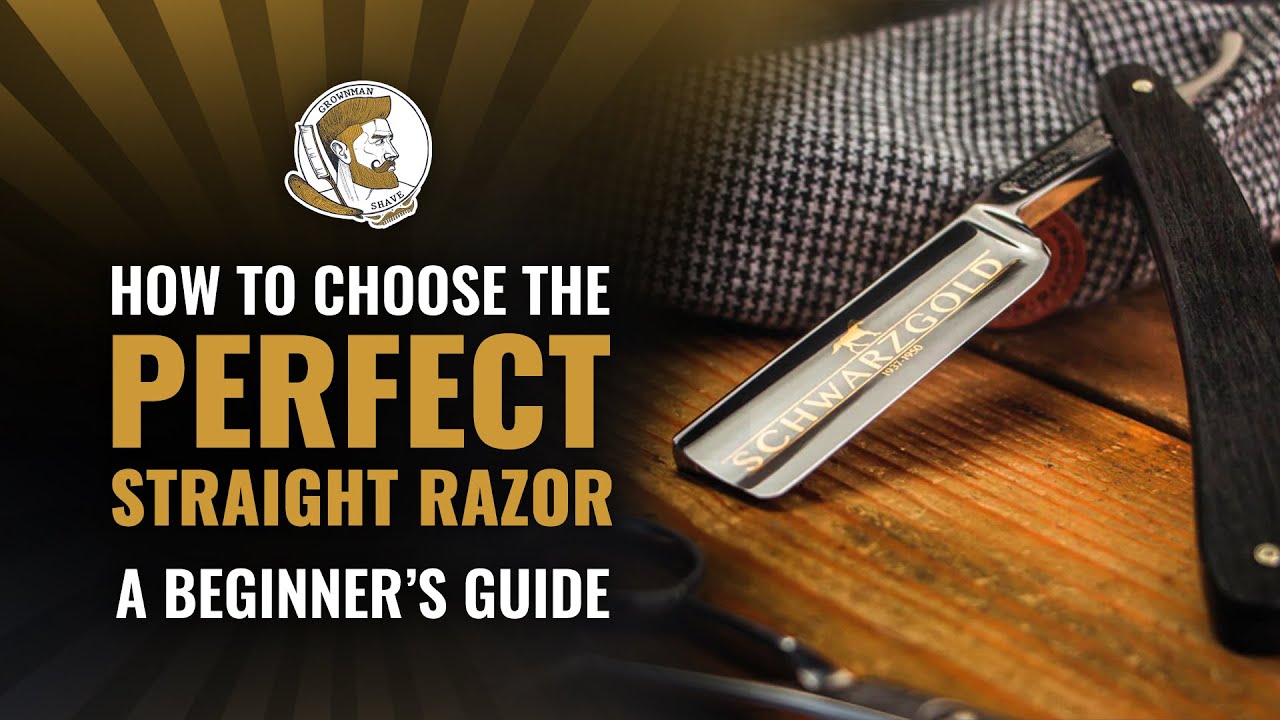
How to Maintain Your Straight Razor
A straight razor is only as good as its edge, and that edge needs regular attention. The single most important habit is stropping before every shave — not after, not occasionally, every time.
Run the blade spine-first along the canvas side of your strop about 20 times, then flip to the leather side for another 20. Keep the blade flat against the strop with light pressure and roll it over its spine — never its edge — at the end of each pass. The goal isn’t to sharpen; it’s to realign the microscopic teeth on the edge so the blade cuts cleanly instead of tearing.
When Stropping Isn’t Enough
Every three to six months, you’ll notice the blade tugging instead of gliding even after a proper stropping. That means it’s time to hone. Honing actually removes steel on a whetstone — typically 4000 then 8000 grit — to create a fresh edge, and it takes practice. Many wet shavers send their razor out for professional honing once or twice a year instead, which is a perfectly respectable option.
If you want to understand the full classic ritual beyond just the razor, our wet shave guide covers everything from lather to aftershave.
For a full walkthrough on honing technique and choosing the right whetstone, see our guide on how to sharpen a straight razor.
After each shave, rinse the blade, dry it completely — including the pivot — and wipe a thin coat of mineral oil or camellia oil down the steel to stop rust. Store it somewhere dry, never in the shower cabinet. Treated like this, a straight razor doesn’t wear out; it gets handed down.
Conclusion
Straight razor shaving isn’t hard — it’s just honest. It rewards prep, patience, and a light hand, and it punishes rushing. Give it two to three weeks of with-the-grain shaves and the technique stops feeling like a circus act and starts feeling like the obvious way to shave.
Start with the six steps above, strop religiously, and keep your angle at two spine-widths. The closest, calmest shave of your life is a fortnight of practice away — and once you’re there, no cartridge will ever feel adequate again.
Ready to Find Your Perfect Cut?
You’ve read about the styles. Now find the one that fits YOUR face shape, hair type, and lifestyle.
FAQs
Q1. How often should you strop a straight razor?
Strop before every single shave — no exceptions. Run the blade spine-first along the canvas side of your strop about 20 times, then 20 times on the leather side. Stropping doesn’t sharpen the blade; it realigns the microscopic edge so it cuts cleanly instead of tearing. Skip it and even a freshly honed razor will feel dull and tuggy within a few shaves. It takes 30 seconds and it’s the single best habit in straight shaving.
Q2. Is a straight razor better than a cartridge razor?
For closeness and skin comfort, yes — once you’ve learned it. A single sharp blade cutting hair flush at the surface gives a closer shave than any cartridge, with far fewer blade passes over your skin, which means less razor burn and fewer ingrown hairs. It’s also cheaper over time and produces no disposable waste. The trade-off is real, though: it takes two to three weeks of practice, plus a few minutes of prep and stropping each shave.
Q3. What are the downsides of using a straight razor?
Three honest ones. First, the learning curve — expect a couple of weeks of slower, imperfect shaves and the odd small nick. Second, maintenance — it needs stropping before every shave and honing every three to six months. Third, time — a proper straight shave with hot-towel prep takes 15 to 20 minutes, not three. If you need a 90-second shave every morning, a straight razor will frustrate you; if you can give it one unhurried session, it will out-shave anything you’ve used.
Q4. Can you shave with a straight razor every day?
Yes — many traditional wet shavers do, and because a straight razor makes fewer passes over your skin than a cartridge, daily shaving is often gentler, not harsher. The keys are sticking to with-the-grain passes on daily shaves, keeping the blade sharp with daily stropping, and using a proper lather and post-shave balm so your skin recovers between sessions. If your skin runs sensitive, start with every other day and build up.
Q5. Why do some barbers not use real straight razors?
Hygiene law, mostly. Many jurisdictions require barbers to use disposable-blade straight razors — called shavettes — because a fixed blade can’t be swapped between clients and full sterilization is hard to enforce. So the “straight razor shave” you get in most barbershops today is done with a shavette that takes a fresh half of a double-edge blade per client. The technique is nearly identical; the shavette is just less forgiving because the thinner blade has no weight behind it.
Q6. Are straight razors legal to own and carry?
Owning and using a straight razor at home is legal virtually everywhere. Restrictions come up in two places: carrying one in public, where it can be treated as a bladed article or concealed weapon depending on local knife laws, and professional use in barbershops, where health codes may require licensed use or disposable blades. Buy one for your bathroom and you’re fine — just don’t leave it in your jacket pocket, and check local rules before shaving clients with it.
Was this article helpful?

Khamis Maiouf is a professional barber who graduated from Hinckley College in England with a Level 3 qualification in hairdressing. With over 20 years of experience, he is an award-winning barber who has mentored numerous students and styled thousands of clients. A recognised expert featured on StyleCraze (20M+ readers).
Credentials: Level 3 Hairdressing (Hinckley College, UK) • 20+ Years Professional Experience • Featured Expert on StyleCraze • Founder of Book of Barbering