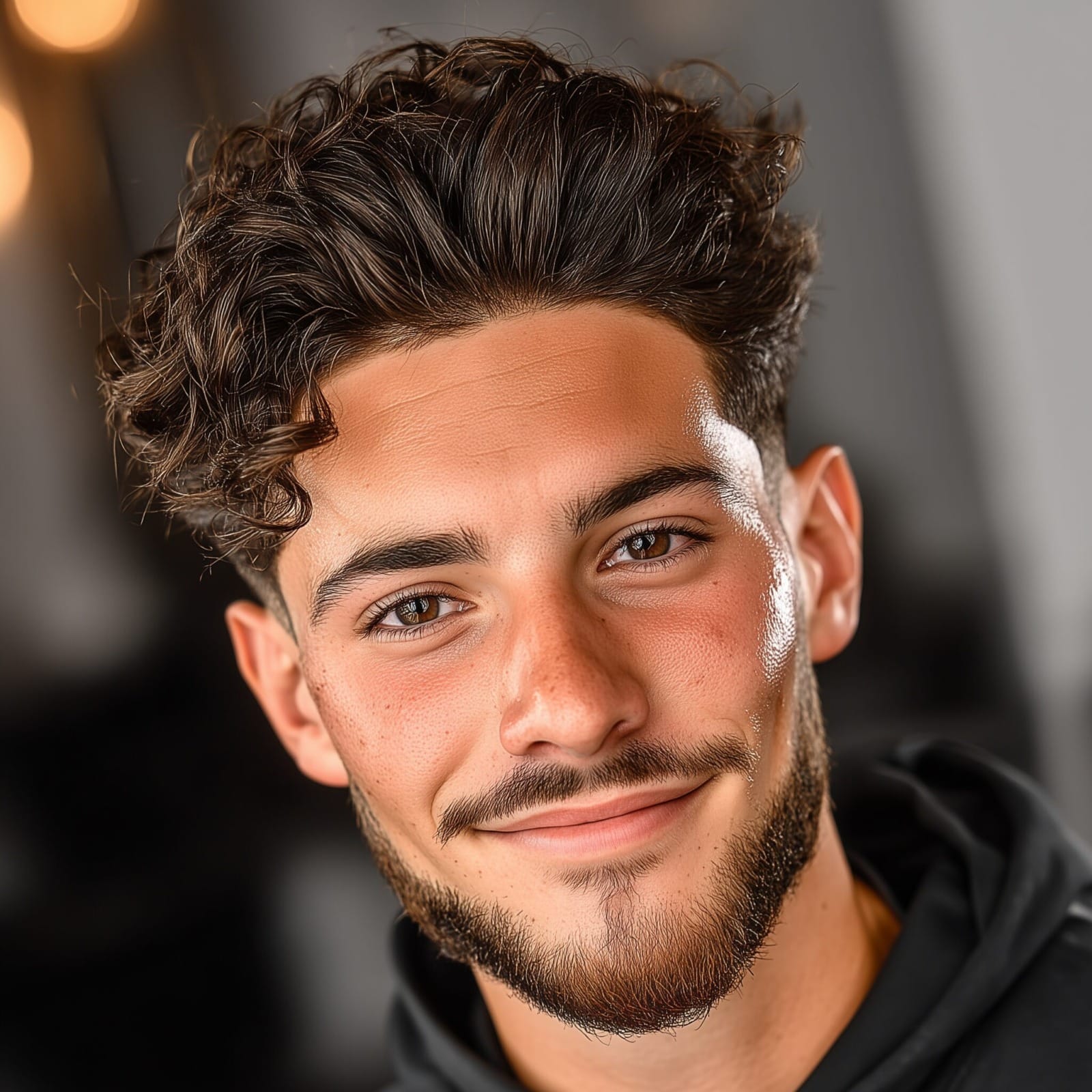
Every week someone sits in my chair asking for a “dark fade” — and I know they mean a shadow fade. It’s the most requested cut guys don’t know how to order.
A shadow fade keeps ultra-short stubble at the baseline instead of going skin-bald, creating that seamless gradient where short meets long without any harsh line.
Not sure which style suits you best? Our Haircut Finder Quiz matches you with the right cut based on your face shape and hair type — takes 60 seconds.
The result? A soft shadow at your baseline that melts seamlessly upward.
Key Takeaways
A shadow fade keeps ultra-short stubble at the baseline instead of bare skin — creating a softer gradient than a skin fade
Choose low for conservative looks, mid for balanced versatility, or high for maximum contrast
Works with every hair texture from straight and wavy to curly and coily
Book touch-ups every 2–3 weeks to keep the shadow effect sharp
Tell your barber you want “shadow, not skin” and specify the fade height you prefer
A shadow fade uses ultra-short graduation starting at zero or near-zero guard length. The technique creates a soft “shadow” effect at your baseline rather than completely bald skin.
Your barber achieves this by keeping the lowest point extremely tight but not completely skin-bald. The fade then gradually transitions upward through multiple guard lengths, creating that signature shadowy appearance.
Classic Shadow Fade Styles
Low Shadow Fade
The low shadow fade starts just above your ears and follows your natural hairline. This conservative option works perfectly for office settings or first-time fade clients.
For more options at this height, see our complete low fade haircut guide.
The transition point sits roughly half an inch above ear level. Your barber blends upward gradually, maintaining maximum length on top while keeping sides professional.
Mid Shadow Fade
Mid shadow fades begin at temple height, creating balanced proportions for most face shapes. The fade line runs parallel to your eyebrows when viewed from the side.
This versatile placement suits both casual and formal occasions. Your stylist typically uses a #1 guard at the midpoint before blending down to zero.
High Shadow Fade
High shadow fades start above your temples, removing most side hair for dramatic contrast. The fade line sits roughly two inches above ear tops.
Explore our high fade haircut guide for even bolder contrast variations.
This bold style emphasizes your top section while creating sharp definition. Athletes and creatives often choose this cut for its standout appearance and easy maintenance.
Drop Shadow Fade
Drop shadow fades curve downward behind your ears, following your head’s natural contour. The arc creates a unique silhouette that elongates round faces.
Your barber drops the fade line progressively lower toward the nape. This technique adds dimension while maintaining clean lines throughout the back section.
Burst Shadow Fade
Burst shadow fades radiate outward from behind your ears in semicircular patterns. The fade concentrates around ear areas while leaving more length at the nape.
This style particularly complements mohawks and faux hawks. The burst effect creates movement and draws attention to your hairstyle’s center strip.
Temple Shadow Fade
Temple shadow fades focus exclusively on the temporal region above your sideburns. The fade stays localized, leaving the rest of your sides longer.
Barbers often combine this with beard fades for seamless facial hair integration. The subtle touch-up refreshes your look without committing to a full fade.
Pro tip: Ask for “shadowing” not “dark fade”
Best for: Square and oval face shapes
Maintenance needed every 2-3 weeks
Works with all hair densities
Shadow Fade Length Variations
Shadow Fade With Long Top
Long tops paired with shadow fades create maximum contrast between sections. Keep 4-6 inches on top while fading sides down to near-zero.
This combination allows versatile styling options from slick backs to messy textures. The shadow fade keeps everything clean while your length provides creative freedom.
Shadow Fade With Medium Length
Medium-length tops measuring 2-3 inches balance perfectly with shadow fades. This practical length offers styling flexibility without excessive maintenance requirements.
Your barber can texturize the top for movement while keeping the fade crisp. Most professionals prefer this length for its polished yet approachable appearance.
Shadow Fade With Short Crop
Short crops with shadow fades create uniform, military-inspired aesthetics. The top stays between 0.5-1 inch, blending smoothly into your faded sides.
This low-maintenance option requires minimal styling products or effort. Perfect for busy schedules or anyone preferring wash-and-go convenience every morning.
Shadow Fade With Textured Top
Textured tops add dimension through point-cutting and thinning shear techniques. Your barber creates piece-y separation that contrasts beautifully with smooth shadow fades.
Apply matte clay or sea salt spray for enhanced texture definition. The combination looks effortlessly styled while maintaining structure through your shadow fade.
🧠 Expert Advice
Request your barber use a trimmer without guard for the initial shadow line, then blend upward with a half-guard. This creates the softest transition possible. Most shops rush this step, but spending extra time here makes the difference between good and exceptional shadow fades.
Shadow Fade With Buzz Cut
Buzz cuts with shadow fades offer the ultimate low-maintenance combination. The entire top stays uniform length, typically using #2-4 guard settings.
This military-inspired style suits active lifestyles and hot climates perfectly. The shadow fade adds subtle sophistication to an otherwise basic buzz cut.
Texture-Specific Shadow Fades
Shadow Fade For Straight Hair
Straight hair showcases shadow fades with crystal-clear precision and definition. The lack of natural texture means every blend line shows prominently.
Your barber must execute flawless transitions since straight hair won’t hide imperfections. Consider adding texture through styling products for enhanced visual interest.
Shadow Fade For Wavy Hair
Wavy hair naturally softens shadow fade transitions through its movement patterns. The waves help blend different lengths organically without harsh demarcation lines.
Leave extra length on top to showcase your natural wave pattern. The shadow fade provides structure while waves add personality and dimension.
Shadow Fade For Curly Hair
Curly hair creates natural volume that pairs excellently with shadow fades. The curls spring upward, emphasizing the contrast between faded sides and textured top.
Your barber should cut curls dry for accurate length assessment. Moisturizing products help define curls while maintaining the fade’s clean appearance.
Shadow Fade For Coily Hair
Coily hair textures work exceptionally well with shadow fades due to natural density. The tight coil pattern creates automatic volume and shape definition.
Regular moisturizing keeps coils healthy while maintaining fade sharpness. Consider adding designs or line work to complement your hair’s natural texture.
⚠️ Common Mistake
Asking for a shadow fade “all the way to skin” defeats the entire purpose. Shadow fades specifically avoid complete baldness at the baseline.
If you want skin showing, request a bald fade instead. The shadow effect requires leaving ultra-short hair for that signature graduated darkness.
Shadow Fade For Thick Hair
Thick hair benefits from shadow fades through weight removal and shape control. Your barber thins out bulk while creating clean lines around your perimeter.
The density allows for sharp definition without seeing scalp through the fade. Thick hair holds shadow fade shapes longer between appointments than finer textures.
Shadow Fade For Fine Hair
Fine hair requires careful shadow fade execution to avoid over-exposure of scalp. Your barber should use slightly longer guards to maintain adequate coverage.
Gradual blending becomes crucial with fine hair to prevent patchy appearances. Consider darker hair colors or scalp micropigmentation for enhanced shadow effects.
“The best shadow fades look like they naturally grew that way. If you can count the blend lines, your barber rushed the job.” – Master Barber Carlos Rivera, 18 years experience
Modern Shadow Fade Combinations
Shadow Fade With Pompadour
Pompadours with shadow fades modernize this classic 1950s style beautifully. The volume swept upward and back contrasts dramatically with tight faded sides.
Use strong-hold pomade for all-day height and shine. The shadow fade keeps everything contemporary while the pomp adds vintage flair.
Shadow Fade With Quiff
Quiffs paired with shadow fades create textured height at your front hairline. The style sweeps upward and slightly backward for casual sophistication.
Apply matte paste before blow-drying for maximum volume and hold. Your shadow fade frames the quiff perfectly while maintaining clean side profiles.
Shadow Fade With Slick Back
Slick backs with shadow fades deliver timeless elegance for formal occasions. Comb all hair straight back using high-shine pomade or gel.
The shadow fade prevents bulk at your sides while maintaining sleek aesthetics. This combination works especially well for business settings and special events.
Shadow Fade With Comb Over
Comb overs featuring shadow fades offer versatile styling for various occasions. Part your hair to one side, combing across for subtle coverage.
The fade keeps sides neat while your comb over adds sophistication. This style transitions easily from office to evening with minor adjustments.
Shadow Fade With Faux Hawk
Faux hawks with shadow fades create edgy aesthetics without full mohawk commitment. Style hair upward through the center while keeping sides short.
The shadow fade emphasizes your center strip through stark contrast. Use strong-hold gel or wax to maintain height throughout the day.
Shadow Fade With Mohawk
True mohawks demand shadow fades for maximum impact and definition. The center strip stands tall while faded sides create dramatic contrast.
Your barber can vary strip width from subtle to extreme. Shadow fades soften the overall look compared to completely shaved mohawk sides.
Design Elements And Shadow Fades
Shadow Fade With Line Up
Line ups create razor-sharp hairlines that complement shadow fades perfectly. Your barber uses trimmers to carve precise edges around your forehead and temples.
This combination delivers maximum crispness and definition. Touch up your line weekly to maintain that fresh-from-the-shop appearance.
Shadow Fade With Hard Part
Hard parts add distinctive separation lines shaved into your shadow fade. The part typically runs from your crown to your front hairline.
This permanent part eliminates daily styling decisions while adding visual interest. The shadow fade ensures your hard part stands out prominently.
Shadow Fade With Surgical Line
Surgical lines incorporate precise shaved designs into your shadow fade. These artistic elements range from simple lines to complex geometric patterns.
Your barber uses detailing trimmers for ultra-clean execution. Surgical lines typically last 1-2 weeks before requiring touch-ups.
Shadow Fade With Geometric Designs
Geometric designs transform shadow fades into wearable art pieces. Triangles, diamonds, and zigzags create eye-catching patterns within your fade.
These designs require experienced barbers with steady hands and artistic vision. Expect to pay premium prices for complex geometric work.
Shadow Fade With Edge Work
Edge work involves detailed trimming around your natural hairline and neckline. Clean edges make shadow fades look professionally maintained between appointments.
Your barber shapes edges to complement your face structure. Regular edge maintenance every 5-7 days keeps everything looking fresh.
Design tip: Start simple with single lines
Healing time: Designs grow out in 10-14 days
Best for thick, dark hair
Avoid if you have sensitive skin
Photos help communicate design ideas
Cultural Shadow Fade Styles
Shadow Fade With Waves
360 waves paired with shadow fades create mesmerizing spiral patterns. The waves flow continuously while your fade provides crisp framing.
Consistent brushing and durag use maintain wave patterns. Shadow fades enhance wave visibility through strategic contrast around your perimeter.
Shadow Fade With Afro
Afros with shadow fades blend natural texture with modern barbering techniques. The afro maintains its iconic shape while fades add contemporary structure.
Pick out your afro for maximum volume and shape. The shadow fade creates definition without compromising your natural hair‘s cultural significance.
Shadow Fade With Twists
Two-strand twists combined with shadow fades offer protective styling with aesthetic appeal. Twists preserve hair health while your fade stays fresh.
The shadow fade frames your twist pattern beautifully. This combination works for various twist sizes from micro to chunky styles.
Shadow Fade With Dreads
Dreadlocks featuring shadow fades modernize this ancient hairstyle tradition. The fade keeps sides neat while locs express your personal journey.
Your barber carefully fades around existing locs without disturbing them. This combination bridges cultural heritage with contemporary styling preferences.
Shadow Fade With Caesar Cut
Caesar cuts with shadow fades update this Roman-inspired classic style. The horizontal fringe combines with faded sides for modern appeal.
Not sure what your face shape is? Our Face Shape Detector figures it out in 4 quick questions.
This low-maintenance style suits various face shapes and hair types. The shadow fade adds dimension to the traditionally uniform Caesar cut.
Professional Shadow Fade Looks
Business Shadow Fade
Business shadow fades maintain conservative lengths while incorporating modern technique. The fade stays subtle, typically starting low with minimal contrast.
This style passes corporate dress codes while showing attention to grooming. Regular maintenance every two weeks ensures consistently professional appearance.
Conservative Shadow Fade
Conservative shadow fades feature longer guards and gradual transitions throughout. The overall effect remains understated and appropriate for traditional environments.
Your barber blends carefully to avoid stark contrasts or aggressive lines. This approach works perfectly for client-facing roles requiring polished presentation.
Executive Shadow Fade
Executive shadow fades balance authority with contemporary style sensibilities. The cut projects leadership while avoiding outdated or stuffy appearances.
Pair with well-groomed facial hair for complete executive presence. This sophisticated variation commands respect in boardrooms and business meetings.
Interview-Ready Shadow Fade
Interview-appropriate shadow fades make strong first impressions without distraction. The style shows grooming awareness while remaining universally acceptable.
Get this cut 3-4 days before interviews for settled, natural appearance. The shadow fade demonstrates attention to detail employers appreciate.
🧠 Expert Advice
Schedule professional cuts on Thursdays for important Monday meetings. This gives your shadow fade time to settle while still looking fresh. The slight growth over the weekend softens any harsh lines, creating that perfect “established professional” appearance rather than “just got a haircut” look.
Athletic Shadow Fade Cuts
Sport Shadow Fade
Sport shadow fades prioritize functionality for athletic performance. The ultra-short sides prevent sweat accumulation while maintaining style.
This cut works under helmets and headgear without creating bulk. Athletes appreciate the combination of practicality and sharp appearance.
Gym-Ready Shadow Fade
Gym-friendly shadow fades withstand intense workouts without losing shape. The style requires zero adjustment between sets or cardio sessions.
Sweat-resistant styling products optional but not necessary. Your shadow fade stays looking good from warm-up through cool-down.
Low-Maintenance Shadow Fade
Low-maintenance shadow fades minimize daily styling requirements completely. Wake up, shower, and go without any product application needed.
This practical approach suits busy lifestyles perfectly. The shadow fade maintains its shape naturally between barber visits every 2-3 weeks.
⚠️ Common Mistake
Training immediately after freshshadow fades causes irritation from sweat and bacteria. Wait 24 hours before intense workouts to let micro-cuts heal.
If you must exercise, apply witch hazel beforehand and shower immediately after. This prevents those painful burning sensations and potential skin infections.
Shadow Fade Finishing Techniques
Shadow Fade With Natural Finish
Natural finishes let your shadow fade‘s texture shine without heavy products. Simply towel-dry and finger-style for effortless appearance.
This approach works best with good natural hair texture and density. The shadow fade provides structure while your hair does the rest.
Shadow Fade With Matte Texture
Matte finishes eliminate shine for modern, understated shadow fade aesthetics. Clay or paste products create separation without glossy appearance.
Work product through damp hair before blow-drying for best results. The matte texture emphasizes your fade’s technical precision.
Shadow Fade With Glossy Look
Glossy finishes add shine and sophistication to shadow fades. Pomade or gel creates sleek, polished appearance for formal occasions.
Apply products to damp hair and comb into desired position. The shine draws attention to your fade’s smooth gradations.
Shadow Fade With Messy Styling
Messy styling creates relaxed contrast against precise shadow fades. Tousle hair with texturizing products for intentionally undone appearance.
This juxtaposition of messy and clean works brilliantly. Your shadow fade anchors the look while messy texture adds personality.
Specialty Shadow Fade Variations
Shadow Taper Fade
Shadow taper fades combine two techniques for ultimate gradient control. The taper gradually shortens while incorporating shadow fade blending methods.
This hybrid approach creates the smoothest possible transitions. Your barber uses both clipper-over-comb and fading techniques seamlessly.
Shadow Skin Fade
Shadow skin fades start with minimal hair before fading to complete baldness. The shadow effect appears only in the lower transition zone.
This variation offers both shadow and skin-bald elements. Perfect for those wanting subtle shadow effects with ultra-clean finish.
Shadow Bald Fade
Shadow bald fades feature extremely subtle shadow zones before complete baldness. The shadow portion stays minimal, barely visible at the baseline.
Your barber creates this using zero-gapped clippers with precision. The effect adds slight dimension to otherwise standard bald fades.
Shadow Zero Fade
Shadow zero fades maintain consistent zero-length before blending upward gradually. No skin shows through, preserving that signature shadow appearance throughout.
This technique requires expert clipper control for even results. The finished look stays dark at the baseline while fading smoothly.
Shadow Fade Undercut
Shadow fade undercuts disconnect top length from sides using shadow technique. Instead of harsh undercut lines, shadow fading creates softer separation.
This modern twist on undercuts offers more versatility. The shadow element prevents the severe contrast of traditional disconnected undercuts.
Ready to Find Your Perfect Cut?
You’ve read about the styles. Now find the one that fits YOUR face shape, hair type, and lifestyle.
🎬 HAIRCUT TUTORIAL: SHADOW FADE CURL SPONGE WITH SIDE PART
How to Ask Your Barber for a Shadow Fade
Most clients who sit in my chair wanting this cut use the wrong words — they say “dark fade” or “not too short on the sides.” That vagueness is exactly how you end up with a cut you didn’t want.
Start with these exact words: “I want a shadow fade — not skin, keep a little stubble at the baseline.” Then specify your height: low (above the ears), mid (at the temples), or high (above the temples). Show a reference photo if you have one — barbers work better with visual targets.
Tell your barber what you want on top separately. A shadow fade is a sides-and-back technique, so they need to know whether you’re going for a textured crop, pompadour, or slick back up top. The clearer you communicate, the better the result every time.
Shadow Fade Maintenance Tips
Shadow fades grow out more gracefully than skin fades, but they still need attention. Book touch-ups every 2–3 weeks — once that gradient starts flattening, the whole cut loses its impact.
Between visits, keep the neckline and around the ears clean with a zero-guard trimmer — our guide to fading hair covers the technique. On top, a matte clay or lightweight pomade maintains texture without weighing your hair down. A boar bristle brush used daily trains your hair’s natural fall and keeps the fade looking intentional between appointments.
FAQs
How Often Should I Get My Shadow Fade Touched Up?
Shadow fades require touch-ups every 2-3 weeks for optimal appearance. After week two, the shadow effect starts losing definition as hair grows.
Some guys stretch to 4 weeks between cuts, but the fade loses its impact. Book standing appointments to maintain consistent freshness.
What’s The Difference Between A Shadow Fade And Regular Fade?
Shadow fades leave ultra-short hair at the baseline creating a “shadow” effect. Regular fades often go completely bald at the lowest point.
The shadow technique uses zero or near-zero guards without exposing skin. This creates softer, more gradual transitions than traditional fades.
Can Shadow Fades Work With Thinning Hair?
Shadow fades actually help disguise thinning by removing contrast between thin and thick areas. The gradual blend minimizes obvious density differences.
Your barber adjusts guard lengths to maintain coverage where needed. Shadow fades often look better than longer styles on thinning hair.
What Guard Sizes Create The Best Shadow Fade Effect?
Start with no-guard or zero-gapped clippers at the baseline. Blend upward using half-guard, then #1, #1.5, and #2 guards progressively.
The key is overlapping each guard zone for seamless transitions. Your barber might use different combinations based on your hair density.
How Much Does A Quality Shadow Fade Typically Cost?
Quality shadow fades range from $25-60 depending on location and barber experience. High-end shops in major cities charge $75-100 for master barbers.
The extra cost reflects time and skill required for proper execution. Budget shops rushing through fades rarely achieve true shadow effects.
What Is the Difference Between a Shadow Fade and a Skin Fade?
A shadow fade leaves ultra-short stubble at the baseline, creating a soft gradient without exposing bare skin. A skin fade goes all the way down to the scalp for maximum contrast and a sharper edge.
The practical difference comes down to maintenance: shadow fades grow out naturally over 2–3 weeks, while skin fades need touch-ups every 1–2 weeks to keep that clean look. If you want something low-maintenance with a natural feel, shadow fade is the way to go.
Was this article helpful?
Thanks for your feedback!
References:
A fade or Jersey is a hairstyle. In a fade, a barber cuts the hairs at the back of the neck and sides of the head short and there is longer hair on the top of the head. source
An epic hair cut where the bottom and sides of the head are buzzed with a low guard, and higher guards are employed higher up on the head to produce the effect of a “fade”. source
Khamis Maiouf is a professional barber who graduated from Hinckley College in England with a Level 3 qualification in hairdressing. With over 20 years of experience, he is an award-winning barber who has mentored numerous students and styled thousands of clients. A recognised expert featured on StyleCraze (20M+ readers).
Credentials: Level 3 Hairdressing (Hinckley College, UK) • 20+ Years Professional Experience • Featured Expert on StyleCraze • Founder of Book of Barbering