
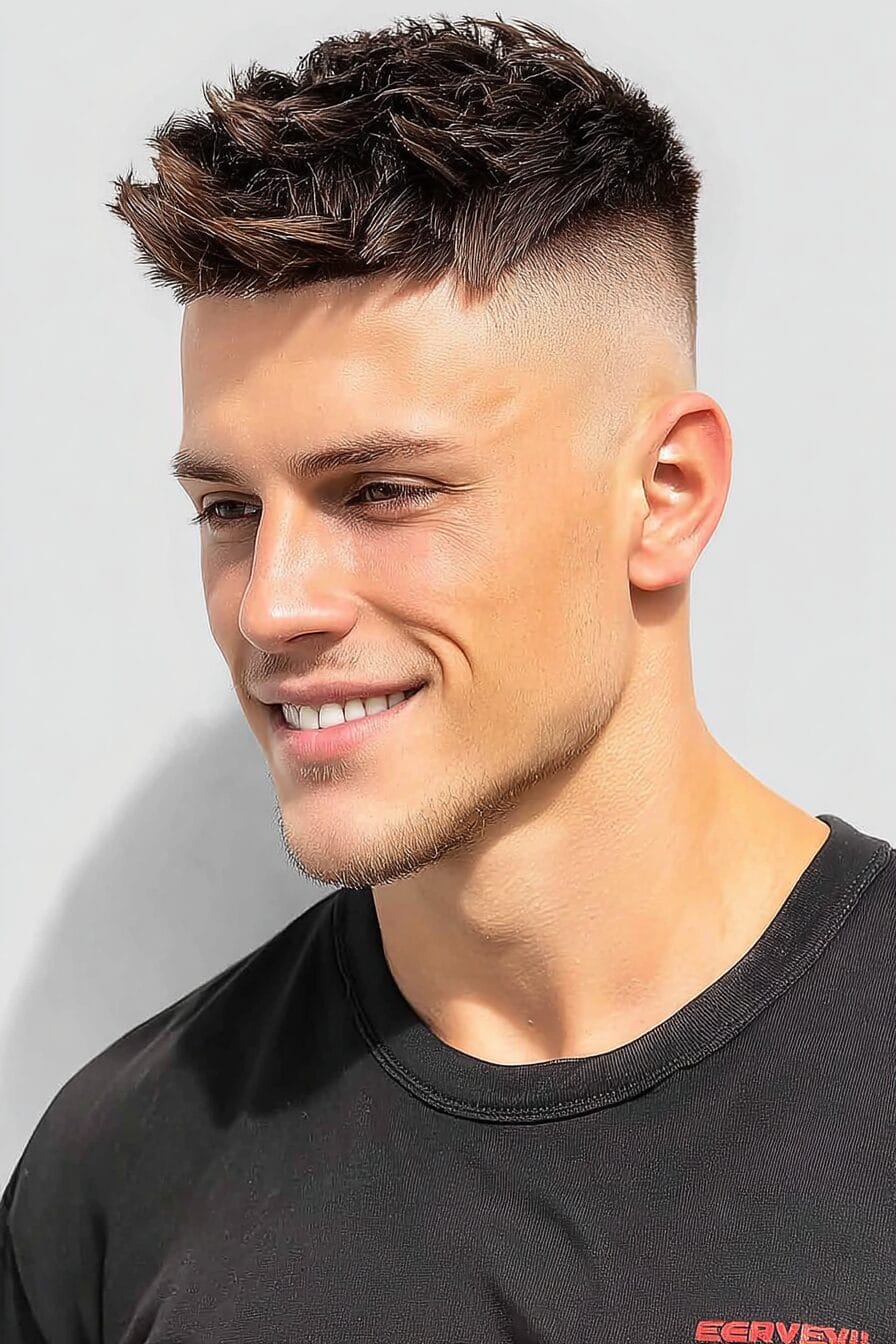
A client sat in my chair last week asking for a “high fade crew cut” — but couldn’t tell me where the fade should start or how long to leave the top. That miscommunication is the number one reason this cut goes wrong.
The high fade crew cut is one of the sharpest combinations in barbering when the measurements are right. Here are the three variations that work and exactly what to ask for.
Not sure which style suits you best? Our Haircut Finder Quiz matches you with the right cut based on your face shape and hair type — takes 60 seconds.
Key Takeaways
- High fade crew cuts start the fade 2+ inches above the ears with 1-1.5 inches of crew length on top — getting these measurements wrong is the most common mistake.
- Three main variations: textured (choppy point-cutting), skin fade (maximum contrast), and mid-high blend (best for first-timers).
- Schedule barber visits every 2-3 weeks to keep the fade sharp — stretching past 4 weeks loses the defining contrast.
- Oval, square, and round face shapes get the best results — oblong faces should lower the fade to mid-high.
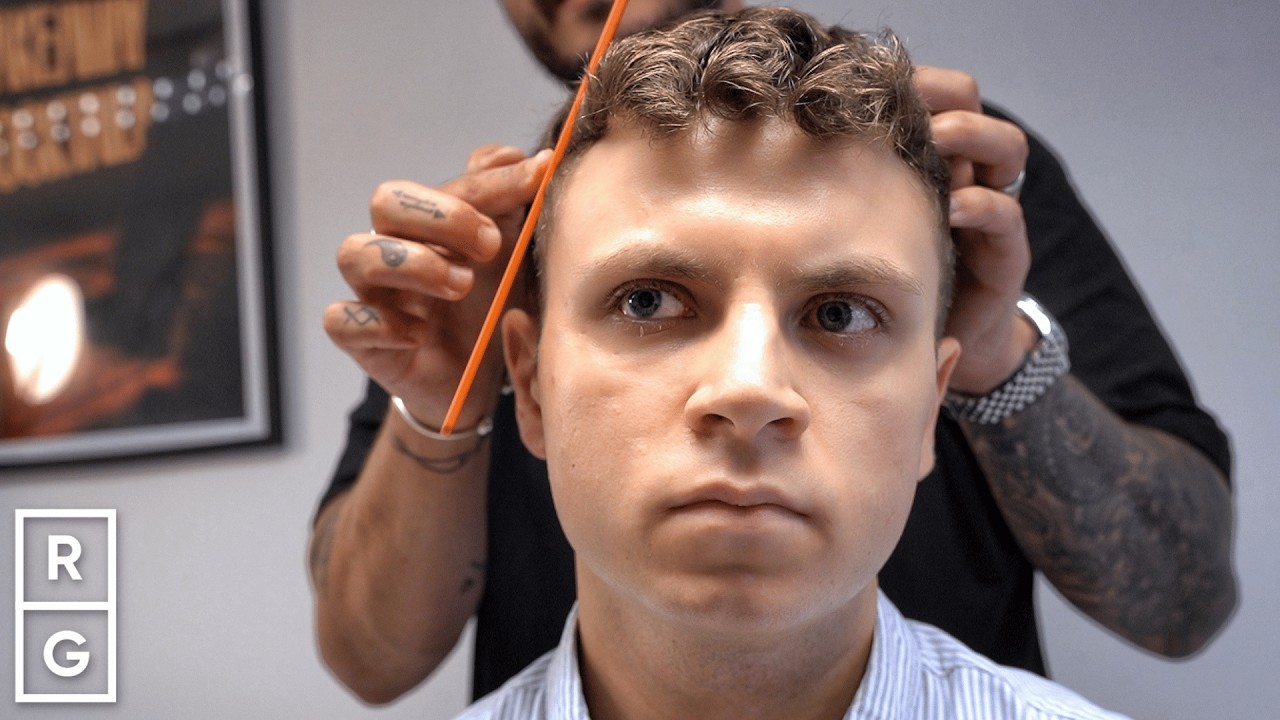
- Always bring a reference photo and point to the exact fade start on your own head before cutting begins.
High Fade Crew Cut Fundamentals
High fades start above your temple line, creating dramatic contrast with the crew cut top. The fade should begin 2-3 inches above your ears for authentic high positioning.
Your crew cut top needs precise graduation from front to back. Start with 1-1.5 inches at the hairline, tapering down to half that length at the crown.
- Temple point: Mark fade start 2 fingers above ear top
- Blend zone: Keep transition area under 1 inch wide
- Top texture: Request point cutting for natural movement

High Fade Starting Points
Position your fade start point where your head curves most dramatically. This natural contour line sits roughly level with your eyebrow arch when viewed from the side.
Ask your barber to mark the fade line with their comb first. You’ll see exactly where the contrast begins before any cutting starts.

Crew Cut Top Lengths
Classic crew cuts measure 1.25 inches at the front hairline. This length provides enough structure for styling while maintaining the signature military precision.
Taper the top gradually shorter toward your crown, ending at 0.5-0.75 inches. This graduation prevents the flat-top effect while keeping clean proportions.

📏 Exact Measurements
Request a #2 guard (6mm) at the fade’s highest point before blending upward. Your barber should use clipper-over-comb technique for the transition zone.
The crew cut top needs scissor work, not clippers. Specify 1.25 inches front, 0.75 inches crown, with point-cut texture throughout for movement.

🧠 Expert Advice
Bring a photo showing the exact fade height you want—temple-level descriptions vary between barbers. Point to where you want the fade to start on your own head, then confirm with your barber’s comb placement before cutting begins. This double-check prevents miscommunication disasters.

Fresh High Fade Crew Variations
Modern high fade crews break traditional rules with texture manipulation and fade modifications. Each variation shifts the classic military cut into contemporary territory.
These three styles dominate barbershop requests, each offering distinct visual impact. Your hair texture determines which variation works best.

Textured High Fade Crew
Choppy point-cutting transforms the uniform crew top into a piece-y, modern style. Your barber creates micro-layers throughout the top section for enhanced movement.
This technique works best with medium-density hair that holds texture naturally. Request 20% length variation through the top for optimal texture definition.

Skin High Fade Crew
Skin fades take the high fade to zero, creating maximum contrast against the crew top. The bald fade starts at your natural hairline around the ears.
This aggressive style demands weekly touch-ups to maintain the clean skin fade. Your barber needs exceptional blending skills to avoid harsh lines.

Mid-High Fade Crew Blend
Split the difference between mid and high fades for versatile styling options. Start the fade 1.5 inches above your ear for balanced proportions.
This hybrid approach softens the dramatic high fade while maintaining strong visual impact. Perfect for first-timers wanting a less extreme introduction to high fades.

⚠️ Common Mistake
Requesting a “high fade” without specifying the exact starting point leads to disappointment. What you call “high” might be your barber’s “medium”—always point to the specific spot on your head where you want the fade to begin for consistent results.
High Fade Crew Cut Styling
Daily styling transforms your precision cut into a polished finished look. The right technique takes under two minutes with proper products.
These methods work for rushed mornings and detailed grooming sessions alike. Master the basics first, then experiment with variations.

Morning High Fade Routine
Dampen your crew cut with wet hands rather than soaking it completely. This controlled moisture activates products without oversaturating the hair.
Work product through from back to front using fingertips. This direction pushes hair forward into the classic crew cut position.

Product for Crew Texture
Matte clay provides ideal hold without shine for modern crew cuts. Use a dime-sized amount warmed between your palms before application.
Avoid heavy pomades that weigh down the precise crew cut shape. Lightweight products maintain the cut’s natural texture and movement.

Natural High Fade Finish
Finger-style instead of combing for an effortless, textured appearance. Pinch small sections between fingers to create piece-y definition throughout.
Let your hair air-dry after product application for maximum texture. Blow-drying flattens the carefully crafted crew cut dimensions.

Maintaining High Fade Crew Cuts
Consistent maintenance keeps your high fade crew sharp between professional cuts. Strategic home care extends the fresh-cut appearance significantly.
These timelines and techniques prevent the awkward growing-out phase. Follow them strictly for continuous style quality.
- Week 1-2: Perfect fade, maintain with good products only
- Week 3: Fade softens, schedule your next appointment
- Week 4: Maximum interval before visible deterioration
- Week 5+: Style loses definition, immediate cut needed

High Fade Touch-Up Schedule
Book appointments every 2-3 weeks for optimal high fade maintenance. This frequency keeps the skin-to-hair transition crisp and professional.
Stretch to 4 weeks maximum if your hair grows slowly. Beyond this point, the high fade loses its defining sharp contrast.
Not sure what your face shape is? Our Face Shape Detector figures it out in 4 quick questions.

Crew Length Management
Trim your crew top every second fade appointment to maintain proportions. The top grows roughly 0.5 inches monthly, affecting the overall balance.
Ask for a “tighten-up” rather than full reshape between major cuts. This preserves your crew cut investment while refreshing the look.

⏱️ Growth Timeline
Days 1-7 showcase perfect fade graduation with crisp lines intact. Days 8-14 see slight softening that actually enhances the natural look.
Days 15-21 mark visible fade deterioration requiring professional attention. Day 22 onward shows obvious outgrowth that compromises the entire style.

Home High Fade Maintenance
Clean up your neckline weekly with careful trimmer work. Define the bottom edge only—never attempt fade adjustments at home.
Maintain sideburn edges with minimal trimming to preserve fade flow. One wrong move destroys the professional blend your barber created.

Best Face Shapes for a High Fade Crew Cut
Not every face shape gets the same result from a high fade crew cut. The dramatic contrast between faded sides and the crew top either sharpens or softens your features depending on your bone structure.
After cutting high fade crews on thousands of clients, here’s what I’ve seen work consistently.
- Oval faces: The ideal match. High fades complement balanced proportions without adding or removing visual weight anywhere.
- Square faces: High fades draw attention upward while the crew top softens angular jawlines. Keep the top slightly longer at 1.5 inches for balance.
- Round faces: High fades create vertical emphasis that elongates a round face. Go with a true high fade starting 2+ inches above the ears to maximize this effect.
- Oblong faces: Proceed with caution. High fades add vertical emphasis that can make a long face look longer. Lower the fade to mid-high and keep more volume on the crew top.
- Diamond faces: Works well. Faded sides reduce width at the temples while the crew top adds structure to a narrower forehead.
Figure out your face shape before your appointment. Getting this right means the difference between a cut that enhances your features and one that fights them.
How to Ask Your Barber for a High Fade Crew Cut
Saying “give me a high fade crew cut” isn’t enough. Every barber interprets “high” differently, and “crew cut” can mean anything from a #2 all over to a textured scissor cut on top.
Here’s the script I wish every client used when sitting in my chair:
- Fade height: “Start the fade at my temple line” — then point to the exact spot on your head.
- Fade type: Specify skin fade (to the skin), #0.5 fade, or #1 fade at the bottom.
- Top length: “1.25 inches at the front, tapering to 0.75 inches at the crown.”
- Texture: “Point-cut the top for movement” if you want texture, or “blunt-cut for uniform length” if you want clean lines.
- Blend width: “Keep the transition zone under 1 inch” for a tight blend, or “give me a wider blend” for a softer look.
Bring a reference photo showing the exact fade height and top length you want. Point to where the fade starts on your own head before your barber picks up the clippers — this prevents 90% of high fade miscommunications.
If you’re not sure which type of fade suits you, compare the options first. Understanding the difference between a taper and a fade matters more than most guys realize.
Professional High Fade Crew Styles
Corporate environments demand subtle modifications to the standard high fade crew. These adjustments maintain professionalism without sacrificing style impact.
Conservative offices have unwritten grooming codes worth understanding. Navigate them successfully with these proven modifications.
- Finance-friendly: Lower fade to 1.5 inches above ears
- Law-approved: Maintain 0.25-inch minimum fade length
- Tech-flexible: Full high skin fade typically acceptable
- Sales-suitable: Keep contrast moderate, avoid extreme skin fades

🧠 Expert Advice
Test workplace boundaries with a mid-high fade first before committing to dramatic high fades. Start conservative, then gradually increase fade height over several cuts as you gauge reactions—it’s easier to go higher than to explain why you suddenly went lower.

Corporate High Fade Rules
Avoid skin fades in traditional corporate settings where visible scalp raises eyebrows. Maintain at least #1 guard length throughout your fade.
Keep the fade start conservative—1.5 inches above ears maximum. This modification reads as “clean-cut professional” rather than “edgy statement.”

Conservative Crew Heights
Extend crew cut length to 1.5 inches minimum for boardroom credibility. Shorter lengths can appear too aggressive for client-facing roles.
Reduce texture variation to maintain uniformity across the top. Conservative environments favor predictable, controlled styles over artistic expression.

Ready to Find Your Perfect Cut?
You’ve read about the styles. Now find the one that fits YOUR face shape, hair type, and lifestyle.
FAQs
How high should fade start?
Standard high fades begin 2 inches above your ear top, aligning with temple height. Measure from your ear’s highest point using two fingers’ width.
Adjust based on head shape—rounder heads benefit from extra height while elongated faces need slightly lower positioning. Your barber can recommend personalized placement.
Best crew length for high fade?
Optimal crew length measures 1.25 inches at front, tapering to 0.75 inches at crown. This proportion creates perfect balance with the dramatic high fade.
Adjust lengths by 0.25 inches up or down based on hair density. Thicker hair needs slightly shorter lengths to maintain the proper silhouette.
High fade maintenance frequency?
Schedule cuts every 2-3 weeks for pristine high fade maintenance. Week two shows slight softening that many actually prefer over fresh-cut sharpness.
Stretch to 4 weeks absolute maximum between cuts. Beyond this timeline, the fade loses definition and requires complete recutting rather than touch-ups.
High fade crew cut cost?
Expect $25-45 for quality high fade crew cuts at established barbershops. Premium shops in major cities charge $50-75 for master barber expertise.
Budget $75-100 monthly for biweekly maintenance appointments. Some barbers offer maintenance packages that reduce per-visit costs for regular clients.
What face shape is best for a high fade crew cut?
Oval faces work best because the balanced proportions complement the high fade’s dramatic contrast. Square and round faces also get great results — the vertical emphasis elongates round faces and draws attention upward on square faces. Oblong faces should lower the fade to mid-high to avoid adding too much length.
What’s the difference between a crew cut and a buzz cut?
A crew cut has graduated length — longer at the front (1-1.5 inches) and shorter toward the crown (0.5-0.75 inches), cut with scissors on top. A buzz cut is uniform length all over, cut entirely with clippers. The crew cut offers more styling versatility while the buzz cut is pure low-maintenance simplicity.
Was this article helpful?

Khamis Maiouf is a professional barber who graduated from Hinckley College in England with a Level 3 qualification in hairdressing. With over 20 years of experience, he is an award-winning barber who has mentored numerous students and styled thousands of clients. A recognised expert featured on StyleCraze (20M+ readers).
Credentials: Level 3 Hairdressing (Hinckley College, UK) • 20+ Years Professional Experience • Featured Expert on StyleCraze • Founder of Book of Barbering