
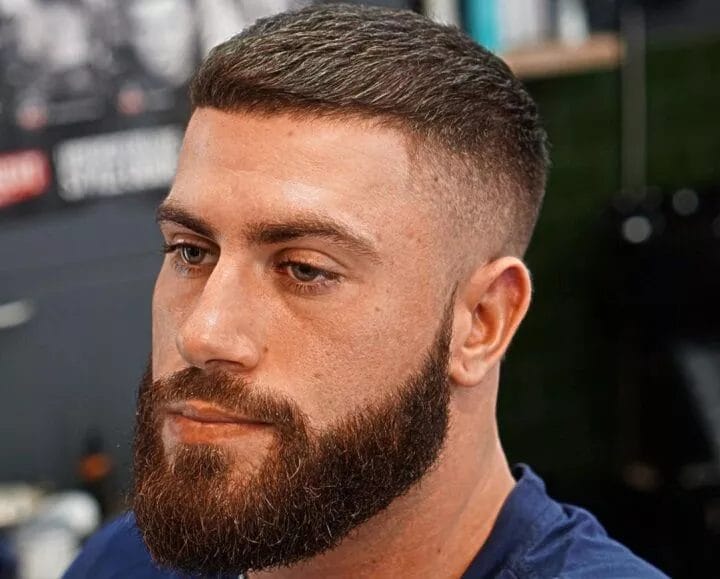
I’ve watched thousands of men sit in my chair trying to hide a receding hairline with the wrong cut — and I’ve spent 20+ years showing them that the right style makes recession look intentional, not accidental. About 50% of men see noticeable recession by 30, and by 50 it’s the majority. This isn’t a problem to panic about. It’s a reality to style around.
Here are the eight cuts I recommend most, why each one works for specific recession patterns, and the styling techniques that make thin areas disappear.
Not sure which cut is right for you? Try our free Haircut Finder tool — answer 5 quick questions and get personalised recommendations with barber instructions.
Concerned about thinning? Our Hair Loss Risk Quiz helps you understand where you stand — 8 quick questions, no email needed.
Key Takeaways
- Temple recession and crown thinning require different strategies — forward-styled cuts (French crop, textured fringe) cover temples, while shorter all-over cuts minimize crown contrast
- Matte-finish products always outperform shiny ones on receding hair — shine highlights scalp visibility
- The buzz cut remains the most confidence-boosting option for advanced recession, eliminating contrast entirely
- Every 3-4 weeks is the maintenance sweet spot — overgrowth exposes what shorter styles are designed to minimize
- Working with your recession pattern beats fighting it — the best cuts use your hairline shape as a design feature, not a flaw
Unders
tanding Your Receding Hairline
Male pattern baldness typically starts at the temples, creating that distinctive M-shape. It’s driven by genetics and hormones – specifically DHT sensitivity in your follicles. Men with a widow’s peak often see recession start there first.
Most men first notice it between 25-35, though it can start earlier or later. The key isn’t hiding from it but choosing styles that complement your natural hairline evolution.
8 Best Haircuts For Receding Hairlines
The Buzz Cut
A buzz cut uses clippers all over, typically with a #2 or #3 guard. It’s the ultimate confidence move. See our buzz cut vs crew cut comparison to decide which short option fits you – owning your look completely.
By keeping everything uniform and short, you eliminate the contrast between thick and thin areas. The maintenance is simple too – just run clippers over it every two weeks.
Crew Cut With Fade
This keeps about an inch on top with a skin fade starting at the temples. The gradual blend from skin to hair creates a smooth transition.
The fade draws the eye to the skillful barbering rather than the hairline position. Ask for a mid or high fade to maximize the effect.
French Crop
The French crop features textured hair on top, cut to 1-2 inches with a blunt fringe. Sides stay short, usually with a fade.
That forward-styled fringe is your secret weapon – it naturally falls over temple recession. Works especially well if you still have decent density up front.
Textured Quiff
Keep 2-3 inches on top for this quiff, styled up and back with texture spray. Sides should be tight – think #2 guard or shorter.
The height creates an optical illusion, making your hairline appear lower than it is. The key is keeping the sides super clean to emphasize the contrast.
Side Part With Taper
This classic side part uses your natural part line, keeping 1.5-2 inches on top. The taper gradually shortens from a #4 to #2 down the sides.
Instead of fighting your hairline, you’re working with its natural shape. The defined part gives structure while the taper keeps everything neat.
Ivy League Cut
Similar to a crew cut but with enough length on top (1-1.5 inches) to part and style. Think refined Princeton student.
You can brush it to the side or slightly forward depending on where you need coverage. Perfect for professional settings where you want polish without fuss.
Slicked Back Undercut
Keep 3-4 inches on top, slicked straight back with pomade. Sides are buzzed to #1 or #0 for maximum contrast.
This style actually embraces your mature hairline – that widow’s peak looks distinguished when slicked back. Just ensure you have the density on top to pull it off.
Short Textured Top
Cut to about 1 inch all over the top with point cutting for texture. This textured approach keeps things interesting without requiring length. Use sea salt spray for that perfectly imperfect finish.
The messy, piece-y texture creates visual interest that distracts from hairline placement. Low maintenance too – just scrunch in product and go.
Styling Techniques That Make A Difference
Always style your hair when it’s damp, not soaking wet. For full technique breakdowns, see how to style short hair. This gives you more control and prevents product dilution.
Direction matters too. Styling slightly to the side rather than straight back often looks more natural with recession. Use a blow dryer on medium heat to add volume at the roots.
🧠 Expert Advice
Most clients don’t realize that blow-drying forward before styling back creates crucial volume at the roots. Start by pushing everything forward with hot air, then style backward into position.
This technique lifts the hair away from the scalp, creating fullness that lasts all day. The forward-then-back motion also helps conceal any thinning at the crown.
What To Tell Your Barber
Be direct: “I’m working with some recession at the temples and want something that looks intentional.” Show photos of styles you like.
Ask specifically about fade heights and where they’ll start the blend. Request “textured” or “point cut” on top rather than blunt cuts, which can emphasize thinning.
Products And Daily Maintenance
Your product game needs to be on point. If you’re also dealing with thin hair overall, the same product rules apply. Matte clay or texture powder gives grip without shine that highlights scalp. Apply to towel-dried hair, not wet.
Get trims every 3-4 weeks to maintain the shape. Letting it grow too long makes recession more obvious as weight pulls hair down.
⚠️ Common Mistake
Using heavy pomades that weigh hair down and expose more scalp – opt for lightweight texturizing products instead. Those thick, shiny pomades make thin hair look stringy and separate, revealing more scalp underneath.
Switch to a matte clay or texture powder that adds volume without weight. Your hair will look fuller and the matte finish won’t reflect light off any visible scalp.
Understanding the Norwood Scale: Where Are You?
In my shop, I use the Norwood scale to quickly assess what we’re working with. It’s the standard classification for male pattern baldness, and knowing your stage helps choose the right cut:
Norwood 1-2 (early recession): Slight temple recession. You have the most options here — textured quiffs, side parts, and French crops all work because you still have plenty of density. This is the stage where most men first notice change and start adapting their style.
Norwood 3 (moderate recession): Clear M-shape at the temples. Forward-styled cuts like the French crop become your best friend because they direct hair toward the receding areas. The crew cut also works well at this stage.
Norwood 4-5 (significant recession): Temple and crown thinning combine. Shorter cuts win here — buzz cuts, tight crew cuts, and the Ivy League. Trying to maintain length at this stage usually backfires.
Norwood 6-7 (advanced): Most of the top is thin or gone. The buzz cut or full shave is your strongest move. I’ve watched men go from anxious to confident the moment they commit to embracing it. Check our guide on haircuts for balding men for more options at this stage.
Not sure which style suits you best? Our Haircut Finder Quiz matches you with the right cut based on your face shape and hair type — takes 60 seconds.
Hairstyles to Avoid With a Receding Hairline
I see these mistakes weekly in my chair. Here’s what doesn’t work:
The comb-over. Dragging long hair across a thinning area fools nobody and looks worse than the recession itself. Any breeze, any sweat, any rain exposes the illusion.
Long, unstructured styles. Length without structure draws attention to thin areas through movement and separation. If you want length, it needs to be layered and textured — never one-length and flat.
Center parts. A center part splits your hair directly over the area most affected by recession, creating a V-shape that emphasizes the hairline’s retreat at both temples simultaneously.
Heavy gel or wet-look products. Anything that clumps hair together or creates shine makes scalp visible between strands. Matte, lightweight products always serve receding hair better.
Beyond the Cut: When to Consider Medical Options
As a barber, I’m not a doctor — but I talk to men about hair loss every single day, and I believe in honest conversations. If your recession bothers you beyond what styling can address, there are options worth discussing with a dermatologist:
Finasteride blocks DHT conversion and can slow or stop further recession in many men. Minoxidil stimulates blood flow to follicles and may promote regrowth. Both require ongoing use and have side effects worth discussing with your doctor.
Hair transplants have improved dramatically — modern FUE techniques produce natural results that even barbers can’t spot. But they’re expensive and not for everyone. My advice: get the right haircut first. Many of my clients who came in considering transplants left happy with just a style change.
Check Your Hair Loss Risk
Wondering if what you’re seeing is normal? Get a personalised assessment in under 2 minutes.
🎬 How to cut a Receding Hairline 👴🏼
FAQs
Which haircut works best for temple recession versus crown thinning?
Temple recession works great with French crops and textured quiffs that use forward styling. These cuts naturally cover the temples while adding height.
Crown thinning needs different tactics – go shorter overall with buzz cuts or crew cuts. Longer hair on a thinning crown just makes it more noticeable when you bend down or in certain lighting.
How often should I get my haircut to maintain the look?
Every 3-4 weeks is the sweet spot for most receding hairline cuts. Shorter styles like buzz cuts can stretch to 4-5 weeks.
The key is catching it before the grow-out exposes what you’re trying to minimize. Set a recurring appointment – consistency is everything with these styles.
What’s the best styling product for thin hair with a receding hairline?
Texture powder or dry shampoo-based products are your best friends. They add grip and volume without weight, making hair appear thicker.
For slightly longer styles, a lightweight fiber cream gives hold and texture. Avoid anything labeled “shine” or “wet look” – matte products always make thin hair look fuller.
What’s the Norwood scale and why does it matter for my haircut?
The Norwood scale classifies male pattern baldness from 1 (minimal) to 7 (extensive). Knowing your stage helps your barber recommend the right cut — early stages (1-3) have more options like quiffs and French crops, while advanced stages (5-7) benefit most from buzz cuts or full shaves. Ask your barber to assess your stage at your next visit.
Should I just shave my head if my hairline is receding?
Not necessarily. Shaving works great for Norwood 5+ but is overkill for early recession. Many men with moderate recession look better with a textured crop or crew cut than a full shave.
I tell my clients: try a shorter style first. If you’re still not happy, then go for the shave. You might be surprised how much the right cut changes your perspective.
Related Guides
Was this article helpful?

Khamis Maiouf is a professional barber who graduated from Hinckley College in England with a Level 3 qualification in hairdressing. With over 20 years of experience, he is an award-winning barber who has mentored numerous students and styled thousands of clients. A recognised expert featured on StyleCraze (20M+ readers).
Credentials: Level 3 Hairdressing (Hinckley College, UK) • 20+ Years Professional Experience • Featured Expert on StyleCraze • Founder of Book of Barbering