

— Award-Winning Barber · 20+ Years Experience · Level 3 Qualified
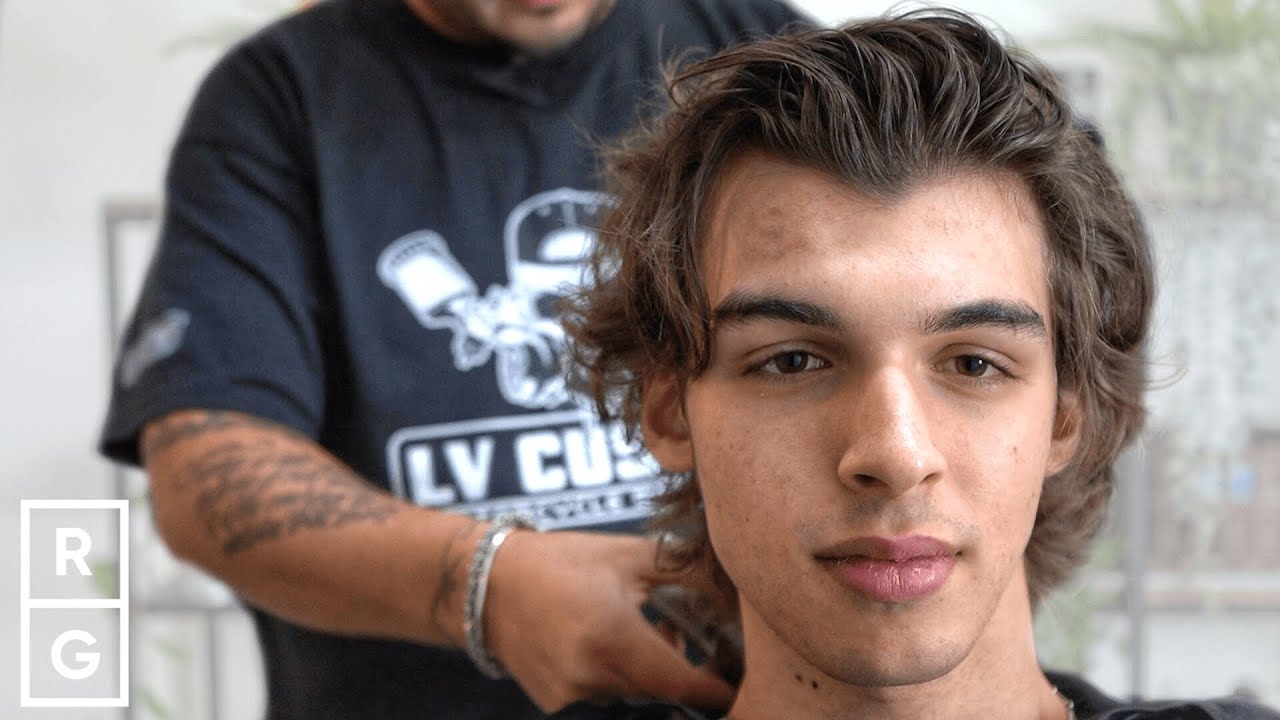
Every third client this year walks in, opens Instagram or TikTok, and shows me the same idea: hair that moves instead of sitting there like a helmet. That’s texture, and it’s the biggest change I’ve seen at the chair in 2026 — the polished, painted-on look is out, and choppy layers, soft fringes and matte finishes are what men actually ask for now.
The good part is that “textured” isn’t one haircut. It’s a family of techniques — point-cutting, razor work, thinning shears, natural layering — that a barber uses to break up weight and create separation. That means a textured cut can be a two-guard crop, a longer flow, or an old-school pompadour built with modern layering. The engine underneath is the same.
Below I’ll walk you through the versions I’m cutting most this year, what to ask for, who each one flatters, and the products that actually hold texture without turning it greasy. Not sure which is right for you? Try our free Haircut Finder tool — five quick questions and you’ll get a matched style with barber instructions.
Key Takeaways
- Texture is a technique, not one haircut — point-cutting and razor work break up weight so every length looks intentional.
- The textured crop is the most-requested cut of 2026, followed by the warrior cut, modern mullet and soft textured fades.
- Matte clay, styling paste and sea-salt spray beat shiny gel every time — the finish this year is touchable, not wet-look.
- Thick hair usually needs thinning; fine hair benefits from tighter layering. Tell your barber your hair type before the first section is cut.
- Bring a reference photo, then describe three things: length on top, sides (fade or taper), and the finish (choppy, piecey or soft).

The Basics: Textured Haircuts For Men
A textured haircut is any cut where your barber deliberately removes weight from the ends so the hair separates into pieces instead of sitting as one solid block. The three tools that do the work are point-cutting scissors (chipping into the ends at an angle), a straight razor (slicing and feathering) and thinning shears (removing bulk without changing the outline). Most modern textured cuts use two of the three.
The important distinction: layering changes lengths through the top so hair falls at different levels; texturising breaks up the ends within a single length so each piece sits differently. A great textured cut usually blends both.
What that means in the mirror is a haircut that looks styled even when it’s not. Fine hair looks fuller because the pieces aren’t glued together, thick hair looks less bulky because the density is broken up, and curly hair keeps its shape because there’s no dead weight dragging it down.

Why Choose A Textured Haircut?
Three reasons I keep hearing at the chair this year. First, styling time — a textured cut takes about 60 seconds to finish in the morning because the shape is already in the hair. A pea-sized dab of matte clay, five finger-runs, done. Second, it grows out well. A blunt cut looks messy after three weeks; a textured cut just looks a bit longer. That’s real money saved between trims.
Third, and this is the 2026 shift: matte, natural finishes photograph better on phones than shiny gel. Everything you see on TikTok grooming feeds has that soft, dry, touchable finish, and texture is what makes it possible. If you want to look like the reference photo instead of a shiny copy of it, you need the underlying cut, not just the product.
It also flatters more face shapes than any other approach. Adding height on top makes round and square faces look longer; keeping the sides tight balances a heart-shaped face; asymmetric texture softens a strong jaw. One idea, dozens of variations — that’s why every barber I know uses textured techniques on 70–80% of clients.
Classic Short Textured Cuts
These are the low-effort, high-return options. Sides sit between a #1 and #3 guard, top ranges from an inch to two-and-a-half inches, and the whole thing takes minutes to style. If you’ve never had a textured cut before, start here — the full short haircuts for men guide covers the non-textured variants too.
Textured Crew Cut

The crew cut is short all over with a bit more length on top — usually 3/4 inch to 1.5 inches. What makes the modern version textured is the point-cutting through the top so the ends look chipped rather than snipped straight across. Sides drop to a #2 or #3 guard, no fade needed.
Ask for: “A classic crew cut with #2 sides, an inch on top, and point-cut the top so it’s not blunt.” Style with a five-cent piece of matte clay pushed forward with your fingers. Great for round and square face shapes, and it works on every hair type except very tight curls (where the length disappears too fast). If you want to see the non-textured version and where the crew cut came from, see the full crew cut styles guide.
Textured Ivy League

Think of the Ivy League as the crew cut’s smarter cousin. Same short sides, but the top is left long enough — 1.5 to 2.5 inches — to sweep to one side. It reads professional in an office and slick at the weekend, which is why it’s my go-to recommendation for men who want one haircut that covers every occasion.
The trick is texture on top: I point-cut the crown and razor the front fringe so it moves with a comb-through instead of standing up in a block. Ask for: “Ivy League, side part on the left/right, textured through the top so it lays soft.” Cream pomade or a light styling paste, combed to one side, is all you need. Full breakdown in the Ivy League haircut guide.
Medium-Length Textured Styles
This is the biggest growth area at the chair right now. Two to four inches on top with taper or fade sides — long enough to have real movement, short enough to still look tidy. If you’re growing your hair out from short, medium-length textured is where you’ll spend most of the journey.
Messy Textured Crop

The textured crop is officially the most-requested men’s haircut of 2026 — I book it more than any other style on the list. It’s a French crop pushed forward into a short, choppy fringe (about 2 to 3 inches at the front, shorter at the crown) sitting over a low or mid fade. The word “messy” is doing a lot of work: it means the fringe is deliberately uneven — pieces of different lengths sitting at slightly different angles.
Ask for: “A textured crop with a low fade, forward fringe, and razor the ends so it’s piecey not blunt.” Sea-salt spray on damp hair, rough-dry with your fingers, finish with the tiniest smear of matte clay. Best face shapes: oval, oblong, square. Skip it if you have a very high forehead — the fringe won’t cover as much as you’d like. Deeper dive in the dedicated French crop haircut guide.
Textured Side Part

A modern side part isn’t the razor-sharp office look from ten years ago — the part is softer now, almost drawn in with the comb rather than shaved. Top length sits around 3 inches, sides taper down cleanly (usually scissor-tapered, not clippered). The texture is what stops it looking dated.
Ask for: “Side part, scissor-tapered sides, natural part on my left/right, textured through the top so it doesn’t look sculpted.” A cream pomade or a light gel works — anything shinier will drag it back to the 2015 corporate version, which is not what you want. Full details in the side part haircut guide.
Layered Medium Cut
A pure layered cut — no fringe, no strong part — with 3 to 4 inches on top layered progressively shorter towards the crown. This is the style I recommend for men with thick or wavy hair who feel their current cut is “too heavy”. Layers take the weight out but keep the length, so it moves in the wind instead of just sitting there.
Ask for: “A layered medium cut, keep the length, remove the weight underneath, blend the sides with a scissor taper.” Air-dry, or blow-dry with your fingers pointing up and back. A leave-in conditioner works better than a styling product on this one. If your hair sits on the very thick end of the scale, the haircuts for men with thick hair guide covers all the workarounds.
Longer Textured Haircuts
Four inches and up on top. This category exploded in 2026 off the back of the “warrior cut” trend — longer, textured layers with clean sides, essentially a modern take on the mid-2000s rockstar cut. If you’ve grown your hair through the medium phase and want to keep going, these are your options.
Textured Shag

The men’s shag is choppy layers from the crown all the way down, usually with a curtain-style fringe splitting either side of the forehead. Length ranges from 4 to 6 inches on top, ear-length or longer at the sides. It’s the closest thing to the modern mullet trend without committing to the disconnected back.
Ask for: “A textured shag with curtain bangs, heavy point-cutting through the layers, keep the length at the back and sides ear-length.” Style with a curl cream or a sea-salt spray, scrunched with your fingers. Best on wavy or curly hair — dead-straight hair needs a light perm at the roots to sit right. If you want to push into full mullet territory, the wolf cut for men guide is the next step up.
Wavy Textured Flow

The “flow” is hair that’s grown out past your ears, brushed straight back off the forehead so it flows behind. Think surfer / hockey-player energy but tidied up. It only works with texture — cut it blunt and it hangs like curtains; texture gives it lift at the roots so it actually flows.
Ask for: “Grow-out flow, keep the length, add heavy layers from the crown down, scissor-taper the sides so I can still tuck it behind my ears.” Rinse in the shower, towel-dry rough, push back with your hands. That’s the styling routine — genuinely no product needed if your hair is even slightly wavy.
Textured Fade Haircuts
A fade means the sides blend from skin (or very short) up to a longer length, with no visible line. Pair it with a textured top and you get the highest-contrast look on the list — clean at the sides, wild on top. Most requested combination at the chair after the plain textured crop.
Low Fade With Texture

A low fade starts the taper just above the ear — nothing higher. It’s the most versatile of the three fade heights because it leaves enough side hair to soften the shape. Pair it with 2 to 3 inches of textured top and you’ve got a haircut that works in a suit or a hoodie.
Ask for: “Low skin fade starting just above the ear, 3 inches on top, point-cut and razored so the top is piecey.” Matte clay, forward and up. If you’ve never had a fade before, start at “low” — it grows out most forgivingly. Fade heights and shapes explained in the low fade haircut guide.
Mid Fade Textured Crop
Mid fade starts halfway between the ear and the temple. This is the pairing you’ll see on 90% of the “textured crop” reference photos on Instagram — the mid fade is short enough to look sharp but not so aggressive it makes the top look tiny. The gold-standard combination for 2026.
Ask for: “Mid skin fade starting mid-side, textured French crop on top with a short forward fringe, razor the ends.” This is where I earn my money — the blend between the fade and the top needs a proper freehand section from your barber, not a lazy scissor-over-comb finish. Full breakdown in the mid fade haircut guide.
High Fade With Choppy Texture
High fades start at the temple or above and expose more skin — bold, high-maintenance (a top-up every 2 weeks or it looks scruffy), but visually stunning when paired with heavy top texture. Best if you have a strong hairline and don’t mind commitment.
Ask for: “High skin fade at the temple, keep 3 to 4 inches of choppy texture on top, deliberate weight up front.” Matte finish only — anything shiny will pull the eye down to the fade line, which you don’t want.
Textured Taper Cuts

A taper is like a fade’s polite cousin — instead of blending to skin, it just gets progressively shorter (usually stopping at a #1 or #0.5 guard). No exposed skin, no hard lines. The 2026 taper is softer than ever, which is exactly why it’s replacing the aggressive skin fade for a lot of men over 30.
Ask for: “Scissor taper, short but not skin at the neckline and around the ears, textured top.” Works with any top length and any face shape. If you’re not sure whether to get a fade or a taper, the taper is the safer bet — it grows out over 4 to 5 weeks instead of 2.
Curly And Wavy Textured Haircuts

Curly hair is texture — the barber’s job is just to control the amount and direction. The mistake I see most often is over-thinning: curly hair without weight goes triangle-shaped (wide at the bottom, narrow at the top). What you want is layers cut on dry hair, so I can see exactly where each curl lands.
For loose waves (type 2), ask for: “Medium length, keep 3 inches on top, low taper sides, layered so the waves fall forward.” For defined curls (type 3), ask for: “Cut on dry hair, keep the shape rounded, thin only where it’s clearly too heavy, no thinning near the front hairline.” A curl cream or leave-in conditioner is non-negotiable — matte clays will kill the curl pattern.
Textured Quiff Variations
The quiff is hair swept up and slightly back from the forehead, held with product. The modern version is textured — no more glossy pompadour-style quiffs like David Beckham had in 2010. Three variations covering different levels of drama.
Messy Textured Quiff

Lower-effort quiff with 3 to 4 inches on top, heavily point-cut so the pieces stick up unevenly. Sides taper down — anything shorter than a #1 will make the top look disproportionately big.
Ask for: “Messy quiff, 3 inches on top with heavy point-cutting, low taper sides.” Style with matte clay pushed up and back with your fingers, then break it up with a comb. Deliberately uneven is the whole point.
Textured Modern Quiff
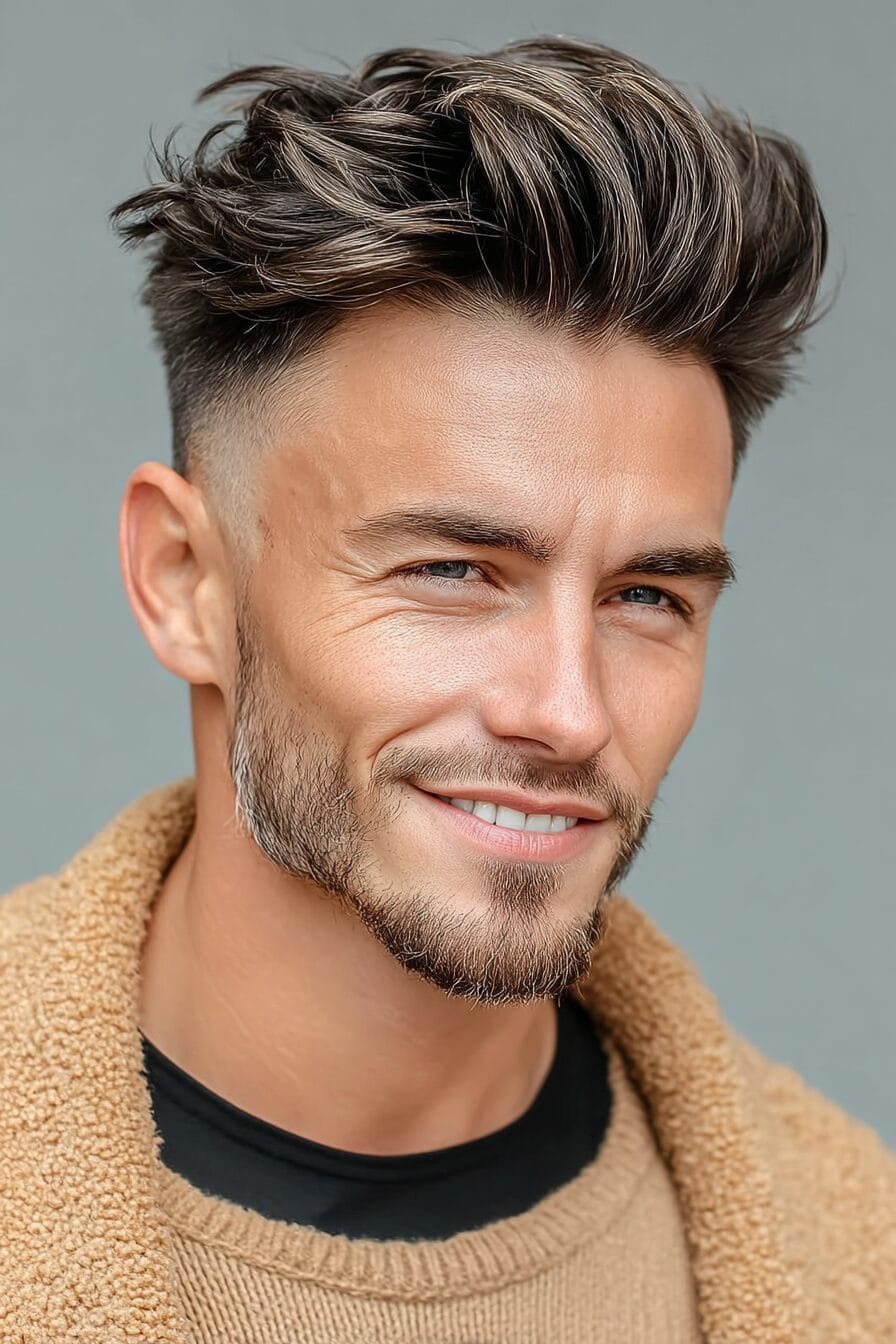
Cleaner cousin of the messy quiff. Similar length on top but the layers are more even, and the sides run to a mid or high fade instead of a taper. This is the quiff for men who want structure — you’ll blow-dry it briefly (30 seconds, low heat) to get the height, then finish with a light styling paste.
Ask for: “Modern quiff, mid skin fade, 3 to 4 inches on top with defined pieces.” Blow-dry back and up, product last, comb through once.
Side-Swept Textured Quiff

The quiff that leans. Top volume swept to one side rather than pushed straight back — softer, more romantic-looking, and it flatters angular faces because it breaks up the hard lines. My most-requested quiff for men who work in creative jobs.
Ask for: “Side-swept quiff to the left/right, medium length on top, scissor-taper sides, textured through the front so it moves.” Cream pomade, brushed to the direction you want, no product on the ends.
Textured Pompadour Styles
The pompadour is the quiff turned up to eleven — much more front volume, hair swept back into a defined shape. The old-school version needed pomade and a comb; the modern textured pompadour uses layers to build the height so you need less product to hold it. Three flavours below.
Classic Textured Pompadour

The traditional shape (think James Dean, updated) with 4 to 5 inches at the front sweeping back into a defined roll. What makes the modern version textured is the layering underneath the top — it builds height without needing wet-look product.
Ask for: “Classic pompadour, 4 inches at the front, tapered sides, textured underneath the top layer.” A firm-hold cream pomade (not gel), blow-dried with a round brush pushing back. This one takes the longest to style — about 5 minutes — but the payoff is the most striking cut on the list.
Loose Textured Pompadour
Same shape but softer. Instead of a defined roll at the front, the top piece is broken up into loose sections. Reads as more casual and works on wavy hair without much effort — the waves add the texture for you.
Ask for: “Loose pompadour, keep it soft not sculpted, low taper sides, break up the front pieces.” Sea-salt spray, blow-dried back, no comb — finger-shape only. It’s the pompadour to try if the classic version feels too formal.
Undercut Pompadour With Texture
Full disconnect between the top and the sides — the sides are shaved to a single short length (usually #1 or #2) with no fade blend, and the top sits as a distinct disconnected piece. Bolder look, higher maintenance (the sides need reset every 2 weeks), and it looks best on strong, defined jawlines.
Ask for: “Disconnected undercut with #2 sides, keep 4 inches on top, textured through the whole top piece.” Pomade for the pomp shape, and consider growing the top even longer for a real statement version. If you like this look, our disconnected undercut guide covers the variations in more depth.
Textured vs Layered Haircuts
This one comes up in the chair almost every week, so worth being clear. Layering is about cutting different lengths — the crown might be an inch, the sides two inches, the front three inches, creating a shape that flows from short to long. Texturising is about breaking up the ends within any single length, using point-cutting or razor work so the pieces separate.
Almost every modern cut uses both. A “layered haircut” without any texturising tends to look heavy and blocky at the ends; a “textured cut” without any layering can look messy without structure. When you ask a barber for a textured haircut, what you’re really asking is: layers plus point-cutting on the ends. If you want to go deeper, our layered haircuts guide covers the layering side specifically.
Best Textured Haircut for Your Face Shape
Face shape isn’t the whole answer, but it’s the biggest single factor. Quick guide from 20 years of matching cuts to faces:
- Oval: almost anything works — you’re the lucky ones. Try the textured crop or medium quiff.
- Round: add height on top to lengthen the face. Textured pompadour, high fade with choppy texture, or the modern quiff all work.
- Square: soften the strong jaw with side-swept or asymmetric texture. Side-swept quiff and textured ivy league are safe bets.
- Oblong / long: avoid too much top volume — it makes the face look longer. Textured crop with a full fringe or the wavy flow.
- Heart-shaped: balance the wide forehead with length or fullness at the sides. Textured shag, loose pompadour, or a low fade with medium top.
- Diamond: width at the cheekbones — go with fringes or curtains to soften the top and sides.
Not sure which face shape you have? Try our free face shape detector tool — takes a photo and does the work for you. There’s more detail in the full face shape haircut guide.
Textured Undercut Styles

An undercut means the sides are cut to a single short length with no gradient — the top can be anything from a quiff to a full mane. Texture is what stops it looking harsh: without point-cutting on top, an undercut feels like two separate haircuts glued together.
Ask for: “Undercut with #1 or #2 sides, keep the top length long, textured heavily through the top layer, natural neckline.” The maintenance cost is the sides — a full reset every 2–3 weeks, or the “disconnect” starts to blur and lose its impact.
How to Ask Your Barber for a Textured Haircut
The single best thing you can do is bring a reference photo. Every barber I know welcomes photos — words are ambiguous, pictures are not. On top of that, describe three things: length on top, sides (fade or taper, how short), and finish (choppy, piecey, or soft).
Then say the magic phrase: “point-cut the top so it’s not blunt” or “razor through the ends for texture.” Those two sentences instantly signal that you know what you want and stop the barber from finishing with a clean straight-across cut. Finally, tell them your hair type — thick hair usually needs thinning under the top, fine hair needs the layers kept closer together so it doesn’t look sparse.
If it’s your first textured cut, start conservative: “textured crop with a low fade” is basically request-proof. Once you’ve had it done and know how it grows out, you can experiment upwards.
Maintenance Tips For Textured Haircuts
Texture holds its shape longer than a blunt cut, but the price is a bit more thought at each stage. Three habits that make the difference:
Regular Trims
Every 3 to 5 weeks is the sweet spot for most textured cuts. Any longer and the layers collapse — the ends get heavy, the top loses movement, and the whole thing looks flat. If you have a fade, you’ll want a mid-cycle “sides only” refresh at the 2-week mark. It’s a 10-minute job and costs half the price of a full cut.
Proper Shampooing
Shampoo two or three times a week, not daily — daily washing strips the natural oil that gives texture grip. On the in-between days, rinse with warm water and condition just the ends. Once a week, use a clarifying shampoo to strip out product build-up (that’s the main reason a good haircut starts looking dull two weeks in).
Daily Styling Routine

Less product than you think. A pea-sized amount of matte clay or styling paste, warmed between your palms, is enough for a full head of medium-length hair. Apply to damp hair — not soaking, not dry — and work through with your fingers, never a brush. Finish with a quick blast of cool air from the dryer to lock the shape.
Products worth investing in: a good matte clay (Baxter, Layrite Cement Clay, American Crew Fiber all work), a sea-salt spray (for volume at the roots), and one good comb. That’s the whole kit. If your cut needs more than that to look right, the cut isn’t right.
Ready to Find Your Perfect Cut?
You’ve read about the styles. Now find the one that fits YOUR face shape, hair type, and lifestyle.
FAQs
What Is The Best Product For Textured Haircuts?
Matte clay or styling paste is the default choice for most textured cuts because it adds hold and definition without shine — and shine is what makes a textured cut look wrong in 2026. For lighter control or wavy hair, sea-salt spray or texturising powder builds volume with almost no weight. Avoid anything labelled “gel” or “wet look” — it’ll drag the pieces back together and undo the point-cutting your barber worked on.
How Often Should I Trim A Textured Cut?
Every three to five weeks is the sweet spot. Any longer and the layers collapse into a heavy shape that loses movement — the top starts sitting flat, the fade grows out fuzzy, and you’ll notice your styling routine takes twice as long for half the result. If you have a skin fade, book a “sides-only” cleanup at the 2-week mark to keep the contrast sharp.
Can Textured Haircuts Work On Curly Hair?
Absolutely — curls are texture, so the technique enhances what’s already there. The rule is to have the cut done on dry hair so the barber can see exactly where each curl lands. Ask for layers to control weight, avoid heavy thinning near the hairline, and use a curl cream or leave-in conditioner instead of matte clay so you don’t kill the pattern.
Are Textured Styles Professional Enough For Work?
Yes — textured versions of classic office cuts (ivy league, side part, low fade with medium top) are more polished than the blunt equivalents because they don’t look “unfinished”. The distinction is polished texture versus messy texture: for corporate settings, ask for softer point-cutting and a scissor-tapered side, not a heavy chop with a high skin fade.
How Do You Ask Your Barber for a Textured Haircut?
Bring a reference photo and describe three things: length on top, how short you want the sides (fade or taper), and the finish (choppy, piecey or soft). Then say the magic phrase — “point-cut the top so it’s not blunt” or “razor through the ends for texture.” Mention your hair type so the barber can adjust: thick hair usually needs thinning under the top, fine hair benefits from tighter layering to keep the appearance of fullness.
Was this article helpful?

Khamis Maiouf is a professional barber who graduated from Hinckley College in England with a Level 3 qualification in hairdressing. With over 20 years of experience, he is an award-winning barber who has mentored numerous students and styled thousands of clients. A recognised expert featured on StyleCraze (20M+ readers).
Credentials: Level 3 Hairdressing (Hinckley College, UK) • 20+ Years Professional Experience • Featured Expert on StyleCraze • Founder of Book of Barbering