

— Award-Winning Barber · 20+ Years Experience · Level 3 Qualified
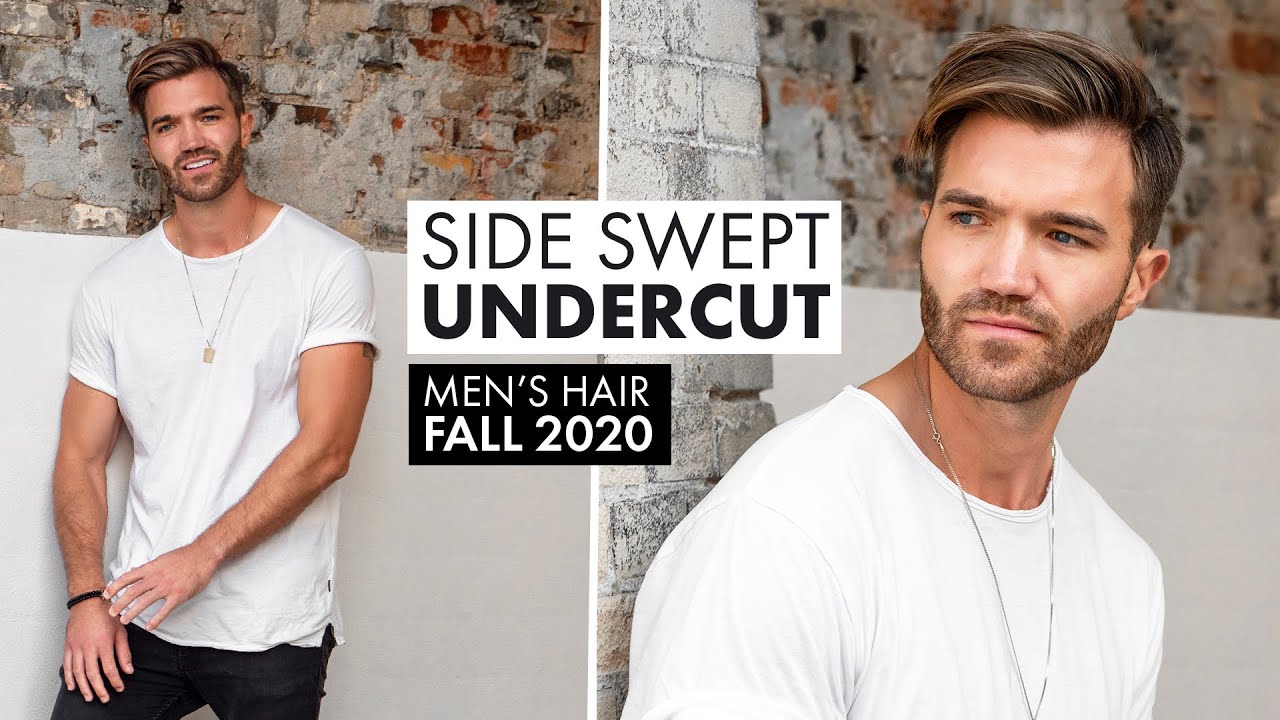
Every week I get a version of the same phone screenshot in my chair: shorter sides, a heavier top, hair swept across the forehead. It’s the side swept undercut — one of the most requested men’s cuts I do, and the shape that keeps coming back stronger every year because it hides a bad hair day, flatters most face shapes, and doesn’t take a bathroom shelf of product to style.
What changed for 2026 is how we cut it. The old version was harsh — skin sides, a hard disconnect, gel that never moved. The current version is quieter: soft taper instead of skin, real length and movement on top, matte finish instead of shine. Below are 25 variations I’ve cut on real clients, sorted by hair type, face shape, and how much effort you actually want to put in each morning.
Key Takeaways
- The modern side swept undercut is softer than the old one — think low taper or #1–#2 guard on the sides, not a skin fade, with 3–5 inches on top
- Ask your barber for the fade level (low taper, mid, or skin), the top length in inches, and which side the hair should sweep — bring a photo if you can
- The current-year finish is matte and lived-in — matte clay, cream, or light-hold pomade, never stiff gel
- It works on straight, wavy, curly, and thick hair — each texture just needs a small tweak in length and product
- Keep the shape sharp by trimming the sides every 2–3 weeks and the top every 4–6 weeks
What Is The Side Swept Undercut?
A side swept undercut is short sides paired with enough length on top to comb, brush, or finger-style the hair across the head. The sides can be a low taper (softer), a mid or high fade, or a true undercut disconnect where the sides stay one length all the way up. Whichever you choose, the top is the part that carries the look — usually 3 to 5 inches so it can actually sweep and hold movement.
The reason this cut has stayed on trend for so long is honest: the contrast between clean sides and a longer, sculpted top does the flattering work for you. On a round face it adds height. On a long face it adds width through the sides. On a square jaw it softens the angles. That’s why almost every barber has a version of this on their wall.

How To Style A Side Swept Undercut
Start on damp hair, not wet — towel-blot until it’s just past drip stage. Warm a five-pence-sized amount of matte clay or cream pomade between your palms until it’s clear, then work it through the top from root to tip so every strand is coated.
Blow-dry with a round or vent brush, pushing the hair against your parting first to build root volume, then finishing in the direction you want the sweep to fall. Cool shot at the end locks the shape. Finish with your fingers, not a comb — the current-year finish is textured, not sheeted. Most clients hit their look inside three or four minutes once they’ve done it a week.

Side Swept Undercut vs Classic Undercut: What’s The Difference?
Clients ask me this all the time, because on the sides they look identical. The difference is the top and the finish.
A classic undercut leaves the top uniform and combs it straight back or side-parted with product for a slick, clean shine — think 2010s Peaky Blinders. The side swept version cuts more layers into the top, styles the hair across the forehead with softer texture, and reads more relaxed than formal. If you want a boardroom shape, go classic. If you want a lived-in shape that photographs well and hides a rough morning, go side swept.
Not sure which variant will suit you? Our Haircut Finder Quiz matches you with the right cut based on your face shape and hair type — takes 60 seconds.

Best Products for a Side Swept Undercut
I keep it simple in my kit and I tell every client the same. For fine or straight hair, use a matte clay — it grips the roots without weighing them down. For medium or wavy hair, a medium-hold cream keeps the natural bend without making the ends stiff. For thick or coarse hair, a heavier fibre paste or pomade gives you enough control to sweep without frizz. Curly guys should stay on a curl cream plus a bit of styling foam — anything waxy will clump the coils.
If you already own hairspray, learn how to use pomade properly instead — it holds better and looks less varnished. Shiny gel is the fastest way to age this cut by ten years.
Short Side Swept Undercut
The short version is my go-to for clients who want a low-fuss cut. Ask for 1½–2 inches on top over a low taper or #2 guard on the sides. It’s still long enough to sweep, but short enough that a splash of water and a rub of clay in the morning is all it takes. This one flatters oval and square faces best, and it’s the version I’d suggest if you’re a first-timer and not sure how much length you can style yet.

Long Side Swept Undercut
Take the top past four inches and the sweep becomes cinematic — it’s the “Italian” or old-money version everyone screenshots off TikTok right now. Ask for 4–6 inches on top, a soft blend on the sides (low or mid taper, not skin), and point-cut layers so the ends aren’t blunt. It suits guys with straight-to-wavy hair and a bit of thickness. If your hair is very fine, this length can go flat by lunchtime — go shorter or add a root spray.

Textured Side Swept Undercut
This is the version I’m cutting the most this year. Same shape as a normal side swept undercut, but with heavier point cutting and texturising scissors through the top so the hair falls in broken chunks instead of a flat curtain. Ask for “a lot of texture, not a lot of taken-off length” so your barber doesn’t confuse the two. It works on almost every hair type and is the friendliest version of this cut for guys who don’t want to touch a blow-dryer.

Side Swept Undercut Fade
Instead of one blunt undercut length, the sides blend from long to short in a gradient. Ask for a low, mid, or high fade depending on how much contrast you want; the fade level starts at the temple for a low, at the mid-parietal for a mid, and above the recession for a high. Pair it with a top of 3–4 inches for the cleanest 2026 look — a fade with a shorter top can look boyish. This is the most common version I cut, full stop.

Curly Hair Side Swept Undercut
Curly hair actually wears this cut beautifully — the natural bend gives the sweep instant movement without any styling. Ask your barber for a dry cut, not a wet cut so they can see how your curls actually fall. Keep the sides on a #1 or #2 guard, leave 3–4 inches on top, and ask for the front section to be a hair longer than the crown so it sweeps forward rather than crowning up.
At home, diffuse instead of brush-blowing, then finger-shape with a light curl cream. For more on managing curls, my full guide on how to get and style curly hair for men walks through the whole routine.

Wavy Side Swept Undercut
Wavy hair is honestly the perfect texture for this cut — enough movement to look effortless, enough control to actually stay put. Ask for a mid or low taper, 3–4 inches on top, and layers cut with the wave so the top doesn’t puff sideways. A pea-sized amount of sea-salt spray while damp then a rub of matte cream is all it needs. Guys with wavy hair get the most compliments on this cut of anyone in my chair.

Disconnected Undercut Side Swept
The disconnected version keeps the sides one solid length with no fade at all — a hard shelf where the short meets the long. Ask for a #1 or #0.5 all the way up the sides and a top of at least 4 inches to keep the disconnect visible. This is the boldest version of the cut. It flatters strong jawlines and does not flatter thinning hairlines. For a full breakdown of the shape, see my guide to disconnected undercut styles.

High Fade Swept Undercut
The high fade takes the short sides up almost to where the top starts, giving you maximum contrast. Ask for the fade to start above the temple recession and a top of 3–5 inches to balance it. It’s a strong, editorial-feeling shape — great for photos, less forgiving on round face shapes because it removes any softening on the sides. If you love this look, my guide to the high fade haircut covers the sub-variants in detail.

Messy Side Swept Undercut
“Messy” is a styling choice, not a cutting one — the cut is a standard textured side swept undercut, and the mess is what you do at the sink. Rough-dry the top with your fingers instead of a brush, use a matte clay with your palms, and let the hair fall where the crown wants it to. It’s the most forgiving version of this cut, and honestly the closest to how the 2026 look wears in real life.

Clean Side Swept Undercut Style
On the other end of the spectrum, a proper clean version uses a low-shine cream and a comb to lay every strand in one direction. Ask your barber to keep the top even in length (no big layer variation), the sides on a #1 skin taper, and the neckline blocked square. This is the interview / wedding version. If you work a formal job and want a haircut that pairs with a suit, this is the one to ask for.

Volume Side Swept Hair
If you want proper lift, ask for 4–5 inches on top with heavy internal layering to keep the weight low and let the surface fluff up. Blow-dry against the growth direction first with a round brush, then sweep. Root-boosting sprays help; a paddle brush finish helps more. Volume-first side swept looks best on fine-to-medium straight or wavy hair — thick hair usually needs the opposite treatment.
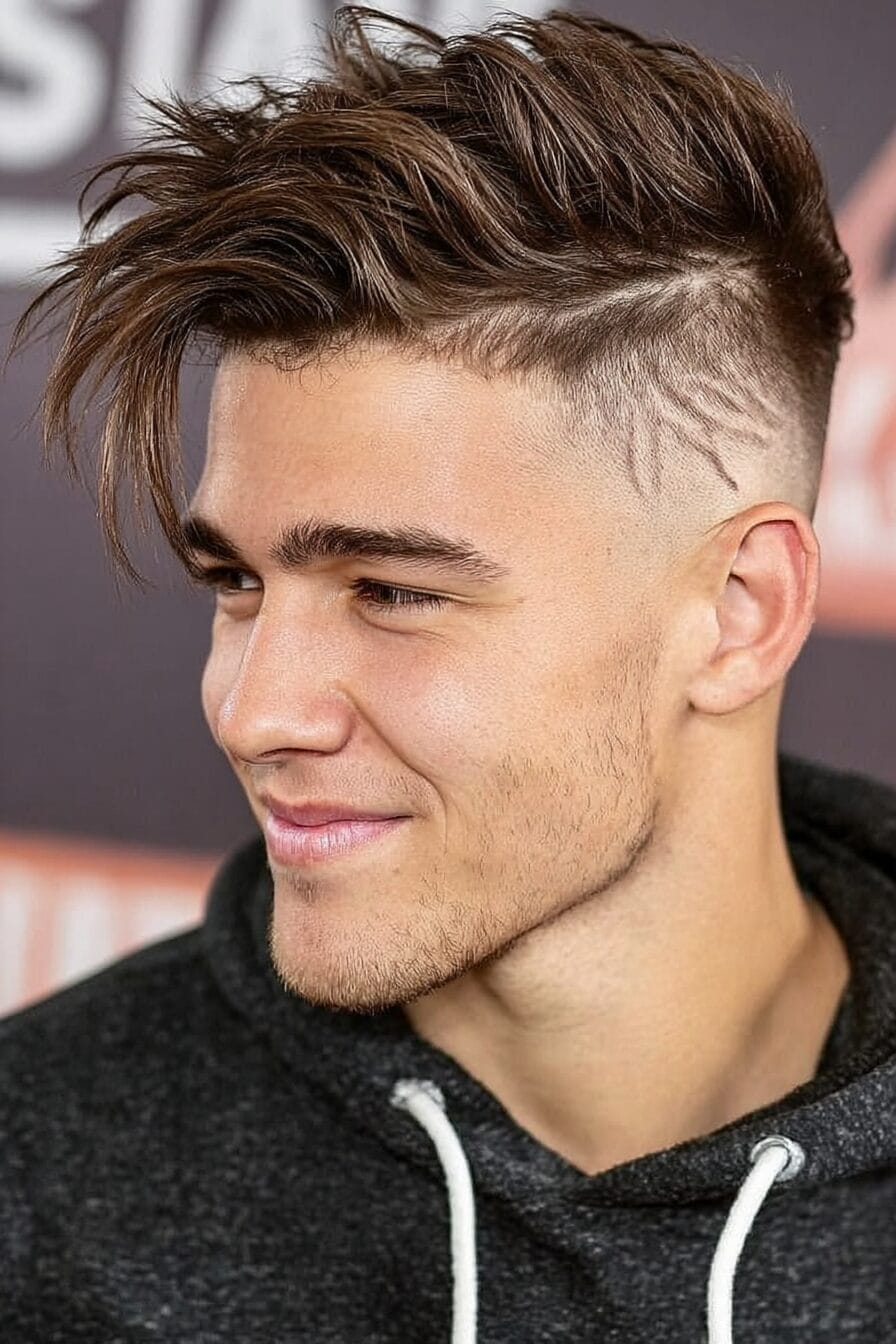
Side Swept Undercut With Hard Part
The hard part is a razor line shaved into the side that separates the short from the long. Ask for a hard part on the side you sweep away from (so the line stays visible), roughly 1–2 mm deep, running from the recession to just past the crown. It looks sharp on straight, thick hair with a fade underneath, and it grows in cleanly within two weeks. This one photographs really well.

Slicked Side Swept Style
A proper slick is a shine finish combed flat to the head — think 1920s but with a modern short-back-and-sides. Ask for 3–4 inches on top and use a medium-shine pomade on damp hair. Comb in the direction you want to sweep while it’s still wet, then leave it. If your hair is very fine, avoid this variant — a slick shows every gap. For technique, my step-by-step on how to slick back hair is worth a read.

Side Swept Undercut Pompadour
Take the front section of a side swept and lift it into a rounded pompadour at the fringe. Ask your barber for the front 1–2 inches longer than the rest of the top (roughly 5 inches at the front, 3 at the crown). Blow-dry the front up and back before sweeping across. It’s a big-personality haircut and it’s currently doing very well on wavy hair guys who don’t want to commit to a full pompadour.

Tapered Side Swept Cut
The tapered version is the softest, most conservative shape on this list. The sides don’t get short short — they blend from around #3 down to #1 at the neckline with no visible fade line. Ask for a “barbershop taper, not a fade” — that phrase gets you the right cut every time. Combined with a 3–4 inch swept top, it’s the version I recommend for guys over 40 or in traditional workplaces.

Side Swept Undercut With Beard
Pairing the cut with a beard rebalances the whole face. For an oval face almost anything works. For a round face, ask your barber to keep the beard longer at the chin than the cheeks to add length. For a square jaw, keep the beard neat and short so the jaw does the work.
I always finish the beard on the same visit as the cut so the fade blends into the sideburn cleanly — never let the two lines fight each other. For beard shape ideas, see my guide to beard styles for an oval face.

Layered Side Swept Style
Heavy internal layering is the fastest way to make thick hair feel manageable. Ask for point-cut layers through the top, keeping the outer length between 3 and 5 inches. Layers remove weight, add movement, and stop the top from sitting like a helmet. If your hair is straight and fine, ask for softer, longer layers so you don’t lose density at the front.

Fluffy Side Swept Look
“Fluffy” is the internet’s word for what barbers call a soft, cloud-like blow-out finish. Rough-dry the top upside down for volume, then bring it back into the sweep without pulling it flat with a brush. Ask your barber to leave the front longer and heavier than the crown so the fluff sits at the forehead. This is the most-requested styling finish among guys under 25 right now.

Side Swept Undercut For Thick Hair
Thick hair suits this cut but needs a stronger cutting hand. Ask for the sides on a #0.5 or skin (thick hair grows fast, so the sides need to be very short to keep the contrast), and the top layered aggressively — otherwise you’ll end up looking top-heavy. Use a heavy fibre paste or clay pomade and blow-dry with a nozzle to control direction. Thick straight hair on a square face photographs particularly well in this cut.

Teen Side Swept Undercut
For teenagers I keep it simple: #1 sides, 3 inches on top, no fade line. School allows it, mums approve, and it lets a kid experiment with texture at home without ruining the cut. I usually leave a bit of extra length at the fringe so they can push it around the way they see on TikTok. Trim it every four weeks to keep the shape — kids’ hair grows faster than adults’.
How to Maintain Your Side Swept Undercut Between Cuts
Every side swept undercut lives or dies on the sides. Book the sides every 2–3 weeks even if you skip the top — the fade or taper losing definition is what makes the cut look grown-out first. The top can go 4–6 weeks before the layers feel heavy.
Wash no more than 2–3 times a week to keep natural oils in the top; a proper conditioner matters more than an expensive shampoo. My guide to men’s hair care covers the basics if you’re building a routine from scratch. And use a silk or satin pillowcase — sounds fussy, but it drops daily bed-head noticeably.
FAQs: Side Swept Undercut
How do I ask my barber for a side swept undercut?
Give your barber three pieces of information: the top length in inches (3, 4, or 5), the side type (low taper, mid fade, high fade, skin, or disconnected undercut), and which side you want the hair to sweep towards. Add “matte finish, not shiny” so the styling advice matches. Bring one or two photos on your phone — different angles are more useful than one perfect front shot.
What face shape suits a side swept undercut best?
Almost every shape wears it well with small tweaks. Oval and square faces can wear any variation. Round faces need extra height on top and a lower fade. Long or oblong faces need a moderate top height with the sweep going wider than tall. Heart-shaped faces suit a fuller, softer sweep to balance the narrower chin. When in doubt, ask your barber to leave a little more length — it’s easier to take off than add on.
How often should I trim my side swept undercut?
Sides every 2–3 weeks, top every 4–6 weeks. If the sides are a skin fade, closer to 2 weeks; if it’s a soft taper, closer to 3. The top can stretch if you’re growing the shape out, but any longer than six weeks and the layers usually feel heavy at the front.
Is the side swept undercut still in style?
Yes — but the 2026 version is different from what you saw a few years ago. The current cut leans on soft tapers instead of hard skin fades, real texture on top instead of stiff sheeted hair, and matte finishes instead of shine. It’s less aggressive and more lived-in, which is why it’s staying in rotation while some of the harsher undercut variants have quietly fallen off.
Can you do a side swept undercut with curly or thick hair?
Yes, and honestly both textures wear it better than fine straight hair does. Curly hair needs a dry cut so the barber can see the actual pattern, plus extra length on top (3–4 inches minimum) so the curls have room to move. Thick hair needs shorter sides (#0.5 or skin) plus internal layering to stop the top going helmet-shaped. Straight fine hair works too, but you’ll need root spray or a texturising powder to keep it from going flat.
Was this article helpful?
Ready to Find Your Perfect Cut?
You’ve read about the styles. Now find the one that fits YOUR face shape, hair type, and lifestyle.

Khamis Maiouf is a professional barber who graduated from Hinckley College in England with a Level 3 qualification in hairdressing. With over 20 years of experience, he is an award-winning barber who has mentored numerous students and styled thousands of clients. A recognised expert featured on StyleCraze (20M+ readers).
Credentials: Level 3 Hairdressing (Hinckley College, UK) • 20+ Years Professional Experience • Featured Expert on StyleCraze • Founder of Book of Barbering