

Every week, at least one guy sits in my chair and asks for “that swept-back look” without knowing exactly what it’s called. Nine times out of ten, they’re describing a pompadour. It’s the cut that works in a boardroom, at a wedding, or on a Saturday night — and after two decades of cutting them, I can tell you there’s a version for every face shape and hair type.
Here are 20 pompadour styles I actually recommend to clients, from classic slick-backs to modern textured versions you can style in under five minutes.
Key Takeaways
- The pompadour works for every face shape — adjust height and width to balance your proportions.
- You need at least 3-4 inches on top for a basic pompadour; classic versions work best with 4-6 inches.
- Product choice matters: pomade for shine, clay for matte texture, mousse for pre-blow-dry volume.
- Fade pompadours need trims every 2-3 weeks; taper and fuller-sided versions can go 4-6 weeks.
- Blow-dry upward and back before applying product — this single step creates 90% of the pompadour’s shape.
Traditional Pompadour
The traditional pompadour features significant height at the front with hair swept upward and back in a smooth, continuous wave. This timeless version maintains fullness on the sides, slicked back with pomade for a polished finish. It’s the go-to choice for formal events and professional settings where classic sophistication matters most.
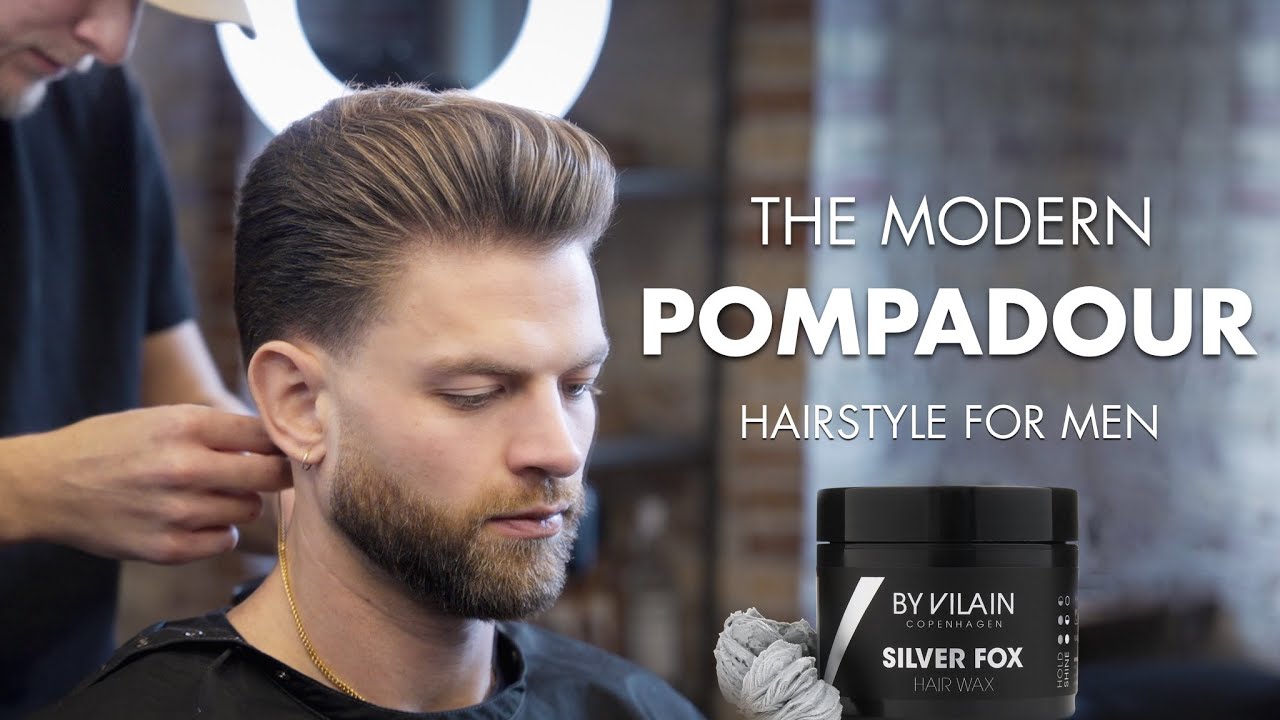
Modern Pompadour
A contemporary take on the classic, the modern pompadour incorporates textured volume on top with shorter, faded sides for a cleaner silhouette. This version trades the rigid, slicked appearance for a more touchable, natural finish. Perfect for men wanting the pompadour’s iconic shape without the formal commitment, it transitions seamlessly from office to evening.
Pompadour with Low Fade
The low fade pompadour offers subtle sophistication by starting the fade just above the ears, maintaining more length through the sides. This conservative approach provides a gentle transition from the voluminous top to the shorter sides. Business professionals often prefer this variation because it offers modern style while remaining appropriately understated for corporate environments.

High Fade Pompadour
Creating dramatic contrast, the high fade pompadour features a fade that starts at temple level or above, leaving minimal hair on the sides. This bold cut emphasizes the pompadour’s height and creates a striking silhouette that demands attention. Athletes and fashion-forward men gravitate toward this style for its clean, sharp appearance that requires minimal daily maintenance.

Skin Fade Pompadour
The skin fade pompadour takes contrast to the extreme with sides faded completely down to the skin. This ultra-modern variation creates the sharpest possible distinction between the voluminous top and bare sides. Popular among younger men and urban professionals, it delivers maximum impact while keeping the neck and sides feeling fresh in warmer weather.

Textured Pompadour
The textured pompadour embraces natural hair movement with a matte, piece-y finish that shows individual strands rather than a uniform sweep. Using clay or texture powder instead of traditional pomade, this style creates touchable volume with visible separation. It’s particularly flattering for men with fine hair, as the texture adds visual thickness and dimension.

Messy Pompadour
Deliberately tousled and imperfect, the messy pompadour maintains characteristic front volume while embracing controlled chaos throughout. This relaxed interpretation works best with medium-hold products that allow natural movement. Creative professionals and weekend warriors love this style because it suggests effortless cool without requiring precise styling every morning.
Wavy Pompadour
The wavy pompadour celebrates natural texture by incorporating waves and subtle curls into the traditional swept-back shape. Rather than fighting against natural movement, this style enhances it with curl-defining products that maintain the pompadour’s height while showcasing beautiful texture. Men with wavy hair find this variation finally gives them a formal style option that works with their natural pattern.

Short Pompadour
The short pompadour keeps things compact with just 2-3 inches on top, perfect for those wanting the style without excessive length. This practical variation maintains the characteristic front sweep but requires less product and styling time. It’s ideal for men transitioning from longer styles or those with active lifestyles who need low-maintenance sophistication.

Disconnected Pompadour
The disconnected pompadour features a hard line or distinct separation between the top section and sides, eliminating any gradual blend. This bold architectural approach creates a striking visual break that emphasizes the pompadour’s shape. Modern barbers often add a razored part line to further define the disconnection, making it a favorite among fashion-forward clients.

Pompadour with Beard
Pairing a pompadour with well-groomed facial hair creates balanced masculine symmetry that frames the face beautifully. The key lies in proportioning—a voluminous pompadour pairs best with a fuller beard, while subtle pompadours complement shorter facial hair. This combination has become increasingly popular as men discover how facial hair can enhance their pompadour’s overall impact.

Pompadour with Hard Part
Incorporating a razored line on one side, the hard part pompadour adds geometric precision to the classic style. This clean line, typically carved with clippers, creates structure and helps direct the hair’s natural flow. Barbers recommend this for men with unruly hair or prominent cowlicks, as the hard part provides a defined starting point for styling.

Undercut Pompadour
The undercut pompadour combines voluminous top styling with uniformly short, disconnected sides that maintain consistent length rather than fading. This stark contrast creates a bold, fashion-forward appearance that originated in European style capitals. Unlike faded variations, the undercut maintains the same clipper length from bottom to top, creating a shelf-like effect that dramatically showcases the pompadour.
Quiff Pompadour Hybrid
Blending elements of both iconic styles, this hybrid features the pompadour’s swept-back volume with the quiff’s forward-facing height at the very front. The result is a versatile style that can lean more pompadour or quiff depending on styling. Men appreciate this variation because it offers the best of both worlds—classic sophistication with a modern, youthful edge.
Brushed Back Pompadour
The brushed back pompadour offers a looser interpretation where hair flows naturally backward with soft, touchable volume rather than rigid slickness. This relaxed approach uses lightweight products that provide hold without stiffness, allowing hair to move naturally throughout the day. Perfect for casual settings, it delivers pompadour sophistication without the formal polish of traditional versions.
Not sure what your face shape is? Our Face Shape Detector figures it out in 4 quick questions.
Pompadour with Mid Fade
The mid fade pompadour hits the sweet spot between low and high fades, starting the fade right at the temple line. I cut this more than any other pompadour variation because it balances clean sides with enough length to maintain some texture. It’s the version I recommend to guys who want a modern look without the maintenance commitment of a skin fade — you can stretch trims to every 3 weeks instead of 2.
Curly Pompadour
Men with natural curls often assume the pompadour isn’t for them — that’s completely wrong. The curly pompadour uses your texture as an advantage, building natural volume that straight-haired guys need a blow dryer to achieve. I typically leave the top longer (5-6 inches) and use a curl-defining cream instead of pomade to let the curls stack upward with shape and movement.
Side Part Pompadour
Adding a defined side part to the pompadour creates structured elegance that reads as intentional rather than tousled. I typically carve the part with a razor during the cut for a crisp line, then the client combs the bulk of the pompadour to the opposite side. This variation works especially well for professional settings where you want personality without looking like you tried too hard.
Taper Pompadour
Unlike faded versions, the taper pompadour uses scissor work on the sides for a gradual length reduction without clipper lines. This classic approach gives the style a more refined, European feel that pairs beautifully with tailored clothing. I recommend the taper to men who prefer a barbershop visit every 4-5 weeks rather than the 2-3 week cycle that fades demand.
Long Pompadour
With 6 or more inches on top, the long pompadour delivers maximum volume and dramatic sweep. This is the statement version — the one that turns heads. Styling takes more time (a full blow-dry is non-negotiable), and you’ll need a strong-hold pomade or wax to keep everything in place through the day. I always tell clients: if you’re willing to spend 10 minutes styling each morning, this version pays off.
How to Style a Pompadour
Getting the right pompadour shape comes down to technique more than product. Here’s the process I walk every client through after their first pompadour cut.
- Start with damp hair. Towel-dry after a shower until your hair is about 70% dry. Too wet and the product won’t hold; too dry and you can’t build the shape.
- Apply a volumizing pre-styler. Work a small amount of mousse or sea salt spray through the top section. This gives your hair something to grip when you blow-dry.
- Blow-dry upward and back. Using medium heat, direct the airflow from front to back while lifting with a round brush or your fingers. This is the step that creates the pompadour’s signature height — skip it and no amount of product will save you.
- Apply your styling product. Rub a fingertip amount of pomade or clay between your palms until warm, then work it through the top from front to back. Pomade gives shine; clay gives texture.
- Shape and comb. Use a wide-tooth comb to sweep the front upward, then a fine-tooth comb to smooth the sides. Build height at the front hairline first, then blend toward the crown.
The whole process takes about 5 minutes once you’ve done it a few times. For a quicker version, skip the blow-dry and use a matte clay on completely dry hair — you’ll get less height but a solid textured pomp.
Best Pompadour for Your Hair Type
The pompadour isn’t one-size-fits-all. Here’s what I recommend based on what I see across hundreds of clients.
- Fine or thin hair: Go with a textured pompadour using matte clay or texture powder. These products add visual thickness without weighing your hair down. Avoid heavy pomades — they’ll flatten everything.
- Thick hair: You’ve got the advantage of natural volume. A traditional or brushed-back pompadour works beautifully. Use a strong-hold product to tame the density, and ask your barber to thin the top slightly with thinning shears.
- Curly or wavy hair: Skip the blow-dryer fight. Embrace a wavy or curly pompadour that uses your natural texture for volume. A light gel or curl cream will define the shape without crunch.
- Straight hair: The modern pompadour with a mid or high fade is your best bet. Straight hair takes to blow-drying well and holds the swept-back shape cleanly. Pre-style with mousse for lasting volume.
Not sure about your face shape? That matters too — taller pompadours elongate round faces, while wider, textured versions balance longer face shapes.
FAQs: Pompadour Hairstyles
How long does hair need to be for a pompadour?
You’ll need at least 3-4 inches on top for a basic pompadour, though classic versions work best with 4-6 inches. The sides can be any length depending on your chosen variation—from skin fades to fuller sides.
Hair at the crown should be slightly shorter than the front to create the characteristic graduated shape. Your barber can work with as little as 2 inches for a subtle pomp, but more length provides better styling versatility.
What face shapes suit a pompadour best?
Pompadours work particularly well with oval, square, and oblong face shapes because the added height balances facial proportions. Round faces benefit from extra height to create length, while square faces look great with softer, textured pompadours.
Men with longer faces should opt for wider, less tall variations to avoid over-elongating their appearance. The style’s versatility means virtually any face shape can wear a pompadour with the right adjustments to height and width.
What products work best for styling a pompadour?
The best products depend on your desired finish and hair type. Pomade provides classic shine and strong hold for traditional looks, while matte clay creates modern texture without greasiness.
Use mousse or volumizing powder on damp hair before blow-drying to build lasting height. Fine hair benefits from lightweight products that won’t weigh it down, while thick hair may need stronger-hold formulas. Always apply product to slightly damp hair for easier distribution.
How often should I cut my pompadour?
Most men need a trim every 2-4 weeks to maintain their pompadour’s shape, especially for faded variations where grown-out sides look messy quickly. The top can go 4-6 weeks between cuts if you’re growing length, but sides typically need more frequent attention.
Regular maintenance keeps the proportions balanced and prevents the style from losing its distinctive silhouette. Schedule appointments based on how quickly your hair grows and your tolerance for imperfection.
Is the pompadour still in style?
Absolutely — the pompadour is one of the most consistently requested styles in barbershops in 2026. What’s changed is how men wear it. The heavy, greased-back look of the 1950s has given way to textured, natural-looking versions with modern fades. Whether it’s a skin fade pompadour for a sharp edge or a messy textured version for everyday wear, the pompadour continues to evolve while keeping its signature front volume.
What is the difference between a pompadour and a quiff?
Both styles feature volume on top, but the direction of the hair is different. A pompadour sweeps hair upward and backward from the forehead, creating a continuous wave from front to crown. A quiff pushes hair upward and slightly forward at the very front, creating a peak. The pompadour tends to look more polished and formal, while the quiff leans casual and modern. Many men wear a hybrid that borrows from both.
Was this article helpful?
Ready to Find Your Perfect Cut?
You’ve read about the styles. Now find the one that fits YOUR face shape, hair type, and lifestyle.

Khamis Maiouf is a professional barber who graduated from Hinckley College in England with a Level 3 qualification in hairdressing. With over 20 years of experience, he is an award-winning barber who has mentored numerous students and styled thousands of clients. A recognised expert featured on StyleCraze (20M+ readers).
Credentials: Level 3 Hairdressing (Hinckley College, UK) • 20+ Years Professional Experience • Featured Expert on StyleCraze • Founder of Book of Barbering