
Most guys who sit in my chair asking for a quiff can’t describe which variation they actually want. There are far more styles than people realize, and the right one depends on your face shape, hair type, and how much morning styling you’re willing to do.
This guide covers every quiff variation worth trying, the fade combinations that work best with each, and the products that keep them sharp all day.
Not sure which cut is right for you? Try our free Haircut Finder tool — answer 5 quick questions and get personalised recommendations with barber instructions.

Key Takeaways
- The quiff works for nearly every face shape — oval and square faces have the most flexibility, while round faces benefit from extra height and oblong faces need shorter quiffs
- You need at least 2 inches on top for a basic quiff, but 3-4 inches gives optimal styling flexibility and the best hold
- Clay gives the most versatile hold for most quiff styles, while mousse is essential as a volume base for fine hair
- Edge cleanups every 2-3 weeks keep fade lines crisp, with full top trims every 4-6 weeks to maintain shape
- Bring a reference photo to your barber and specify your fade type, top length, and desired finish for the best results
What Is A Quiff?
Practically speaking, a quiff is a timeless hairstyle featuring hair swept upward and backward from the forehead, creating height and volume at the front while keeping the sides shorter. This versatile cut combines elements of pompadours, flat-tops, and modern fades for a sharp, sophisticated look that works in both casual and formal settings.
Classic Quiff Variations
Traditional Textured Quiff
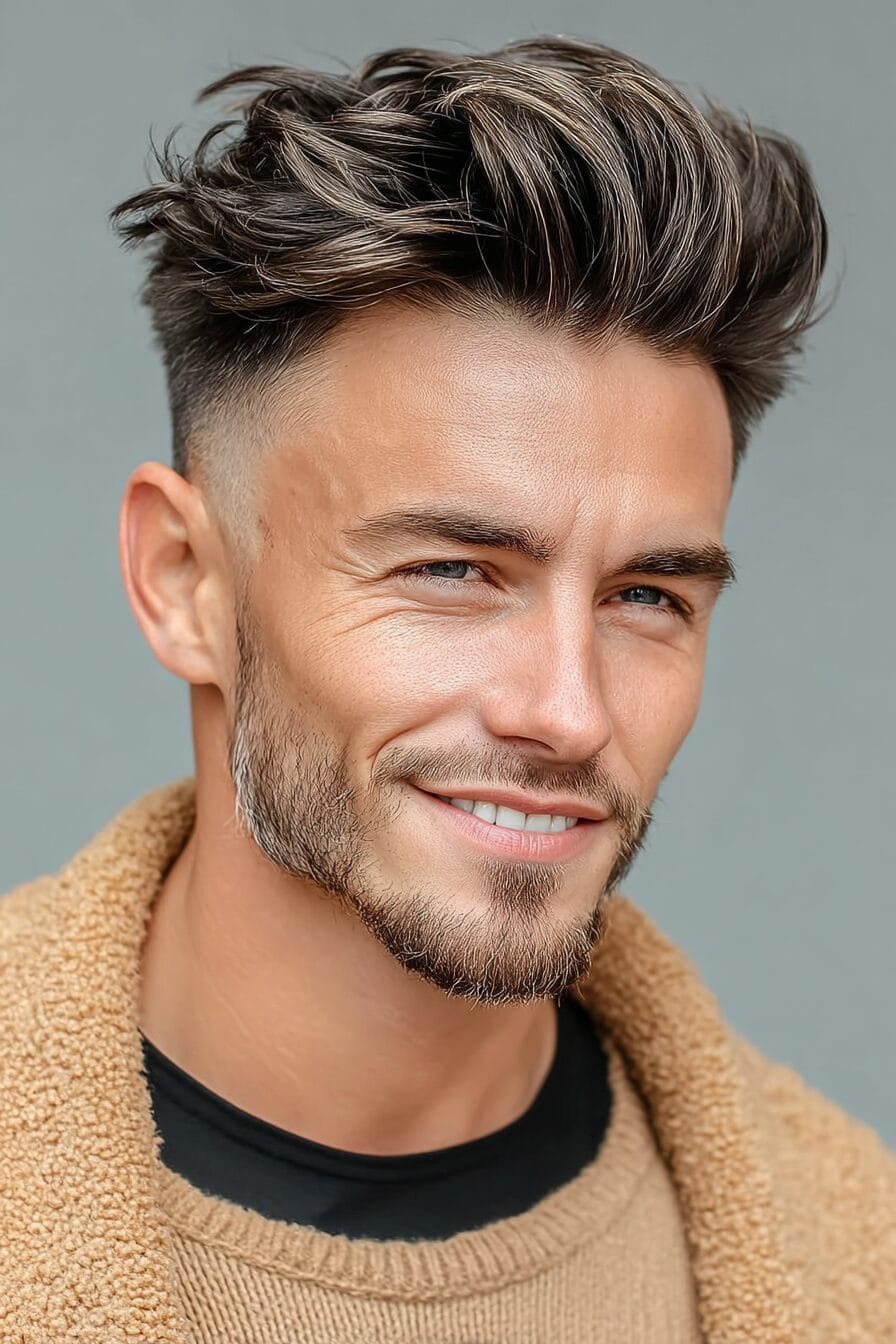
The traditional textured quiff relies on natural hair movement with subtle layers cut throughout the top section. Barbers typically leave 3-4 inches on top, tapering down to shorter sides.
This classic version works best with medium-density hair that holds shape without excessive product buildup.

Modern Disconnected Quiff
Sharp contrast defines the modern disconnected quiff, with no blending between the long top and buzzed sides. The hard part line creates visual separation.
Most clients request a #1 or #2 guard on sides while maintaining 4-5 inches of workable length up top.

Short Business Quiff
Corporate-friendly quiffs keep the height modest at 2-3 inches, perfect for conservative office environments. The sides blend gradually from a #3 guard.
This refined variation requires minimal morning styling time yet maintains professional polish throughout long workdays.
Length-Based Quiff Styles
Long Dramatic Quiff
Long quiffs require 5-6 inches minimum on top, allowing for sweeping backward motion and exaggerated height. The weight naturally creates dramatic flow.
Daily blow-drying becomes essential to prevent the length from falling flat against your forehead.

Medium Versatile Quiff
Medium-length quiffs at 3-4 inches offer the sweet spot between styling options and maintenance ease. You get height without the commitment.
This length adapts quickly from messy texture during weekends to slicked perfection for Monday meetings.

Short Subtle Quiff
Short quiffs measuring 2 inches provide understated elevation perfect for first-timers testing the style. Less product means faster morning routines.
The abbreviated length still delivers that signature quiff silhouette without requiring advanced styling skills or tools.

🧠 Expert Advice
Pre-styling with a volumizing mousse while hair is damp creates the foundation for all-day height. I always recommend blow-drying upward with a round brush for maximum lift before applying any finishing products.
Best Quiff for Your Face Shape
After twenty years behind the chair, I can tell you that face shape is the single biggest factor in whether a quiff looks incredible or just wrong. Here’s what actually works.
Oval faces can pull off almost any quiff variation. You’ve got the most balanced proportions, so experiment freely with height and texture. A medium-length textured quiff is your safest starting point.
Square faces pair naturally with quiffs because the angular jawline balances the volume on top. Go for a slightly messy or textured finish to soften the strong lines — a slicked-back quiff can make your face look too boxy.
Round faces benefit most from height. A taller quiff with a high fade creates vertical length that makes your face look slimmer. Avoid short, wide quiffs that add width to an already round shape.
Oblong faces need shorter quiffs. Too much height on top exaggerates the length. Keep the quiff low and add volume on the sides — a mid fade works better than a high fade here.
Heart-shaped faces work well with medium quiffs that add width at the temples. A textured, slightly wider quiff balances a narrower chin without emphasizing the wider forehead.
Not sure what your face shape is? Our Face Shape Detector figures it out in 4 quick questions, or check the full face shapes guide for men for more detail.
Fade Combinations For Your Quiff
High Skin Fade Quiff
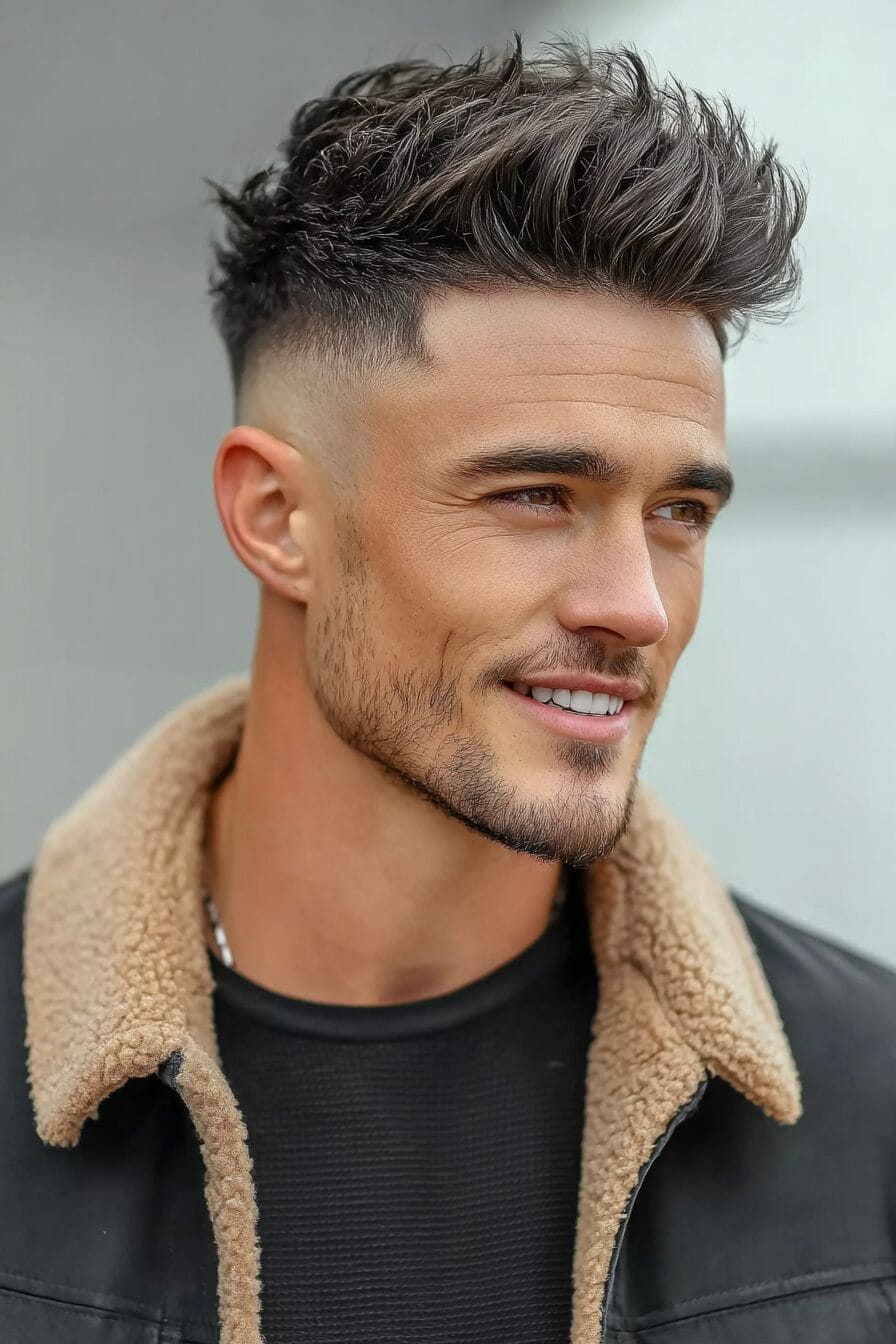
High skin fades start the blend near your temples, creating maximum contrast against the voluminous quiff top. The bald fade emphasizes height.
Request the fade line about 2 inches above your ear for that aggressive, modern aesthetic.
Mid Fade Classic Quiff
Mid fades begin at ear level, balancing the quiff‘s drama with versatile wearability for various occasions. This placement suits most face shapes.
The gradual blend from skin to length creates smooth transitions that complement the quiff’s swept-back flow.

Drop Fade Quiff Style
Drop fades curve downward behind the ears, following your head‘s natural contours for an organic flow. The arc complements the quiff’s upward sweep.
This fade variation particularly flatters longer face shapes by adding width through the preserved temple hair.

Texture Techniques For Quiff Hairstyles
Smooth Polished Quiff
Smooth quiffs require precision cutting with minimal layering to achieve that sleek, uniform surface. Regular trims maintain the polished aesthetic.
Fine-tooth combs and medium-hold pomade create the glass-like finish synonymous with formal quiff styling.
Wavy Natural Quiff
Natural waves add organic texture to quiffs without requiring heavy product manipulation or heat styling. Work with your pattern, not against it.
Sea salt spray enhances existing waves while providing grip for the upward styling motion quiffs demand.

Razor-Cut Quiff Finish
Razor cutting produces softer, feathered edges that blend seamlessly into the quiff’s overall shape. The technique removes harsh lines.
This finishing method works especially well for thick hair that needs weight reduction without sacrificing length.
Volume Building Methods
Root Lift Technique
Lifting at the roots starts with applying mousse directly to the base of damp hair sections. Focus product application where you need maximum height.
Round brushes pull hair perpendicular to the scalp during blow-drying for sustained vertical lift.

Layered Cutting For Volume
Strategic layering removes weight from thick hair while creating natural lift points throughout the quiff structure. Shorter layers support longer ones.
Your barber should graduate layers from shortest at the crown to longest at the front hairline.

Blow-Dry Direction Strategy
Blow-drying against your natural growth pattern creates tension that translates into lasting volume. Fight gravity with strategic airflow angles.
Cool air shots after heating lock the lifted shape in place for extended hold throughout the day.
Styling Tools Essential For Quiffs
Round Brush Techniques
Round brushes with boar bristles grip hair effectively while creating the curved shape quiffs require. Barrel size determines your curl radius.
Not sure what your face shape is? Our Face Shape Detector figures it out in 4 quick questions.
Roll the brush away from your face while following with the dryer for maximum lift and backward sweep.
Blow Dryer Settings
Medium heat with high speed provides optimal drying power without damaging hair structure. Excessive heat causes brittleness and frizz.
Concentrator nozzles direct airflow precisely where needed, preventing unnecessary volume in areas meant to stay flat.

Comb Selection Guide
Wide-tooth combs work best for initial shaping while hair remains damp with product. Fine combs create definition once dried.
Carbon fiber combs reduce static electricity that causes flyaways, maintaining your quiff’s polished finish longer.
Best Products for Your Quiff
I see guys ruin great quiffs with the wrong product more than anything else. The right choice depends entirely on your hair type and the finish you want.
Clay is the go-to for most quiff styles. It gives strong hold with a matte, natural finish and works especially well on thick hair. Apply a small amount to towel-dried hair and work it through from roots to tips.
Pomade delivers that classic, polished quiff look with shine. Choose water-based pomade for easier washout and reworkability throughout the day. Oil-based gives stronger hold but builds up faster.
Sea salt spray is perfect for textured, beachy quiffs without heavy product. Spray into damp hair before blow-drying for natural volume and grip. Best on medium to thick hair.
Mousse is the secret weapon for fine hair. Apply to damp roots before blow-drying to create a volume base that heavier products can’t match. Layer with a light clay on top for hold.
Hairspray locks everything in place as a finishing step. Use a flexible-hold spray that lets you restyle during the day rather than a maximum-hold that creates helmet hair.
How to Ask Your Barber for a Quiff
Walking into a barbershop and just saying “I want a quiff” leaves too much to interpretation. Here’s exactly how to communicate what you want.
Specify your fade. Tell your barber which fade type you want on the sides — high, mid, low, or drop — and what guard number to start with. “High skin fade on the sides” is much clearer than “short sides.”
State your top length. Know how many inches you want on top. If you’re not sure, 3-4 inches gives you the most styling flexibility. Bring a reference photo — it communicates more than words ever will.
Describe the finish. Do you want a textured, messy quiff or a smooth, polished one? Tell your barber whether you’re going for a matte or shiny finish, because that affects how they cut the layers.
Mention your styling commitment. If you only have 5 minutes in the morning, say so. Your barber will adjust the cut to work with minimal product rather than building a style that needs a blow-dryer and three products.
Still not sure which style to ask for? Our guide to choosing the right haircut can help you narrow it down before your appointment.
Maintenance And Upkeep
Weekly Trim Schedule
Quiff maintenance requires edge cleanups every 2-3 weeks to preserve the sharp contrast between lengths. Overgrown sides ruin proportions.
Top length trims every 4-6 weeks maintain shape while allowing gradual growth if you’re building toward longer styles.

Daily Styling Routine
Morning quiff styling takes 5-10 minutes once you establish muscle memory for your specific technique. Consistency breeds efficiency.
Damp hair responds better than completely wet or dry, so towel-dry to 70% before applying products.
Product Removal Methods
Clarifying shampoo once weekly removes product buildup that weighs down your quiff over time. Regular shampoo won’t cut through wax.
Pre-shampoo oil treatments help break down stubborn pomades before washing, protecting hair from harsh stripping.
⚠️ Common Mistake
Skipping regular trims thinking you’re growing length actually slows progress. Split ends travel upward, forcing bigger cuts later. Book appointments every 4 weeks to maintain healthy growth while preserving your quiff’s structured shape.
Ready to Find Your Perfect Cut?
You’ve read about the styles. Now find the one that fits YOUR face shape, hair type, and lifestyle.
FAQs
How Much Length Do I Need On Top For A Good Quiff?
Minimum 2 inches creates basic quiffs, but 3-4 inches delivers optimal styling flexibility and hold. Shorter hair limits your height options.
Fine hair needs extra length to achieve the same visual volume that thick hair creates with less.
Can Thick Hair Work With A Quiff Style?
Thick hair creates excellent quiffs with proper thinning techniques and strong-hold products. Your barber should remove bulk strategically.
Texturizing shears and undercuts prevent the mushroom effect while maintaining necessary length for styling upward and backward.
What’s The Difference Between A Quiff And Pompadour?
Quiffs feature forward-swept height at the front while pompadours sweep all hair backward from the forehead. Quiffs show more forehead.
Modern quiffs incorporate textured, messy finishes while pompadours traditionally maintain smooth, uniform surfaces throughout.
How Often Should I Trim My Quiff To Maintain Shape?
Side and back maintenance every 2-3 weeks keeps fade lines crisp while top trims every 4-6 weeks preserve shape. Book regular appointments.
Fast-growing hair might need weekly edge cleanups, especially if you prefer skin fades or sharp line-ups.
Which Hold Strength Works Best For All-Day Quiff Styles?
Medium to strong hold products balance staying power with natural movement for most hair types. Firm hold works for stubborn, thick hair.
Layer light mousse for volume first, then finish with medium-hold clay or pomade for the perfect combination.
Can Curly Hair Work With a Quiff?
Curly hair makes great quiffs — the natural texture adds volume and movement that straight hair has to work hard to achieve. Keep at least 3-4 inches on top so the curl pattern has room to form the upward quiff shape. Use a curl-defining cream instead of heavy pomade, and let the curls do the volumizing work. Ask your barber to avoid over-thinning the top, since curly hair loses density faster when layered.
Was this article helpful?

Khamis Maiouf is a professional barber who graduated from Hinckley College in England with a Level 3 qualification in hairdressing. With over 20 years of experience, he is an award-winning barber who has mentored numerous students and styled thousands of clients. A recognised expert featured on StyleCraze (20M+ readers).
Credentials: Level 3 Hairdressing (Hinckley College, UK) • 20+ Years Professional Experience • Featured Expert on StyleCraze • Founder of Book of Barbering