

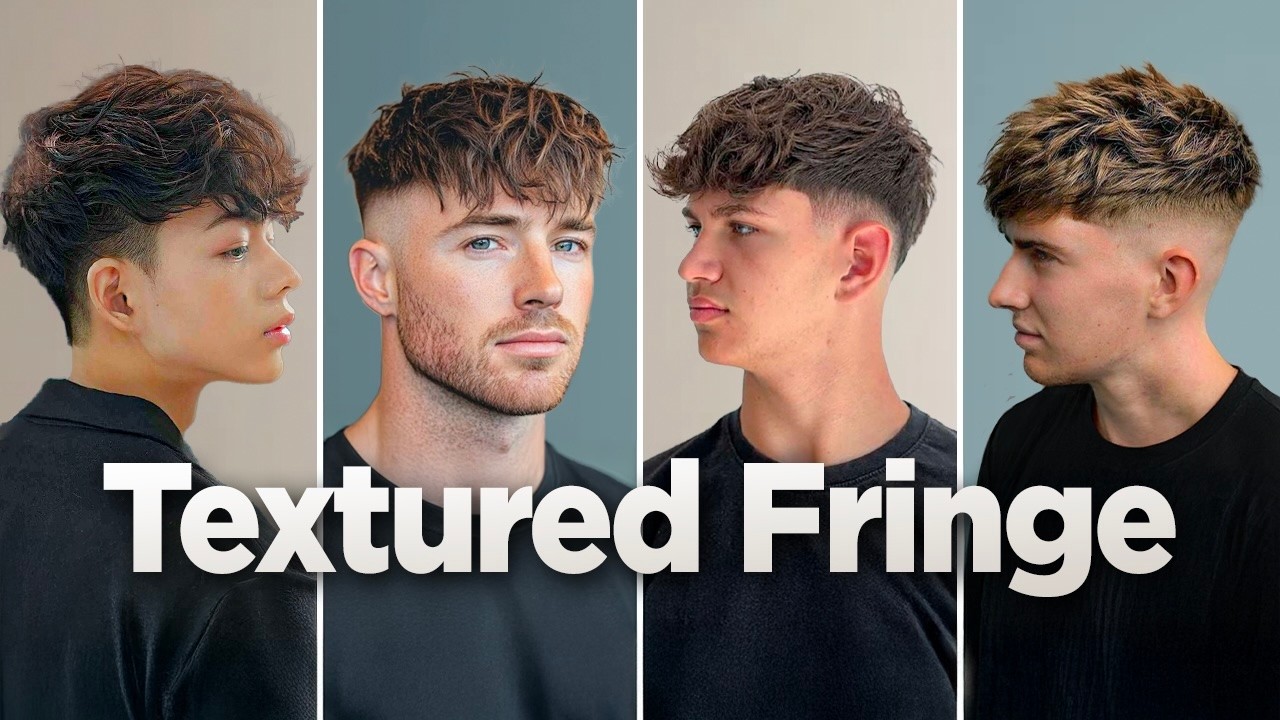
Every week someone sits in my chair with a screenshot of an angular fringe, convinced it’ll look exactly the same on them. It almost never does — because the angle, your face shape, and your hair type all have to line up for this cut to hit right.
This guide covers the sharpest angular fringe styles that actually work, which faces they suit, and what to tell your barber so you get it right the first time.
Not sure which style suits you best? Our Haircut Finder Quiz matches you with the right cut based on your face shape and hair type — takes 60 seconds.
Key Takeaways
- Angular fringe works best on round and oval face shapes — square and oblong faces need angle adjustments to avoid looking harsh
- Point cutting at 45 degrees creates the sharpest edges — never use thinning shears, which destroy geometric precision
- Bring 2-3 reference photos to your barber and specify the exact angle (20–45 degrees) and side length you want
- Style daily with matte paste or clay and a blow-dryer — high-shine products kill the textured, sharp look
- Expect trims every 2–3 weeks for short angular styles, or 4–5 weeks for medium-length versions
Sharp Angular Fringe Fundamentals
Angular fringe lives or dies by its geometry. Every cut needs deliberate direction, not random snips hoping for sharpness.
The foundation starts with understanding how angles interact with natural growth patterns. Your fringe grows forward, but sharp angles fight that flow to create tension and visual impact.

Angular Cutting Angles
45-degree angles create the sharpest visual break between fringe and surrounding hair. This angle works against natural fall patterns, forcing hair into geometric shapes.
Steeper angles near 60 degrees soften slightly while maintaining edge. Anything below 30 degrees loses the angular effect entirely, blending into standard fringe territory.

Sharp Edge Geometry
Triangle formations dominate angular fringe design. The point sits at your natural part, widening toward the temples in precise increments.
Inverted triangles flip this concept, narrowing at the sides for dramatic face framing. Both require mathematical precision during cutting to maintain symmetry.

📐 Precision Points
Corner points define angular success. Each intersection between fringe and side sections needs razor-sharp definition, achieved through point cutting rather than blunt scissor work.
Reference points matter: use the arch of eyebrows, temple hollows, and pupil alignment. These natural markers guide angle placement for balanced, repeatable results across different clients.
Creating Sharp Angular Lines
Technical execution separates amateur angles from professional precision. Your tools, technique, and hand position determine whether you achieve sharp geometry or soft suggestions.
Start with tension—angular cuts demand consistent pull throughout each section.

Angular Point Cutting
Point cutting creates the sharpest possible edges. Hold scissors vertically, entering hair at 90 degrees to remove weight while maintaining line integrity.
Work in 1/4-inch sections for maximum control. Larger sections blur angles, smaller sections create unwanted texture that softens your geometric intentions.

Sharp Graduation Techniques
Graduation builds angular depth without sacrificing sharpness. Start with your shortest point, extending length systematically toward predetermined corners.
Each graduated section should differ by exactly 1/8 inch. This mathematical progression maintains visual sharpness while creating movement within the angular structure.
✂️ Tool Selection
Japanese steel scissors with convex edges slice cleanest angles. Their sharpness prevents hair from bending during cuts, maintaining geometric precision.
Avoid thinning shears entirely—they destroy angular integrity. If texture is needed, use slide cutting or point cutting exclusively to preserve your sharp edges.

Angular Fringe Length Dynamics
Length determines angular impact. Short angles scream confidence, medium angles balance edge with wearability, and long angles make subtle statements.
Each length category requires different cutting approaches and maintenance commitments.
Short Sharp Angular Options
Micro fringe with angular edges sits above eyebrows, creating maximum facial exposure. This bold choice demands perfect execution since mistakes have nowhere to hide.
Short angular fringe grows out fastest, requiring trims every 2-3 weeks. The commitment pays off in pure visual impact that photographs exceptionally well.

Medium Angular Fringe Balance
Eyebrow-grazing angular fringe offers versatility without sacrifice. You maintain sharp geometry while keeping styling options open for different occasions.
This length forgives minor cutting imperfections better than short versions. Growth patterns become manageable, extending time between precise trim appointments to 4-5 weeks.

Long Sharp Statement Cuts
Cheekbone-length angular fringe creates dramatic face framing. The extended length allows for more complex geometric patterns and asymmetric designs.
Weight becomes critical at this length—too heavy and angles disappear into curtains. Strategic thinning maintains sharpness while preventing bulk from destroying your geometric vision.

Sharp Angular Texture Work
Texture within angular fringe requires surgical precision. Random texturizing destroys geometric integrity faster than growth.
Every texture decision should enhance, not compromise, your angular architecture.
“Angular fringe is architecture, not art. Every cut has structural purpose.” – Master barber James Chen

Angular Disconnection Methods
Disconnection amplifies angular impact by creating harsh transitions. Remove connecting hairs between fringe and sides using clippers or scissors for maximum geometric contrast.
The disconnection line should mirror your fringe angle exactly. Any deviation creates visual confusion that weakens the overall angular statement you’re building.
Not sure what your face shape is? Our Face Shape Detector figures it out in 4 quick questions.
Sharp Layering Techniques
Internal layers add movement without sacrificing external sharpness. Cut layers parallel to your angular edges, maintaining the geometric outline while reducing weight.
Keep layers minimal—two to three maximum. Excessive layering transforms angular fringe into generic texture, defeating the entire geometric purpose.

🎯 Texture Goals
Texture should enhance angle visibility, not blur edges. Point cutting along angular lines sharpens definition while removing weight.
Avoid horizontal texture lines that fight your angles. Every texture cut should follow or complement your established geometry, reinforcing rather than contradicting the angular design.

🧠 Expert Advice
Test texture on a small section first before committing to the entire fringe. Angular geometry is unforgiving—one wrong texture pass can destroy hours of precise cutting. Start conservative with texture; you can always remove more, but you can’t add back sharpness once it’s gone.

⚠️ Common Mistake
Texturizing with thinning shears creates fuzzy edges that destroy angular precision. These tools were designed for blending, not geometry. Stick to point cutting or slide cutting exclusively—your angles will thank you with crisp, photogenic edges that actually look sharp.

Best Face Shapes for Angular Fringe
Angular fringe doesn’t suit everyone equally, and I’d rather tell you upfront than let you find out in the chair. The angles in this cut interact directly with your bone structure — get the match right and it sharpens your whole look.
Round faces benefit the most from angular fringe. The diagonal lines add vertical structure and slim the cheeks, creating the illusion of a longer, more defined face. This is the face shape I recommend angular fringe for most often.
Oval faces can pull off almost any angular variation. The balanced proportions mean the angles enhance without overcorrecting. You’ve got the most freedom with length and angle direction here.
Square faces pair well with softer angular styles — think side-swept angles rather than blunt geometric edges. Sharp 45-degree angles can make a strong jaw look blocky, so I usually soften the angle to 30–35 degrees for square-jawed clients.
Oblong faces should approach with caution. Angular fringe that sweeps downward can make a long face look even longer. If you have an oblong face, keep the fringe shorter and more horizontal to add width rather than length.
Not sure what your face shape actually is? Most guys guess wrong. Our Face Shape Detector identifies it in under a minute.
How to Ask Your Barber for an Angular Fringe
Walking into a barbershop and saying “give me an angular fringe” will get you a different cut at every shop. Here’s how to communicate exactly what you want so there’s no guesswork.
Bring reference photos. Show your barber 2–3 photos of the exact angle and length you want. One photo from the front, one from the side. This eliminates 90% of miscommunication.
Specify the angle. Tell your barber whether you want a steep angle (45+ degrees — more dramatic) or a subtle angle (20–30 degrees — more wearable). Most first-timers do better starting with a moderate 30-degree angle.
Discuss the sides. Angular fringe pairs with everything from a skin fade to a disconnected undercut. Tell your barber how short you want the sides and whether you want a hard disconnect or a blended transition into the fringe.
Mention your maintenance tolerance. If you don’t want to style your hair every morning, say so. Your barber can adjust the cut to fall naturally with minimal product. If you’re willing to put in 5 minutes daily, you can go sharper and more geometric.
How to Style Your Angular Fringe at Home
The best angular fringe in the world looks average if you don’t know how to style it. Here’s the routine I walk every client through before they leave the chair.
Blow-dry forward first. After washing, towel-dry until damp, then blow-dry your fringe forward and slightly to one side using medium heat. This trains the hair to fall in the direction of the angle. Use a round brush to guide the direction — your fingers alone won’t create clean lines.
Use a matte paste or clay. Skip high-shine gels and pomades unless you want a wet, slicked look. A matte-finish paste or clay gives you hold without sacrificing the textured, sharp appearance. Work a pea-sized amount between your palms and apply from mid-length to tips, following the angle.
Touch up the edges. Use your fingertips to pinch and define the angular tips after product application. This takes 10 seconds and makes the difference between “styled” and “just woke up.”
Refresh without washing. On day 2–3, skip the full wash. Hit your fringe with a quick blast of blow-dryer heat and reshape with your hands. A small amount of dry shampoo at the roots absorbs oil and restores volume.
Sharp Angular Fringe Variations
Beyond basic triangular cuts, angular fringe offers endless geometric possibilities. Each variation serves different style goals and maintenance capabilities.
Choose variations based on lifestyle, not just aesthetics.
- Zigzag: Multiple angles create sawtooth edges
- Diamond: Four points frame the face perfectly
- Hexagonal: Six subtle angles for complexity
- Chevron: V-shaped center point draws eyes upward

Asymmetric Angular Cuts
Asymmetric angles create dynamic movement across the forehead. One side extends longer, while the opposite maintains sharp, short geometry.
This variation suits creative personalities who want angular impact without perfect symmetry. The deliberate imbalance actually requires more precision than symmetric cuts.
Sharp Micro Fringe
Ultra-short angular fringe sits 2-3 inches above eyebrows, creating maximum forehead exposure. This extreme variation demands flawless execution and confident wearing.
Micro angular fringe works best with straight, dense hair. Cowlicks or growth irregularities become immediately visible at this minimal length.

Angular Side-Swept Options
Side-swept angles combine geometric precision with directional movement. The fringe maintains sharp edges while flowing naturally across the forehead.
Cut angles at 30 degrees from vertical for optimal sweep. Steeper angles resist directional styling, while shallower angles lose their geometric impact entirely.

Ready to Find Your Perfect Cut?
You’ve read about the styles. Now find the one that fits YOUR face shape, hair type, and lifestyle.
FAQs
Best hair type for sharp angular fringe?
Straight, medium-density hair holds angular shapes best without excessive styling. Coarse textures maintain edges naturally, while fine hair needs product support.
Wavy hair requires flat-iron commitment for sharp angles. Curly textures generally fight geometric shapes too aggressively for practical angular fringe.
How often to trim angular edges?
Professional trimming every 2-3 weeks maintains optimal sharpness. DIY touch-ups between appointments can extend this to monthly visits.
Growth rate affects frequency—fast growers need bi-weekly maintenance. Slower growth patterns might stretch to 4 weeks before angles completely disappear.
Can thick hair handle sharp angles?
Thick hair actually enhances angular fringe by providing structural weight. The density helps maintain sharp edges without constant styling.
Internal thinning becomes essential for thick hair angles. Remove weight from inside sections while preserving perimeter density for clean geometric lines.
What is an angular fringe haircut?
An angular fringe haircut features tapered sides with a longer top section cut at a deliberate angle across the forehead. Unlike a standard blunt fringe that sits straight across, the angular version uses diagonal cuts — typically between 30 and 45 degrees — to create sharp, geometric edges. It works best on straight to medium-density hair and pairs well with fades, undercuts, or textured sides.
Was this article helpful?

Khamis Maiouf is a professional barber who graduated from Hinckley College in England with a Level 3 qualification in hairdressing. With over 20 years of experience, he is an award-winning barber who has mentored numerous students and styled thousands of clients. A recognised expert featured on StyleCraze (20M+ readers).
Credentials: Level 3 Hairdressing (Hinckley College, UK) • 20+ Years Professional Experience • Featured Expert on StyleCraze • Founder of Book of Barbering