

Caesar cuts for round faces require strategic length and angle placement to create definition.
Most barbers default to standard Caesar proportions that actually emphasize roundness.
The right approach transforms circular features into a more angular, masculine profile.
Not sure what your face shape is? Our Face Shape Detector figures it out in 4 quick questions.
Not sure which cut is right for you? Try our free Haircut Finder tool — answer 5 quick questions and get personalised recommendations with barber instructions.
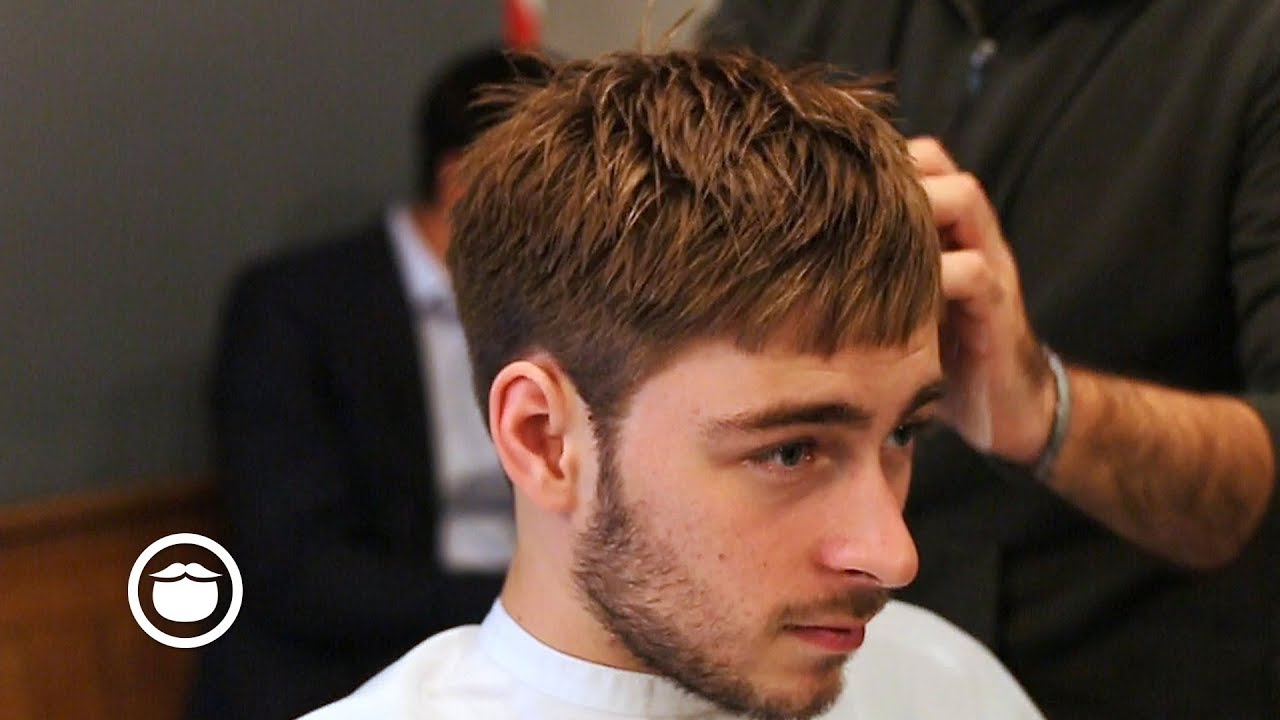
Key Takeaways
- Use a high fade to add vertical emphasis and slim the face
- Keep the top slightly longer (grade 4–5) than standard Caesar for height
- Angle the fringe slightly—a perfectly horizontal line makes round faces look wider
- Avoid low fades that preserve width at the temples
- A beard with angular lines amplifies the slimming effect
Caesar Cuts for Round Face Basics
Round faces benefit from Caesar cuts that add vertical height and minimize horizontal width. The style’s structured lines create angular illusions that counteract soft, circular features.
Your barber should focus on building height through the top while keeping sides tight. This vertical emphasis naturally elongates round proportions without requiring extreme lengths.
- Height focus: Add 0.5-1 inch extra on top
- Side strategy: Keep sides 2 grades shorter than standard
- Forward styling creates angular front profile
- Texture breaks up round smoothness

Why Caesar Works for Round Faces
The Caesar’s horizontal fringe line creates an optical break that interrupts circular face flow. This disruption makes round faces appear more rectangular, especially when cut with precision.
Strategic texture placement adds dimension that flat styles can’t achieve. The forward-brushed direction also extends your profile, creating the illusion of a longer face shape.

📏 Key Measurements
Measure from hairline to chin – round faces typically show equal width and length ratios. Your Caesar should add 15-20% visual height through strategic cutting and styling techniques.
The ideal fringe should sit 0.75-1 inch above your natural hairline. This placement creates maximum vertical extension without looking unnatural or forced.

Round Face Caesar Length Strategy
Length distribution makes or breaks a Caesar on round faces – standard proportions won’t work. The top needs 1.5-2 inches minimum to create sufficient height and angular potential.
Graduated length from back to front builds natural volume where round faces need it most. This progressive increase prevents the flat-top effect that emphasizes circular features.

Optimal Top Length for Round Features
Keep 1.75-2 inches through the top section for maximum styling flexibility and height creation. This length allows product to grip and hold vertical styles throughout the day.
Shorter lengths collapse too quickly on round face shapes, eliminating the angular benefit. The extra quarter-inch makes the difference between a flattering cut and one that emphasizes roundness.

Side Proportions for Round Faces
Sides should stay at #1 or #2 guard maximum to avoid adding width to already-round features. The contrast between short sides and longer top creates the vertical emphasis you need.
Avoid uniform length all around – this circle-cut approach is the worst choice possible. The differential between top and sides should be at least 1.5 inches.

Creating Angles on Round Faces
Angular creation through cutting technique transforms soft features into defined, masculine lines. Point-cutting and texturizing shears become essential tools for breaking up circular smoothness.
The fringe line shouldn’t follow your natural hairline curve – keep it straighter instead. This geometric approach contradicts round features, creating the visual tension that defines great style.

Forward Fringe for Round Face Definition
Push the fringe forward at a 45-degree angle rather than straight down for maximum elongation. This diagonal direction extends your face vertically while the horizontal line adds structure.
Avoid perfectly straight, blunt edges that emphasize width – slight texture keeps things natural. The key is controlled messiness that maintains the Caesar’s signature clean lines.

Textured Caesar for Round Shapes
Choppy texture through the top breaks up the solid mass that makes faces look rounder. Point-cutting creates micro-layers that stand independently, adding crucial dimension to flat areas.
Focus texture at the front third where it has maximum impact on face shape. The back can stay cleaner since it doesn’t affect the frontal profile as much.
⚠️ Common Mistake
Cutting the fringe perfectly horizontal makes round faces look wider and shorter – catastrophic for proportions. Instead, create a subtle arc that’s higher at the center, lower at temples. This gentle curve actually makes faces appear longer, not wider.
Round Face Caesar Fade Options
Fade selection dramatically impacts how round your face appears from every angle. High fades create vertical lines that stretch proportions, while low fades can emphasize width.
The fade’s starting point should sit above your widest face point for best results. This placement draws eyes upward, creating the elongation effect round faces need desperately.
A properly executed high fade can add 2 inches of visual height to any round face shape.

High Fade for Round Face Elongation
Start your high fade at temple level or slightly above to maximize vertical impact. This aggressive approach removes bulk exactly where round faces carry excess visual weight.
The stark contrast between skin and hair creates strong vertical lines along the sides. These lines act like arrows pointing upward, naturally elongating your overall proportions.

Taper vs Fade for Round Features
Fades work better than tapers for round faces because they create more dramatic contrast. The gradual blend of a taper doesn’t provide enough visual disruption to alter proportions.
If you prefer subtlety, choose a mid-fade starting just above ear level. This compromise still provides vertical emphasis without the boldness of a high skin fade.

Round Face Caesar Styling Techniques
Daily styling determines whether your Caesar flatters or flattens your round face shape. Product choice and application technique matter more than the actual cut quality sometimes.
Morning routine should take 3-4 minutes maximum with the right products and method. Overworking the style causes it to fall flat, eliminating the height you’ve built.

Product Selection for Round Faces
Matte clay or texture powder provides grip without weight that collapses carefully built height. Avoid heavy pomades that pull hair down, emphasizing the roundness you’re trying to minimize.
Apply product to damp, not wet hair for maximum lift and control. The slight moisture helps distribute product evenly while maintaining the volume round faces require.

Daily Styling for Round Face Definition
Blow-dry with head tilted forward, pushing hair up and away from the scalp. This technique builds natural lift at the roots where round faces need height most.
Finish with fingers, not a comb, to maintain texture and prevent over-smoothing. The slight messiness adds dimension that combats the uniformity of round facial features.
Not sure which style suits you best? Our Haircut Finder Quiz matches you with the right cut based on your face shape and hair type — takes 60 seconds.

✅ Success Indicators
Your reflection should show visible height increase of at least one inch above natural proportions. The face should appear 10-15% longer in photos taken straight-on, not just mirrors.
Side profile reveals a diagonal line from fringe to chin, not a circular arc. Friends comment that you look leaner, even without any actual weight change.

Round Face Caesar Variations
Modified Caesar styles offer alternative solutions for round faces seeking variety beyond traditional cuts. Each variation addresses specific round-face concerns while maintaining the Caesar’s core identity.
Experimentation with these variations helps identify which angular elements work best for your features. Not every round face responds identically to the same modifications.

Disconnected Caesar for Round Faces
The disconnected version creates a harsh line between top and sides, adding instant angularity. This bold contrast breaks up facial roundness more aggressively than blended transitions ever could.
Position the disconnect slightly above your face’s widest point for maximum elongation effect. The line should angle upward from back to front, creating additional vertical movement.

Textured Caesar for Round Features
Heavy texturizing through the top third creates spiky, piece-y sections that disrupt smooth roundness. This technique works especially well for thick hair that tends to lay flat naturally.
Random texture placement prevents the uniform look that emphasizes circular features. Focus heaviest texturizing at the crown and front where it impacts face shape most.

Maintenance for Round Face Caesar
Round face Caesars lose their elongating effect faster than other face shapes need touch-ups. The precise proportions that create vertical emphasis deteriorate quickly without proper maintenance schedules.
Home care between appointments preserves the angular elements that make this style work. Simple daily attention prevents the gradual rounding that occurs as hair grows.
- Week 1-2: Maintain daily styling routine religiously
- Week 3: Clean up neckline at home
- Week 4: Book appointment before proportions fail
- Emergency fix: Extra product and blow-drying
Trim Schedule for Round Face Shape
Every 3 weeks maximum – round faces can’t afford the proportion shift that occurs beyond this. The critical top-to-side ratio degrades noticeably after 21 days of growth.
Book appointments in advance since waiting for obvious growth means you’ve already lost the elongating effect. Proactive maintenance keeps the style working consistently.

Home Care Between Cuts
Trim neck hair weekly with clippers to maintain the clean lines that define this style. Use a #1 guard below your occipital bone, fading upward to preserve professional edges.
Texturizing scissors can refresh the front section at week two if needed. Make vertical cuts into the fringe to restore separation and prevent the helmet effect.

Discover Your Face Shape
The right haircut starts with knowing your face shape. Most guys get it wrong — find out yours in seconds.
FAQs
Best Caesar length for round face?
Maintain 1.75-2 inches on top with sides at #1 or #2 guard maximum for optimal proportions. This creates enough height differential to elongate round faces while keeping the Caesar identity intact.
Anything shorter than 1.5 inches on top eliminates styling options for adding vertical emphasis. The extra length provides crucial flexibility for creating lift and angular elements.
Will Caesar make round face rounder?
Only if cut with standard proportions – properly modified Caesars actually elongate round faces significantly. The key is emphasizing vertical elements through strategic length placement and angular cutting techniques.
Request specific round-face modifications: higher top length, tighter sides, textured finish, and forward-angled styling. These adjustments transform the Caesar from problematic to perfect for round faces.
How often trim Caesar on round face?
Every 3 weeks maintains the precise proportions that make Caesar cuts work for round faces. Waiting 4 weeks or longer allows the style to lose its elongating effect completely.
Between appointments, maintain edges at home and refresh texture with point-cutting if needed. This preserves the angular elements that prevent your face from looking too circular.
Should round faces avoid Caesar cuts?
No—round faces just need a modified Caesar. Use a high fade instead of a low fade, keep the top slightly longer, and angle the fringe. These adjustments create a slimming illusion that makes the Caesar one of the most flattering short cuts for round faces.
Was this article helpful?

Khamis Maiouf is a professional barber who graduated from Hinckley College in England with a Level 3 qualification in hairdressing. With over 20 years of experience, he is an award-winning barber who has mentored numerous students and styled thousands of clients. A recognised expert featured on StyleCraze (20M+ readers).
Credentials: Level 3 Hairdressing (Hinckley College, UK) • 20+ Years Professional Experience • Featured Expert on StyleCraze • Founder of Book of Barbering