

The Italian beard style has taken over TikTok and Instagram for good reason — it’s one of the cleanest, most structured beard looks I’ve shaped in my 20+ years behind the chair. Defined by a disconnected mustache, a sharp fade into the jawline, and concentrated fullness at the chin, this style blends old-world Mediterranean sophistication with modern barbering precision. Below, I break down 20 variations of the Italian beard so you can find the one that works for your face shape and lifestyle.
Key Takeaways
- The Italian beard features a disconnected mustache, faded sides, and concentrated fullness at the chin and jawline
- It works best on oval, square, and heart-shaped faces — round faces should grow the chin longer for a slimming effect
- Maintenance requires a trim every 1-2 weeks to keep the fade and neckline sharp
- You need at least 3-4 weeks of growth before your barber can shape it into an Italian style
- The style went viral on TikTok in 2025, but it’s rooted in classic Mediterranean grooming traditions
Quick Picks: Best Italian Beard Styles at a Glance
Short on time? Here are the top picks based on your needs:
- Best for beginners: Short Italian Stubble — minimal effort, maximum style.
- Best for the office: Neat Italian Professional Beard — clean enough for clients, stylish enough for after-work drinks.
- Most versatile: Full Italian Beard — works in boardrooms and on weekends alike.
- Best for round faces: Tapered Italian Beard — creates length and angular definition.
- Best vintage look: Italian Balbo Beard — old-world charm meets modern grooming.
- Best for patchy growers: Italian Stubble With Mustache — turns uneven growth into intentional style.

What Is An Italian Beard Style?
Italian beard styles prioritize clean lines and deliberate shaping over wild, natural growth. These looks feature precise edges, carefully maintained lengths, and seamless blending between beard and mustache. The Italian approach treats facial hair as an extension of personal style—always intentional, never accidental.
Whether you’re sporting stubble or a full beard, the hallmark remains meticulous attention to detail that appears effortlessly stylish. This philosophy is what separates Italian grooming from other traditions. While some beard cultures celebrate rugged wildness, the Italian school of thought says your beard should look as considered as your suit.
How To Achieve The Italian Beard Look
Creating an authentic Italian beard requires strategic trimming and daily maintenance. For the neckline, place two fingers above your Adam’s apple and follow that line from ear to ear in a slight U-shape—not a straight line, which always looks unnatural. For cheek lines, work with your natural growth boundary rather than shaving a harsh geometric line across the cheek.
Use quality beard oil daily to maintain that healthy Mediterranean shine. When you visit your barber every 2-3 weeks, ask them to use a straight razor on the edges—clippers alone can’t match the crispness that Italian styles demand.
The key is making grooming look natural while actually putting in consistent effort behind the scenes. Invest in a precision trimmer with multiple guard lengths, a boar bristle brush for daily grooming, and a quality beard balm for hold and conditioning. If you’re new to beard care, our guide on how to maintain a healthy beard covers everything you need to get started.

1. Short Italian Stubble
Short Italian stubble maintains 2-3mm length for that perfectly undone Mediterranean look. This low-maintenance style requires trimming every 2-3 days to prevent graduation into scruff territory. The key lies in keeping edges defined while maintaining consistent coverage across the jawline and cheeks.
It’s the ideal choice for men wanting Italian sophistication without committing to fuller facial hair. Stubble also works as an excellent starting point if you’re exploring the beard growth stages and haven’t yet decided on a longer style.
Styling Details
- Best face shape: All face shapes — stubble is universally flattering.
- Maintenance level: Low — trim every 2-3 days.
- Pro tip: Use a trimmer without a guard along the neckline to keep edges sharp even at short lengths.

2. Classic Italian Goatee
The classic Italian goatee features a perfectly rounded shape connecting mustache to chin beard in seamless harmony. This timeless style requires precise trimming to maintain its circular silhouette and works particularly well with angular face shapes. Regular shaping every 4-5 days keeps the look sharp.
Many Italian men consider this their signature style for both professional and casual settings. If you’re deciding between a goatee and a full beard, check out our breakdown of goatee vs beard styles to find which suits you best.
Styling Details
- Best face shape: Angular and square faces — the rounded goatee softens sharp features.
- Maintenance level: Medium — shape every 4-5 days.
- Pro tip: Use a small detail trimmer to maintain the perfect circle connecting your mustache to chin beard.

3. Full Italian Beard
A full Italian beard combines substantial coverage with refined shaping, typically maintained at 2-4 inches. Unlike wilder full beard styles, the Italian version features meticulously trimmed cheek lines and a sculpted neckline. This commanding presence requires weekly professional shaping and daily beard oil application.
The result is masculine authority with Mediterranean sophistication that works equally well in boardrooms and casual settings. This is the style that most people picture when they think of Italian facial hair—substantial, polished, and utterly confident.
Styling Details
- Best face shape: Oval and oblong faces — the fullness adds width and balance.
- Maintenance level: High — daily oil, weekly professional shaping.
- Pro tip: Apply beard oil on slightly damp hair after showering for maximum absorption and shine.

4. Sculpted Italian Beard
The sculpted Italian beard transforms facial hair into architectural precision. Every angle is deliberately carved, from the sharp cheek lines to the perfectly symmetrical bottom edge. This style demands professional-level trimming skills and daily maintenance with balm for hold.
Barbers often use straight razors to achieve those crisp edges. It’s the ultimate expression of Italian grooming perfectionism, ideal for men who view their beard as wearable art. Expect to spend 10-15 minutes daily on upkeep to keep every line looking razor-sharp.
Styling Details
- Best face shape: Oval faces — the sculpted angles add striking definition.
- Maintenance level: Very high — daily balm and edge maintenance.
- Pro tip: Invest in a quality beard balm with strong hold to keep sculpted sections in place throughout the day.

5. Italian Balbo Beard
The Italian Balbo combines a floating mustache with an extended goatee, creating sophisticated disconnection. This vintage-inspired style requires careful maintenance to keep the gap between mustache and beard consistent. Named after Italian aviator Italo Balbo, it brings old-world charm to modern grooming.
The look works exceptionally well with strong facial features and requires 3-4 weeks of strategic growth before initial shaping. Patience during the early stages is essential—resist the urge to trim too early, or you’ll compromise the final silhouette.
Styling Details
- Best face shape: Narrow and diamond faces — the Balbo adds width to the lower face.
- Maintenance level: Medium-high — daily gap maintenance, weekly shaping.
- Pro tip: Use a precision trimmer to maintain the gap between mustache and chin beard at a consistent 3-5mm width.

6. Neat Italian Professional Beard
The neat Italian professional beard maintains corporate-appropriate length while showcasing Italian styling sensibilities. Kept at 1-2 inches, it features immaculate edges and uniform density throughout. This versatile style transitions seamlessly from office to evening occasions.
Daily combing and weekly edge maintenance ensure it always looks freshly barbered, making it perfect for client-facing professionals who refuse to sacrifice style. If your workplace has a strict grooming policy, this is your safest bet for looking distinguished without pushing boundaries.
Styling Details
- Best face shape: All face shapes — the moderate length adapts well to any facial structure.
- Maintenance level: Medium — daily combing, weekly edge cleanup.
- Pro tip: Keep a small beard comb in your desk drawer for midday touch-ups before important meetings.

7. Italian Anchor Beard Style
The Italian anchor beard creates a nautical-inspired silhouette combining a pointed chin beard with a pencil mustache. This distinctive style extends along the jawline while maintaining separation from sideburns. The Italian interpretation adds extra precision to edges and symmetry.
It requires steady trimming skills and works best with oval or oblong faces. The unique shape makes a bold statement while maintaining sophisticated Italian refinement. This is a great conversation-starter style that signals you take your grooming seriously.
Styling Details
- Best face shape: Oval and oblong faces — the anchor shape balances longer facial proportions.
- Maintenance level: High — precise daily trimming required.
- Pro tip: Use a single-blade razor for the clean skin sections between beard elements to keep separation crisp.

8. Extended Italian Goatee
An extended Italian goatee stretches the classic circle beard along the jawline for added coverage and definition. This hybrid style bridges the gap between goatee and full beard, offering more substance while maintaining focused shaping. The extension typically reaches mid-jaw, creating a masculine frame for the lower face.
It’s particularly flattering for men with weaker chins or those wanting more coverage than a standard goatee provides. For more ideas on goatee variations, explore our complete goatee styles guide.
Styling Details
- Best face shape: Round and heart-shaped faces — the extension adds angular definition.
- Maintenance level: Medium — weekly shaping to maintain jawline extension.
- Pro tip: Gradually extend the goatee over 2-3 weeks rather than cutting the shape all at once for a more natural look.

9. Italian Beard With Handlebar Mustache
Pairing an Italian beard with a handlebar mustache creates vintage Mediterranean flair. The contrast between the precisely trimmed beard and theatrical mustache curls makes an unforgettable impression. This combination requires dedication—the mustache alone needs 2-3 months growth and daily wax styling.
The beard portion maintains typical Italian precision while the mustache adds personality. It’s perfect for men who appreciate classic style with dramatic touches. You’ll need quality mustache wax and a willingness to train those curls daily for the best results.
Styling Details
- Best face shape: Square and rectangular faces — the horizontal mustache adds width balance.
- Maintenance level: Very high — daily wax styling for mustache, regular beard trimming.
- Pro tip: Apply mustache wax to slightly damp hair and use a blow dryer on low heat to set the curl shape faster.

10. Rounded Italian Beard
The rounded Italian beard softens facial angles with its curved bottom edge and gentle tapering. This style works exceptionally well for square faces, creating harmonious balance between strong features and soft beard lines. Achieving the perfect round shape requires skilled scissor work and regular maintenance every 5-7 days.
The approachable aesthetic makes it ideal for creative professionals and those preferring friendlier facial hair presentation. Unlike geometric styles, the rounded beard gives off a warm, welcoming vibe that puts people at ease.
Styling Details
- Best face shape: Square faces — the curved lines soften strong jawlines beautifully.
- Maintenance level: Medium — scissor trim every 5-7 days.
- Pro tip: Use barber scissors instead of a trimmer for the bottom edge to achieve a smoother, more natural curve.

11. Square Italian Beard Style
A square Italian beard features geometric precision with its flat bottom edge and angular corners. This architectural approach to facial hair creates strong masculine lines that complement round faces beautifully. The style demands exact trimming techniques to maintain those clean right angles.
Regular lineup appointments keep edges sharp while daily brushing ensures uniform appearance. It’s the choice for men who prefer bold, structured aesthetics over natural curves. This style pairs exceptionally well with sharp haircuts and tailored clothing.
Styling Details
- Best face shape: Round faces — the angular shape adds structure and definition.
- Maintenance level: High — requires precise trimming and regular lineups.
- Pro tip: Use painter’s tape as a guide along the bottom edge when learning to trim this style at home.

12. Italian Van Dyke
The Italian Van Dyke reimagines the classic style with contemporary Mediterranean refinement. This combination of pointed goatee and styled mustache maintains complete separation—no connecting hair between elements. The Italian version emphasizes sharper lines and more deliberate shaping than traditional interpretations.
Named after Flemish painter Anthony van Dyck, this aristocratic style requires meticulous daily grooming to maintain its distinctive separated elements. For a deep dive into this timeless look, see our full guide on Van Dyke beard styles.
Styling Details
- Best face shape: Heart and diamond faces — the pointed chin element adds length.
- Maintenance level: High — daily grooming to maintain separation and symmetry.
- Pro tip: Shave the connecting area between mustache and goatee every morning to keep the gap clean and defined.

13. Tapered Italian Beard
The tapered Italian beard gradually decreases in length from chin to sideburns, creating elegant elongation. This technique adds sophistication to any beard length while maintaining that signature Italian polish. The gradual fade requires professional blending skills to avoid harsh lines.
It’s particularly effective for round faces, as the tapering creates an illusion of length. Weekly touch-ups maintain the perfect gradient from full to fade. This is one of the most requested Italian styles at barbershops because it flatters nearly everyone.
Styling Details
- Best face shape: Round and square faces — the taper creates a slimming elongation effect.
- Maintenance level: Medium-high — weekly professional blending recommended.
- Pro tip: Ask your barber to blend using multiple guard sizes, stepping down 0.5mm increments from chin to sideburn for a seamless gradient.

14. Italian Stubble With Mustache
Italian stubble with mustache emphasizes the upper lip while maintaining minimal cheek coverage. The mustache stays slightly longer at 5-7mm while stubble remains at 2-3mm, creating subtle contrast. This low-commitment style needs trimming every 3-4 days to maintain proportions.
It’s ideal for men whose mustache grows fuller than their beard, turning potential patchiness into intentional style. The look captures Italian sophistication without requiring extensive growth time. If you struggle with uneven coverage, this style is a smart workaround that looks completely deliberate.
Styling Details
- Best face shape: All face shapes — especially effective for those with strong upper lip growth.
- Maintenance level: Low — trim every 3-4 days with two different guard lengths.
- Pro tip: Set your trimmer to 6mm for the mustache and 2mm for the cheeks, blending the transition just above the lip line.

15. Thick Italian Beard
The thick Italian beard celebrates natural density with controlled shaping. While maintaining substantial volume, Italian styling keeps edges crisp and length uniform. This style requires quality beard balm to tame thickness while preserving that enviable fullness.
Men with naturally dense growth find this perfect for showcasing their genetic gifts within refined parameters. Regular thinning prevents bulk while weekly shaping maintains the silhouette. If your beard grows thick and fast, this style lets you embrace that density rather than fight it.
Styling Details
- Best face shape: Narrow and oblong faces — the thickness adds fullness and width.
- Maintenance level: Medium-high — daily balm, regular thinning with scissors.
- Pro tip: Use thinning shears every 2 weeks to reduce bulk without losing length, keeping the beard from looking too bushy.

16. Italian Circle Beard
The Italian circle beard perfects the continuous loop connecting mustache and goatee with mathematical precision. This style demands exact symmetry—any imbalance becomes immediately noticeable. The Italian approach ensures the circle maintains consistent width throughout its circumference.
It frames the mouth elegantly while keeping maintenance relatively simple compared to more complex Italian styles. The contained nature makes it office-appropriate while the precision showcases attention to grooming detail. This is a strong choice for men who want a defined focal point without growing a full beard.
Styling Details
- Best face shape: Square and rectangular faces — the circular shape softens angular features.
- Maintenance level: Medium — shave surrounding areas every 2-3 days, shape circle weekly.
- Pro tip: Use a round stencil or template when starting out to establish symmetry before freehand trimming.

17. Groomed Italian Style
The groomed Italian style represents the pinnacle of maintenance culture—every hair deliberately placed and perfectly controlled. This isn’t one specific cut but rather an approach emphasizing daily beard oil, regular balm application, and constant edge maintenance.
The result looks naturally perfect, though it requires 15-20 minutes daily dedication. It’s the embodiment of Italian grooming philosophy: maximum effort for seemingly effortless results. Think of it as the difference between “I woke up like this” and actually putting in the work to look like you woke up like that.
Styling Details
- Best face shape: All face shapes — it’s an approach that adapts to any beard style.
- Maintenance level: Very high — 15-20 minutes daily grooming routine.
- Pro tip: Build a morning routine: wash, oil, brush, balm, shape edges. Consistency matters more than any single product.
18. Italian Beard With Fade
Combining an Italian beard with a fade creates a seamless transition from haircut to facial hair. The fade technique gradually blends beard into sideburns, eliminating harsh disconnection lines. This modern approach requires barber expertise to execute properly—the gradient must appear natural despite being highly technical.
Updated every 2-3 weeks, this style suits contemporary Italian men who appreciate both classic beard styling and current barbering trends. For more inspiration on combining fades with beards, check out our guides on faded beard styles and high fade haircuts with beards.
Styling Details
- Best face shape: All face shapes — the fade transition complements any facial structure.
- Maintenance level: Medium-high — professional fade every 2-3 weeks.
- Pro tip: Book your beard fade and haircut at the same appointment so your barber can blend both seamlessly in one session.

19. Natural Italian Beard
The natural Italian beard embraces organic growth patterns while maintaining essential Italian grooming standards. Unlike completely wild beards, this style keeps edges defined and length controlled while allowing natural texture to shine. The approach works particularly well with wavy or curly facial hair.
Minimal product use—just beard oil for health—lets authentic texture become the focal point while strategic trimming prevents unruliness. This is the ideal style for men who want that Italian polish without spending too much time in front of the mirror each morning.
Styling Details
- Best face shape: Oval and heart faces — natural texture adds volume where needed.
- Maintenance level: Low-medium — daily oil, weekly edge cleanup only.
- Pro tip: Let your natural growth pattern dictate the shape and resist over-trimming. Less is more with this style.

20. Italian Chin Strap Beard
The Italian chin strap traces the jawline with precise linear coverage from ear to ear. This minimalist style requires expert edging to maintain its thin, consistent width—typically 1-2cm. The Italian version features sharper lines and more deliberate shaping than casual chin straps.
It works exceptionally well for men with strong jawlines who want to emphasize bone structure. Daily lineup maintenance keeps this geometric style looking fresh. For a complete breakdown on perfecting this look, visit our chin strap beard guide.
Styling Details
- Best face shape: Square and angular faces — the thin line accentuates a strong jawline.
- Maintenance level: High — daily edge maintenance to keep the line clean and uniform.
- Pro tip: Use a single-blade razor rather than a multi-blade to achieve the thin, precise lines this style demands.

21. Long Italian Beard Style
The long Italian beard extends beyond 4 inches while maintaining refinement that sets it apart from wild long beards. The Italian version features regular shaping, tapered sides, and conditioned texture. This distinguished style requires patient growth over 6-8 months plus dedication to daily care.
Quality beard oil becomes essential for preventing dryness, while monthly professional shaping maintains proportion. It’s the ultimate statement of Italian beard mastery—substantial yet sophisticated. Understanding the beard growth stages will help you stay patient during the awkward phases.
Styling Details
- Best face shape: Round and wide faces — the length creates a slimming effect.
- Maintenance level: High — daily oil and combing, monthly professional shaping.
- Pro tip: Sleep with a silk pillowcase to reduce beard friction and tangling overnight.
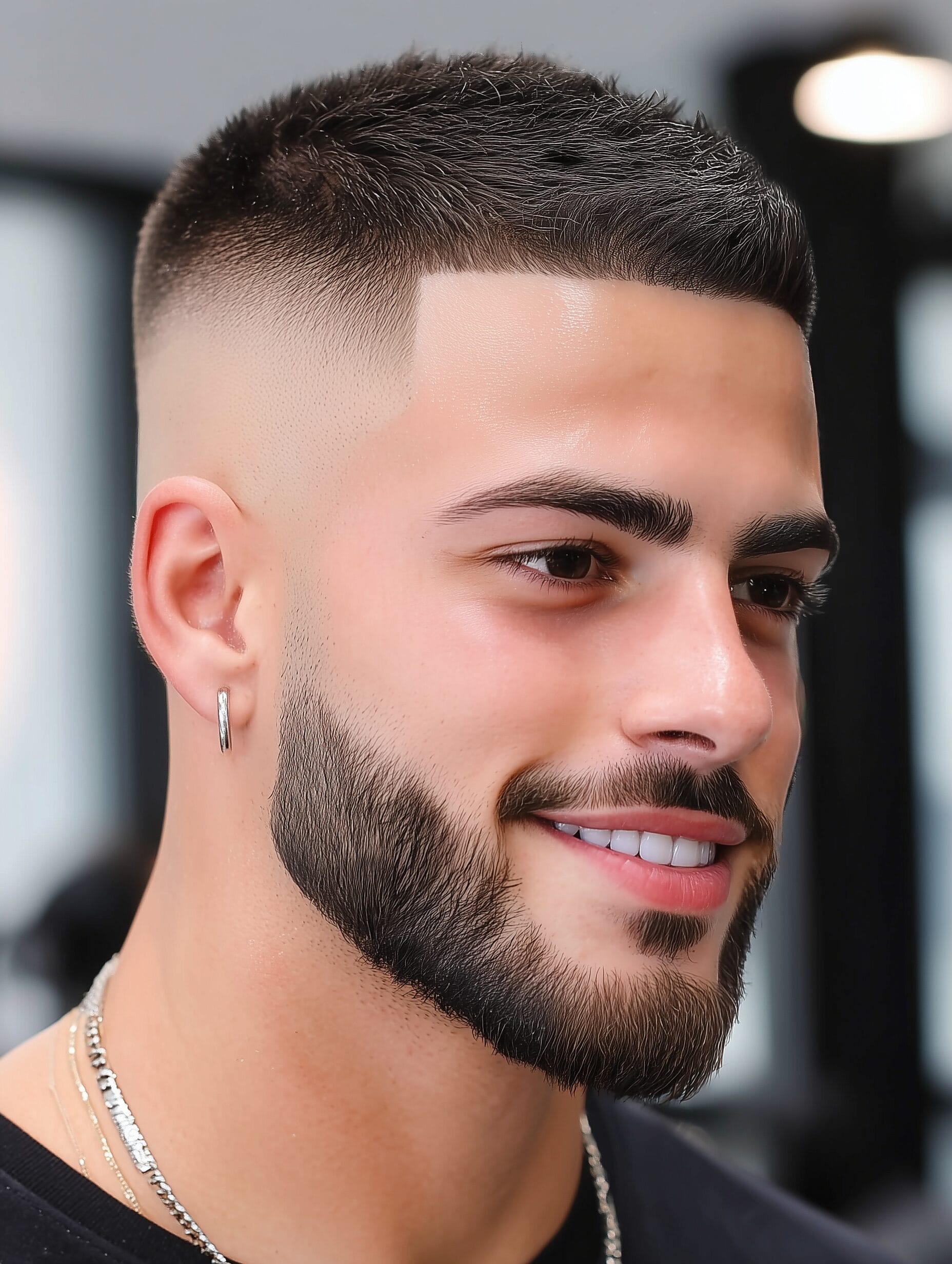
22. Italian Beard For Round Face
Italian beards for round faces focus on creating angular definition through strategic length and shaping. The ideal approach maintains longer length at the chin while keeping sides closely trimmed. This elongating effect counteracts facial roundness, creating more oval proportions.
Sharp cheek lines add geometric contrast to soft features. The style typically extends 2-3 inches downward while staying tight on sides—a flattering frame that adds Mediterranean sophistication to round face shapes. If you’re unsure of your face shape, our face shapes guide for men can help you figure it out.
Styling Details
- Best face shape: Round faces — specifically designed to add length and definition.
- Maintenance level: Medium-high — weekly chin shaping and side trimming.
- Pro tip: Keep the chin 1-2 inches longer than the sides to maximize the elongating effect.

23. Disconnected Italian Beard And Mustache
The disconnected Italian beard and mustache creates deliberate separation for modern artistic effect. This contemporary style maintains a visible gap between beard and mustache, requiring precise daily maintenance to keep spacing consistent. The Italian interpretation ensures both elements remain impeccably groomed despite their independence.
It works best with defined facial features that can carry the segmented look. The style demands confident wear—it’s intentionally unconventional within traditional Italian aesthetics, making it perfect for men who want to stand out while staying polished.
Styling Details
- Best face shape: Oval and diamond faces — strong features carry the disconnected look best.
- Maintenance level: High — daily shaving of the gap area between mustache and beard.
- Pro tip: Maintain a consistent 5-8mm gap between mustache and beard for the cleanest disconnected effect.

24. Salt and Pepper Italian Style
The salt and pepper Italian style celebrates distinguished gray patterns with sophisticated grooming. This natural coloring adds depth and character that younger beards simply cannot replicate. Italian styling techniques—precise shaping, quality oils—make the silver strands shine brilliantly against darker hair.
The contrast looks particularly striking with shorter lengths where color variation remains visible. Many mature Italian men consider this their signature look, proving that aging gracefully includes impeccable beard maintenance. Embrace the gray—it’s a mark of distinction, not decline.
Styling Details
- Best face shape: All face shapes — the color contrast itself becomes the focal point.
- Maintenance level: Medium — regular grooming plus extra conditioning for coarser gray hairs.
- Pro tip: Gray hairs tend to be coarser, so use a conditioning beard oil daily to keep them soft and manageable.

25. Italian Beard With Sharp Lines
Italian beards with sharp lines showcase geometric precision through laser-sharp edges and defined angles. Every boundary—cheeks, neckline, mustache connection—features crisp demarcation achieved through straight razor work. This high-maintenance style requires professional lineup every 5-7 days or exceptional home skills.
The dramatic contrast between skin and hair creates bold framing for facial features. It’s the preferred choice for men who view their beard as an architectural statement rather than organic growth. When done right, the lines are so clean they look almost laser-cut.
Styling Details
- Best face shape: Round and oval faces — the sharp lines add strong definition.
- Maintenance level: Very high — professional lineup every 5-7 days.
- Pro tip: Ask your barber to use a straight razor rather than a trimmer for the crispest possible edge lines.

26. Wavy Italian Beard
The wavy Italian beard works with natural texture patterns while maintaining signature Italian control. Rather than fighting waves, this style embraces them through strategic length and quality styling products. Beard balm helps define wave patterns without creating stiffness.
The key is finding the sweet spot where waves look intentional yet relaxed. Regular trimming prevents the unruly phase while daily conditioning keeps waves soft and manageable within Italian aesthetic standards. Men with naturally curly or wavy facial hair should consider this their go-to style.
Styling Details
- Best face shape: Angular and square faces — waves add softness to sharp features.
- Maintenance level: Medium — daily balm to define waves, weekly trimming to control shape.
- Pro tip: Apply balm to towel-dried beard and scrunch gently to enhance natural wave patterns rather than combing them out.

27. Pointed Italian Beard
The pointed Italian beard tapers to a distinctive triangular tip, creating dramatic facial elongation. This style requires patient growth and precise shaping to achieve the perfect point without looking unkempt. The Italian version maintains cleaner side lines than similar styles like the French fork.
It particularly suits round or square faces by adding vertical emphasis. Achieving the ideal point takes 4-6 months of guided growth plus weekly professional maintenance to preserve the silhouette. The patience pays off—few styles make as bold a statement as a perfectly maintained pointed beard.
Styling Details
- Best face shape: Round and square faces — the point adds dramatic vertical length.
- Maintenance level: High — weekly professional shaping to maintain the point.
- Pro tip: Use a small amount of beard wax at the chin tip to train the hair downward into the point shape as it grows.
How To Choose The Right Italian Beard For Your Face Shape
Picking the right Italian beard style starts with understanding your face shape. While many Italian styles are versatile, matching the right beard to your bone structure can make the difference between looking good and looking exceptional. Here’s a quick breakdown:
Not sure what your face shape is? Our Face Shape Detector figures it out in 4 quick questions.
Round faces benefit most from styles that add length and angular definition. The tapered Italian beard, pointed Italian beard, and square Italian beard all create the illusion of a more chiseled face. Keep the sides tight and the chin longer for maximum effect.
Square faces look best with rounded or softer Italian styles that balance strong jawlines. The rounded Italian beard and wavy Italian beard are excellent options. Avoid overly angular styles that can make a square face appear too boxy.
Oval faces have the most flexibility and can pull off nearly any Italian beard style. The sculpted Italian beard and full Italian beard are particularly striking on oval faces, as the symmetry of the face supports bold shapes.
Oblong faces should opt for fuller styles with width on the sides, such as the thick Italian beard or the natural Italian beard. Avoid long or pointed styles that can make an already long face appear even longer.
The biggest mistake I see is men choosing a style that looks great on someone else without considering their own face shape and growth pattern. Bring a reference photo to your barber, but trust their judgment if they suggest a modification—a good barber can adapt any Italian style to work with what you’ve got.
Italian Beard Styles for Bald Men
A shaved or bald head paired with an Italian beard is one of the most striking combinations I see in my chair. The contrast between clean scalp and sculpted facial hair draws attention to the jawline and creates a powerful silhouette. Here are the styles that work best:
- Full Italian Beard: The go-to choice. A thick, well-shaped full beard balances the lack of hair on top and adds visual weight to the lower face. Keep the cheek line natural and the neckline clean.
- Sculpted Italian Beard: If you want a more polished look, sharp lines and defined edges pair perfectly with a bald head. This works especially well for professional settings.
- Italian Goatee: A classic goatee with clean-shaven cheeks creates a focused, intentional look. I recommend this for men with rounder face shapes who want to add length.
- Italian Stubble: Heavy stubble (3-5mm) gives texture without the commitment of a full beard. It’s low-maintenance and works with every head shape.
The key with bald heads is keeping the beard proportional — don’t let it grow too long or it overwhelms the face. I tell my bald clients to maintain their beard at 70% of the length they’d wear with hair on top.
Italian Beard Fade: How To Get the Look
The Italian beard fade is dominating social media right now, and I’ve been doing more of these in my shop than almost any other style. It’s a technique where the beard gradually transitions from skin to full density, creating a seamless blend between your sideburns, jawline, and the thickest part of the beard.
Here’s how I approach it in the chair:
- Start with an open trimmer at the sideburn area, working with the grain
- Gradually close the guard as you move toward the cheekline, creating a natural density gradient
- Use a straight razor to clean up the cheek line — this is where the “Italian” precision comes in
- Blend the neckline by fading from skin up to the full beard length over about 1-2 inches
- Detail work: Use a precision trimmer around the lip line and under the chin for sharp definition
The Italian beard fade pairs especially well with a skin fade haircut — when the hair and beard fades mirror each other, the whole look comes together. If you’re attempting this at home, invest in a quality adjustable trimmer and go slow. It’s much easier to take more off than to fix an uneven fade.
🎬 Italian Beard Fade Tutorial 2025
FAQs: Italian Beard Styles
How long does it take to grow an Italian beard?
Growing an Italian beard typically requires 4-12 weeks depending on your chosen style. Short stubble styles achieve their look within days, while designer stubble needs 1-2 weeks. Full Italian beards require 2-3 months for proper shaping foundation.
The key isn’t just growth time but also the shaping process—Italian styles demand precision from the start. Plan for weekly barber visits during initial growth to establish proper lines and proportions from the beginning. For a detailed timeline of what to expect at each stage, check out our beard growth stages guide.
What products do I need for an Italian beard style?
Essential products for Italian beard styling include quality beard oil, balm, and a precision trimmer. Beard oil maintains health and shine—apply daily after washing. Balm provides hold for shaping while conditioning hair. A good trimmer with multiple guards ensures consistent length.
Additionally, consider beard shampoo for cleanliness, a boar bristle brush for daily grooming, and scissors for detail work. Italian styles prioritize product quality over quantity—invest in fewer, better products rather than a cabinet full of mediocre ones.
What face shape suits Italian beard styles best?
Italian beard styles offer incredible versatility across all face shapes when properly adapted. Oval faces enjoy the most flexibility with any Italian variation. Round faces benefit from angular styles with length at the chin.
Square faces look best with rounded Italian beards that soften strong jawlines. Oblong faces should choose fuller styles with width at the sides. The key is working with an experienced barber to customize the Italian aesthetic to your unique facial structure.
How often should I trim my Italian beard?
Italian beard maintenance requires trimming every 3-7 days for stubble styles and weekly to bi-weekly for fuller beards. Edge cleanup should happen every 3-4 days to maintain those signature sharp lines.
Professional shaping appointments every 2-3 weeks keep the overall silhouette perfect. The Italian approach favors frequent minor adjustments over dramatic monthly changes. This consistent maintenance schedule ensures your beard always looks deliberately styled rather than accidentally grown.
Can I achieve an Italian beard style with patchy facial hair?
Patchy facial hair can absolutely work with strategic Italian styling choices. Shorter styles like designer stubble or a classic goatee minimize coverage requirements while maintaining sophistication.
The Italian emphasis on precise shaping actually helps disguise patchiness by creating deliberate boundaries. If your cheeks are patchy but your chin and mustache grow full, styles like the Italian Balbo, Van Dyke, or classic goatee are ideal—they skip cheek coverage entirely, so the patchiness becomes invisible. If it’s the opposite and your cheeks are strong but the chin is thin, a chin strap or stubble with mustache keeps the focus where your growth is strongest. For more solutions, explore our guide to patchy beard styles that actually look great.
Are Italian beard styles high maintenance?
It depends on the style. Short Italian stubble requires just a few minutes every couple of days, making it one of the lowest-maintenance options available.
On the other end of the spectrum, sculpted Italian beards and styles with sharp lines can demand 15-20 minutes of daily grooming plus regular barber visits. Most Italian styles fall somewhere in the middle—5-10 minutes of daily care with a professional touch-up every 2-3 weeks. The good news is that the routine becomes second nature once you’ve established it.
What’s the difference between Italian and French beard styles?
While both traditions value refined grooming, the key difference lies in philosophy. Italian beard styles emphasize clean precision and sharp lines—they aim for a polished, intentional look where every edge is deliberate.
French beard styles, by contrast, tend to embrace a slightly more relaxed, artistic sensibility with softer lines and a more natural finish. Italian beards look like they were designed; French beards look like they evolved. Both are sophisticated, but Italian styles lean more structured.
Can I pull off an Italian beard at work?
Absolutely. Many Italian beard styles are perfectly corporate-appropriate. The neat Italian professional beard, short Italian stubble, and Italian circle beard are all boardroom-ready.
The key is keeping edges immaculate and length moderate. Italian grooming’s emphasis on precision and cleanliness actually makes these beards more professional-looking than their length might suggest. When your beard looks intentional and well-maintained, it conveys discipline and attention to detail—qualities any employer values.
What is Italian beard style?
An Italian beard style is a well-groomed facial hair look inspired by Italian grooming culture. It’s characterized by clean cheek lines, defined necklines, and intentional shaping — the goal is looking polished without appearing over-styled. Unlike a wild or unkempt beard, Italian styles emphasize precision and balance with your face shape. In my experience, the best Italian beards share three things: sharp edges, proper density, and a length that flatters rather than hides the jawline.
Is facial hair popular in Italy?
Absolutely. Facial hair has been central to Italian masculine identity for centuries. Today, Italian men favor well-maintained stubble and medium-length beards over clean-shaven looks.
The Italian approach is less about growing the biggest beard and more about grooming it with intention — think tailored, not overgrown. Walk through Milan or Rome and you’ll see more sculpted beards than bare faces.
How do I shape an Italian beard neckline?
Place two fingers above your Adam’s apple — that’s your neckline. I tell every client to trim everything below that line clean. Use a straight razor or precision trimmer for a sharp edge, and check from the side profile before finishing. The biggest mistake I see is cutting the neckline too high, which makes the beard look like a chin strap instead of a natural, full style.
What’s the best beard length for an Italian style?
Most Italian styles sit between 10-25mm. Stubble runs 2-5mm, medium styles 10-15mm, and full Italian beards 20-25mm. I recommend starting at 15mm and adjusting — you can always take more off but you can’t put it back. The right length depends on your face shape: rounder faces benefit from longer, more angular beards, while angular faces can go shorter.
Final Thoughts
Italian beard styles prove that facial hair can be both masculine and meticulously refined. Whether you’re drawn to the low-maintenance appeal of short Italian stubble or the bold statement of a sculpted full beard, there’s an Italian style that fits your face shape, lifestyle, and grooming commitment level.
The secret to nailing any Italian beard style comes down to three things: choosing the right shape for your face, investing in quality products, and committing to consistent maintenance. Start with a style that matches your current growth and comfort level, then experiment as your skills develop. Your barber is your best ally in this journey—don’t hesitate to bring reference photos from this guide to your next appointment.
Which Italian beard style are you going to try first? If you’re still exploring options, browse our full collection of full beard styles or discover more goatee styles for additional inspiration.
Can I get an Italian beard with patchy facial hair?
It depends on where the patches are. The Italian beard actually works in your favor if your cheeks are patchy, since the style fades the cheeks down to almost nothing anyway. You need decent growth along the jawline and chin though — that’s where the bulk of this style lives. If your chin growth is sparse, I’d recommend letting it grow for 6-8 weeks before attempting this style so your barber has enough to work with.
What is the difference between an Italian beard and a French beard?
The Italian beard features a faded, gradual transition from short sideburns to a fuller chin with a disconnected mustache. A French beard (or French fork) is a longer, more pointed style that splits at the chin into two prongs. The Italian style is shorter, more structured, and more modern — think clean barbershop precision versus old-world aristocratic length. They’re completely different aesthetics despite both being European beard traditions.
How long does it take to grow an Italian beard?
Most men can grow enough length for a basic Italian beard shape in 4-6 weeks. You need about half an inch of growth at the chin minimum for your barber to create the fade and shaping. The fuller, more dramatic versions with heavy chin volume can take 8-12 weeks. I always tell clients to resist trimming during the grow-out phase — let it get slightly unruly, then bring it to a skilled barber for the initial shaping.
Can I get an Italian beard with patchy facial hair?
It depends on where the patches are. The Italian beard actually works in your favor if your cheeks are patchy, since the style fades the cheeks down to almost nothing anyway. You need decent growth along the jawline and chin though — that’s where the bulk of this style lives. If your chin growth is sparse, I’d recommend letting it grow for 6-8 weeks before attempting this style so your barber has enough to work with.
What is the difference between an Italian beard and a French beard?
The Italian beard features a faded, gradual transition from short sideburns to a fuller chin with a disconnected mustache. A French beard (or French fork) is a longer, more pointed style that splits at the chin into two prongs. The Italian style is shorter, more structured, and more modern — think clean barbershop precision versus old-world aristocratic length. They’re completely different aesthetics despite both being European beard traditions.
How long does it take to grow an Italian beard?
Most men can grow enough length for a basic Italian beard shape in 4-6 weeks. You need about half an inch of growth at the chin minimum for your barber to create the fade and shaping. The fuller, more dramatic versions with heavy chin volume can take 8-12 weeks. I always tell clients to resist trimming during the grow-out phase — let it get slightly unruly, then bring it to a skilled barber for the initial shaping.
Was this article helpful?
Find Your Perfect Beard Style
You’ve seen the options. Now find the one that actually suits YOUR face shape and growth pattern.

Khamis Maiouf is a professional barber who graduated from Hinckley College in England with a Level 3 qualification in hairdressing. With over 20 years of experience, he is an award-winning barber who has mentored numerous students and styled thousands of clients. A recognised expert featured on StyleCraze (20M+ readers).
Credentials: Level 3 Hairdressing (Hinckley College, UK) • 20+ Years Professional Experience • Featured Expert on StyleCraze • Founder of Book of Barbering