

A client sat down last week convinced he needed a skin fade — until I showed him how a burst fade curves around the ear instead of cutting straight across. That semicircular shape changed everything about his look, and after two decades behind the chair, it’s still one of the most versatile fades I cut for every hair type and face shape.
Not sure which style suits you best? Our Haircut Finder Quiz matches you with the right cut based on your face shape and hair type — takes 60 seconds.
Key Takeaways
- A burst fade creates a semicircular gradient around your ear — unlike straight-line fades that cut across evenly
- Works for every hair texture (straight, wavy, curly, coily) and all face shapes with minor adjustments to fade height
- Low burst fades suit first-timers; high burst fades deliver dramatic contrast for bolder looks
- Schedule touch-ups every 2–3 weeks — home maintenance between visits keeps edges clean longer
- Ask your barber to match guard transitions (from #0.5 up to #2 or #3) with your hair density for the smoothest blend
What Is A Burst Fade?
A burst fade creates a semicircular gradient that radiates outward from behind your ear, following its natural curve. The fade “bursts” in an arc pattern while preserving length at your neckline.
Unlike traditional fades that run straight across, this technique leaves hair progressively longer as it moves toward the back of your head.

The burst fade originated in the 1980s hip-hop scene and gained mainstream popularity through athletes like Usher and Odell Beckham Jr.
Classic Burst Fade Variations
Classic burst fade styles range from subtle professional cuts to bold statement looks. Each variation offers unique styling possibilities while maintaining the signature curved fade pattern.
Your choice depends on personal style, maintenance preferences, and how dramatic you want the burst effect to appear.

Low Burst Fade With Textured Top
The low burst fade starts just above your ear, creating minimal contrast with the textured top. This subtle approach works perfectly for first-timers testing the burst fade waters.
Keep the fade tight around the ear while maintaining 2-3 inches of textured length on top for versatile styling options.

Mid Burst Fade With Quiff
Position the burst fade midway up your head for balanced contrast with a voluminous quiff. The mid-level fade provides enough canvas for smooth gradient transitions.
Style the quiff forward and upward using a blow dryer and medium-hold pomade for maximum height and definition.

High Burst Fade With Pompadour
The high burst fade creates dramatic contrast by starting near your temple line. This bold placement amplifies the pompadour’s height and draws attention to your styled crown.
Use a round brush while blow-drying to achieve that classic pompadour sweep and finish with strong-hold product.

Subtle Burst Fade With Side Part
A subtle burst fade maintains a professional appearance while adding modern edge to the classic side part. The fade stays low and gradual, barely noticeable in formal settings.
Create a clean part line using a fine-tooth comb and style each section independently for polished definition.

Sharp Burst Fade With Hard Part
Combine a crisp burst fade with a razor-carved hard part for maximum precision. The hard part creates a bold dividing line that complements the fade’s curved gradient.
Request a #1 guard for the shortest point and ask your barber to carve the part with a straight razor.

Burst Fade Styles For Different Hair Textures
Hair texture dramatically influences how your burst fade appears and behaves throughout the day. Each texture requires specific cutting techniques and styling approaches.
Understanding your hair’s natural characteristics helps you choose the most flattering burst fade variation.

- Straight: Requires texturizing for movement
- Wavy: Natural volume enhances the burst
- Curly: Creates automatic contrast with tight coils
- Coily: Needs moisture-rich products daily
- Mixed: Adapt techniques for each section
Burst Fade For Straight Hair
Straight hair showcases the burst fade‘s clean lines and precise gradients beautifully. Add texture through point cutting or texturizing shears to prevent the top from looking flat.
Use sea salt spray or texture powder to create grip and movement in naturally sleek straight hair.

Burst Fade For Wavy Hair
Wavy hair naturally complements the burst fade‘s curved silhouette with organic movement and volume. The waves create visual interest that enhances the fade’s dramatic arc.
Apply curl-enhancing cream while damp and scrunch upward to maximize your natural wave pattern.
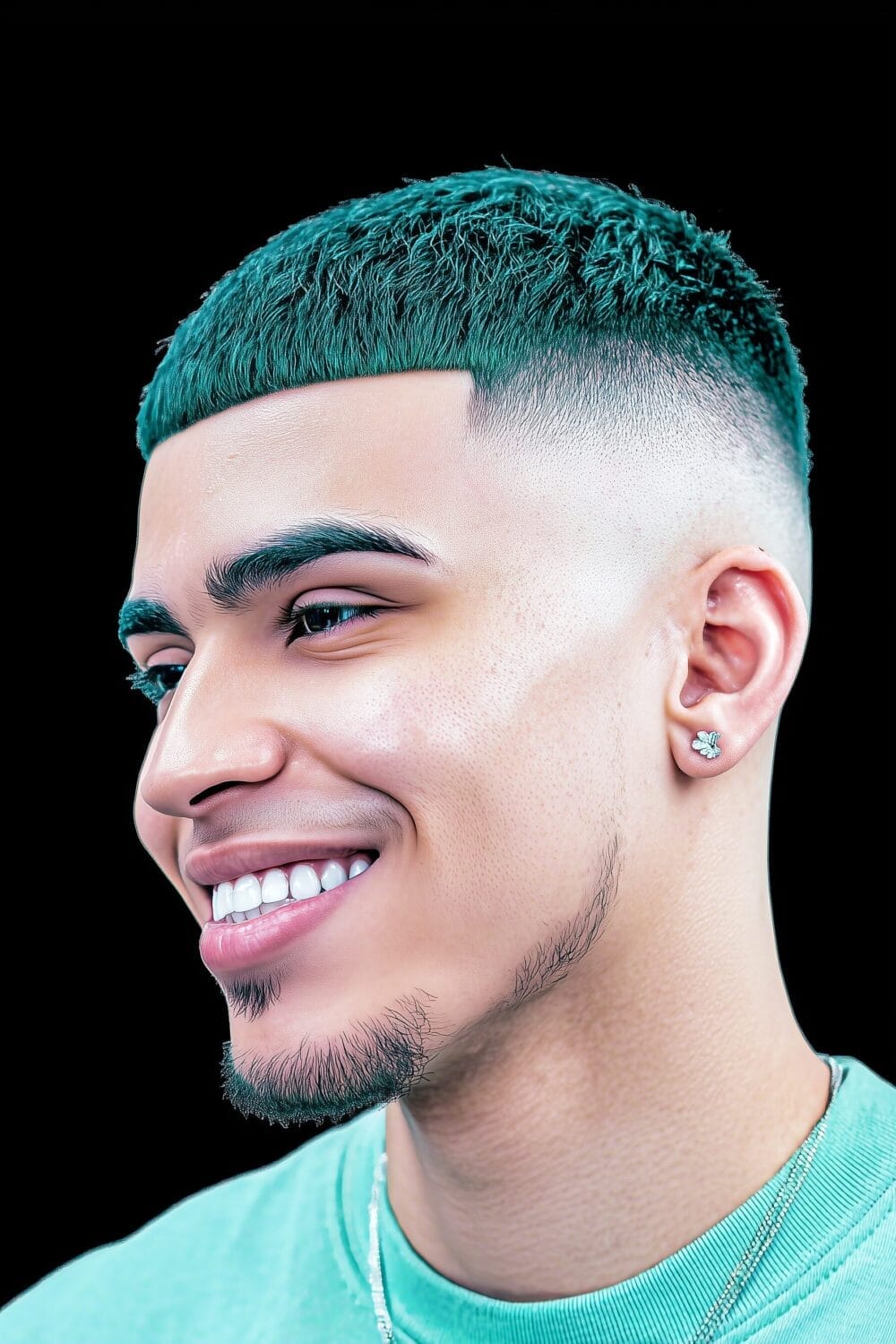
Burst Fade For Curly Hair
Curly hair provides automatic contrast against the burst fade‘s smooth gradient. The tight curls on top create a striking visual against the faded sides.
Moisturize daily with leave-in conditioner and use curl-defining gel to maintain shape without crunchiness or flaking.

Burst Fade For Coily Hair
Coily hair creates the most dramatic burst fade contrast with its tight, springy texture. The coils naturally stand upward, emphasizing the fade’s semicircular shape.
Apply moisturizing butter or oil daily to prevent dryness and use a pick to shape your coils.

🧠 Expert Advice
Match your product choice to your hair’s porosity level, not just texture type. High-porosity hair absorbs products quickly but loses moisture fast, requiring heavier creams. Low-porosity hair repels products, so use lightweight formulas that won’t weigh down your burst fade‘s natural movement.
Burst Fade For Thick Hair
Thick hair benefits from aggressive thinning and texturizing to prevent bulkiness around the burst fade transition. Your barber should use thinning shears strategically through the blend area.
Choose matte-finish products that won’t add extra weight or shine to already dense hair.

Burst Fade For Fine Hair
Fine hair requires careful blending to avoid visible scalp lines in the burst fade area. Keep the fade gradual and use volumizing products to create fullness on top.
Blow-dry with a round brush while lifting at the roots to maximize volume and disguise thinning areas.

Modern Burst Fade With Length Variations
Modern burst fades experiment with dramatic length contrasts between the faded sides and styled top. Today’s variations push boundaries while maintaining wearability.
Length choices impact maintenance frequency, styling time, and overall visual impact of your burst fade.

Burst Fade With Long Top
Keep 4-6 inches on top for maximum styling versatility with your burst fade. Long tops allow for slicked-back styles, textured spikes, or flowing movement.
The dramatic length contrast makes the burst fade appear more pronounced and creates endless styling possibilities.

Burst Fade With Medium Length
Medium length tops of 2-3 inches balance style options with manageable maintenance. This versatile length works with most face shapes and professional environments.
Style with lightweight pomade for control without sacrificing the natural movement that complements your burst fade.

Burst Fade With Short Crop
A short crop maintains 0.5-1 inch on top for minimal styling requirements. The close-cropped length emphasizes the burst fade‘s technical precision and clean lines.
Perfect for active lifestyles, this combination requires touch-ups every 2-3 weeks to maintain its sharp appearance.

Burst Fade With Fringe
Forward-styled fringe creates youthful energy when paired with a burst fade. The fringe softens facial features while the fade adds contemporary edge to this classic style.
Blow-dry the fringe forward using a paddle brush and finish with flexible-hold paste for touchable texture.

Burst Fade Mullet
The burst fade mullet combines retro length in back with modern faded sides. Business in front, party in back gets a contemporary update through precise burst fade techniques.
Maintain the mullet’s length while keeping the burst fade crisp for an intentional, styled appearance.

Burst Fade With Man Bun
Long hair pulled into a man bun showcases the burst fade‘s clean lines perfectly. The gathered hair on top creates maximum contrast against the precisely faded sides.
Position the bun slightly back from your crown to display the burst fade’s full semicircular gradient.

Burst Fade Blending Techniques
Professional blending techniques determine whether your burst fade looks seamless or choppy. Each method creates different textures and requires specific tools and expertise.
Master barbers often combine multiple blending techniques to achieve the perfect burst fade gradient.

Clipper-Over-Comb Burst Fade
Clipper-over-comb technique creates the smoothest burst fade transitions using continuous motion. Your barber guides clippers over a comb at varying angles following the ear’s curve.
This method provides maximum control for creating that signature semicircular burst pattern around your ears.

Scissor-Over-Comb Burst Fade
Scissor-over-comb delivers softer, more natural burst fade transitions than clipper work alone. This technique excels at blending longer lengths into the fade’s upper portions.
Experienced barbers use this method for clients with fine or thinning hair requiring gentler blending.

Freehand Burst Fade Technique
Freehand clipper work creates custom burst fade shapes without comb guides. Barbers use wrist rotation and pressure variation to sculpt the perfect arc.
This advanced technique requires years of experience but produces the most personalized burst fade results.

⚠️ Common Mistake
Creating the burst fade too wide defeats its purpose of following your ear’s natural curve. When the fade extends past your temple or too far into the neckline, you lose that signature semicircle. Keep the burst concentrated behind the ear, maintaining a 2-3 inch radius maximum.
Burst Fade With Guard Transitions
Strategic guard transitions from #0 to #3 create distinct steps in your burst fade. Each guard change should blend seamlessly into the next without visible lines.
Start with the shortest guard at the ear’s edge and gradually increase sizes following the burst pattern.

Burst Fade Corner Techniques
Corner work defines where the burst fade meets your hairline and neckline. Clean corners require precise edging tools and steady hands to maintain symmetry.
Use a trimmer’s corner edge for sharp lines or blend corners softly for a more natural appearance.

Face Shape Matches For Burst Fades
Face shape determines optimal burst fade placement and intensity for balanced proportions. Strategic fade positioning can elongate, widen, or balance your facial features.
Understanding your face shape helps customize the burst fade’s arc and height for maximum flattery.

Burst Fade For Oval Faces
Oval faces suit any burst fade variation due to balanced proportions. Experiment with high, mid, or low placement since your face shape accommodates all options.
Take advantage of this versatility by trying bold burst fade designs or dramatic length contrasts.

Burst Fade For Round Faces
Round faces benefit from high burst fades that add vertical dimension. The upward arc creates an elongating effect that slims and lengthens facial appearance.
Pair with extra height on top through pompadours or quiffs to maximize the lengthening effect.

Burst Fade For Square Faces
Square faces look best with mid-level burst fades that soften angular jawlines. The curved fade pattern contrasts nicely with straight, masculine facial lines.
Keep some length on top with textured styling to balance your strong jaw without overwhelming it.

Burst Fade For Heart-Shaped Faces
Heart-shaped faces need low burst fades to avoid emphasizing the wider forehead. The lower placement draws attention downward, balancing your narrower chin.
Style the top with side-swept looks rather than adding excessive height that widens the forehead area.

Burst Fade For Oblong Faces
Oblong faces require mid-to-low burst fades that don’t add extra length. Avoid high fades or excessive top height that elongates your already long face.
Choose wider burst fade arcs that add horizontal dimension rather than vertical emphasis to balance proportions.

Burst Fade For Diamond Faces
Diamond faces shine with burst fades that maintain fullness at the temples. The fade should start below the widest cheekbone point to preserve facial balance.
Add textured volume on top while keeping the burst fade subtle around your narrower forehead and chin.

Burst Fade With Design Elements
Design elements transform basic burst fades into personalized artwork showcasing individual style. Strategic patterns and lines add visual interest without compromising the fade’s integrity.
Choose designs that complement your lifestyle and maintenance commitment for long-lasting satisfaction.

- Lines: Single, double, or curved razored accents
- Geometric: Triangles, diamonds, or zigzag patterns
- Artistic: Stars, logos, or custom symbols
- Tribal: Cultural patterns with personal meaning
Burst Fade With Line Designs
Carved lines add sharp detail to your burst fade‘s smooth gradient. Single or parallel lines can follow the fade’s curve or create contrasting straight elements.
Request lines at natural transition points between guard lengths for seamless integration with the fade.

Burst Fade With Geometric Patterns
Geometric shapes etched into the burst fade create modern, architectural interest. Triangles, diamonds, and hexagons work especially well with the fade’s curved canvas.
Position patterns where they’ll remain visible as your hair grows, typically in the fade’s shortest sections.

Burst Fade With Hair Tattoos
Hair tattoos showcase intricate designs within your burst fade‘s gradient. From realistic images to abstract art, these detailed works require exceptional barber artistry.
Complex designs need touch-ups every 7-10 days to maintain clarity as your hair grows.

Burst Fade With Temple Design
Temple designs frame your face while complementing the burst fade‘s arc. Popular choices include stars, crosses, or initials carved into the temple area.
Not sure what your face shape is? Our Face Shape Detector figures it out in 4 quick questions.
Keep temple designs simple since this area grows quickly and requires frequent maintenance for crisp lines.

Burst Fade With Nape Art
Nape designs add surprise elements visible only from behind. The burst fade‘s preserved neckline provides perfect canvas space for creative expression.
Choose meaningful symbols or patterns that maintain clarity even as the surrounding hair grows between appointments.

Athletic Burst Fade Styles
Athletic burst fades prioritize function without sacrificing style during intense physical activity. These cuts withstand sweat, helmets, and frequent washing while maintaining shape.
Sport-specific considerations influence fade height, top length, and product choices for optimal performance.

Basketball Player Burst Fade
Basketball players favor high burst fades that stay neat under constant movement and sweat. The minimal length reduces interference during games while maintaining street style credibility.
Keep the top at 0.5-1 inch for easy maintenance between games and tournaments.

Soccer-Ready Burst Fade
Soccer players need burst fades that survive headers and slide tackles. Mid-level fades with slightly longer tops provide cushioning for ball contact.
Use water-resistant styling products that won’t run into your eyes during intense ninety-minute matches.

Gym-Friendly Burst Fade
Gym enthusiasts require burst fades that transition seamlessly from weights to cardio. Short, textured tops dry quickly and resist hat hair from backwards caps.
Choose breathable styling products that won’t clog pores during heavy sweating sessions.

Swimming-Compatible Burst Fade
Swimmers benefit from ultra-short burst fades that minimize chlorine damage and dry time. Keep maximum length under one inch to reduce drag and maintenance needs.
Apply leave-in conditioner before swimming to protect your hair from harsh pool chemicals.

Professional Burst Fade Looks
Professional burst fades balance modern style with workplace appropriateness across various corporate environments. Conservative execution maintains the cut’s character without appearing rebellious.
Industry standards and company culture determine acceptable fade heights and styling choices.

Business Burst Fade
Business burst fades keep gradients subtle with longer guard transitions for softer blending. Maintain at least #2 guard length at the shortest point for professional environments.
Style conservatively with light pomade, avoiding extreme heights or textured spikes during important meetings.

Conservative Burst Fade
Conservative burst fades barely register as fades, using minimal contrast between lengths. The arc stays low and narrow, appearing almost like a traditional taper.
Perfect for industries with strict grooming standards like banking, law, or government positions requiring subtle style.

Executive Burst Fade
Executive burst fades convey authority through precise lines and immaculate maintenance. The fade stays medium-height with perfectly blended transitions showcasing attention to detail.
Schedule weekly edge-ups to maintain the polished appearance expected in C-suite positions.

Interview-Ready Burst Fade
Interview-appropriate burst fades err on the conservative side while showing personality. Keep the fade low-to-mid height with natural styling that won’t distract.
Fresh cuts 2-3 days before interviews look intentional without appearing too sharp or aggressive.

Burst Fade Maintenance Essentials
Proper maintenance keeps your burst fade looking fresh between barber visits. Regular upkeep prevents the fade from growing out unevenly or losing definition.
Establish a maintenance routine based on your hair growth rate and style preferences.

Most burst fades require professional touch-ups every 2-3 weeks, with DIY maintenance extending that timeline to 3-4 weeks for budget-conscious clients.
Weekly Burst Fade Touch-Ups
Weekly touch-ups focus on maintaining clean edges and removing neck stubble. Use trimmers to preserve the hairline and clean up around ears.
Avoid attempting to recreate the actual fade at home; focus only on perimeter cleanup between appointments.

Home Maintenance Between Cuts
Between professional cuts, maintain your burst fade‘s shape through strategic styling and edge work. Brush directions and product application can extend your fade’s fresh appearance.
Invest in quality trimmers for biweekly edge-ups that keep lines crisp without disrupting the fade.

Product Recommendations For Burst Fades
Choose products based on your hair type and desired finish rather than marketing claims. Matte clays work for textured looks while pomades create sleek styles.
Layer products strategically: sea salt spray for texture, then clay for hold, finishing with hairspray if needed.

Burst Fade Growing Out Timeline
Burst fades lose definition after 10-14 days as hair grows approximately 0.5 inches monthly. Week three brings visible grow-out requiring professional attention.
Plan appointments every 2-3 weeks for optimal appearance or stretch to monthly with diligent home maintenance.

Burst Fade Styling Products And Tools
Quality products and tools make the difference between amateur and professional-looking burst fade styling. Invest in essentials that match your hair type and styling goals.
Building a complete toolkit ensures consistent results and extends time between professional services.

Best Pomades For Burst Fades
Water-based pomades provide strong hold without the greasy buildup that weighs down burst fades. Look for medium-to-firm hold formulas with natural or matte finishes.
Apply pomade to damp hair for even distribution, then blow-dry into your desired style for maximum hold.

Clippers For DIY Burst Fade Maintenance
Professional-grade clippers with adjustable guards help maintain burst fade edges at home. Cordless models provide better maneuverability around the ear’s curve.
Invest in clippers with self-sharpening blades and multiple guard sizes for versatile maintenance options.

Edge-Up Tools For Burst Fades
T-blade trimmers create the sharpest lines for burst fade edge-ups and design work. Zero-gap adjustments provide the closest possible trim without irritation.
Practice your technique on less visible areas before attempting front hairline work to avoid mistakes.

Brushes And Combs For Burst Fade Styling
Boar bristle brushes distribute natural oils while styling your burst fade‘s longer sections. Wide-tooth combs work best for detangling without disrupting curl patterns.
Use a small styling comb for creating parts and directing hair flow around the fade transition.

Ready to Find Your Perfect Cut?
You’ve read about the styles. Now find the one that fits YOUR face shape, hair type, and lifestyle.
🎬 FLAWLESS BURST FADE TEXTURED CROP HAIRCUT TUTORIAL!
FAQs
How Often Should I Get My Burst Fade Touched Up?
Schedule burst fade touch-ups every 2-3 weeks for optimal freshness. Your hair grows roughly 0.5 inches monthly, causing noticeable fade deterioration by week two.
Stretch appointments to 3-4 weeks with diligent home edge maintenance if budget is a concern.
What’s The Difference Between A Burst Fade And A Drop Fade?
Burst fades create semicircular arcs behind your ears while preserving neckline length. Drop fades follow your head’s natural curve but continue dropping through the back.
The burst fade leaves a “mohawk-like” strip while drop fades taper the entire perimeter.
Can I Get A Burst Fade With A Receding Hairline?
Burst fades actually complement receding hairlines by drawing attention to the sides rather than the front. Choose a low-to-mid burst fade height to minimize contrast.
Style the top forward or to the side rather than slicked back to disguise thinning areas.
How Much Does A Professional Burst Fade Cost?
Professional burst fades typically cost $25-50 depending on location and barber expertise. High-end barbershops in major cities may charge $60-80 for precision work.
Factor in 15-20% tips for exceptional service and consider package deals for regular clients.
Which Guard Sizes Work Best For A Burst Fade?
Start with #0 or #0.5 guards at the shortest point, gradually increasing to #2 or #3. The progression depends on desired contrast and hair density.
Most barbers use half-guard increments (#0.5, #1, #1.5, #2) for smoother burst fade transitions.
What Is the Difference Between a Burst Fade and a Taper Fade?
A burst fade radiates in a semicircular arc around your ear, creating a rounded gradient that preserves neckline length. A taper fade gradually shortens hair in a straight line from top to bottom around the entire perimeter. The burst fade is more dramatic and artistic, while the taper fade is a classic all-around option that works in any setting.
Can You Do a Burst Fade at Home?
Technically yes, but a clean burst fade requires precision around the ear that’s extremely difficult to achieve on yourself. The semicircular gradient needs consistent guard transitions at awkward angles. If you attempt it at home, use a three-mirror setup and start with a longer guard than your target — you can always go shorter. For best results, get the initial cut professionally and handle only minor touch-ups between appointments.
Was this article helpful?

Khamis Maiouf is a professional barber who graduated from Hinckley College in England with a Level 3 qualification in hairdressing. With over 20 years of experience, he is an award-winning barber who has mentored numerous students and styled thousands of clients. A recognised expert featured on StyleCraze (20M+ readers).
Credentials: Level 3 Hairdressing (Hinckley College, UK) • 20+ Years Professional Experience • Featured Expert on StyleCraze • Founder of Book of Barbering