

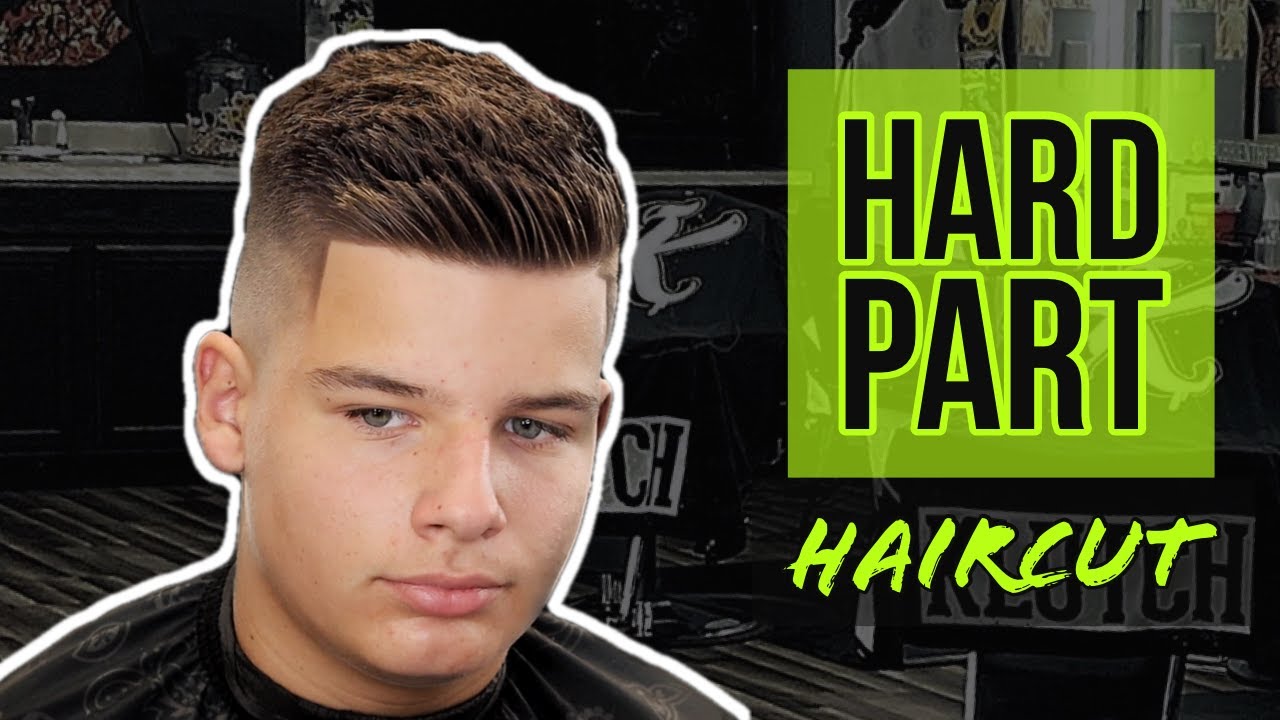
Most guys who sit in my chair asking for a hard part don’t realize how much one razor line changes their entire look. That single shaved channel turns a standard fade into something people actually notice. After cutting hard parts for over two decades, I can tell you this detail works on virtually every style — from conservative comb overs to aggressive disconnects.
Below are 13 hard part variations I recommend most, plus exactly how to ask your barber and keep the line looking fresh.
Key Takeaways
- A hard part is a razor-shaved line that adds instant structure to any fade, comb over, or pompadour — it’s an add-on detail, not a standalone haircut.
- All 13 styles here work across different hair types and face shapes, from subtle office-appropriate looks to bold disconnected cuts.
- Ask your barber to match the line width to your hair density — thinner for fine hair, wider for thick hair.
- Plan for touch-ups every 2–3 weeks since the shaved line fills in quickly, especially on darker hair.
- Always bring a reference photo to your appointment and decide on the base cut before adding the hard part.
What Is a Hard Part Haircut?
A hard part is a razor-shaved line cut into the scalp along your natural parting. Unlike a soft part — where you simply comb hair to one side — a hard part creates a permanent, visible dividing line that stays defined between haircuts.
Your barber creates it using a trimmer or straight razor, carving a clean channel typically 1–2mm wide. The line usually runs from the front hairline back toward the crown, though placement varies by style. On thicker or darker hair, the contrast is more dramatic. On finer hair, a skilled barber keeps the line narrower to avoid exposing too much scalp.
The hard part works as an add-on detail, not a standalone cut. It pairs with fades, undercuts, comb overs, pompadours, and quiffs — any style where a side parting exists or could exist.
Classic Side Part
The classic side part with a hard line delivers timeless sophistication with modern precision. This versatile style works across all hair types and face shapes, offering a polished appearance suitable for any professional setting. The razor-etched part line stays visible for weeks, reducing daily styling decisions while maintaining that fresh-from-the-barber look.
Low Fade Hard Part
A low fade hard part keeps things subtle by starting the fade just above the ears. This conservative approach maintains more length on the sides while the hard part adds definition without being too bold.
Perfect for professionals who want contemporary style within corporate dress codes. The gradual fade creates a natural progression that complements the clean part line.

Mid Fade Hard Part
The mid fade hard part strikes the perfect balance, with the fade beginning at temple level. This placement creates noticeable contrast without being too dramatic, making it ideal for those transitioning from conservative to modern styles. The mid-height fade emphasizes the hard part’s precision while maintaining versatility for both casual and formal occasions.

High Fade Hard Part
A high fade hard part makes a bold statement by starting the fade well above the temples. This dramatic contrast between the longer top and closely faded sides creates maximum visual impact. The elevated fade line draws even more attention to the razor part, resulting in a contemporary look that’s currently trending among fashion-forward professionals and creatives.

Skin Fade Hard Part
The skin fade hard part takes precision to the extreme, fading completely down to bare skin. This ultra-clean technique creates the sharpest possible contrast with the hard part line.
Requiring visits every 2-3 weeks to maintain its crisp appearance, it’s the choice for those who prioritize immaculate grooming. The seamless blend showcases exceptional barbering skill.
Textured Crop with Hard Part
This textured crop incorporates a hard part into the modern French crop silhouette. The choppy, piece-y texture on top contrasts beautifully with the clean razor line, creating an effortlessly stylish look. Ideal for men with straight to wavy hair, it requires minimal styling—just some matte paste worked through with fingers for that perfectly imperfect finish.

Pompadour Hard Part
The pompadour hard part combines vintage volume with contemporary precision. This style sweeps hair up and back from the forehead, creating impressive height that’s accentuated by the sharp part line. While it demands more styling commitment than other variations, the dramatic silhouette makes it worth the effort for special occasions or those who enjoy a statement hairstyle.
Quiff Hard Part
A quiff hard part focuses height and volume at the front hairline while keeping sides neat. This style offers pompadour-like impact with less maintenance, as only the front section requires significant styling.
The hard part adds structure to the voluminous front, preventing the style from looking unbalanced. It’s particularly flattering for round faces, adding vertical dimension.
Slick Back Hard Part
The slick back hard part channels classic Hollywood glamour with modern edge. Hair is combed straight back from the forehead, creating a sleek, polished appearance that works brilliantly in professional settings.
The hard part prevents the style from looking too severe while adding contemporary relevance. Use a high-shine pomade for formal events or matte products for everyday wear.
Comb Over Hard Part
This comb over hard part elevates the traditional business haircut with a precision razor line. The hair sweeps across the head following the part’s direction, creating a refined appearance suitable for any boardroom. Unlike natural parts that can shift throughout the day, the hard part keeps everything perfectly in place, eliminating constant mirror checks.

Messy Top Hard Part
The messy top hard part juxtaposes casual tousled texture with precise side detailing. This controlled chaos approach appeals to those wanting an effortless appearance without sacrificing structure. The hard part prevents the intentionally messy top from looking unkempt, while sea salt spray or texture powder creates that perfect lived-in finish requiring minimal morning effort.
Hard Part with Beard Fade
This comprehensive style connects the hard part to a faded beard line, creating seamless flow from hair to facial hair. The continuous fade technique requires exceptional barber skill to execute properly.
Not sure what your face shape is? Our Face Shape Detector figures it out in 4 quick questions.
When done right, it creates a polished, cohesive appearance that frames the face perfectly. This style particularly suits those with strong beard growth who want everything impeccably groomed.

Buzz Cut Hard Part
A buzz cut hard part adds personality to ultra-short hair, typically under half an inch all over. This minimalist approach proves that even the simplest cuts benefit from thoughtful detailing. The hard part creates visual interest on an otherwise uniform length, perfect for those wanting zero styling commitment while maintaining a fashionable edge.

How to Ask Your Barber for a Hard Part
Most barbers hear “hard part” multiple times a day, so don’t overthink it. But a few details make the difference between a generic line and one that actually elevates your cut:
- Show a reference photo. Even experienced barbers appreciate seeing exactly what you’re picturing. Save one or two from this page to your phone.
- Specify width. Tell your barber whether you want a subtle thin line or a wider, more noticeable part. Thinner looks more professional; wider makes a bolder statement.
- Confirm placement. Most hard parts follow your natural parting, but you can place them higher or lower. Ask your barber what complements your head shape.
- Decide the base cut first. The hard part is a detail, not the whole haircut. Lock in your fade level, top length, and texture before adding the line.
Expect a $5–15 upcharge on top of your regular haircut price. The whole addition takes about 2–3 extra minutes in the chair. For more on communicating with your barber, see our full guide on how to ask for a haircut.
How to Maintain Your Hard Part
Here’s what I tell every client walking out with a fresh hard part: enjoy the crispness while it lasts, because maintenance starts faster than you’d think.
- Days 1–3: The line looks its sharpest. No maintenance needed — just style your hair as directed.
- Days 4–7: Stubble starts filling in the channel. If you’re comfortable with a trimmer, you can carefully touch up the line at home using a zero-gap trimmer along the existing track.
- Weeks 2–3: The line softens noticeably. Most men book a touch-up at this point — many barbers offer line-ups at a reduced price between full haircuts.
- Week 4+: The part has grown in enough to blend naturally. At your next haircut, your barber re-shaves it fresh.
Pro tip: Darker, coarser hair shows regrowth faster than lighter, finer hair. If you’ve got thick dark hair, plan on touch-ups every two weeks. Lighter hair can often stretch to three.
FAQs: Hard Part Haircuts
How long does a hard part last?
A well-executed hard part typically remains visible for 2-3 weeks before requiring a touch-up. The exact duration depends on your hair growth rate and the initial depth of the razor line.
Darker, thicker hair shows regrowth faster than lighter, finer textures. Most men schedule barber visits every two weeks to maintain that fresh, crisp appearance, though some can stretch it to three weeks with slower growth patterns.
Can you give yourself a hard part?
While technically possible, creating your own hard part is extremely challenging and risky. The angle required for self-cutting makes achieving a straight line nearly impossible, especially on the back portions.
Professional barbers use specialized razors and have the proper viewing angle to ensure precision. One wrong move can result in an uneven line that takes weeks to grow out. The $5-10 upcharge at a barbershop is worth avoiding potential mistakes.
Does a hard part work with thin hair?
Hard parts can work with thin hair when executed properly. The key is keeping the line subtle rather than wide, as broader parts can expose too much scalp and emphasize thinning.
A skilled barber will adjust the depth and width to complement your hair density. Some men with thinning hair actually find hard parts helpful since the defined line creates structure that makes remaining hair appear fuller and more intentional.
How do you grow out a hard part?
The growing-out phase lasts about 3–4 weeks. During the first week, use a strong-hold pomade or clay to comb hair across the line. By week two, the stubble fills in enough that most people won’t notice unless they’re looking closely. If the regrowth bothers you, ask your barber for a slightly longer clipper length across the area to speed the blending. Within a month, the hard part disappears completely into your natural hair pattern.
What are the pros and cons of a hard part haircut?
The biggest pro is instant definition — one razor line transforms any standard cut into a sharp, intentional style that requires less daily styling effort. Hard parts also work with virtually any face shape and hair type. The main con is maintenance: the line grows in within 2–3 weeks, requiring regular barber visits. There’s also a brief awkward phase if you decide to grow it out. Cost-wise, expect a small upcharge of $5–15 per visit for the detail.
Was this article helpful?
Ready to Find Your Perfect Cut?
You’ve read about the styles. Now find the one that fits YOUR face shape, hair type, and lifestyle.

Khamis Maiouf is a professional barber who graduated from Hinckley College in England with a Level 3 qualification in hairdressing. With over 20 years of experience, he is an award-winning barber who has mentored numerous students and styled thousands of clients. A recognised expert featured on StyleCraze (20M+ readers).
Credentials: Level 3 Hairdressing (Hinckley College, UK) • 20+ Years Professional Experience • Featured Expert on StyleCraze • Founder of Book of Barbering