

Most guys who sit in my chair asking about man buns have the same worry — they don’t want to look like they’re trying too hard. Fair enough. After styling hundreds of these over 20 years, I can tell you the difference between a man bun that works and one that doesn’t comes down to choosing the right variation for your hair type and face shape.
From sleek top knots to textured Viking buns, here are 20 styles I actually recommend to clients — and how to make each one work.
Key Takeaways
- The best man bun style depends on your face shape and hair type — round faces benefit from higher buns, while oval and square faces work with almost any variation.
- You need at least 6 inches of hair for a basic bun, though 8–10 inches gives you more styling options and a fuller look.
- The undercut man bun and messy bun are the most versatile options for 2026, working across casual and professional settings.
- Rotate your bun position daily and use fabric hair ties to prevent traction alopecia and breakage.
- Regular trims every 8–10 weeks keep your bun looking sharp even while growing it out.
The Full Man Bun
The full man bun gathers all your hair at the crown into a complete, centered bun for maximum impact. This traditional style requires 8-10 inches minimum and works best with thick, straight to wavy textures. The key is positioning it perfectly between the crown and occipital bone for balanced proportions. Most men find this their go-to daily style once they master the technique.

The Top Knot
A top knot positions your bun high on the vertex, creating dramatic height and a bold silhouette. This variation draws the eye upward, making it ideal for round faces seeking length.
The higher placement requires secure tying technique to prevent sliding, but the payoff is a striking look that commands attention. It’s particularly effective with undercut sides for contrast.

The Low Man Bun
The low man bun sits at the nape of your neck, offering understated sophistication perfect for professional settings. This placement creates a more mature, refined aesthetic that translates well from office to evening events.
The lower position also reduces tension on your hairline, making it comfortable for all-day wear. Pair it with a well-groomed beard for maximum impact.

The Half-Up Man Bun
This hybrid style secures only the top section while leaving lower layers flowing free, creating effortless dimension. Perfect for medium-length hair that’s not quite long enough for a full bun, it offers versatility without commitment.
The contrast between tied and loose sections adds visual interest while maintaining movement. Many men use this as their transition style while growing out their hair.

The Undercut Man Bun
Combining buzzed or faded sides with a top bun creates the ultimate modern contrast. This style reduces bulk while maintaining the man bun aesthetic, making it ideal for thick hair or warm climates.
The short sides require regular maintenance every 2-3 weeks, but the dramatic effect justifies the upkeep. Currently trending among athletes and creative professionals who want edge with practicality.

The Braided Man Bun
Incorporating braids into your bun adds texture and cultural flair that elevates the basic style. Whether you choose cornrows leading to the bun or a single French braid, this variation requires 10+ inches of length for proper execution.
The braided elements provide extra hold and reduce frizz, making it perfect for coarse or textured hair types. It’s become increasingly popular in urban fashion scenes.

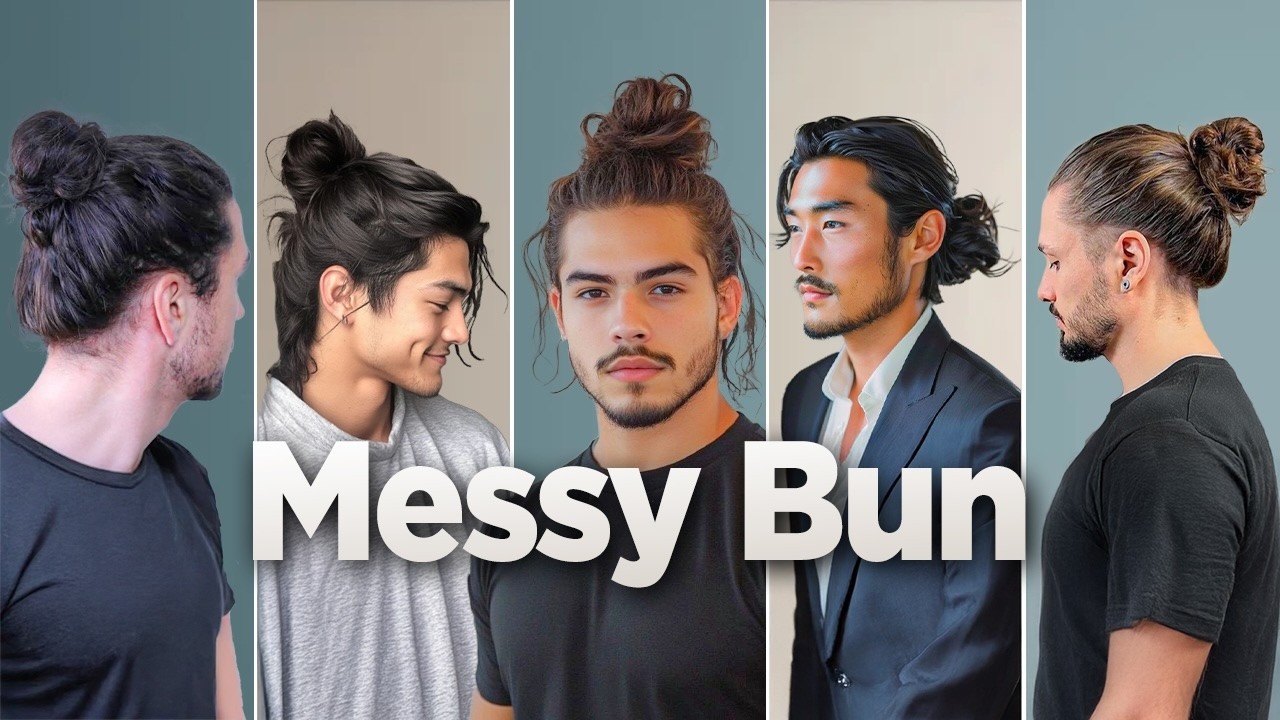
The Messy Man Bun
The messy man bun embraces controlled chaos with deliberately loose strands and textured imperfection. This relaxed approach works best with wavy or slightly curly hair that naturally creates volume.
Pull out face-framing pieces and avoid over-tightening for that just-rolled-out-of-bed appeal. Sea salt spray becomes your best friend for achieving the perfect undone texture.

The Sleek Man Bun
A sleek man bun demands precision with every hair smoothed into place using pomade or gel. This polished variation suits formal occasions, job interviews, or any situation requiring sharp presentation.
The controlled finish works best on straight to slightly wavy hair, though curly textures can achieve it with proper product application. Regular conditioning keeps the sleek look healthy rather than greasy.

The Curly Man Bun
Natural curls create stunning texture when gathered into a looser, more voluminous bun. The key is avoiding over-manipulation that disrupts your curl pattern – use wide-tooth combs and minimal tension.
This style celebrates natural texture rather than fighting it, resulting in a fuller, more organic shape. Leave-in conditioner helps maintain definition while reducing frizz throughout the day.

The Viking Man Bun
The Viking bun combines a substantial top knot with a full beard and optional braided elements for warrior-inspired impact. This masculine style typically positions the bun higher on the crown while incorporating shaved or faded sides for contrast.
Some variations include small braids within the bun itself or leading from the temples. It’s become the signature look for men wanting to project strength with sophistication.

The Samurai Bun
Inspired by traditional Japanese topknots, the samurai bun sits high and tight with military precision. This style traditionally pairs with a clean-shaven face or minimal facial hair to emphasize the dramatic hair placement.
The key difference from a standard top knot is the tighter wrap and more compact shape. Modern interpretations often include subtle undercuts for contemporary edge.

The Double Man Bun
Creating two smaller buns instead of one offers a playful, festival-ready alternative to the classic style. This variation works best with thick hair that can maintain volume when divided.
Position them symmetrically at equal heights, typically just above ear level for balance. While not office-appropriate, it’s perfect for concerts, beach days, or anywhere personality trumps convention.

The Mini Man Bun
The mini man bun proves you don’t need flowing locks to join the trend, working with just 6-8 inches of length. This compact version creates a small knot that’s more subtle than statement-making.
The limited size means positioning becomes crucial – too high looks sprouting, too low appears forced. It’s the perfect entry point for men growing out their hair.

The Long Flow Bun
When you have 12+ inches to work with, the long flow bun becomes a substantial statement piece. This variation creates a larger, more dramatic bun that can be styled multiple ways – twisted, wrapped, or folded.
The extra length allows for creative positioning and shaping options unavailable to shorter hair. Regular deep conditioning treatments keep long hair healthy and manageable.
The Medium Twist Bun
Twisting medium-length hair before bunning adds texture and improves hold without requiring products. This technique works especially well for fine or slippery hair that struggles to maintain traditional buns.
The twist creates natural grip while adding visual interest to the final shape. Start twisting from the base and continue through to the ends before securing for best results.

The Fade Man Bun
A skin fade graduating from bare skin to full length creates dramatic contrast that modernizes the man bun. This precision cut requires professional barbering skills to blend seamlessly from zero to hero.
The fade can start low, mid, or high depending on your preference and head shape. Maintenance every 2-3 weeks keeps the fade crisp while the top continues growing.

The Disconnected Man Bun
The disconnected version eliminates any blending between sides and top, creating a bold line of demarcation. This edgy approach makes a stronger statement than gradual fades, emphasizing the contrast between lengths.
The harsh line works best with straight to wavy hair where the distinction remains clear. It’s currently trending among fashion-forward men in creative industries.

The Textured Crop Bun
Combining a textured, choppy cut with a small bun creates an intentionally undone aesthetic. This style maintains shorter, piece-y layers throughout while gathering just enough length for a minimal bun.
The textured cutting technique adds movement and dimension even when tied up. Point cutting and razoring create the necessary texture, making this a barber-essential style.

The Business Man Bun
The business man bun maintains corporate-appropriate polish through careful positioning and immaculate grooming. Positioned lower on the head with zero flyaways, this style uses light pomade for control without shine.
The key is achieving hold that lasts through meetings without looking overly styled. Pair with a crisp part and clean neckline for maximum professional impact.

The Athletic Man Bun
Designed for maximum security during movement, the athletic man bun prioritizes function without sacrificing style. Double elastic bands and strategic positioning prevent loosening during workouts while avoiding tension headaches.
The placement typically sits at the occipital bone where natural head movement creates minimal stress. Moisture-wicking hair ties and dry shampoo become essential tools for active lifestyles.

How to Tie a Man Bun
After watching guys struggle with this in my chair for years, here’s the method I teach every client. It takes 30 seconds once you get the hang of it.
Step 1: Brush or finger-comb your hair straight back from the forehead to remove tangles. Work in a lightweight styling cream if you want extra hold and reduced flyaways.
Step 2: Gather all your hair at the desired position — crown height for a top knot, mid-head for a classic bun, or nape level for a low bun.
Step 3: Twist the gathered hair clockwise until it naturally coils into a bun shape. On the last loop of your hair tie, pull the hair only halfway through to create a folded bun — this is faster and holds better than wrapping.
Step 4: Secure with a snag-free elastic. Pull gently on the bun to loosen it slightly for a more natural look. Tuck any loose strands behind your ears or pin them with bobby pins.
The biggest mistake I see? Pulling too tight. A slightly loose bun looks more natural and puts less stress on your hairline.
Man Bun Maintenance Tips
The man bun is low-maintenance compared to most long styles, but ignoring the basics leads to breakage, thinning, and a bun that looks worse every month. Here’s what I tell every client who’s growing their hair out.
Rotate your bun position. Wearing it in the same spot every day pulls on the same follicles repeatedly. Alternate between high, mid, and low positions throughout the week to distribute tension.
Use fabric hair ties, not rubber bands. Rubber and thin elastics snag and snap hair. Spiral or fabric-covered ties grip without damage.
Condition more than you shampoo. Long hair needs moisture. Shampoo 2–3 times per week and condition every wash — your ends are the oldest, driest part of your hair.
Get regular trims. Even if you’re growing it out, trimming a quarter inch every 8–10 weeks prevents split ends from traveling up the shaft and weakening the hair.
FAQs: Man Bun Hairstyles
How long does hair need to be for a man bun?
You’ll need minimum 6 inches for a basic mini bun, though 8-10 inches provides more styling versatility. The hair must reach from your crown to beyond your ears when pulled back.
Thicker hair can sometimes work with slightly less length since it maintains better hold. Most men find their sweet spot around 10-12 inches, which takes roughly 18-24 months to grow from a short cut.
Will a man bun damage my hair?
Man buns can cause damage if tied too tightly or always positioned in the same spot. Traction alopecia results from constant pulling on hair follicles, potentially causing permanent hair loss.
Prevent damage by varying your bun position, using snag-free elastics, and avoiding tight styles when hair is wet. Give your hair regular breaks by wearing it down whenever possible.
What face shapes suit man buns best?
Man buns work with all face shapes when positioned correctly. Round faces benefit from higher buns that add vertical length.
Square faces look best with softer, messier styles that balance angular features. Oval faces can pull off any variation, while long faces should opt for lower buns to avoid extending proportions. The key is experimenting with placement and volume to find your most flattering style.
How do I stop my man bun from falling out?
Secure man buns start with proper technique and the right products. Use texturizing spray or dry shampoo on clean hair for grip, then twist hair before wrapping for extra hold.
Double up on hair ties or use spiral elastics designed for thick hair. Position the bun where your skull curves naturally to prevent sliding. For extra security, bobby pins hidden within the bun provide invisible support.
Are man buns still in style?
Yes — the man bun has evolved far beyond its mid-2010s trend status. In 2026, it remains one of the most requested long hairstyles in barbershops, with modern variations like the undercut bun and textured messy bun keeping the style fresh. The key is choosing a variation that suits your face shape and hair type rather than defaulting to the basic full bun.
Is a man bun professional?
Absolutely, when done right. The low man bun and sleek business bun are workplace-appropriate styles worn by professionals across industries. The key is keeping it neat — no flyaways, a clean hairline, and minimal bulk. Pair it with well-groomed facial hair and you have a polished look that works in most office environments.
Was this article helpful?
Ready to Find Your Perfect Cut?
You’ve read about the styles. Now find the one that fits YOUR face shape, hair type, and lifestyle.

Khamis Maiouf is a professional barber who graduated from Hinckley College in England with a Level 3 qualification in hairdressing. With over 20 years of experience, he is an award-winning barber who has mentored numerous students and styled thousands of clients. A recognised expert featured on StyleCraze (20M+ readers).
Credentials: Level 3 Hairdressing (Hinckley College, UK) • 20+ Years Professional Experience • Featured Expert on StyleCraze • Founder of Book of Barbering