
— Award-Winning Barber · 20+ Years Experience · Level 3 Qualified
Viking hairstyles aren’t just about looking fierce — they’re rooted in centuries of Norse warrior culture that I find endlessly fascinating as a barber. I’ve spent years perfecting the braids, undercuts, and shaved-side looks that bring this aesthetic to life in a modern barbershop setting.
Whether you want a battle-ready Ragnar Lothbrok undercut or a subtler Norse-inspired style for everyday wear, here are the best Viking hairstyles I recommend to my clients.
Key Takeaways
Not sure which style suits you best? Our Haircut Finder Quiz matches you with the right cut based on your face shape and hair type — takes 60 seconds.
- Viking undercuts with braids are the most popular Norse-inspired style and work best with medium to thick hair
- Authentic Viking hairstyles were simpler than TV shows suggest — most Norse men wore shoulder-length hair with practical ties
- Pair your Viking hairstyle with a full beard or braided beard for the complete warrior aesthetic
- Modern Viking styles like the pompadour mohawk and skin fade blend Norse energy with contemporary barbering
- These styles require 6-18 months of growth depending on the look, plus regular maintenance trims
What Did Real Viking Hairstyles Actually Look Like?
Here’s something most guys don’t realize: the Viking hairstyles you see on TV shows like Vikings and The Last Kingdom aren’t historically accurate. As a barber who’s researched Norse grooming extensively, I find the real history even more interesting than the Hollywood versions.
Historical evidence suggests most Viking men wore their hair between ear-length and shoulder-length, often with a practical center part. The famous “reverse mullet” — long at the front, shaved at the back — is actually documented in historical accounts of Norman-influenced Norse warriors. Archaeological combs found in Viking burial sites confirm that grooming was extremely important to these warriors.
The iconic shaved sides with a long top that you see on Ragnar Lothbrok is more of a modern interpretation, though it draws from some historical basis. Real Vikings valued clean, well-maintained hair as a sign of status. Many kept their hair tied back for battle using simple leather cords — nothing as elaborate as the intricate braiding patterns we create in the shop today.
What IS historically accurate is the connection between Viking hairstyles and beards. Norse men took immense pride in their full beards, sometimes braiding them with beads or metal rings. If you want an authentically-inspired Viking look, I always tell clients to grow the beard first — it’s the foundation of the entire aesthetic. Combine it with a disconnected undercut or simple pulled-back length and you’ve got a look that honors the real Norse tradition.
The Ragnar Lothbrok
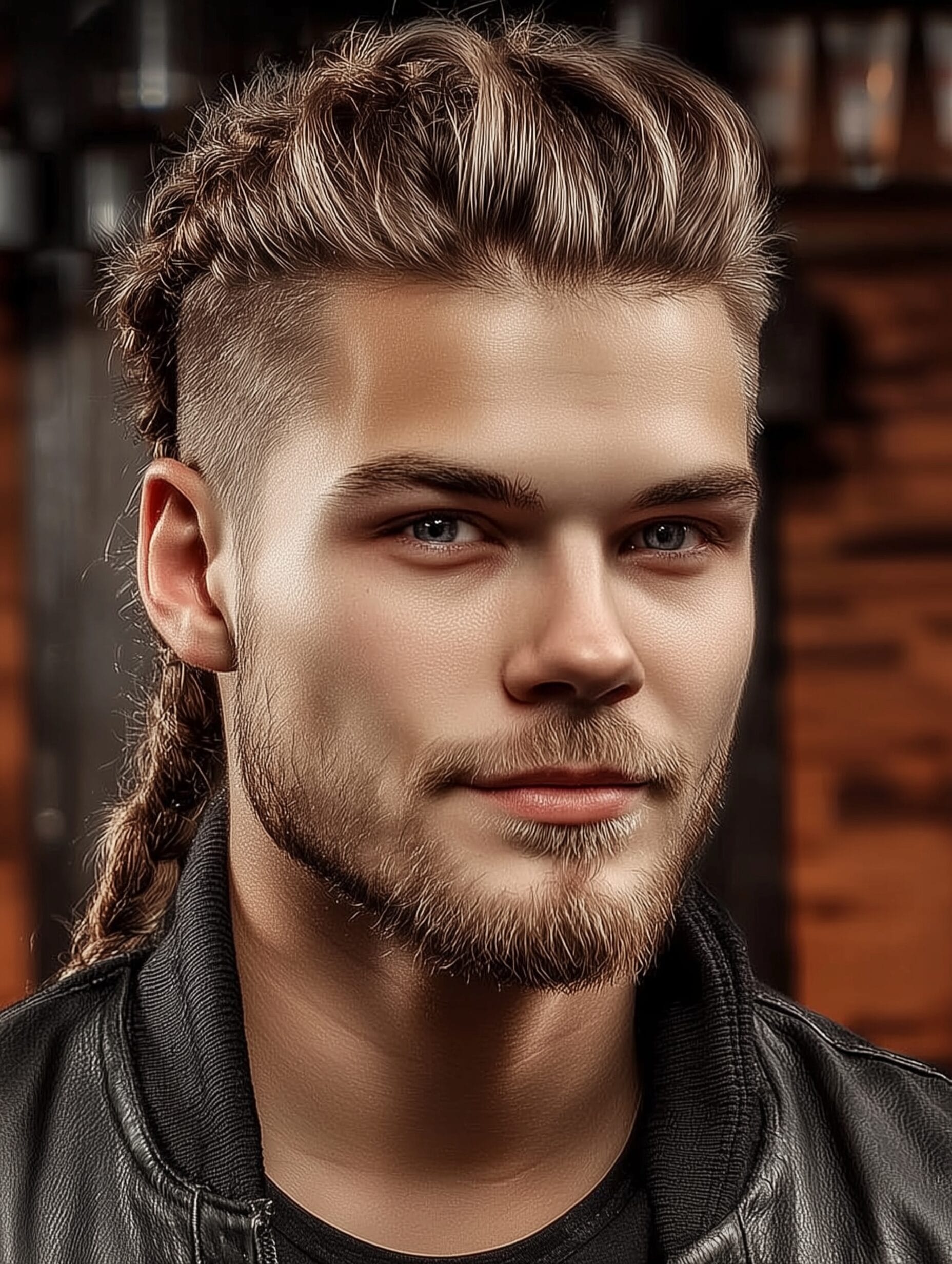
The Ragnar Lothbrok features dramatically shaved sides with a long braided section running along the crown. This iconic look combines the practicality of an undercut with intricate Viking braiding techniques. The contrast between bare skin and elaborate plaits creates an unmistakably fierce appearance that commands attention in any setting.

Traditional Viking Braids
Traditional Viking braids consist of multiple tight plaits running from the forehead straight back to the nape. This protective style kept hair secure during battle while displaying a warrior’s patience and skill. Modern versions incorporate 3-5 parallel braids that work best with medium to long hair, requiring dedication to maintain but delivering unmatched authentic Norse appeal.

The Bjorn Ironside
The Bjorn Ironside masterfully blends cornrows along the sides that transition into a thick central braid. This sophisticated warrior style offers more refinement than traditional Viking looks while maintaining fierce energy. The graduated braiding technique creates visual flow from temples to crown, making it perfect for those wanting Viking aesthetics with modern precision.

The Full Mane
A full mane showcases long, flowing hair extending past the shoulders, occasionally secured with leather ties or authentic metal rings. This style represents the ultimate Viking power move, requiring significant length and maintenance commitment. Natural texture adds to the wild warrior aesthetic, while strategic accessories provide both function and historically-inspired flair.

Viking Ponytail
The Viking ponytail combines a high, tight hair tie with closely trimmed or shaved sides for maximum contrast. This practical warrior style keeps long hair controlled while maintaining aggressive aesthetics through the undercut element. It’s particularly effective for active lifestyles, offering both the length Vikings prized and modern functionality.

The Ivar Style
The Ivar style incorporates multiple small braids throughout longer hair, creating dynamic texture while preserving overall length. These scattered plaits add visual interest without committing to full braiding, making it ideal for those easing into Viking styling. The random braid placement mimics battle-ready practicality while looking deliberately artistic and effortlessly fierce.

Viking Undercut
A Viking undercut features dramatically shaved sides contrasting with long hair on top, styled into braids or left loose for movement. This high-contrast cut modernizes traditional Viking aesthetics for contemporary settings. The versatility allows for professional slicked-back styling during weekdays, then full warrior mode with braids for weekends.

Temple Shave
Temple shave styles remove hair specifically around the temples while maintaining length on top and back. This selective shaving creates a distinctive silhouette that frames the face aggressively. Often combined with swept-back styling or side braids, it offers Viking edge without full undercut commitment.

The Battle Ready
The Battle Ready cut features short, tight sides supporting a mohawk-style strip of longer hair braided down the center. This warrior-inspired style screams aggression while remaining surprisingly wearable. The central braid can be adjusted from subtle to extreme depending on length and tightness, allowing customization for different occasions.

Double Dutch Braids
Double Dutch braids run parallel from the forehead to neck, creating symmetrical warrior lines that stay secure during any activity. This practical style originated from battlefield necessity but translates perfectly to modern active lifestyles. The raised braid technique adds dimension while keeping every strand controlled, making it ideal for sports or outdoor work.

Side Swept Braids
Side swept braids combine multiple small plaits swept dramatically to one side with an undercut on the opposite side. This asymmetrical approach adds modern artistic flair to traditional Viking braiding. The contrast between intricate braided texture and clean-shaved skin creates visual tension that’s both fierce and fashionable.

The War Braid
The War Braid consists of a single, thick plait starting from the forehead and incorporating all hair into one powerful braid. This commanding style demonstrates both commitment and skill, requiring substantial length and regular re-braiding. Master barber Erik Nordstrom notes this requires specific sectioning technique for proper weight distribution throughout the braid.

Viking Fade
A Viking fade merges modern barbering precision with Norse-inspired top styling through braids or top knots. The graduated fade provides contemporary clean lines while Viking elements on top honor historical aesthetics. This fusion style works perfectly for professionals wanting warrior spirit without sacrificing workplace appropriateness.

Textured Warrior
The Textured Warrior features medium-length hair with natural texture enhanced by subtle braids and complementary beard styling. This approachable Viking look uses strategic texturizing to create movement and depth without extreme length requirements. Sea salt spray and light hold products maintain the deliberately undone aesthetic while small accent braids add authentic touches.

The Urban Viking
Urban Viking styles incorporate clean, sharp lines with geometric patterns shaved into the sides, topped with neat, precise braids. This contemporary interpretation brings Viking aesthetics into modern street style through technical barbering skills. The combination of traditional braiding and modern design work creates a unique cultural fusion.

The Full Viking
The Full Viking commits completely with long flowing hair matched by an equally impressive beard, both featuring coordinated braids and beads. This maximum-impact style requires serious grooming dedication but delivers unmatched authentic Norse presence. Metal rings, leather wraps, and carved beads add historically-accurate finishing touches that complete the warrior transformation.

Braided Beard Combo
Braided beard combinations coordinate plaits in both hair and facial hair for cohesive warrior styling. This advanced technique requires sufficient length in both areas but creates unparalleled Viking authenticity. The matching braid patterns between hair and beard demonstrate mastery of Norse grooming traditions while making an undeniably bold statement.

The Shieldwall
The Shieldwall offers a practical, shorter cut incorporating subtle Viking elements through small side braids or shaved Nordic designs. This accessible style works for those with length restrictions or conservative environments. Despite its restraint, strategic Viking touches like temple braids or runic patterns maintain warrior spirit without full commitment.

Half-Up Warrior Knot
A Half-Up Warrior Knot pulls the top section into a tight bun or knot while leaving remaining length flowing freely. This versatile style transitions easily between battle-ready and casual, offering control without sacrificing the long hair Vikings valued. The top knot positioning can vary from crown to occipital bone depending on desired aggression level.

The Berserker
The Berserker embraces wild, untamed longer hair with random braids scattered throughout for deliberately fierce messiness. This chaotic warrior style captures the legendary Berserker’s uncontrolled battle fury through intentionally disheveled appearance. Natural texture and minimal product allow hair to move freely, with sporadic braids adding just enough structure to prevent complete anarchy.


🎬 Viking Hairstyles: A Response to "Reenactorisms: Viking Fashion That Isn't Viking"
FAQs: Viking Hairstyles
Did Vikings actually have these hairstyles?
Historical evidence suggests Vikings did wear braids, long hair, and various combinations of both. Archaeological findings and contemporary accounts describe Norse warriors with elaborate hairstyles including braids, top knots, and partially shaved heads.
However, modern “Viking” styles often incorporate creative liberties inspired by pop culture. The emphasis on grooming and hair decoration in Viking culture is well-documented through artifacts and written records.

How long does hair need to be for Viking braids?
Most Viking braid styles require minimum 4-6 inches of length, though fuller looks need considerably more. Simple side braids can work with shorter lengths, while elaborate styles like the War Braid need hair reaching at least mid-back. Growing hair for authentic Viking styles typically takes 12-18 months from a short cut, requiring patience and proper maintenance throughout the growth process.
Are Viking hairstyles high maintenance?
Viking hairstyles demand significant maintenance commitment, especially braided and long styles. Braids need re-doing every 3-7 days to stay neat, while shaved elements require touch-ups every 2-3 weeks. Long Viking hair needs regular conditioning, detangling, and protective styling to prevent damage.
However, some modern Viking-inspired cuts like the Temple Shave or Viking Fade offer lower maintenance alternatives while maintaining Norse aesthetics.
What is the Viking hairstyle called?
There’s no single name for Viking hairstyles — they include several distinct styles. The most popular modern versions are the Viking undercut (shaved sides with long top), the Norse warrior braid (braided mohawk or ponytail), and the Ragnar cut named after the TV character. In my shop, clients usually reference a specific character or image rather than a style name, which honestly makes my job easier.
Can you get a Viking hairstyle with short hair?
You can absolutely start a Viking-inspired look with shorter hair. I recommend a high fade with textured length on top as your entry point — it captures that shaved-sides warrior energy without needing months of growth. As your top grows out past 4-5 inches, you can begin incorporating small braids or a tied-back style. The full Viking aesthetic takes time, but the journey looks great at every stage.
Do Viking hairstyles work for all hair types?
Viking styles work across most hair types, though the execution changes. Straight and wavy hair holds braids best and gives you that classic Norse look. Curly and coily hair creates incredible volume for the mohawk and top-knot variations — some of my best Viking-inspired work has been on clients with naturally textured hair. The only challenge is very fine hair, which may struggle with tight braids, but a clean undercut with loose styling still delivers the warrior vibe.
Was this article helpful?
Ready to Find Your Perfect Cut?
You’ve read about the styles. Now find the one that fits YOUR face shape, hair type, and lifestyle.

Khamis Maiouf is a professional barber who graduated from Hinckley College in England with a Level 3 qualification in hairdressing. With over 20 years of experience, he is an award-winning barber who has mentored numerous students and styled thousands of clients. A recognised expert featured on StyleCraze (20M+ readers).
Credentials: Level 3 Hairdressing (Hinckley College, UK) • 20+ Years Professional Experience • Featured Expert on StyleCraze • Founder of Book of Barbering