

Every few months, someone walks into my shop with a photo on their phone that makes the whole room stop and look. Monkey tails, forked wizard beards, carved geometric patterns—I’ve shaped them all, and honestly, these are some of the most fun hours I spend behind the chair.
These 20 crazy beard styles aren’t for the faint of heart, but if you’ve got the growth and the guts, they’ll turn your facial hair into genuine wearable art.
Key Takeaways
- Most creative beard styles require at least 6–10 inches of growth—expect 8–12 months of patience before shaping
- Heavy-hold wax, styling balm, and precision trimmers are essential for maintaining sculpted designs
- Start with reversible styles (braids, beads) before committing to carved patterns that require regrowth to undo
- Even wild styles need a clean neckline and cheek line—chaos above, clean borders below
- Work with a barber experienced in creative designs—not every shop handles geometric carving or multi-braid work
What Are Crazy Beard Styles?
Crazy beard styles are unconventional facial hair designs—pushing the boundaries of standard beard types—that prioritize artistic expression over traditional grooming.

How To Grow And Style Creative Beards
Growing a creative beard starts with 6-8 months of unrestricted growth to establish your canvas. Once you’ve achieved sufficient length and density, work with an experienced barber to map out your design.
Daily maintenance involves specialized waxes, gels, and holding sprays to maintain shapes. Regular touch-ups every 2-3 weeks keep designs sharp, while beard oils prevent damage from frequent styling.
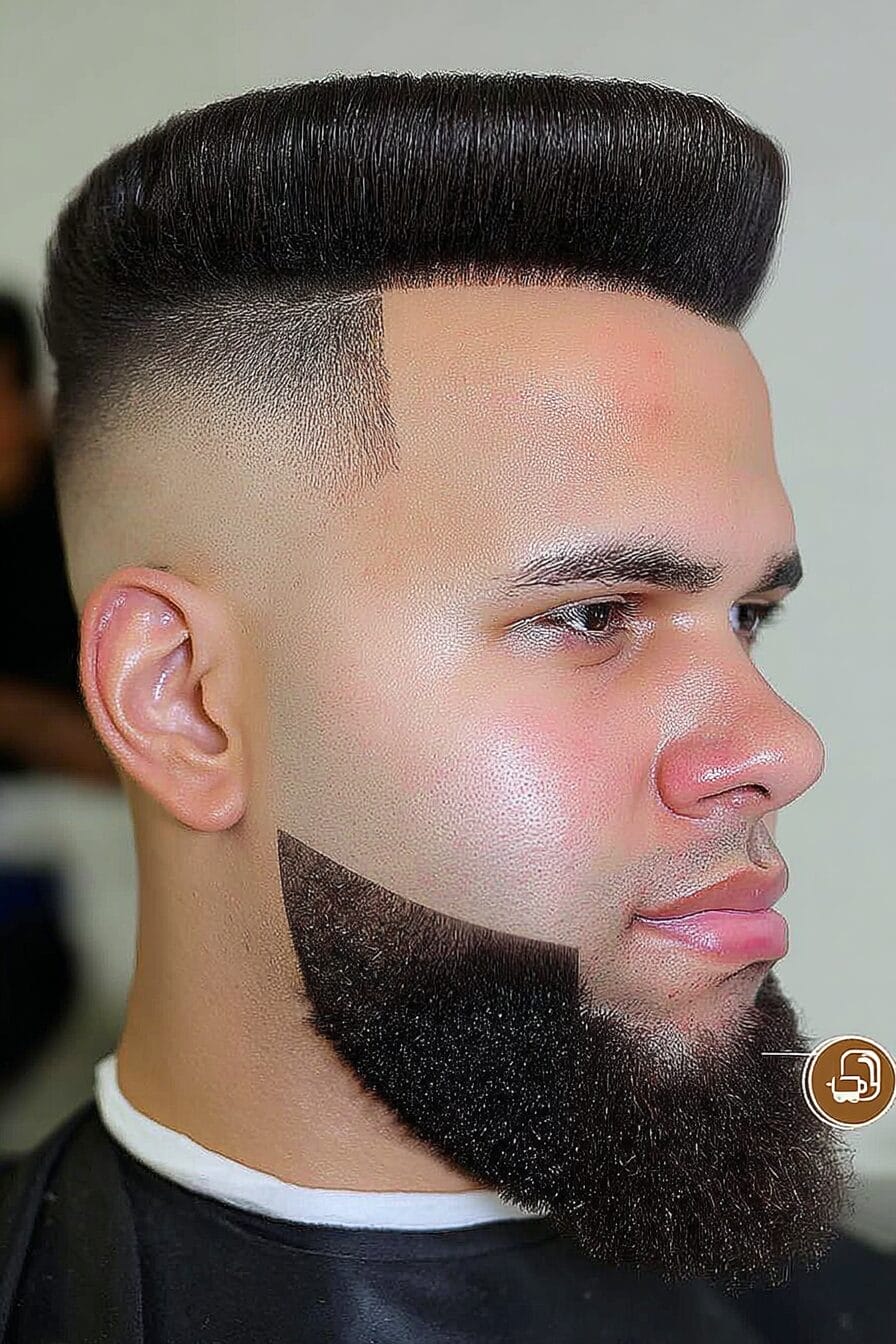
Monkey Tail Beard
The monkey tail beard creates a continuous line from one sideburn, down around the chin, connecting to a mustache that curves to the opposite side. This playful asymmetrical design requires precise daily grooming to maintain its distinctive tail-like appearance. Popular among comedians and creative professionals, it balances humor with genuine grooming skill.

Forked Beard Style
A forked beard splits into two distinct points at the chin, borrowing from classic long beard territory, creating a devil-may-care aesthetic. Achieving this style requires at least 6 inches of length and strategic training with wax or balm.
Medieval enthusiasts and metal musicians particularly favor this bold look. Daily separation and styling prevent the forks from tangling together.

Spiral Braided Beard
The spiral braided beard twists facial hair into a continuous corkscrew pattern from chin to tip. This intricate style demands 8-10 inches of length and advanced braiding skills or professional assistance.
The spiral effect works best with straight to wavy beard textures. Maintaining the twist requires nightly re-braiding and liberal use of holding products.

Two-Tone Colored Beard
Two-tone colored beards feature contrasting color blocks that create striking visual divisions. Popular combinations include natural with bleached sections, or bold colors like blue and green.
Professional coloring ensures even saturation without damage. This style particularly suits creative industry professionals who can showcase artistic flair. Touch-ups every 3-4 weeks maintain color vibrancy.

Asymmetrical Beard Design
Asymmetrical beard designs deliberately break traditional symmetry with uneven lengths or shapes on each side. One side might feature a full beard while the other sports intricate carved patterns.
This avant-garde approach requires confident personality and skilled maintenance. Fashion-forward urbanites embrace asymmetry as wearable art that challenges conventional grooming standards.
Octopus Tentacle Beard
The octopus tentacle beard divides facial hair into eight distinct braided sections resembling tentacles. Each braid can be styled differently—some twisted, others beaded—creating dynamic movement.
This maritime-inspired masterpiece needs at least 10 inches of growth. Cosplayers and festival-goers particularly love this attention-grabbing style that takes serious dedication to maintain.

Lightning Bolt Carved Beard
Lightning bolt designs carved into beards create dramatic negative space patterns using precision trimmers. The bolts can zigzag across cheeks or strike down from sideburns.
This style works best with dense, dark facial hair for maximum contrast. Barbers recommend weekly touch-ups to keep edges crisp. Athletes and performers often choose lightning bolts for their dynamic energy.

Multi-Braided Viking Beard
Multi-braided Viking beards incorporate 3-7 separate braids throughout a full beard, often decorated with metal beads or leather wraps. This warrior-inspired style requires 6-8 inches minimum length and works best with straight to wavy textures.
Each braid tells a story through different patterns—fishtail, rope, or traditional three-strand. Maintenance involves daily re-braiding and careful washing to prevent tangling.

Geometric Pattern Beard
Geometric pattern beards feature precise angular designs—think extreme line designs—carved into facial hair—triangles, diamonds, or interconnected shapes. These mathematical masterpieces require expert barber skills and dense beard growth for clean lines.
Tech professionals and designers gravitate toward geometric patterns that mirror their analytical mindsets. Patterns need refreshing every 10-14 days as hair grows.

Rainbow Dyed Beard
Rainbow dyed beards showcase full spectrum colors transitioning through facial hair like a pride flag. Professional colorists layer multiple semi-permanent dyes to achieve smooth gradients without excessive damage.
This bold statement style suits performers and artists who embrace maximum visibility. Color-safe beard products and cool water washing extend vibrancy between salon visits.

Twisted Rope Beard
The twisted rope beard style transforms facial hair into a thick nautical rope through tight twisting techniques. Starting with two sections, the beard spirals together from chin to tip, secured with strong-hold wax.
Maritime enthusiasts and sailors traditionally favored this practical yet distinctive look. Daily re-twisting maintains the rope effect, especially in humid conditions.

Zig-Zag Shaped Beard
Zig-zag shaped beards feature sharp angular edges carved along the cheek lines and bottom, creating a jagged silhouette. This edgy design requires precise trimmer work and works best with straight beard hair.
Graphic designers and visual artists appreciate the bold geometric statement. Maintaining crisp angles demands twice-weekly edge-ups and steady hands.

Beaded Warrior Beard
Beaded warrior beards incorporate decorative beads throughout the facial hair, from subtle accents to fully loaded displays. Viking-inspired wooden beads, metal rings, or colorful plastic pieces create personalized patterns.
This style needs at least 4 inches of length for secure bead placement. Festival culture embraces beaded beards as walking art installations that jingle with movement.

Reverse Fade Beard
The reverse fade beard inverts traditional fading by keeping sides long while gradually shortening toward the chin. This unconventional gradient challenges standard beard shapes and creates unique facial framing.
Experimental groomers and barbers showcase this technique to demonstrate skill. The reverse fade requires expert blending to avoid choppy transitions between lengths.

Sculpted Wave Beard
Sculpted wave beards use strategic trimming and styling to create ocean-like wave patterns flowing through facial hair. Heavy-hold products and daily brushing train hair into S-curves that mimic water movement.
Surfers and beach culture enthusiasts naturally gravitate toward this fluid aesthetic. The waves require constant manipulation to maintain their flowing appearance.
Not sure what your face shape is? Our Face Shape Detector figures it out in 4 quick questions.

Split-Level Beard Style
Split-level beard styles feature distinct horizontal layers at different lengths, creating a terraced effect. The upper portion might be kept short while the lower beard extends dramatically.
This architectural approach to facial hair suits creative professionals who appreciate structured design. Each level needs individual maintenance to preserve the stepped silhouette.

Freestyle Artistic Beard
Freestyle artistic beards combine multiple techniques—carving, coloring, braiding—into unique personal expressions. No two freestyle beards look alike, as each reflects the wearer’s creativity and barber’s skills.
Artists and musicians use their beards as evolving canvases, changing designs regularly. This approach requires open-minded experimentation and zero fear of standing out.

Extreme Pointed Wizard Beard
Extreme pointed wizard beards extend 12-24 inches from the chin like an exaggerated pointed beard, styled into sharp dramatic points using heavy waxes. This fantasy-inspired style demands years of dedicated growth and daily shaping to achieve the signature wizardly silhouette.
Cosplayers and fantasy enthusiasts fully commit to this magical aesthetic. Wind and humidity become serious enemies requiring constant touch-ups.

Curved Hook Beard
The curved hook beard style shapes facial hair into a dramatic J-shaped curve that hooks upward or sideways. This gravity-defying design requires strong-hold products and wire-like beard texture for best results.
Circus performers and entertainers often sport hook beards as part of their theatrical personas. Daily reshaping with heated styling tools maintains the distinctive curve.

Tribal Design Carved Beard
Tribal design carved beards feature intricate cultural patterns shaved into facial hair, from Polynesian motifs to Celtic knots. These meaningful designs require artistic barbers familiar with cultural symbolism and precise trimmer control.
Men honoring their heritage choose tribal patterns that tell personal stories. Designs need weekly maintenance as even minimal growth blurs intricate details.


FAQs: Crazy Beard Styles
How long does it take to grow a crazy beard style?
Most crazy beard styles require 4-12 months of growth before you can begin serious styling. Simple carved designs work with 2-3 months of growth, while elaborate braided or sculpted styles need 8-12 inches of length.
Genetics determine growth speed—typically half an inch monthly. Patience during the awkward growth phase pays off when you finally achieve enough length for creative expression.
What products do I need for creative beard styling?
Creative beard styling demands specialized products beyond basic beard oil. You’ll need extra-hold waxes for shaping, temporary color sprays for events, precision trimmers for patterns, and potentially beads or decorative elements.
Heat-styling tools help set dramatic shapes. Quality scissors handle detailed trimming. Budget around $100-200 for a complete creative styling kit including professional-grade holding products.
Can I maintain a crazy beard style for work?
Workplace compatibility depends on your industry and specific style choices. Creative fields often embrace bold beard styles, while conservative offices might not.
Consider reversible options like temporary colors or styles that can be tamed with products. Some men rock crazy styles on weekends, then groom conservatively for work. Discuss boundaries with your employer before committing to permanent alterations.
How often should I reshape my creative beard?
Creative beard styles typically need reshaping every 1-3 weeks depending on complexity and growth rate. Carved patterns require weekly touch-ups to maintain crisp lines.
Braided styles might last 2-3 weeks before needing complete re-styling. Color treatments fade after 3-4 weeks. Daily maintenance between professional sessions includes applying holding products and minor adjustments to preserve your intended design.
Was this article helpful?
Find Your Perfect Beard Style
You’ve seen the options. Now find the one that actually suits YOUR face shape and growth pattern.

Khamis Maiouf is a professional barber who graduated from Hinckley College in England with a Level 3 qualification in hairdressing. With over 20 years of experience, he is an award-winning barber who has mentored numerous students and styled thousands of clients. A recognised expert featured on StyleCraze (20M+ readers).
Credentials: Level 3 Hairdressing (Hinckley College, UK) • 20+ Years Professional Experience • Featured Expert on StyleCraze • Founder of Book of Barbering