

— Award-Winning Barber · 20+ Years Experience · Level 3 Qualified
Red beards get more compliments in my chair than any other color, and that’s after 20+ years shaping every shade of ginger, auburn, and copper you can imagine. The reason is simple — red facial hair catches light differently, so a shape that looks tidy on a dark beard looks striking on a red one. In 2026 the trend has swung firmly toward warm ginger-copper tones with clean, structured lines, and these 25 red beard styles are the ones I’m actively steering clients into right now.
Keep it looking its best — see my pick of my pick of the best beard oils.
Key Takeaways
- Red beards occur in only 1–2% of the population, but roughly 40% of men carrying one MC1R gene copy grow red facial hair even when their head hair is brown or blonde
- The 2026 direction is warm ginger-copper with sharp cheek and neck lines — think structured shape, not scruffy fullness
- Ginger hair is coarser and drier than average, so condition every 2–3 days and finish with a lightweight jojoba or argan beard oil daily
- Ask your barber for a shape-up every 3–4 weeks to hold the lines; growing out from stubble takes a clean 4–6 weeks before it’s worth shaping
- Sun brings out pheomelanin (the red pigment), so protect with a beard SPF if you want the color to stay even, or use it deliberately in summer to lift the tone
Keep a Red Beard Bold, Not Brittle
Red beards tend to run coarse and dry. The right oil and daily care keep the colour rich and the hair soft instead of wiry.
Viking Revolution Beard Oil
A few drops a day softens the hair, kills the itch and stops the flakes. The cheapest habit that makes any beard look intentional.
Check it on Amazon →Viking Revolution Ultimate Beard Kit
Oil, balm, boar brush, comb and scissors in one box. If you’re serious about the look, this is the whole routine sorted — my pick for most men.
Check it on Amazon →Philips Norelco Beard Trimmer
Sharp cheek and neck lines are what separate “groomed” from “scruffy.” A trusted trimmer makes them easy to hold week to week.
Check it on Amazon →As an Amazon Associate, I earn from qualifying purchases — at no extra cost to you. Current price and availability are shown on Amazon.
Why Is My Beard Red When My Hair Isn’t?
This is the single most common question I hear when a client with brown or blonde head hair sits down and points at their beard. The short answer is the MC1R gene, which controls how much pheomelanin (the pigment that makes hair red) your follicles produce. You only need one copy of the red-hair variant for the pigment to show up in your beard, even if your scalp hair follicles didn’t inherit enough of it to turn your hair red on top.
In my chair I see this pattern in roughly 4 out of every 10 men who carry the red gene recessively. It’s completely natural, and my advice never changes — lean into it. The two-tone effect of brown or blonde hair with a ginger or auburn beard reads as intentional and modern, especially when the shape is kept clean.
Testosterone converts to DHT inside beard follicles, which activates pigment production more aggressively than it does on the scalp — that’s part of why the beard often runs redder or darker than the hair above it. Sun also lifts the tone through summer, so many clients tell me their beard looks noticeably brighter in July than in January.
What Is A Red Beard?

A red beard is any facial hair sitting on the warm end of the color spectrum, from bright ginger and copper through to deep auburn and subtle strawberry blonde. The pigment mix is unusually rich in pheomelanin (red-orange) and low in eumelanin (brown-black), which is why red beards catch light in a way that darker beards simply don’t.
Texturally, red facial hair tends to be coarser and slightly wirier than an equivalent dark beard, which is worth knowing before you commit to any long style. That coarseness holds shape beautifully once the beard is trained but can look untidy if left uncombed, so a good boar-bristle brush and a small dab of oil each morning does more for a red beard than any expensive product on the shelf.
How To Enhance Your Red Beard Color
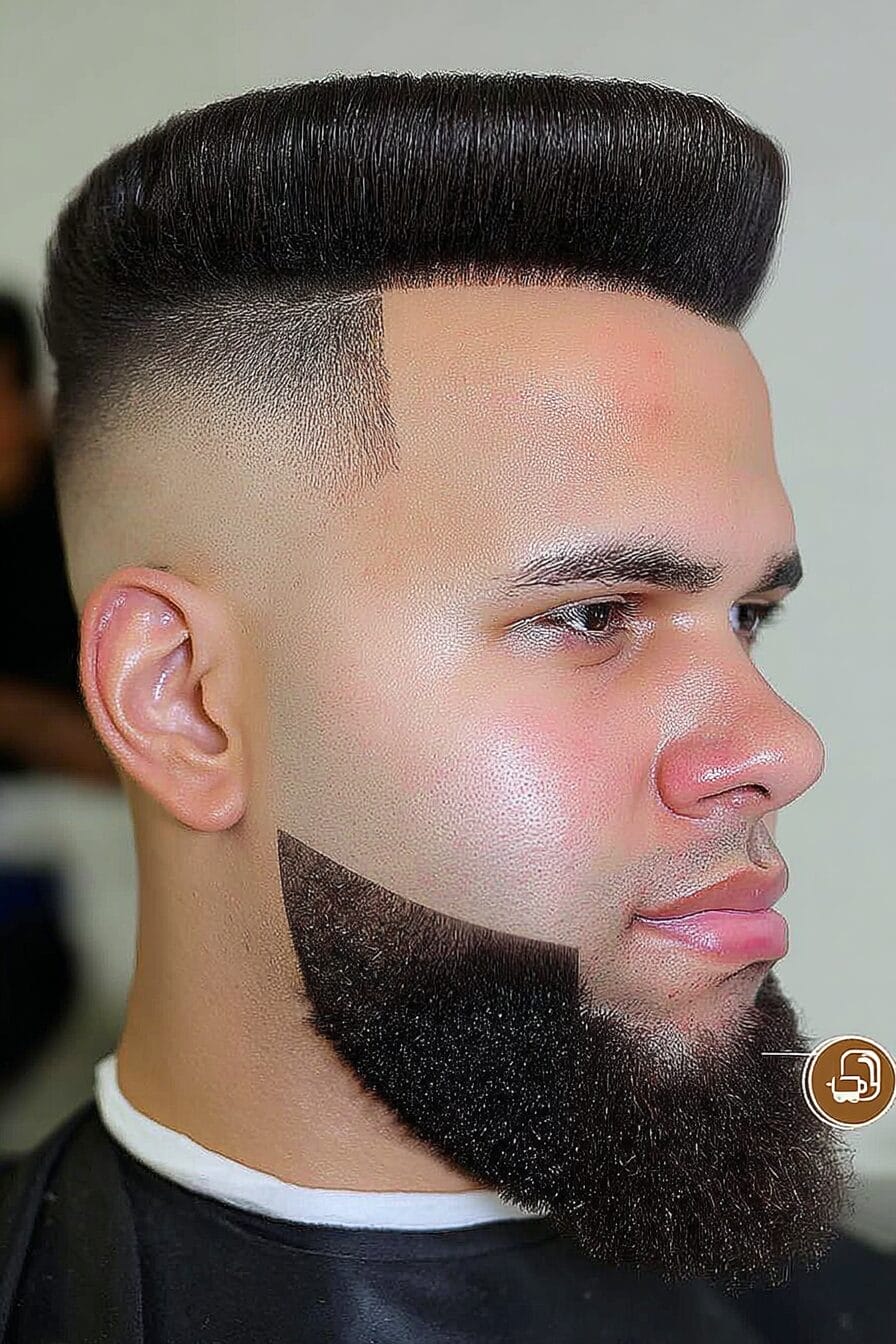
The quickest natural lift is 10–15 minutes of direct sunlight two or three times a week — UV activates pheomelanin and warms the tone toward brighter copper. For a bigger shift without dye, a weekly rinse of one part apple-cider vinegar to four parts water seals the cuticle and makes the existing red pop; leave it on for two minutes, then rinse with cool water and follow with your usual beard oil.
If you want a proper color boost, henna is the gentlest option I trust in the shop. Pure body-art-quality henna gives an orange-copper tone, and mixing in a pinch of indigo pushes it toward auburn. Application takes 2–3 hours and the color holds for 4–6 weeks. Always strand-test on the underside first — henna reacts differently on lighter blonde or grey hairs and can turn brassy if you skip that step.
Best Products For Red Beards

The three products every red beard actually needs are a sulfate-free beard wash, a lightweight jojoba or argan-based oil, and a decent boar-bristle brush. Skip the coconut-heavy oils — they sit on top of coarser ginger hair and make it look greasy rather than conditioned. Jojoba mimics your own sebum most closely, which is exactly what a drier red beard is short on.
For anything past 2 inches long I add a light beard balm on damp hair for hold and a purple-toned conditioner once every two weeks to knock back any brassy shift from sun or hard water. Use cool water on the final rinse in the shower — hot water opens the cuticle and dulls the red. It’s a 10-second change that makes a visible difference within a fortnight.
Short Red Beard Style

A short red beard sits between 3–10 mm all round and is my go-to recommendation for clients whose growth is patchy or who work in strict corporate environments. Guard #2 or #3 across the cheeks, guard #1 or #2 on the moustache, and a razor-defined neckline about two fingers above the Adam’s apple. That specific setup keeps the shape sharp for the full 3–4 weeks between trims.
Ask the barber for “short beard, even guard three, defined lines” and specify whether you want the cheek line natural or lined up with a straight razor. This style suits round and square faces particularly well because the tight length lets the jawline read clearly. It also flatters lighter ginger tones because there’s less hair for the sun to bleach unevenly.
Long Red Beard

A long red beard runs 4 inches or more from the chin and needs commitment — you’re looking at 4–6 months of growth minimum plus a monthly barber visit for shape maintenance. The 2026 version isn’t the wild frontier look of five years ago; it’s a fuller shape with a clearly defined neckline and a rounded (not pointed) tip so the length reads intentional.
Ask for “length preserved, weight taken out with thinning shears, rounded chin” if you want the modern silhouette. Comb through with a wide-tooth wooden comb and finish with a pea-sized amount of balm distributed from mid-length to tip. Long red beards look best on oval and long face shapes because the extra length balances the vertical proportion; if you have a round face, keep the sides tighter to add visual length.
Red Viking Beard

The Viking is the boldest red beard you can wear — full width, dense length, and often finished with a small braid or a single beaded strand at the chin. I keep the moustache slightly heavier than the beard so the whole shape reads balanced, and I taper the sideburns wider at the ear to visually anchor the beard to the face rather than letting it float.
Ask for “Viking shape, kept full, cheek line natural, neckline defined.” This works best when paired with medium-length hair on top (see our Viking beard guide for the full set of variations). Product-wise, a stronger-hold balm with beeswax is essential to keep the fullness looking sculpted rather than blown-out on windy days.
Ginger Stubble Beard

Ginger stubble at 2–5 mm is one of the most flattering red-beard looks going and takes almost zero maintenance beyond a trim every 4–6 days. I set it with the trimmer guard-off but using a shorter attachment comb (0.5 or 1 mm) to keep the length even, then shape a hard cheek line and neckline with a straight razor for definition.
Ask your barber for “stubble at three mm, straight-razor cheek and neck lines.” The magic of this look on red facial hair is the density — ginger stubble reads darker in low light and warmer in daylight, so you get a subtle two-tone effect through the day. Best on square, oval, and heart-shaped faces; it flatters a strong jaw without adding bulk.
Full Red Beard

A full red beard is the classic 2–3 inch length that covers the jaw completely, blends into the sideburns, and shows the natural fullness of your growth. This is the shape I recommend most often to men with dense, even ginger growth because it lets the color do the work without needing extreme length or a stylised outline.
Trim guard #6 or #8 through the length once every three weeks, keep the cheek line following your natural growth (a hard razor line here can look severe on a fuller beard), and finish the neckline with a curved line that follows your jaw from ear to ear. Ask for “full beard, cleaned up and even.” The full red beard also happens to be the easiest style to grow next-level into a Viking, ducktail, or lumberjack if you decide to keep going.
Red Beard With Fade
Pairing a red beard with a faded haircut is the modernisation move I’ve been booking most in the last 18 months, and it’s the single fastest way to make a red beard look 2026 instead of dated. The fade — usually a low or mid skin fade — leaves the top hair with visible length while everything from the temple down blends toward the beard, so the ginger tone reads as a continuous frame around the face.
Ask for a “low skin fade connected to the beard” and be specific that you want the transition line invisible, not stacked. This works with any beard length from stubble up to a full beard, and it especially flatters clients whose scalp hair is a different color from their beard — the fade blurs the tonal contrast so the eye reads the two shades as one. Pair it with a textured crop or fringe on top for the current trend look.
Auburn Goatee Style

An auburn goatee concentrates the darkest, richest red-brown tones around the mouth and chin while the cheeks stay clean. I shape it as a connected circle-goatee — the moustache meeting the chin hair through a thin corner line on either side of the mouth — because that closed shape looks intentional. Length stays around 10–15 mm; longer and it stops reading as a goatee.
Ask for “closed goatee, chin length half an inch, hard cheek line.” This suits round faces particularly well because it draws focus to the vertical centre of the face and adds visual length. If you have a lighter ginger tone but want the deeper auburn effect, look at our full goatee styles guide for tone-matching options and dye alternatives.
Copper Red Beard

Copper is the trending red hue of 2026 — a warm metallic tone that sits between orange and brown and lifts noticeably in sunlight. If you already have a copper base, the job is to protect and enhance it; use a color-safe wash twice a week maximum, oil daily, and rinse cool. If you’re building toward a copper look, a body-art-quality henna glaze once a month gives a natural warm shimmer without the harshness of chemical dye.
Shape-wise, copper reads best at medium length (25–40 mm) where you get enough hair to catch the light but not so much that the color goes muddy. Ask for “medium length, structured shape, weight taken out with thinning shears at the tip.” This is the go-to red beard for 2026 and works across almost every face shape.
Red Beard With Handlebar Mustache

A red handlebar moustache paired with a shorter chin beard is a proper statement look, but it needs the moustache hairs to reach at least 25–30 mm before you can wax the ends into a curl. Grow the tache for a full 8 weeks untouched, then start training it with a firm-hold moustache wax applied warm between finger and thumb. Comb the hairs down and out, curl the tips upward, and hold for a few seconds.
Ask for “handlebar moustache, chin beard kept short at half an inch, cheeks clean.” This one flatters oval and long faces because the horizontal sweep of the moustache balances the vertical. See our dedicated handlebar moustache guide for growth timelines, waxes I actually use, and repair fixes if a side flops.
Tapered Red Beard

A tapered red beard is longer at the chin and progressively shorter along the jaw and up the cheeks, creating a soft V shape that visually lengthens a round or square face. I usually run guard #6 or #7 along the jaw and blend into guard #3 or #4 at the sideburns, keeping the chin untouched at whatever your natural length is (usually 30–50 mm).
Ask for “tapered beard, longer at chin, fading up to sideburns, no hard lines.” The taper flatters ginger tones particularly well because the graduated length lets the color intensify at the chin where the beard is fullest, giving the impression of richer color than you technically have. Great option for men transitioning from a full beard to something more structured without going short.
Strawberry Blonde Beard

Strawberry blonde is the lightest end of the red beard spectrum — a pale gold with warm pink-copper undertones that photograph beautifully but can look washed out under harsh indoor lighting. Because the base color is so light, cleanliness of shape matters even more; a sloppy neckline reads immediately on a strawberry blonde beard in a way it wouldn’t on a darker one.
Keep the beard at medium length (15–25 mm) so the pink-gold tone stays visible, and ask for “strawberry blonde beard, medium length, straight-razor cheek and neck lines.” Product-wise, avoid heavy oils that darken the tone — a light jojoba is the maximum. This style flatters fair skin with warm undertones especially well; if you have cooler skin, ask the barber to keep the shape a touch fuller so the color-skin balance holds.
Red Circle Beard

The circle beard is a chin-only shape where the moustache connects to a rounded goatee through the corners of the mouth, leaving the cheeks clean. On red facial hair it becomes striking because the circle frames the mouth in warm color while the clean cheeks create a strong contrast against the skin. Length sits at 10–15 mm, trimmed evenly.
Ask for “circle beard, guard #4, corners closed, cheeks razored clean.” This one is a strong choice for corporate workplaces — it reads more professional than a full beard while still giving you a proper beard silhouette. Round and heart-shaped faces suit it best because the rounded shape complements rather than fights their natural proportions.
Thick Ginger Beard

If you’ve been blessed with genuinely dense ginger growth, a thick beard shows it off with minimal styling — and honestly, it’s the look I most enjoy shaping in the shop because you get to work with the natural fullness rather than fight it. Grow to 30–50 mm, then have your barber trim the perimeter to a clean shape while leaving the body untouched. That’s the whole trick.
Ask for “thick beard, natural body, cleaned perimeter and neckline.” Comb daily with a boar-bristle brush to distribute your natural oils and prevent the coarser ginger hairs from tangling. Best on square and rectangular faces where the fullness balances a strong jaw; on rounder faces, ask the barber to tighten the sides so the thickness sits mainly at the chin.
Red Beard With Braids

Braiding a red beard leans directly into the Norse aesthetic and needs at least 4 inches of length to sit well — anything shorter and the braid unravels within an hour. I braid damp beards after applying a light balm because slightly damp hair holds a plait tighter, then finish with a small wooden or metal bead an inch from the tip to lock the shape.
Ask your barber to keep the outline of the beard clean but leave the length untouched so you have material to work with. Single centre braid at the chin is the classic look; two smaller side braids give a subtler Viking effect. Undo, brush out, and re-braid every couple of days to prevent the hair kinking. Ideal for oval and long faces; pair with medium hair on top for the strongest overall look.
Natural Red Beard Style

A natural red beard is exactly what it sounds like — grown in without imposing a strong outline. Cheek line follows the natural cheek growth, neckline sits at the natural collar rather than being lifted to two fingers above the Adam’s apple, and length is whatever you’ve got. This is the shape for men who want the beard to look like a beard rather than a haircut for the face.
Even a “natural” beard needs a monthly maintenance trim — ask for “natural shape, cleaned up, no hard lines” and let the barber work light. Comb daily, oil daily, and accept that this look leans rugged rather than corporate. It flatters angular, sculpted faces the most because the softness of the shape balances strong bone structure.
Red Van Dyke Beard

The Van Dyke is a moustache and pointed chin beard that are deliberately not connected through the corners of the mouth — the disconnection is what defines the style. On a red beard it becomes distinctive because the two separate patches of copper hair frame the mouth without competing. Chin patch sits pointed at around 20–30 mm, moustache slightly shorter at 15–20 mm.
Ask for “Van Dyke, disconnected corners, chin point, moustache trimmed to lip line.” This is a formal, considered look that suits interviews, meetings, and photographic work — less rugged than a full beard, more distinctive than a plain goatee. It flatters oval and heart-shaped faces particularly well because the vertical point at the chin adds length.
Curly Red Beard

A curly red beard is often the natural gift of Celtic or mixed heritage — the curl pattern amplifies the visual density of the color and gives the beard a texture that no product can fake. The mistake most men make is trimming it while dry; curly beard hair springs back shorter than you think it will, so always trim damp and after combing straight down.
Keep length at 15–25 mm where the curl is defined but the shape stays controllable. Use a leave-in conditioner every wash and finish with a curl cream (a small amount — less than you’d use on scalp hair). Ask for “curly beard, medium length, weight taken out from underneath.” That last instruction stops the beard puffing out sideways when the curl expands during the day.
Red Beard With Undercut

An undercut pairs shaved or very short sides with disconnected length on top, and combined with a medium-to-long red beard it produces a hard, editorial look that photographs incredibly well. The disconnection between undercut and beard creates a floating red frame around the lower face; the length on top adds height.
Ask for “undercut, hard disconnection, beard kept at one inch or longer.” This style needs strong bone structure to carry — oval, square, and diamond face shapes work best. If your face is rounder, tighten the beard length at the sides so the undercut and beard read as two clearly separated lengths rather than blending into a heavier overall shape. It’s not a low-maintenance look — the undercut needs a shape-up every two weeks to hold its edge.
Sculpted Auburn Beard

Sculpted means every edge is razored, every line is deliberate, and the beard reads more as a design element on the face than as facial hair. It’s the polar opposite of the natural style and demands a barber visit every 2–3 weeks to hold. On auburn tones the sculpted approach works particularly well because the deeper red-brown color gives enough visual weight to carry the strong lines without looking cartoonish.
Ask for “sculpted beard, straight-razor cheek and neck lines, defined corners, length half an inch.” This is a look for men who dress precisely — suit, tailored casual, or a well-put-together streetwear setup. Best on angular face shapes; on softer faces the hard lines can fight the natural curves and read as too aggressive.
Red Ducktail Beard

The ducktail is a long beard shaped to a soft point at the bottom, mimicking the shape of a duck’s tail feather (hence the name). It’s one of the most flattering long-beard shapes because the tapered point adds visual length to the face and stops a long beard from squaring off the jaw. Length runs 4–6 inches minimum, and I always shape it with scissors rather than clippers so the point stays natural rather than blunt.
Ask for “ducktail shape, scissor-cut, point about an inch below the chin.” This works especially well on red beards because the coarser texture holds the point without collapsing. Round and square faces get the biggest benefit; oval faces look great too. Comb through daily and apply a small amount of balm to hold the tapered shape.
Fiery Red Lumberjack Beard

A lumberjack is a full, thick, medium-to-long beard shaped to look untamed but still deliberate. On a fiery red base the effect is unmistakable — think classic Scottish or Nordic energy. Length runs 3–5 inches, the perimeter is cleaned but not razor-sharp, and the body is left mostly untouched to preserve fullness. Growth takes 6–9 months from a shave.
Ask for “lumberjack shape, natural fullness, cleaned neckline, cheek line following growth.” This is a strongly masculine, casual look that pairs best with medium hair on top — a textured crop, brushed-back medium length, or a low-fade side part. Skip the balm; a light oil is all a lumberjack should ever see, otherwise the beard starts looking sculpted rather than genuine.
Red Beard With Man Bun

Long red hair pulled into a bun paired with a full red beard is the strongest single visual statement you can make with facial hair — it’s the modern Viking aesthetic done properly, and I’ve had a real uptick in requests for it through 2026. It only works when the hair and beard tones match reasonably closely; if your beard is much redder than your hair, the two-tone effect makes the whole look feel unbalanced.
Grow the hair to at least 6 inches (typically 12–18 months from a shorter cut) and the beard to a full 3 inches minimum. Ask for “man bun taper — sides kept longer than a fade, beard blended into the sideburns.” A soft taper on the sides beats a hard undercut here because it lets the beard-to-hair transition read as one connected shape rather than two disconnected parts.
Russet Anchor Beard

The anchor beard is a stylised chin strip shaped like the flukes of a ship’s anchor — a pointed chin patch that extends slightly along the jawline with a moustache disconnected from the chin. On a russet or deep red base the shape reads distinctive rather than gimmicky. It’s a technical shape that needs a genuinely skilled barber; skip DIY on this one.
Ask for “anchor beard, disconnected moustache, jawline extension one inch long each side.” This works best on square and rectangular faces where the geometric shape complements the natural face structure. Maintenance is high — the lines need a razor touch-up every 10–14 days — but the payoff is a genuinely uncommon look.
Red Salt And Pepper Beard

Red beards grey differently from darker ones — they typically fade through a strawberry-blonde-to-sandy phase before turning fully white, so the “salt and pepper” stage on a redhead reads as a warm, mixed silver-copper rather than the classic black-and-grey contrast. It’s a look I actively encourage clients in their 40s and 50s to embrace, because chasing dye on a fading red beard almost always ends up brassy.
Keep the beard at medium length (20–35 mm) so both the remaining copper and the incoming silver stay visible. Ask for “salt and pepper beard, medium length, natural shape, weight taken out through the body.” A purple-toned conditioner every couple of weeks stops the silver from picking up any yellow tint. For more on this transition, our salt and pepper beard guide covers grooming for the fully-grey stage too.

FAQs: Red Beard Styles
How do I keep my red beard from looking brassy?
Brassiness on red beards comes from three sources — hard water minerals, sun oxidation, and stripping too much oil with harsh shampoo. Wash with a sulfate-free beard cleanser twice a week maximum, always finish with a cool-water rinse to seal the cuticle, and use a purple-toned conditioner once every two weeks to neutralise the yellow shift. If you’re outside a lot, a beard SPF spray in summer stops the sun turning the copper orange.
What face shapes suit red beards best?
Every face shape can wear a red beard — the trick is matching the length and outline to your proportions. Oval faces suit anything from stubble up to a Viking. Round faces benefit from tapered or pointed shapes that add vertical length. Square jaws look strongest with fuller, rounded beards that soften the corners. If you’re not sure which shape you have, the face shape detector tool gives you an answer in about 20 seconds.
Can I dye my beard red naturally?
Yes — body-art-quality henna is the safest natural option and gives a warm orange-copper tone that lasts 4–6 weeks. Mixing henna with indigo pushes the result toward auburn; adding a spoon of amla powder deepens it further. Always strand-test on the underside first and expect the color to develop over 48 hours after application, so don’t judge the shade straight after rinsing. Skip chemical “natural” dyes with peroxide — they’re not really natural and they dry the beard significantly.
How often should I condition my red beard?
Every 2–3 days for the beard itself, and every day with a lightweight jojoba or argan oil rubbed into the skin underneath. Red facial hair is coarser and drier than average, so it needs more moisture than a dark beard does. Add a deep-conditioning mask once a fortnight and an overnight oil treatment monthly, especially through winter when central heating dries the beard out further.
Why does my beard grow red but my hair is brown?
It’s the MC1R gene expressing differently in beard follicles than in scalp follicles. You inherited one copy of the red-hair variant, which isn’t enough to turn your scalp red but is enough for the DHT-active beard follicles to produce visible pheomelanin. It happens in roughly 40% of men carrying the recessive gene and there’s nothing unusual or wrong about it — it’s a common expression pattern.
Do red beards go gray differently than darker beards?
Yes, and it’s one of the more interesting things I’ve noticed over 20+ years in the chair. Red beards fade through a strawberry-blonde-to-sandy phase before turning white, rather than going through the typical dark-to-silver transition. Many of my red-bearded clients in their 40s and 50s develop a warm silver tone that’s genuinely distinctive.
What beard oil works best for red facial hair?
Look for a jojoba or argan base — both are lightweight and mimic your own sebum, which is exactly what a drier red beard is short on. Avoid coconut-heavy oils; they sit heavy on ginger hair and dull the tone. Fragrance-free or lightly-scented options are best because red facial hair holds fragrance strongly enough on its own. Apply 3–4 drops to the skin first, then work outward through the beard.
Can I make my beard look redder naturally?
Three moves that work without dye: an apple-cider vinegar rinse weekly to seal the cuticle and boost existing red pigment, moderate sun exposure to activate pheomelanin, and switching to a warm-toned beard oil that enhances rather than dulls the copper. For a bigger visible shift, henna-based beard dye deposits warm red-orange tones that read convincingly natural on light brown or blonde base beards.
Was this article helpful?
Find Your Perfect Beard Style
You’ve seen the options. Now find the one that actually suits YOUR face shape and growth pattern.
Take the Quiz →
Khamis Maiouf is a professional barber who graduated from Hinckley College in England with a Level 3 qualification in hairdressing. With over 20 years of experience, he is an award-winning barber who has mentored numerous students and styled thousands of clients. A recognised expert featured on StyleCraze (20M+ readers).
Credentials: Level 3 Hairdressing (Hinckley College, UK) • 20+ Years Professional Experience • Featured Expert on StyleCraze • Founder of Book of Barbering