
Most men who trim their own beard skip the one step that actually matters — working in sections. Random trimmer passes are how you end up with one side shorter than the other, a botched neckline, and a month of regrowth to fix it.
This guide breaks down the exact sectional system I use on every client, so you get barbershop results at home.
Key Takeaways
- Always trim your beard completely dry — wet hair appears 10-15% longer, leading to over-trimming mistakes.
- Work in sections (sideburns → jaw → chin → mustache) for even results on both sides.
- Start with a longer guard than you think you need — you can always take more off, but you can’t add hair back.
- Define your neckline two fingers above your Adam’s apple, never higher — trimming too high creates an unnatural double-chin look.
- Trim every 2-3 weeks for length and clean up edges weekly to maintain a sharp shape between barber visits.
Tools and Preparation
Having the right equipment sets you up for beard trimming success.
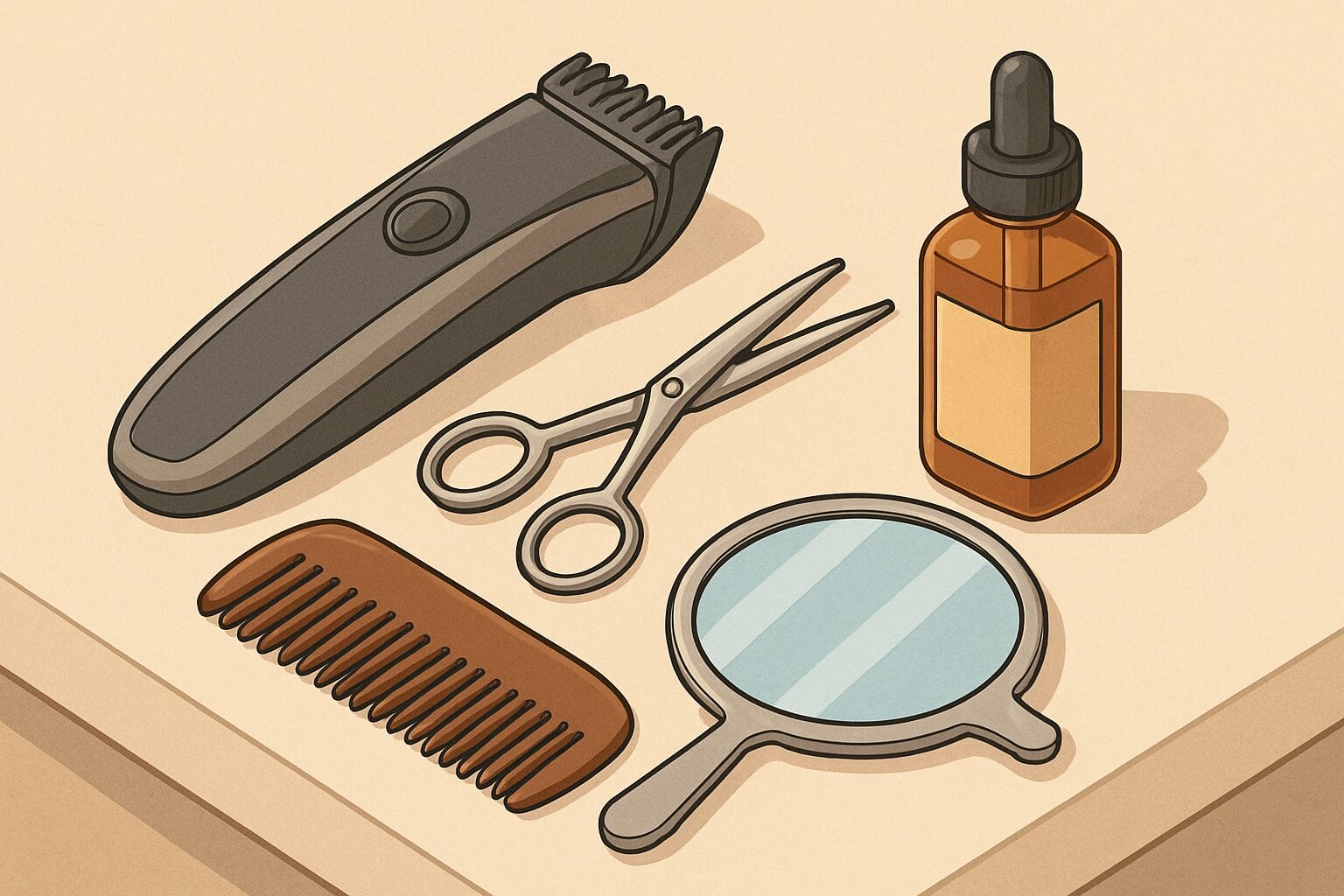
Start with a quality beard trimmer like the Wahl or Andis models that offer multiple guard sizes from #1 (1/8 inch or 3mm) to #8 (1 inch or 25mm). You’ll also need a fine-tooth comb, sharp barber scissors, and a handheld mirror for checking angles.
Keep your tools clean and oiled for smooth operation. A dull or dirty trimmer pulls hair rather than cutting cleanly, causing discomfort and uneven results. Store your equipment in a dry place to prevent rust and maintain blade sharpness.
With proper tools ready, let’s assess your beard’s current state.
Pre-Trim Assessment

Beard Length Check

Examine your beard in natural light to spot uneven growth patterns. Most beards grow faster on the chin and slower on the cheeks, creating an imbalanced appearance over time.
Decide whether you want to maintain your current length or go shorter. In my experience, trimming just 1/4 inch can dramatically improve your beard’s shape without sacrificing months of growth.
Face Shape Consideration

Your face shape determines the ideal beard contours. Round faces benefit from longer length on the chin and shorter sides, while square faces look best with fuller sides to soften angular features.
Take a photo of your face straight-on to objectively assess your shape. This helps you plan where to remove bulk and where to maintain fullness for the most flattering result.
The Beard Trimming Process

The actual trimming requires patience and systematic technique.
Work in sections rather than trying to trim everything at once. Start with your sideburns and work down to the jaw, then tackle the chin and mustache area separately. This methodical approach prevents over-trimming and ensures even coverage.
Step 1: Wash and Dry

Clean your beard with specialized beard shampoo to remove oils and debris. Regular hair shampoo strips too much natural oil, leaving beard hair brittle and harder to trim evenly.
Dry thoroughly with a towel and blow dryer on cool setting. Trimming damp hair results in taking off more length than intended since wet hair appears longer than it actually is.
Step 2: Comb and Section

Brush your entire beard downward first to reveal its natural length. Then comb against the grain to make hairs stand out, exposing uneven spots that need attention.
Section your beard mentally into zones: sideburns, cheeks, jawline, chin, and mustache. This organization helps you maintain symmetry as you work through each area.
Step 3: Trim with Guards

Start with a longer guard like #4 (1/2 inch or 13mm) for your first pass. You can always go shorter, but you can’t add hair back once it’s cut.
Move the trimmer against the grain in smooth, overlapping strokes. Keep the guard flat against your skin for consistent length, lifting only at the end of each stroke to avoid creating lines.
Now let’s refine those edges for a polished look.
Detailing and Shaping

Clean lines separate an average beard from a professional-looking one.
The difference between looking groomed versus unkempt often comes down to just a few millimeters along your borders. Take your time with this step, as rushed detailing shows immediately and takes weeks to grow back if done poorly.
Neckline Definition

Find your neckline by placing two fingers above your Adam’s apple. This natural crease is where your neck meets your jaw and creates the ideal lower boundary for most beard styles.
Trim everything below this line with a bare trimmer or razor. Avoid the common mistake of cutting too high, which creates an unnatural double-chin appearance even on lean faces.
Cheek Line Refinement

Your natural cheek line usually needs minimal adjustment. Follow the existing growth pattern from your sideburn to the corner of your mustache, removing only obvious stragglers above this line.
Resist creating harsh, straight lines on your cheeks. A slightly natural curve looks more authentic and grows out better between trims.
💡 Pro Tip
Always trim less than you think you need, especially when defining lines. I tell clients to remove half of what they’re planning, then reassess.
You can always take more off, but most beard trimming disasters happen from being overly ambitious. Step back from the mirror every few strokes to check your progress from a normal viewing distance.
Not sure what your face shape is? Our Face Shape Detector figures it out in 4 quick questions.
Finishing Touches

The final details transform a basic trim into barbershop quality.
Switch from clippers to scissors for precision work around your mustache and any remaining long hairs. Scissors give you complete control over individual hairs that clippers might miss or cut unevenly.
Scissor Work

Comb small sections of beard hair outward and trim the tips that extend past the comb. This technique, called scissor-over-comb, creates a natural taper without harsh lines.
Pay special attention to your mustache, trimming just above the lip line. Keep the corners slightly longer than the center for a balanced appearance that doesn’t look over-manicured.
⚠️ Common Mistake
Trimming too high on the neckline ruins more beards than any other error. Men often think a higher neckline makes their jawline look stronger, but it actually creates the opposite effect.
That unnatural line emphasizes any fullness under the chin and makes your beard look disconnected from your face. Stick to the two-finger rule above your Adam’s apple.
Proper aftercare maintains your fresh trim for weeks.
Post-Trim Care

Your beard needs immediate attention after trimming to stay healthy.
Apply a dime-size amount of beard oil while the hair is still slightly warm from trimming. Work it through from roots to tips, ensuring complete coverage. This replaces moisture lost during washing and prevents the itchiness that often follows a trim.
Follow with beard balm for styling hold and additional conditioning. Use a quarter-size amount for longer beards, pea-size for shorter styles. The balm helps train your beard to grow in the desired direction while keeping flyaways under control.
Understanding maintenance frequency keeps your beard looking its best.
Trimming by Beard Length
The approach changes depending on how much facial hair you’re working with. Here’s how I adjust the technique for each length in the chair.
Stubble (1-3mm)
Stubble is the most maintenance-heavy length despite looking effortless. Use a #1 guard (3mm) or go guardless with a precision trimmer set to its lowest setting. Trim every 2-3 days to prevent it from looking unkempt.
The neckline matters even more at this length because there’s nowhere to hide uneven growth. Keep your neck clean-shaven below the jawline and let the cheek line follow your natural growth pattern.
Short Beard (3-10mm)
A short beard gives you more room for error but still requires regular upkeep. Set your trimmer to a #2 or #3 guard (6-10mm) for the bulk, then drop one guard size for the cheeks and sideburns to create subtle tapering.
This length shows patchy spots more than any other, so trim with the grain first, then do a second pass against the grain only in areas with full coverage. Weekly trims keep it looking intentional rather than lazy.
Medium Beard (10-25mm)
Medium beards are where proper sectioning becomes essential. Use a #4-#6 guard for the main body and switch to scissors for any hairs that curl outward or sit above the natural beard line. Among all the types of beards, this length offers the most versatility in shaping.
Comb your beard outward before trimming to expose the true shape. At this length, many men discover their beard grows unevenly — typically fuller on one side. Compensate by trimming the fuller side slightly shorter rather than growing the thinner side out.
Long Beard (25mm+)
For a full beard, ditch the guard and use scissors almost exclusively. Clippers at this length risk removing too much in a single pass, turning a month of growth into a regret.
Focus on shaping rather than shortening. Trim split ends by combing sections outward and cutting individual hairs that extend past the comb. The neckline and cheek line still need trimmer attention every 1-2 weeks, but the body of the beard should only be scissor-trimmed every 3-4 weeks.
Maintenance Schedule

Your trimming schedule depends on growth rate and desired style.
Most beards grow about 1/2 inch monthly, requiring a full trim every 2-3 weeks to maintain shape. Touch up your neckline and cheek line weekly to preserve clean borders. This five-minute weekly maintenance prevents the need for dramatic corrections later.
Longer beards need less frequent length trimming but require more regular line cleanup. Short beards and stubble demand attention every 3-5 days to avoid looking scruffy. Mark your calendar for consistent grooming rather than waiting until your beard looks obviously overgrown.
Find Your Perfect Beard Style
You’ve seen the options. Now find the one that actually suits YOUR face shape and growth pattern.
🎬 HOW TO Trim Your Beard at Home Like a PRO | 5 Tips DIY
FAQs
How often should I trim my beard?
For most beard styles, trim the length every 2-3 weeks and clean up edges weekly. Faster growers might need attention every 10 days, while slower growers can stretch to monthly trims. Watch for your beard losing its shape or feeling unruly as signs it’s time to trim.
What’s the best beard trimmer guard size to start with?
Begin with a #4 guard (1/2 inch or 13mm) for your first trimming session. This length is forgiving yet makes a visible difference in beard appearance. You can always switch to a #3 or #2 guard for shorter results, but starting longer prevents accidentally removing too much length while learning.
Should I trim my beard wet or dry?
Always trim your beard completely dry for accurate length assessment. Wet hair appears 10-15% longer than its dry length, leading to over-trimming mistakes. The only exception is using scissors for detail work, where slightly damp hair can be easier to control and cut precisely.
What length should I trim my beard?
The right length depends on your beard style and face shape. For stubble, use a #1 or #2 guard (3-6mm). Short beards work best with a #3 or #4 guard (10-13mm). Medium beards sit around a #5-#7 guard (16-22mm). If you’re growing a full beard, only trim flyaways with scissors rather than shortening overall length. Start longer and work down — once you find your preferred setting, use the same guard each time for consistency.
How do you trim a beard neckline?
Place two fingers horizontally above your Adam’s apple to find your natural neckline. Using your trimmer without a guard, shave everything below this line in short downward strokes. Work from the center outward to each side, following the curve of your jaw. The biggest mistake is trimming too high, which creates an unnatural double-chin appearance. Keep the line slightly curved rather than perfectly straight for the most natural result.
Was this article helpful?

Khamis Maiouf is a professional barber who graduated from Hinckley College in England with a Level 3 qualification in hairdressing. With over 20 years of experience, he is an award-winning barber who has mentored numerous students and styled thousands of clients. A recognised expert featured on StyleCraze (20M+ readers).
Credentials: Level 3 Hairdressing (Hinckley College, UK) • 20+ Years Professional Experience • Featured Expert on StyleCraze • Founder of Book of Barbering