
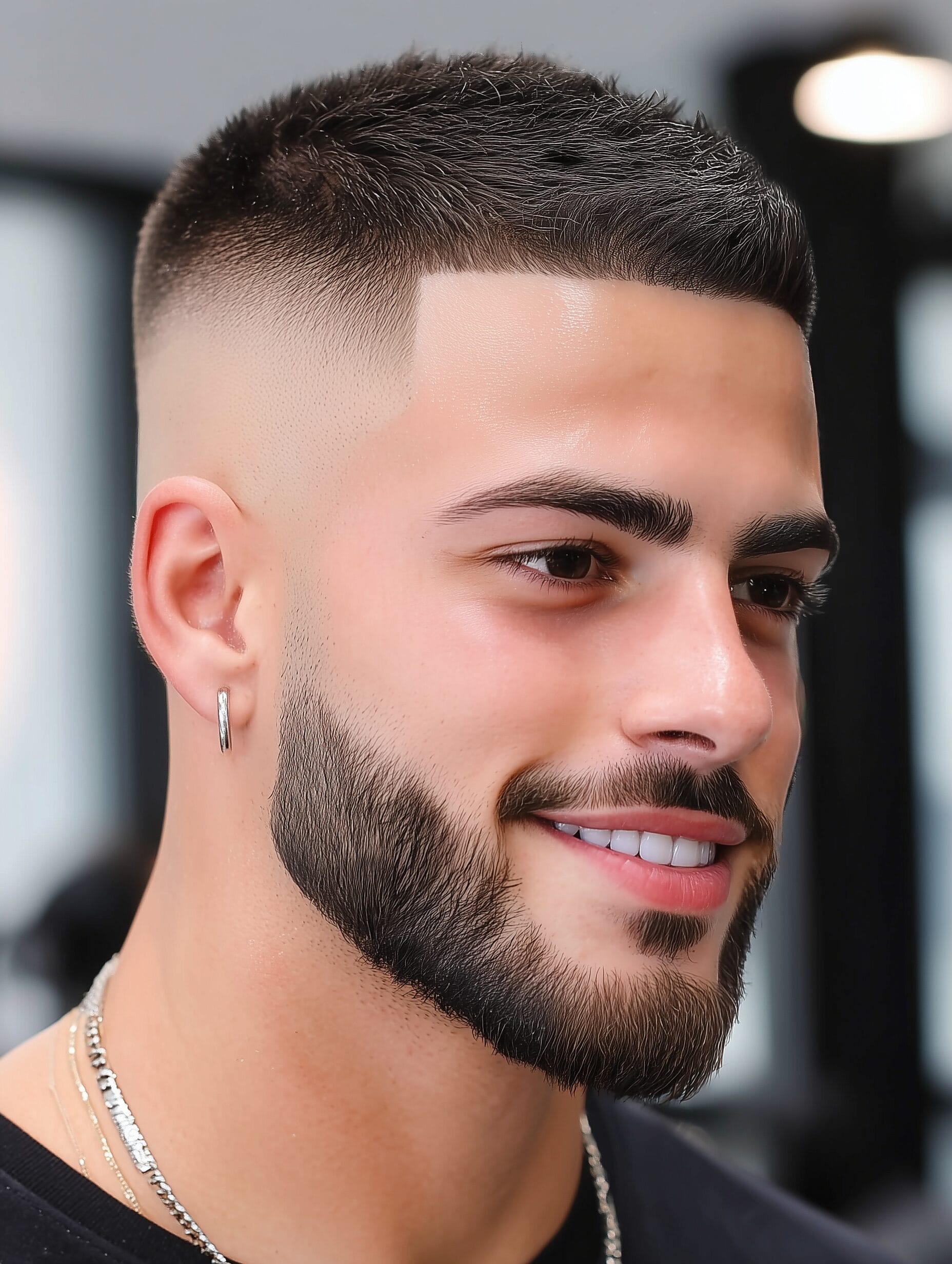
Most guys who come in asking about their beard line don’t realise there are actually two completely different decisions at play. The jawline is where your beard meets clean skin along the sides of your face. The neckline is where it meets your neck. Shaped differently, maintained differently — and the wrong one for your face can work against you harder than you’d think.
After 20+ years shaping beards, this question comes up constantly, and the answer almost always comes down to your face shape, how much maintenance you’ll commit to, and whether you want to add definition or soften your features. Below is the breakdown I give every client who asks.
Key Takeaways
- The jawline beard follows your face outline and removes neck hair — it adds sharp definition but needs trimming every 2-3 days to stay clean
- The neckline beard keeps hair on the neck with a defined lower boundary — fuller coverage, more forgiving, and only needs weekly touch-ups
- Jawline beards suit angular and oval faces; neckline beards work better for round faces, heavier jawlines, or anyone wanting to minimize a double chin
- Neither style is objectively better — the right choice depends on your face shape, your maintenance schedule, and what you’re trying to achieve
- You can combine both: a defined jawline AND a clean neckline is what most professional barber-shaped beards actually use
If you’re still weighing options, the full guide to beard types shows every style mapped to a face shape.
What Is A Jawline Beard?
A jawline beard follows the natural contour of your jaw from ear to chin, creating a sharp border that emphasizes facial structure.

What Is A Neckline Beard?
A neckline beard establishes its boundary lower on the neck, typically one to two fingers above the Adam’s apple. This style allows beard hair to grow naturally along the jaw and upper neck area, creating fuller coverage and a more relaxed appearance.
The neckline curves from ear to ear in a gentle U-shape, passing just above where your head meets your neck. It’s the most common beard boundary because it balances neat grooming with natural growth, requiring maintenance only once or twice weekly.

Key Differences Between Jawline and Neckline Beards
The fundamental difference lies in coverage area and visual impact. Jawline beards create maximum definition by exposing the entire neck, making faces appear more angular and structured.
This style works like contouring for men, using the contrast between beard and skin to enhance bone structure. Neckline beards provide softer transitions with more coverage, offering a fuller appearance that’s more forgiving of weight fluctuations. The jawline approach demands precision and frequent maintenance, while neckline beards allow for more relaxed grooming schedules and natural growth patterns.

Face Shapes And Suitability
Round faces benefit tremendously from jawline beards, as the sharp angles create structure where natural definition might be lacking. Square and rectangular faces can use either style effectively, though neckline beards soften strong features.
Oval faces have the flexibility to experiment with both, while triangular faces often prefer neckline beards to add width at the bottom. Men with double chins frequently choose neckline beards for coverage, though a well-placed jawline beard can actually create the illusion of a stronger chin when positioned correctly.

Maintenance Requirements
Jawline beards demand vigilant upkeep—expect to trim every 2-3 days to maintain that crisp edge. The precision required means investing in quality tools and developing steady hand control. You’ll need good lighting and often multiple mirrors to ensure symmetry.
Neckline beards offer more forgiveness with weekly touch-ups usually sufficient. The broader boundary means minor growth variations aren’t immediately noticeable. Both styles benefit from regular conditioning and brushing, but jawline beards show neglect faster since any stubble below the line breaks the clean aesthetic.

Trimming Techniques For Each Style
For jawline beards, start by tilting your head back and identifying your jaw angle—this is your guide. Use a detail trimmer or straight razor to create the initial line, working from the center outward for symmetry. Make small, controlled passes rather than trying to establish the entire line at once.
Neckline beards require finding your natural crease where your head meets your neck. Place two fingers above your Adam’s apple as a reference point, then curve the line up toward each ear. Use longer guard settings initially—you can always go shorter but can’t add hair back.
Professional Appearance Comparison
In corporate settings, jawline beards project meticulous attention to detail and disciplined grooming habits. The clean neck area works particularly well with dress shirts and ties, preventing any scraggly appearance at the collar line.
Creative industries often embrace neckline beards for their fuller, more relaxed aesthetic that suggests confidence without rigid conformity. Client-facing roles might prefer jawline beards for their polished appearance, while technical positions often find neckline beards perfectly acceptable. The key is consistency—either style looks professional when properly maintained but appears sloppy when neglected.

Growth Patterns And Time Investment
Achieving a proper jawline beard requires minimal growth—just 2-3 weeks provides enough length to establish clear boundaries. The focus is on precision rather than length, making it ideal for men who want immediate results.
Neckline beards benefit from 4-6 weeks growth to establish natural fullness and proper boundary placement. Patchy growers often find neckline beards more forgiving since the additional coverage area can compensate for uneven density. Both styles require understanding your unique growth patterns—some men have higher natural necklines, while others grow hair well onto their necks, affecting optimal line placement.

Common Mistakes To Avoid
The biggest jawline beard error is cutting too high, creating an unnatural appearance that emphasizes any neck fullness. Men often mistake their ideal jawline for their actual bone structure, leading to asymmetrical results.
Another common mistake is using dull tools that pull rather than cut, causing irritation and uneven lines. For neckline beards, cutting too high creates the dreaded chin strap effect, while going too low results in an unkempt neckbeard appearance. Many men also neglect the corners where the vertical and horizontal lines meet, creating awkward angles rather than smooth curves.

Tools Needed For Each Style
Jawline beards require precision instruments: a detail trimmer with zero-gap blade, quality razor for final cleanup, and potentially a straight razor for the sharpest lines. You’ll need proper lighting—consider a magnifying mirror with built-in illumination. Pre-shave oil helps the razor glide smoothly along the jaw contour.
Neckline beards work with standard beard trimmers, though adjustable guards help maintain consistent length. A good beard brush helps train hair direction, while beard scissors handle stray hairs. Both styles benefit from aftershave balm to soothe the trimmed areas and prevent ingrown hairs.

Which Style Is Right for You?
After comparing these two approaches for thousands of clients, I’ve found the decision usually comes down to five factors. Here’s how to think through it.
Choose a Jawline Beard If…
You want maximum definition and structure — the jawline beard essentially contours your face, making angular features sharper and round faces appear slimmer. It works best if you have a strong jaw you want to highlight, don’t carry weight in your neck area, and can commit to trimming every 2-3 days. It’s also the cleaner professional look for client-facing roles where a beard is acceptable.
Choose a Neckline Beard If…
You want fuller coverage and an easier maintenance schedule. The neckline beard is more forgiving — minor growth doesn’t show immediately, and once-weekly touch-ups are usually enough. It’s the better choice if you’re dealing with a softer jawline or double chin you’d rather not expose, or if you’re still growing your beard out and need a defined lower boundary without fully sculpting the sides yet. Most guys who say they “can’t maintain a beard” actually do better with a neckline approach.
When to Use Both
These aren’t mutually exclusive. Many well-groomed beards use a defined cheek line following the jaw AND a clean neckline. The jawline shaping frames the beard on the sides; the neckline cleans the bottom edge. If you’re working with a barber, this combined approach is usually the default — it gives you structure without looking unfinished or going full lumberjack beard.
Transitioning Between Styles
Moving from a neckline to jawline beard requires gradual elevation over 2-3 trim sessions to avoid shocking your appearance. Start by raising your neckline slightly each week until you reach the jaw angle. This prevents the drastic change that might not suit your face immediately.
Not sure what your face shape is? Our Face Shape Detector figures it out in 4 quick questions.
Transitioning from jawline to neckline is simpler—just stop shaving below the jaw and establish your new boundary after adequate growth. The adjustment period helps you evaluate which style truly complements your features. Many men discover their preference only after trying both approaches and observing reactions from colleagues and partners.


🎬 Best Neckline for a Medium or Long Beard!
FAQs: Jawline Beard Vs Neckline Beard
Where should my beard neckline be?
Your ideal neckline sits approximately one to two fingers above your Adam’s apple, following a gentle curve from ear to ear. To find it naturally, tilt your head down—the crease where your neck meets your head indicates the proper boundary.
This placement prevents both the neckbeard look (too low) and the chin strap effect (too high). Adjust slightly based on your neck length and face shape, but this starting point works for most men.

How do I define my jawline with a beard?
Start by identifying your natural jaw angle—the point where your jawbone turns upward toward your ear. Use a detail trimmer to create a sharp line following this natural contour from ear to chin on both sides.
Keep your head level and use multiple angles to ensure symmetry. The key is removing all hair below this line completely, creating stark contrast between beard and skin. Regular maintenance every 2-3 days keeps the definition crisp.
Can I have both a defined jawline and neckline?
Absolutely—many well-groomed beards feature both a clean neckline and shaped jawline. This combination approach involves maintaining a proper neckline while also keeping the jaw edges neat and defined, though not as severely as a true jawline beard.
You’re essentially creating subtle definition along the jaw while maintaining fuller coverage. This hybrid style offers the best of both worlds: structure without the high maintenance of a pure jawline beard.
Which style requires more maintenance?
Jawline beards demand significantly more maintenance, requiring touch-ups every 2-3 days to maintain the sharp edge. Any stubble growth below the line immediately disrupts the clean aesthetic.
Neckline beards typically need attention once or twice weekly, making them more practical for busy schedules. The precision required for jawline beards also means each grooming session takes longer—expect 10-15 minutes versus 5-7 minutes for neckline maintenance.
What face shape suits a jawline beard best?
Round and oval faces gain the most from jawline beards, as the sharp angles create definition and structure that naturally slimmer faces. The exposed neck area also creates an elongating effect that benefits rounder face shapes. Men with weak chins can use jawline beards to create the illusion of a stronger jaw through strategic placement.
However, very thin faces might appear gaunt with jawline beards—these face shapes often look better with the fuller coverage of neckline beards.
Was this article helpful?
Find Your Perfect Beard Style
You’ve seen the options. Now find the one that actually suits YOUR face shape and growth pattern.

Khamis Maiouf is a professional barber who graduated from Hinckley College in England with a Level 3 qualification in hairdressing. With over 20 years of experience, he is an award-winning barber who has mentored numerous students and styled thousands of clients. A recognised expert featured on StyleCraze (20M+ readers).
Credentials: Level 3 Hairdressing (Hinckley College, UK) • 20+ Years Professional Experience • Featured Expert on StyleCraze • Founder of Book of Barbering