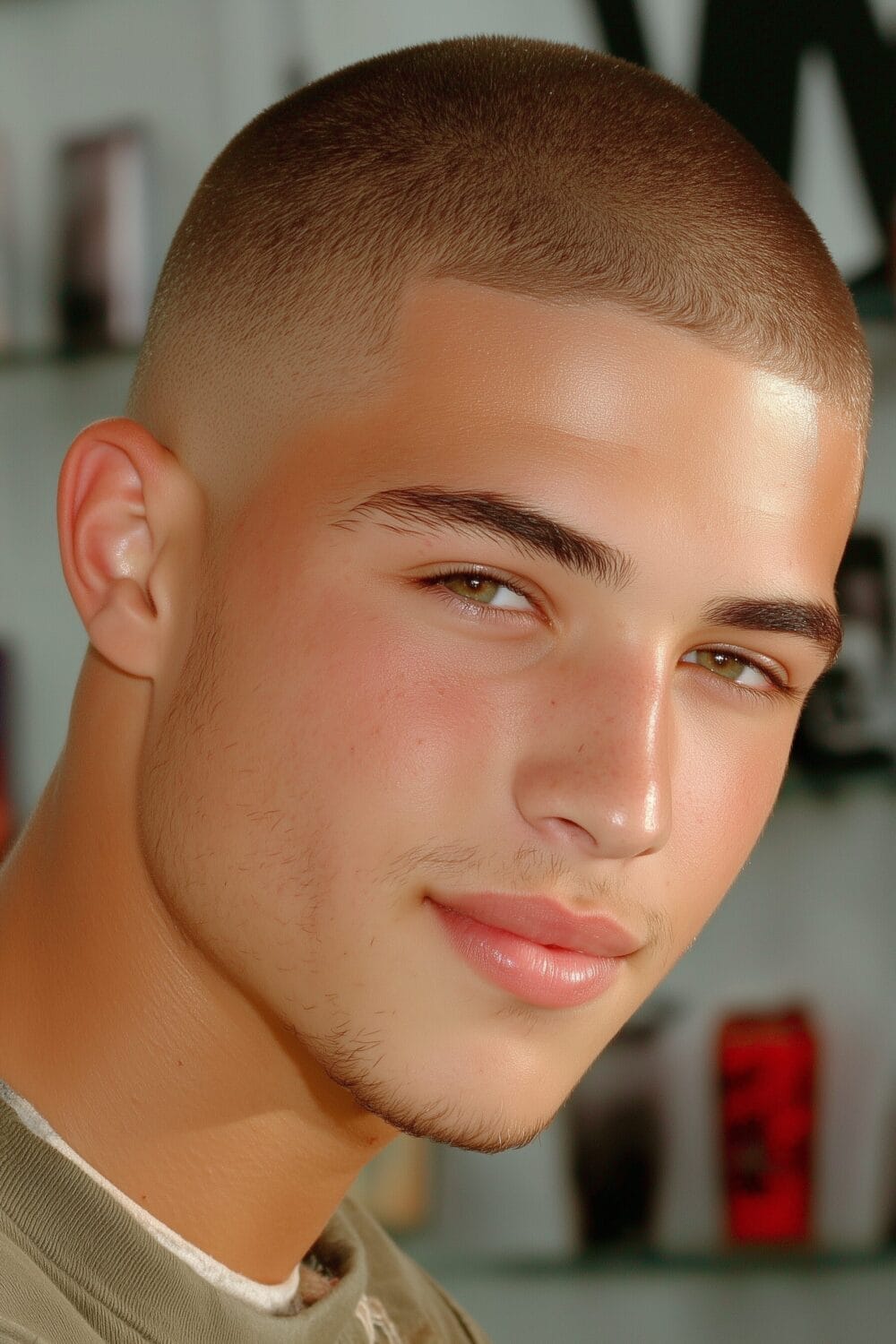
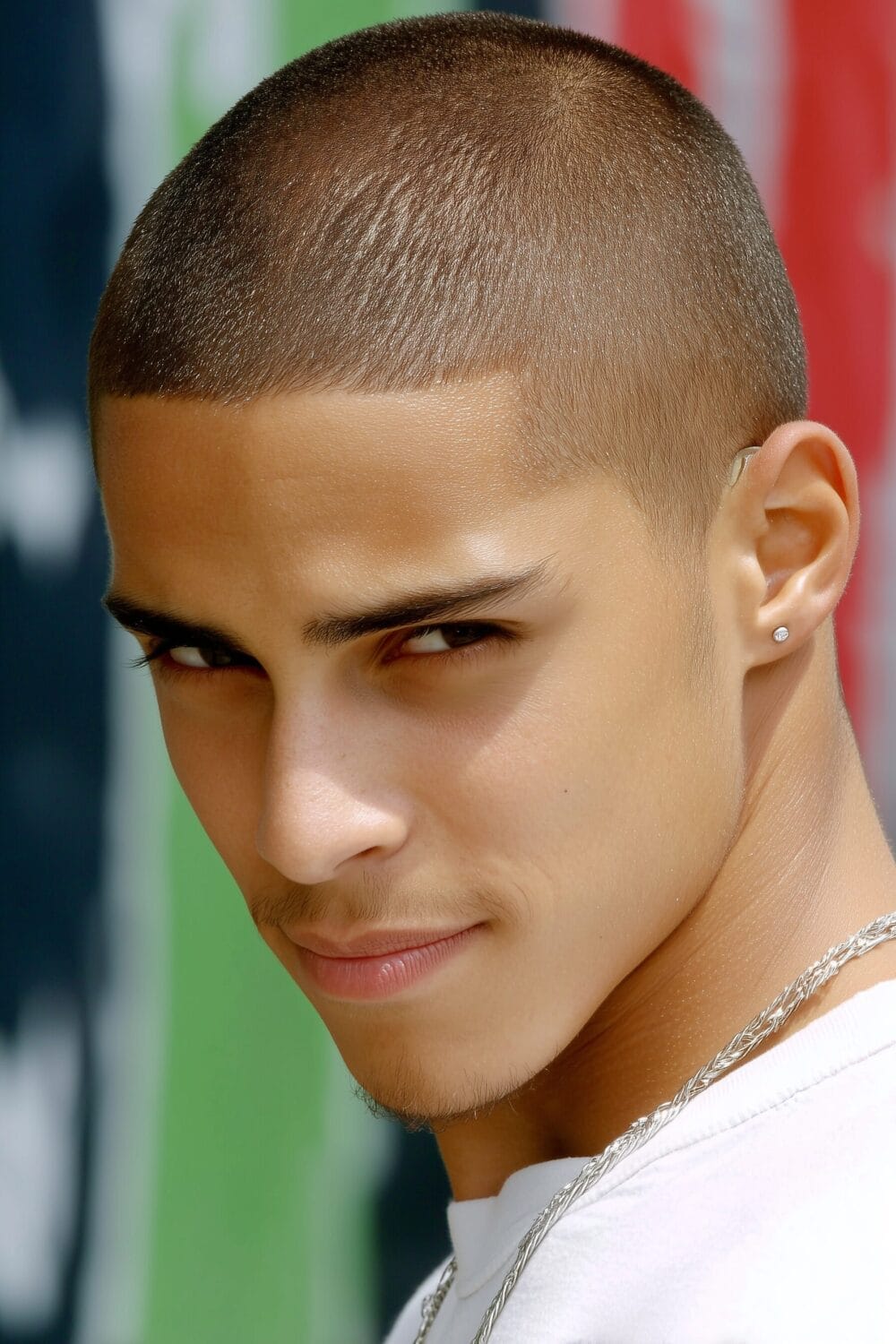
I’ve been cutting army buzz cuts for over 20 years — for active-duty soldiers heading to basic, veterans transitioning to civilian life, and guys who just want that clean military edge. The army buzz cut isn’t one haircut. It’s a family of cuts with specific regulation lengths, fade heights, and maintenance schedules that most civilian barbers get wrong.
Here’s exactly what each variation looks like, how to ask for it, and how to keep it inspection-ready.
Key Takeaways
Not sure which style suits you best? Our Haircut Finder Quiz matches you with the right cut based on your face shape and hair type — takes 60 seconds.
Standard army regulation allows a maximum of 4 inches length and 2 inches bulk — most soldiers use a #2 guard on top, #1 on sides
The high and tight is the most recognized military cut, shaving sides to skin with minimal top length
Three main fade options exist within regulations: zero fade, mid fade, and skin fade — each with different maintenance demands
Weekly trims (every 5-7 days) keep any army buzz inspection-ready
Face shape and hair texture should guide your specific guard and fade height choices within regulation limits
Army regulations specify hair cannot exceed 2 inches in bulk or 4 inches in length. The bulk measurement applies when hair lies flat against your scalp.
Each branch enforces these standards differently during inspection. Navy allows slightly longer top length while Marines demand the shortest overall cuts.
Military Length Requirements
Maximum hair length sits at 4 inches when extended for measuring. Sides and back must taper from zero at the natural hairline.
Officers check compliance by pressing hair flat against your head. Any hair touching ears or collar results in immediate correction orders.
📏 Exact Measurements
Standard army buzz uses #2 guard (1/4 inch) on top, #1 guard (1/8 inch) on sides. High and tight variations drop to #0 guard on sides.
Neckline sits 1/2 inch above collar when standing at attention. Temple fade begins exactly at top of ear attachment point.
Branch-Specific Rules
Marines require zero fade starting at skin level, extending 2 inches up. Air Force permits #3 guard maximum on top sections.
Coast Guard follows Navy standards but enforces stricter neckline tapering. Special forces units often maintain civilian-length cuts for operational reasons.
Army: #2 top, #1 sides standard
Marines: Zero fade mandatory on sides
Navy: 4-inch maximum length allowed
#0 guard for combat deployments
🧠 Expert Advice
Request a “medium reg” cut at civilian barbershops for army-compliant results. Show your barber a photo of current military standards since terminology varies between shops. Most barbers know “high and tight” but interpret lengths differently without specific guard numbers.
High and Tight Army Buzz
The high and tight remains the most recognized military cut worldwide. This style shaves sides completely while leaving minimal length on top.
Execution requires precise clipper work transitioning from skin to #1 guard. Most soldiers maintain this cut weekly during active duty.
Classic Army Execution
Start with #0 guard creating a horseshoe pattern around ears and neckline. Blend upward using clipper-over-comb technique at the transition line.
Top section stays uniform using #2 guard in straight passes. Never round the corners where top meets sides.
Fade Height Specifications
Fade line sits 2 inches above ear top on standard high and tight cuts. Extra-high variations place this line at temple level.
Width of faded strip measures exactly 1/2 inch for regulation compliance. Anything wider creates unauthorized “landing strip” appearance during inspection.
🎯 Precision Points
Check symmetry by measuring from ear top to fade line on both sides. Use white pencil marking fade height before cutting.
Maintain 90-degree angle where top section meets shaved sides. Round transitions indicate amateur cutting and fail inspection standards.
⚠️ Common Mistake
Cutting the fade line too low creates a “bowl cut” appearance that violates regulations. This happens when barbers start the fade at ear level instead of 2 inches above. Always specify “high” placement and verify with a hand gesture before cutting begins.
Army Buzz Fade Techniques
Fade techniques differentiate professional military cuts from basic buzz cuts. Each fade type serves specific purposes within army regulations.
Proper fading requires three guard sizes minimum for smooth transitions. Sharp lines between lengths indicate poor technique.
Zero Fade Army Style
Zero fade starts at absolute skin using foil shaver or trimmer. Blend begins 1/4 inch above natural hairline.
This technique works best for soldiers with dark hair. Light hair shows less contrast making zero fades appear patchy. For a softer approach, consider a military low fade instead.
Mid Fade Army Standards
Mid fade starts at temple level extending down to ear middle. Use #1 guard at fade start transitioning to zero.
This balanced approach suits most face shapes and hair types. Weekly maintenance keeps the fade line crisp.
Skin Fade Army Options
Skin fade removes all hair below fade line using straight razor. This creates the sharpest contrast possible within regulations.
Reserve skin fades for special occasions or inspections. Daily wear causes irritation and requires touch-ups every three days.
Army Buzz Cut Maintenance
Regulation cuts demand consistent maintenance schedules to stay inspection-ready. Most soldiers develop weekly routines using base barber shops.
Between professional cuts, daily grooming prevents stubble buildup. Many soldiers pair their army buzz with facial hair — see our buzz cut with beard combinations for ideas. Electric trimmers handle quick touch-ups.
Weekly Army Touch-Ups
Schedule cuts every 5-7 days during active duty periods. Focus touch-ups on neckline and around ears first.
Weekend appointments avoid rush times at base barbershops. Book recurring slots with the same barber for consistency.
DIY Army Trim Methods
Invest in quality clippers with multiple guard sizes for self-maintenance. Practice on sides first before attempting top sections.
Mirror setup requires one hand mirror plus wall-mounted mirror. Work in sections checking symmetry after each pass.
⏱️ Regulation Timeline
Fresh cuts last 7 days before showing visible growth outside regulations. Day 10 marks absolute maximum before requiring immediate trim.
Deploy with clippers when field assignments exceed two weeks. Battery-powered units work without electricity access.
Set phone reminders every Thursday for Friday cuts. This schedule ensures Monday morning inspection readiness throughout your service.
🧠 Expert Advice
Learn to trim your own neckline between professional cuts using a trimmer without guard. Hold the trimmer upside-down and create a straight line across the neck. This five-minute skill saves multiple barbershop visits monthly and keeps you inspection-ready.
⚠️ Common Mistake
Waiting until Sunday night for cuts creates Monday morning disasters when barbershops close early. Base barbers often book solid on Sundays with two-hour waits. Schedule Thursday or Friday appointments to avoid weekend rushes and ensure proper inspection preparation time.
Ranger Army Buzz Variations
Ranger units modify standard cuts for tactical advantages in field operations. These variations prioritize function while maintaining regulation compliance.
Combat environments demand even shorter lengths than garrison standards. Sand and sweat management drives these specifications.
Combat-Ready Lengths
#1 guard maximum prevents helmet interference during extended wear. Shorter cuts reduce heat retention under tactical headgear.
Many rangers maintain #0 exclusively during deployment rotations. This eliminates grooming needs in austere environments.
Field-Tested Styles
The “ranger roll” keeps sides at zero with 1/8-inch top strip. This style works under helmets for weeks without maintenance.
Desert deployments favor complete buzz cuts using one guard throughout. Uniformity speeds cutting time and simplifies field grooming.
Army to Civilian Buzz Transition
Veterans face unique challenges adapting military cuts for civilian workplaces. Professional environments often require softer transitions than regulation cuts.
Strategic growing phases transform harsh military lines into corporate-appropriate styles. Planning prevents awkward intermediate stages.
Professional Army Adaptations
Extend top length to #4 guard while maintaining short sides. This creates businessman-appropriate contrast without extreme military appearance.
Soften the fade line by blending through multiple guard sizes. Corporate environments respond better to gradual transitions. A professional buzz cut bridges the gap between military precision and civilian polish.
Growing Out Army Cuts
Month one focuses on top growth while maintaining side length. Month two introduces scissor work for texture.
By month three, style options expand to crew cuts or short pompadours. Check our full buzz cut growth timeline for what to expect at each stage.
✅ Workplace Appropriate
Finance and law firms accept modified high and tight with longer tops. Tech companies embrace any clean, maintained variation.
Healthcare settings prefer medium-length buzz cuts over extreme military styles. Adjust based on workplace dress codes.
Not sure what your face shape is? Our Face Shape Detector figures it out in 4 quick questions.
Army Buzz Face Shape Guide
Face shape determines optimal fade height and top length within regulation limits. Strategic adjustments enhance facial features while maintaining compliance.
Understanding your face geometry prevents unflattering regulation cuts. Small modifications create major appearance improvements.
Square Jaw Army Styles
Square faces benefit from higher fades that elongate the head profile. Keep sides extremely short to avoid widening.
Add 1/4 inch extra length on top for vertical emphasis. This balances strong jaw lines without violating standards.
Round Face Army Adjustments
Round faces need maximum height differential between top and sides. Choose zero fades with #2 or #3 guard tops.
Create angular lines at temples to add definition. Avoid curved transitions that emphasize roundness.
⚠️ Common Mistakes
Ignoring natural cowlicks causes stubborn sections that stick up after cutting. Map growth patterns before cutting and adjust guard angles accordingly.
Identify cowlicks by wetting hair completely then observing dry patterns. Cut against growth direction in problem areas.
Take a selfie immediately after your best haircut ever and save it permanently. Show this photo to every new barber for consistent results. Barbers interpret verbal descriptions differently, but photos eliminate confusion about your preferred lengths and fade placement.
⚠️ Common Mistake
Choosing cuts that fight your natural growth patterns creates daily styling battles you’ll lose. Thick hair growing forward won’t stay flat with a backwards cut. Work with your growth direction by asking barbers to cut following natural patterns.
The Induction Cut: Where Every Soldier Starts
The induction cut is the very first haircut every recruit receives at basic training. I’ve watched hundreds of young guys walk into my chair nervous about losing their hair — and walk out looking like soldiers. There’s no guard attachment involved. The clippers run straight across the scalp, leaving uniform stubble at roughly 1/16 of an inch.
This isn’t a style choice. It’s a no-guard buzz cut designed for hygiene, uniformity, and discipline. Every recruit looks the same on day one, and that’s the point. The induction cut eliminates lice risk, reduces grooming time to zero, and signals the transition from civilian to soldier.
After basic training, soldiers graduate to regulation-length cuts. But the induction cut remains available for anyone who wants the lowest-maintenance option the military offers. I recommend it for deployments where grooming access is limited — it buys you two to three weeks before you need any touch-up at all.
Hair Texture and the Army Buzz
In my experience, hair texture changes everything about how an army buzz cut actually looks and behaves. The same #2 guard produces completely different results on fine straight hair versus thick coarse strands.
Fine or Thin Hair
Fine hair lies flat against the scalp, so a #2 guard can look almost transparent. I typically suggest going one guard longer — a number 3 buzz cut — to maintain visual density while staying within regulation. If you’re dealing with thinning hair, the army buzz actually works in your favor because the uniform length hides density differences.
Thick or Coarse Hair
Thick hair sits higher off the scalp, which means a #2 guard can push you past the 2-inch bulk regulation. I always check bulk by pressing the hair flat — not just measuring length. For thick-haired soldiers, drop to a number 1 buzz cut on top to stay safely compliant.
Curly or Coiled Hair
Curly hair on a buzz cut adds natural texture that actually looks fuller at shorter lengths. The challenge is that curls compress when measured flat but spring back up. For Black men with army buzz cuts, I recommend maintaining a sharp lineup at the forehead and temples to keep the regulation look crisp. A buzz cut fade on curly hair creates a cleaner transition than a hard line.
Asian and Straight Thick Hair
Asian hair textures are typically thick and straight, which means the hair stands upright at short lengths rather than lying flat. This actually makes army buzz cuts look fuller and more defined. The trade-off is that cowlicks become more visible — work with the growth pattern rather than against it.
A Brief History of the Army Buzz Cut
The army buzz cut didn’t start as a style — it started as survival. During World War I, military barbers shaved recruits to prevent lice infestations in the trenches. By World War II, the practice was standardized across all branches as both a hygiene measure and a symbol of military discipline.
The “high and tight” variation emerged in the 1950s as grooming standards relaxed slightly after wartime. Marines kept the strictest standards while the Army and Navy allowed marginally longer lengths on top. The term “buzz cut” itself comes from the buzzing sound of electric clippers — which replaced hand clippers in military barbershops during the 1940s.
Today’s army buzz cut has evolved into a legitimate civilian style. Veterans brought the look home, Hollywood actors like these iconic buzz cut stars popularized it, and barbershops worldwide now offer military-inspired variations. What started as a lice prevention measure became one of the most enduring men’s hairstyles in history.
Ready to Find Your Perfect Cut?
You’ve read about the styles. Now find the one that fits YOUR face shape, hair type, and lifestyle.
Army regulations specify 4 inches maximum length and 2 inches maximum bulk. Standard cuts use #2 guard on top, #1 on sides.
Combat units often require shorter specifications. Check your unit’s specific guidelines as some maintain stricter standards.
How often trim army buzz?
Weekly trims maintain inspection-ready appearance for most hair types. Faster-growing hair needs cuts every 5 days.
Schedule appointments for Thursdays or Fridays. This timing ensures fresh cuts for Monday formations and inspections.
Army buzz for civilian jobs?
Modify military cuts by growing tops to #3 or #4 guard length. Blend fades more gradually using multiple guards.
Corporate environments accept longer variations maintaining professional appearance. Avoid extreme high and tight styles for interviews.
Best army fade technique?
Mid fades starting at temple level suit most soldiers and face shapes. Use three guards minimum for smooth blending.
Zero fades look sharpest but require frequent maintenance. Choose based on your available grooming time and skin sensitivity.
What’s the difference between an army buzz cut and an induction cut?
The induction cut shaves everything to one uniform length with no guard — it’s the cut every recruit gets at basic training. The army buzz cut is broader, covering any regulation-compliant short style including high and tights, crew cuts with fades, and standard buzz lengths from #0 to #2 guard.
Can I get an army buzz cut with curly or thick hair?
Absolutely. Curly hair actually holds army buzz cuts well because the texture adds visual density even at short lengths. For thick hair, I recommend going one guard shorter than you think — thick strands sit higher and can push you past the 2-inch bulk regulation. Your barber should check bulk by pressing hair flat, not just measuring length.
Khamis Maiouf is a professional barber who graduated from Hinckley College in England with a Level 3 qualification in hairdressing. With over 20 years of experience, he is an award-winning barber who has mentored numerous students and styled thousands of clients. A recognised expert featured on StyleCraze (20M+ readers).
Credentials: Level 3 Hairdressing (Hinckley College, UK) • 20+ Years Professional Experience • Featured Expert on StyleCraze • Founder of Book of Barbering