

The difference between a regular beard and a model beard comes down to one thing: precision. I’ve shaped beards for headshots, portfolios, and guys who just want to look like they stepped out of a campaign—and the techniques are the same every time.
These 35 styles aren’t random. They’re the ones that photograph well, suit the widest range of face shapes, and hold up between trims. Here’s what actually works.
Key Takeaways
- Designer stubble at 2–3mm is the most universally flattering model beard—it works on every face shape and requires only a trim every 2–3 days
- The “model beard” look comes down to three things: sharp neckline, defined cheek line, and consistent length throughout
- Oval faces can pull off any style, round faces need length on the chin, and square faces look best with softer-edged beards
- Beard oil daily plus a boar bristle brush is the minimum maintenance for any style longer than stubble
- If your beard is patchy, stick to disconnected styles like the Van Dyke or goatee—they focus growth where you’re strongest
What Is A Male Model Beard?
A male model beard is any meticulously groomed facial hair style that emphasizes clean lines and balanced proportions.

How To Achieve The Male Model Beard Look
Achieving a model-worthy beard starts with establishing precise boundaries along your cheek and necklines. Use a quality trimmer to maintain consistent length, typically between 3-10mm for stubble or 15-25mm for fuller styles.
Daily washing, conditioning, and beard oil application keep hair soft and manageable. Weekly edge-ups with a razor ensure those signature sharp lines, while regular professional shaping maintains perfect proportions.

Face Shapes For Male Model Beards
Model beard styles work best with defined jawlines and symmetrical features, though proper shaping can enhance any face. Oval and square faces naturally suit most model styles, while round faces benefit from angular cuts that add definition.
Oblong faces should opt for fuller sides to add width. The key is choosing a beard shape that creates balance—using strategic trimming to highlight your best features while minimizing less favorable angles.

Essential Grooming For Model-Worthy Beards
Model-quality beards demand a comprehensive grooming routine beyond basic trimming. Start with daily cleansing using beard-specific shampoo, followed by conditioner to soften coarse hairs.
Apply beard oil while damp for maximum absorption, then use balm for styling control. Invest in quality tools: precision trimmer, sharp scissors, fine-tooth comb, and boar bristle brush. Weekly deep conditioning treatments and monthly professional maintenance keep your beard camera-ready.

Designer Stubble Model Beard
Designer stubble maintains an exact 2-3mm length for that perfect five o’clock shadow effect. This versatile style requires trimming every 2-3 days to prevent graduation into scruff territory. The key is creating subtle gradients—slightly shorter on the neck, fuller on the chin—for natural dimension that photographs beautifully.
Short Sculpted Model Beard
The short sculpted beard features 10-15mm length with meticulously shaped edges that follow your natural bone structure. This style balances fullness with refinement, requiring weekly professional shaping to maintain those crisp lines. It works particularly well for men transitioning from stubble to fuller styles, offering substance without sacrificing that polished model aesthetic.

Medium Length Model Beard
A medium length model beard extends to 25-40mm, providing substantial coverage while maintaining sophisticated shaping. This length allows for more styling versatility—straight, wavy, or textured finishes all work beautifully.
Daily brushing and beard balm application prevent flyaways, while bi-weekly trimming keeps the silhouette sharp. It’s ideal for adding maturity to younger faces.

Sharp-Lined Model Beard
The sharp-lined style emphasizes razor-precise edges along cheeks and neckline for maximum definition. These geometric boundaries create striking contrast against skin, requiring touch-ups every 3-4 days.
Professional barbers often use straight razors for the crispest lines possible. This high-maintenance style suits men with steady hands or those willing to invest in frequent barbershop visits.

Natural Textured Model Look
This contemporary style embraces your beard’s natural wave and texture while maintaining model-worthy grooming standards. Rather than forcing straightness, work with your hair’s inherent pattern using texturizing products.
The result appears effortlessly styled yet perfectly controlled. Regular trimming prevents unruly growth while sea salt spray enhances natural movement for that beachy, editorial look.

Model Beard With Fade
Combining a beard with a graduated fade creates seamless transition from hair to facial hair. The fade typically starts at the sideburns, gradually increasing density toward the chin.
This technique requires professional expertise to blend properly—attempting at home often results in awkward disconnection. The style works exceptionally well with modern haircuts like skin fades or undercuts.

Square Model Beard Style
The square beard features a flat, angular bottom that creates strong masculine lines. This geometric shape works best with dense growth patterns and requires precise trimming to maintain those clean angles.
The width should match your jawline for proper proportion. It’s particularly flattering for round faces, adding structure where nature didn’t provide it.

Tapered Model Beard
A tapered beard gradually decreases in length from chin to sideburns, creating an elongated facial appearance. This sophisticated gradient requires skilled blending to avoid visible lines between lengths.
The taper can be subtle or dramatic depending on face shape—wider faces benefit from more aggressive tapering. Professional barbers typically use multiple guard sizes to achieve seamless transitions.

Full Model Beard With Definition
This style maintains substantial length while incorporating model-worthy definition through strategic shaping. Unlike traditional full beards, every line is deliberate—from curved cheek lines to sculpted necklines.
The density provides masculine presence while careful grooming ensures it never appears unkempt. Daily oil and balm application plus weekly professional maintenance keep this statement style camera-ready.

Model Stubble With Chevron Mustache
Pairing designer stubble with a fuller chevron mustache creates sophisticated contrast that draws attention to the mouth. The mustache extends just past lip corners while maintaining neat edges.
This combination works particularly well for men with strong upper lip growth but patchier cheeks. The key is keeping stubble consistently short while allowing the mustache slightly more length.

Disconnected Model Beard And Mustache
The disconnected style features a deliberate gap between beard and mustache, creating distinct facial zones. This modern approach requires precise maintenance to keep the separation clean—typically 3-5mm of bare skin.
The contrast adds visual interest while allowing each element to stand independently. It’s currently trending among fashion-forward men seeking something beyond traditional connected styles.

Sleek Model Beard Style
The sleek beard prioritizes smooth, controlled texture over natural roughness. Achieved through daily straightening with heated brush and smoothing balm, this polished look photographs beautifully under studio lights.
Regular conditioning treatments prevent heat damage while maintaining that signature glossy finish. This style suits professional settings where immaculate grooming signals attention to detail.

Angular Model Beard
Angular beards incorporate sharp geometric shapes that emphasize bone structure. Think triangular points, diagonal cheek lines, and squared edges that create dynamic shadows.
This architectural approach to facial hair requires mathematical precision—many barbers use guides or stencils for consistency. The dramatic lines work best with strong facial features that can support such bold geometry.

Model Beard With High Trim
The high trim features elevated cheek lines that sit closer to the cheekbones than traditional beards. This creates a more youthful, lifted appearance while maximizing visible skin for a cleaner aesthetic.
The style requires careful blending where beard meets skin to avoid harsh demarcation. It’s particularly effective for men with lower facial fullness who want to emphasize their upper features.

Neat Professional Model Style
This conservative model beard maintains corporate-appropriate length while incorporating subtle styling elements. Think precise edges, consistent density, and neutral shaping that enhances without dominating.
The look translates perfectly from boardroom to photo shoot, making it ideal for working professionals who model part-time. Daily maintenance takes under five minutes once the shape is established.

Wavy Model Beard Look
The wavy model beard celebrates natural curl patterns while maintaining refined shaping. Rather than fighting texture, enhance waves with curl-defining cream and diffused drying.
The movement adds visual interest and depth that straight beards can’t achieve. This style photographs exceptionally well, creating dynamic shadows and highlights. Regular trimming prevents waves from becoming unruly while preserving that touchable texture.

Straight Model Beard Style
A straight model beard features uniformly aligned hairs that create a sleek, controlled appearance. This look requires daily straightening with heated tools or strong-hold products for naturally wavy beards.
The poker-straight finish provides clean lines and predictable shaping that works well in professional headshots. Heat protectant spray prevents damage during daily styling sessions.

Model Goatee Combination
The model goatee combination blends a sculpted goatee with designer stubble on the cheeks for balanced coverage. This hybrid approach offers more versatility than a standalone goatee while maintaining that focused chin emphasis.
The stubble should be 1-2mm shorter than the goatee for proper contrast. It’s an excellent option for patchy growth patterns that can’t support full coverage.

Extended Model Stubble
Extended stubble pushes beyond designer length to 5-7mm, offering more substance while maintaining that rough-refined balance. This length provides better coverage for uneven growth patterns while still reading as intentional rather than lazy.
The key is maintaining consistent length throughout—any variation becomes immediately noticeable. Weekly trimming and daily beard oil keep this low-maintenance style looking deliberately disheveled.

Model Beard With Handlebar Mustache
Combining a groomed beard with a styled handlebar mustache creates editorial-worthy contrast. The mustache’s waxed curls add personality to an otherwise conservative beard shape.
This statement combination requires commitment—the mustache needs daily styling while the beard maintains its clean lines. The juxtaposition of controlled beard and theatrical mustache makes for memorable photography.
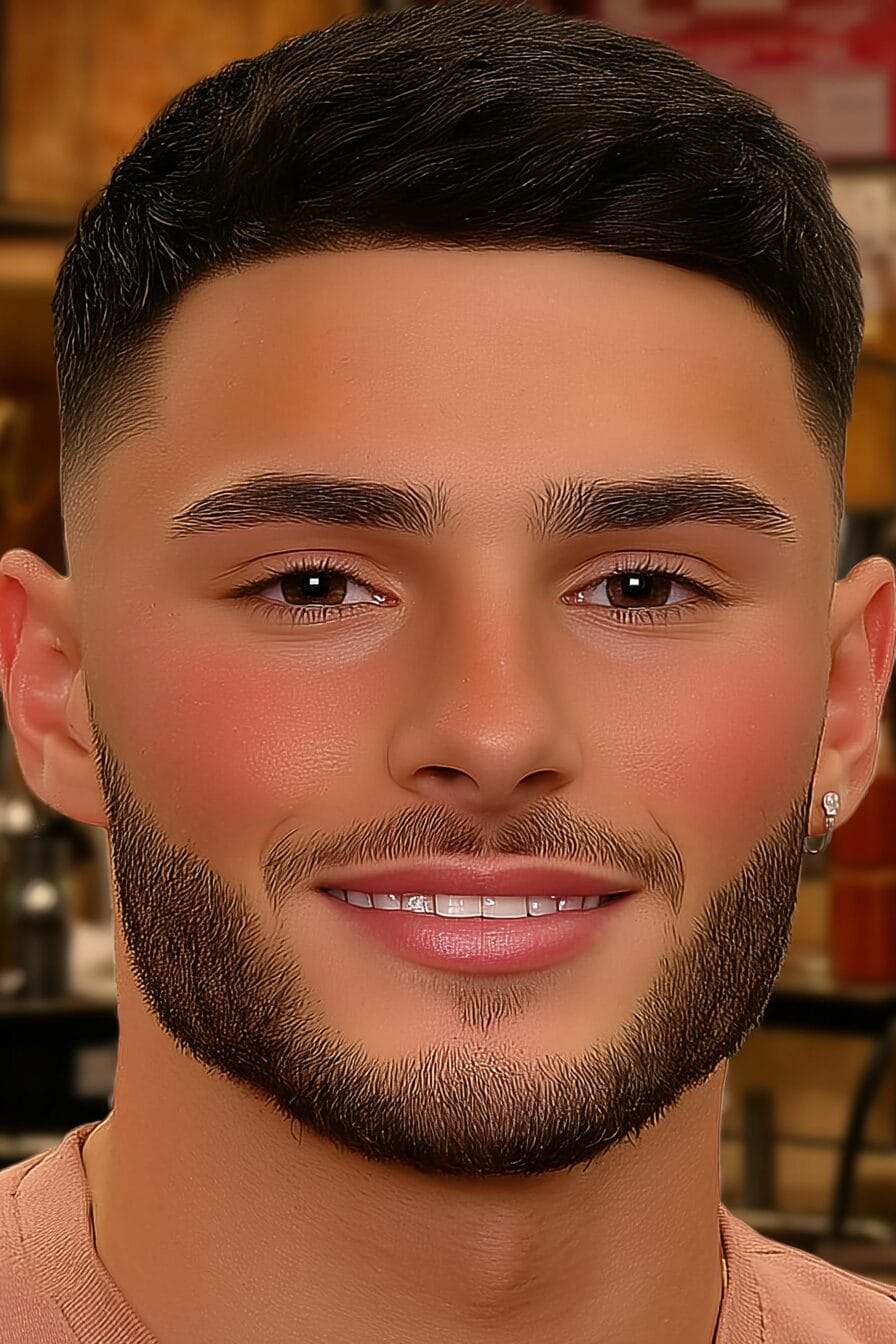
Manicured Model Beard
The manicured beard represents absolute grooming perfection—every hair precisely placed, every line mathematically straight. This obsessive attention to detail requires professional maintenance twice weekly plus daily home touch-ups.
Split ends are immediately trimmed, stray hairs instantly removed. While time-intensive, this immaculate style projects unparalleled professionalism and commands premium modeling rates.

Rounded Model Beard Style
A rounded beard features soft, curved edges that create a friendly, approachable aesthetic. This shape works particularly well for angular faces, softening harsh features with gentle contours.
The key is maintaining perfect symmetry—any imbalance becomes obvious with circular shapes. Regular trimming with curved scissors helps maintain that smooth arc from ear to ear.
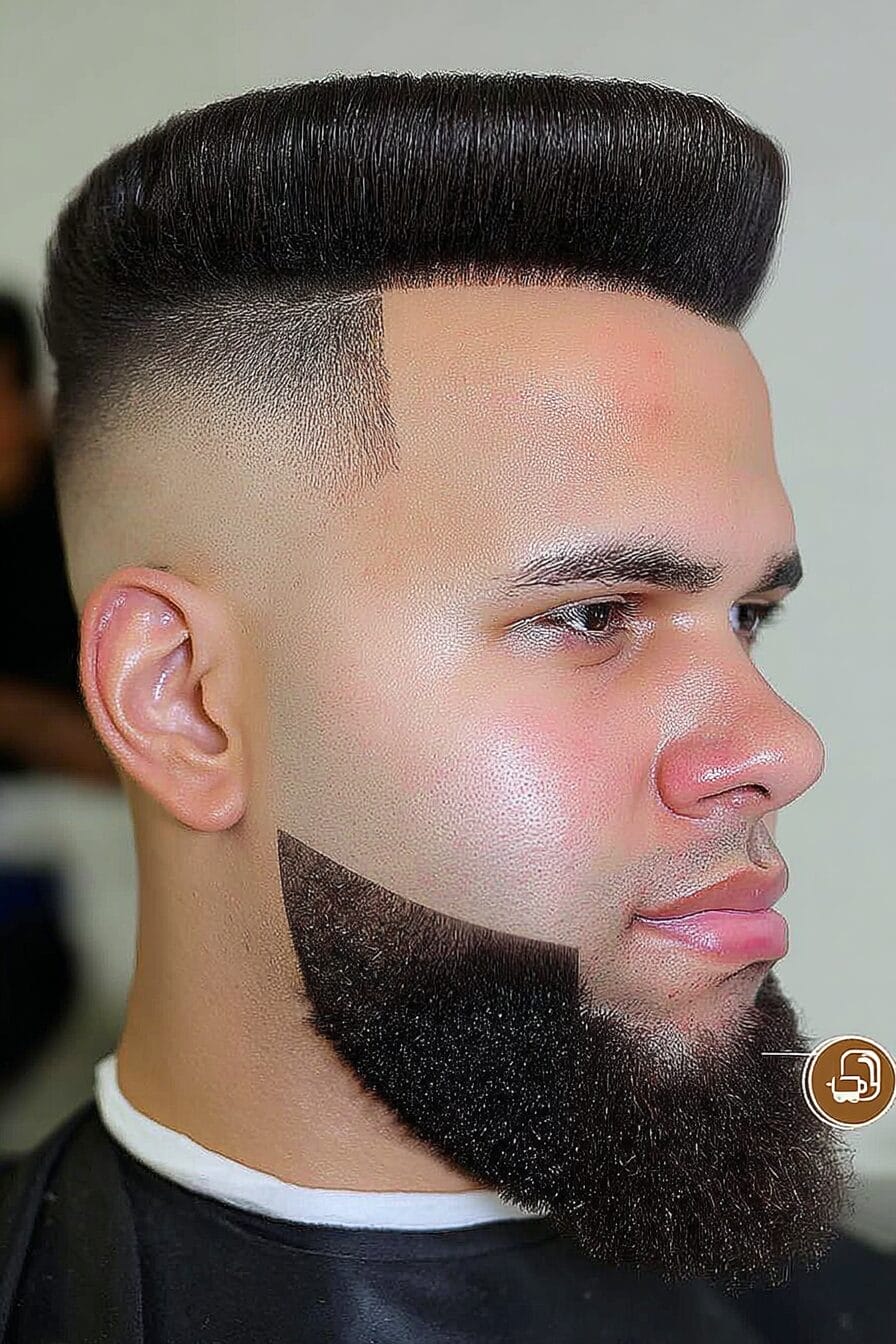
Model Beard With Soft Edges
Soft-edged beards blur the traditional sharp lines for a more natural graduation into skin. This technique uses trimmer over comb methods to create gentle fades rather than hard stops.
The result appears less severe while maintaining that groomed model quality. This style suits men who want polish without the high-maintenance edge work of sharper styles.
Not sure what your face shape is? Our Face Shape Detector figures it out in 4 quick questions.

Dense Model Beard Look
The dense model beard maximizes thick growth patterns for impressive fullness while maintaining refined shaping. This style works exclusively for men with naturally heavy coverage—no amount of product can fake true density.
Regular thinning prevents bulk from becoming unmanageable while preserving that enviable thickness. The key is balancing volume with control through strategic layering.

Model Van Dyke Style
The model Van Dyke features a disconnected goatee and mustache with completely clean cheeks. This classic style gets modern updates through precise shaping and perfect symmetry.
The mustache can be styled straight or with slight curves, while the goatee maintains a controlled point. This distinctive look requires daily shaving of cheeks plus regular trimming to maintain those signature separate elements.

Pointed Model Beard
A pointed beard extends the chin hair into a defined triangular tip for dramatic elongation. This style requires sufficient length at the chin—usually 40-60mm—while keeping sides shorter for proper tapering.
Daily brushing trains hair downward while beard balm maintains the point throughout the day. The angular shape adds sophistication and works especially well for round or square faces.

Model Beard With Taper Fade
The taper fade beard features an ultra-gradual transition that seamlessly blends with a faded haircut. This advanced technique requires professional expertise to execute properly—the fade should be imperceptible yet effective.
Starting near the sideburns, density gradually increases toward the chin and jaw. This contemporary style has become increasingly popular for its clean, modern aesthetic that photographs beautifully.

Salt and Pepper Model Style
The salt and pepper beard embraces natural graying for distinguished sophistication that younger models can’t replicate. The key is enhancing the contrast between dark and silver hairs through proper grooming.
Silver-specific beard products prevent yellowing while adding shine to gray strands. This mature look commands respect and has become increasingly sought-after in fashion and lifestyle campaigns.

Model Beard With Quiff Hairstyle
Pairing a groomed beard with a voluminous quiff creates balanced vertical proportion. The beard should be kept relatively short—10-20mm—to avoid competing with the hair’s height.
This combination requires coordinated grooming: both beard and quiff need daily styling for cohesive appearance. The contrast between structured facial hair and sweeping hairstyle creates dynamic visual interest perfect for editorial shoots.

Thick Model Beard Style
The thick model beard showcases natural density while maintaining refined edges and consistent length. Unlike dense beards that maximize volume, thick styles focus on showcasing hair quality through careful shaping.
Regular thinning shears prevent overwhelming bulk while preserving that enviable fullness. This style requires quality beard products to maintain softness despite the substantial coverage.

Model Circle Beard
The model circle beard connects mustache and goatee in a perfect oval frame around the mouth. This precise style requires exact symmetry—any deviation disrupts the circular effect.
The width should complement lip size while the density remains consistent throughout. Clean-shaven cheeks demand daily maintenance, but the focused growth area makes this surprisingly manageable for busy professionals.

Groomed Heavy Stubble Model Look
Heavy stubble pushes into the 7-10mm range, offering maximum texture while maintaining that intentionally unshaven aesthetic. This length provides excellent coverage for patchy areas while still reading as stubble rather than beard.
The trick is keeping edges clean despite the longer length—neck and cheek lines require definition. This versatile style transitions easily from casual to formal settings.

Model Beard With Slicked Back Hair
Combining a structured beard with slicked back hair creates classic masculine elegance. The beard should maintain medium length with sharp edges to complement the hair’s sleek control.
Both elements require similar products—pomade for hair, balm for beard—creating cohesive shine and hold. This timeless combination works particularly well for formal events and professional photography.

Wide Model Beard Style
The wide beard extends horizontally past the jawline to create broader facial proportions. This style benefits narrow faces by adding visual width and balance.
The key is maintaining consistent density across the expanded area—patchy sides will ruin the effect. Regular trimming keeps the width controlled while preventing that unkempt mountain man progression. This bold style makes a statement in fashion photography.


FAQs: Male Model Beard Styles
How often should I trim my beard for a model look?
Model-worthy beards require trimming every 3-5 days for stubble styles and weekly for longer beards. Edge work needs attention every 2-3 days to maintain those signature sharp lines.
Professional shaping should happen bi-weekly or monthly depending on growth rate. Between professional visits, daily inspection catches stray hairs immediately. The key is consistency—regular minor adjustments prevent major corrections.
What products do male models use for their beards?
Professional models typically use a four-product system: beard shampoo for cleansing, oil for conditioning, balm for styling, and wax for mustache control. High-end brands with natural ingredients prevent skin irritation during long photo shoots.
Heat protectant spray is essential for styles requiring hot tools. Many models also use beard masks weekly for deep conditioning. The investment in quality products shows in the final photographs.
What face shape works best for model beard styles?
While oval and square faces naturally suit most model styles, any face shape can work with proper beard shaping. The key is choosing styles that create balance—angular beards for round faces, softer edges for square jaws, wider styles for narrow faces.
Professional barbers can assess your bone structure and recommend specific styles. Remember that confidence carries any look better than perfect proportions.
How long does it take to grow a model-worthy beard?
Most men can achieve model-quality stubble in 5-10 days, short beards in 4-6 weeks, and medium length styles in 2-3 months. Genetics determine growth rate and density—some men need more time for full coverage.
The shaping process begins immediately; don’t wait for full length before establishing edges. Proper grooming during growth ensures you look intentional rather than unkempt throughout the process.
Can I achieve a model beard look with patchy facial hair?
Absolutely—many successful models work with strategic styles that maximize their growth patterns. Shorter lengths like designer stubble disguise patchiness better than longer styles.
Disconnected beards, goatees, and Van Dykes focus growth where you’re strongest. Beard fillers and fibers can temporarily enhance density for special occasions. The key is choosing styles that work with your natural growth rather than against it.
What beard style is most attractive on men?
Designer stubble consistently ranks as the most attractive beard style in surveys and studies. The 2–3mm length adds definition to the jawline without overwhelming facial features. For a more refined look, a short sculpted beard at 10–15mm with sharp cheek and necklines gives you that editorial-ready appearance. The key isn’t the specific style—it’s how well-maintained it is. A neatly groomed full beard beats a messy stubble every time.
Do models have beards?
Yes—beards have become widely accepted and even sought after in the modeling industry. While clean-shaven faces dominated fashion for decades, the shift started in the early 2010s when brands like Burberry, Prada, and Hugo Boss began casting bearded models for major campaigns. Today, agencies actively seek men with well-groomed facial hair for everything from editorial shoots to commercial work. The key is grooming: a model beard is always precisely shaped and maintained, never unkempt.
Was this article helpful?
Find Your Perfect Beard Style
You’ve seen the options. Now find the one that actually suits YOUR face shape and growth pattern.

Khamis Maiouf is a professional barber who graduated from Hinckley College in England with a Level 3 qualification in hairdressing. With over 20 years of experience, he is an award-winning barber who has mentored numerous students and styled thousands of clients. A recognised expert featured on StyleCraze (20M+ readers).
Credentials: Level 3 Hairdressing (Hinckley College, UK) • 20+ Years Professional Experience • Featured Expert on StyleCraze • Founder of Book of Barbering