

— Award-Winning Barber · 20+ Years Experience · Level 3 Qualified
Dreadlocks are the busiest long-hair request in my chair right now, and the reason is simple — with the right maintenance and the right pairing on the sides, locs read as sharp and intentional, not scruffy. The wall between “protective natural style” and “clean corporate haircut” basically doesn’t exist anymore, and 2026 is the year the barber world finally caught up.
The list below is the exact loc menu I offer Black clients in the shop — freeform, starter, barrel twist, rope, micro, chest-length, plus every fade and updo combo I actually rebook people for. Each style tells you the length you need, who it suits, how to ask for it, and what it costs to keep up.
Key Takeaways
Not sure which style suits you best? Our Haircut Finder Quiz matches you with the right cut based on your face shape and hair type — takes 60 seconds.
- Starter locs take 3-6 months to begin locking and 12-18 months to mature — the awkward “budding” phase between month 4 and month 9 is non-negotiable, so book styling appointments to get through it
- Barrel twist locs are the #1 new request of 2026 — thicker, faster to install than micro locs, and photograph well the same day
- Pairing dreads with a mid or low taper fade is the single most requested combination in Black barbershops in 2026 — it removes the “heavy on the sides” problem old locs used to have
- Budget $60-150 per retwist depending on length and count, plus a $25-45 fade every 2 weeks if you go the faded route
- Freeform locs are cheapest to maintain (just wash and separate), but they take longest to mature and can’t be undone if you dislike the shape
- Wash weekly with a residue-free clarifying shampoo — clean hair actually locks faster than dirty hair, and product buildup is the #1 cause of soft, mushy locs
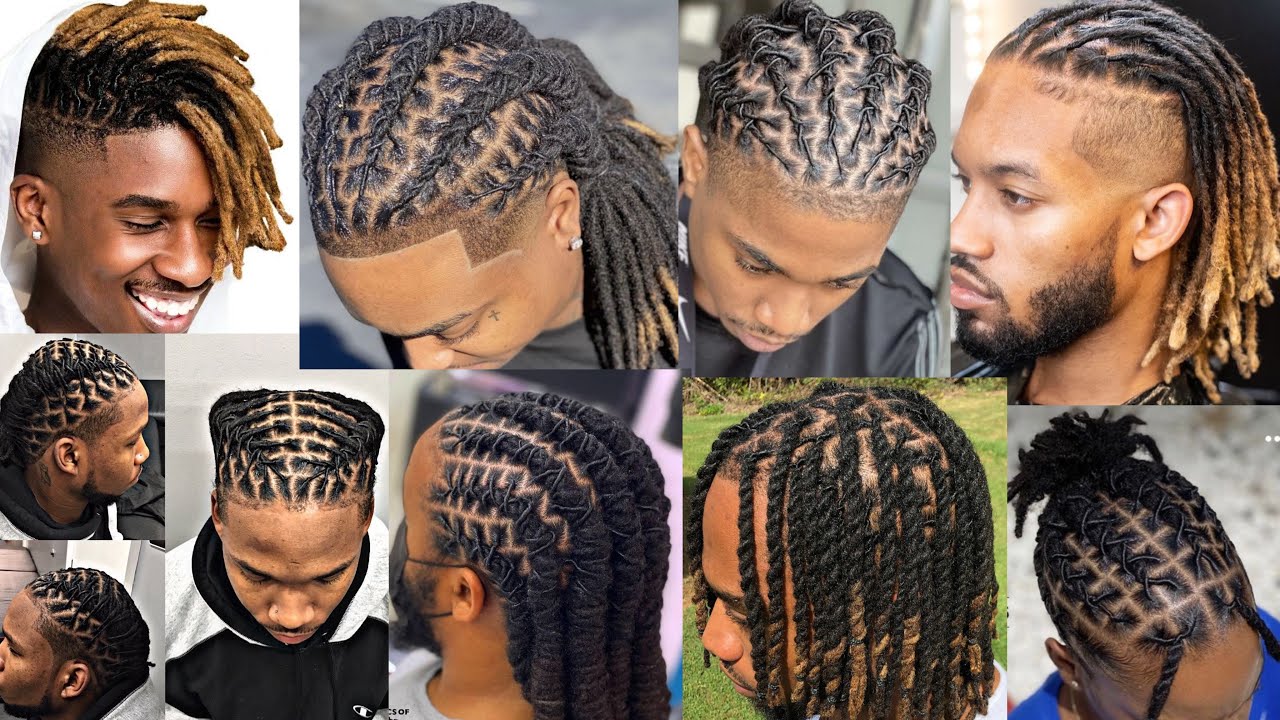
The 2026 Dread Trend: Barrel Twists, Micro Fades, and Sharper Parts
If you asked me what changed in 2026, my answer is three things: barrel twist locs took over as the #1 new install, mid taper fades quietly overtook high fades as the most-requested pairing, and geometric scalp parts (sometimes called “trap braid” or “temple design” work) are being added to almost every fresh loc appointment. All three trends push the same direction — cleaner, more sculpted, less “just grew this.”
Barrel twists are what people used to call “chunky two-strand twists” but styled to sit as their own distinct locs. They install in a single sitting, look photograph-ready the same day, and hold their shape for two to three weeks before needing a retwist. Ask your barber for “barrel twist locs, medium diameter, mid taper fade on the sides” and you’ll walk out with the 2026 look. If you already have mature locs, ask for a “barrel wrap style” — same silhouette, no starting over.
Dreads With Fades: The Most Requested Combination
The single most popular dreadlock request in my shop right now is locs paired with a fade — and it’s easy to see why. A clean fade on the sides and back frames the locs on top, creating sharp contrast between the textured length and the tapered skin. It bridges the gap between cultural expression and corporate polish in a way few other styles can.
For short to medium locs (under 6 inches), I recommend a high fade that starts about a finger’s width above the temples. This maximises the visual impact of the locs by putting all the focus on the crown. The high fade also makes shorter starter locs look intentional during that awkward budding phase when the hair is still forming.
With longer, more established locs (8 inches and up), a low fade or taper fade works better because it preserves more of the loc coverage around the head. Going too high with a fade on long locs can leave the transition looking abrupt rather than seamless. I usually cut the fade line where the locs naturally begin to hang rather than creating a hard horizontal break.
What to ask for: “Locs on top, mid taper fade with a 1.5 guard fading to skin at the neckline, edge-up the front hairline.” The maintenance schedule is tighter than locs alone — you’ll need the fade touched up every 2 weeks to keep the contrast crisp, while the locs themselves only need retwisting every 4-6 weeks. I tell clients to book both services on alternating schedules so they’re in the chair roughly every two weeks for one service or the other.
Freeform Locs
Freeform locs are what happens when you stop touching your hair and let it lock the way it wants to. No palm rolling, no interlocking, no retwist appointments — just regular washing and hand-separating the roots so nothing grows together at the scalp. The pay-off is a look nobody else can copy: uneven diameters, wild shapes, and a texture that photographs like sculpture.
Freeforms suit type 4 hair best because the tight coils tangle onto themselves quickly. It usually takes 12-24 months to look “finished,” and the first six months are honestly rough — you’ll go through a “sponge” phase where the hair looks matted rather than locked. Push through it. The men in my chair who committed to freeforms are the ones with the most confident-looking locs by year three.

Traditional Shoulder-Length Locs
Shoulder length is the sweet spot most of my clients aim for — around 8-12 inches, heavy enough to hang properly, short enough that a wet wash still dries overnight. This length also unlocks every styling option: half-up, low ponytail, updo for a wedding, or just down and loose for a Friday.
To reach shoulder length from a fresh start you’re looking at roughly 3 to 4 years, faster if you already had 4 inches of hair when you started. I usually recommend clients get their first “shape-up cut” (levelling the ends) when their locs hit the collarbone — it makes the ends look intentional instead of straggly.

Thick Rope Locs
Rope locs are the chunky end of the spectrum — usually 30-50 total locs across the whole head, each one thick as a marker pen. The bigger sections lock faster (six months versus twelve for micro), need fewer retwist appointments, and read as bold on any face shape. Downsides: they take longer to dry after a wash, they’re heavier once they hit shoulder length, and they don’t do delicate updos.
Ask your barber for “medium-to-large diameter locs, roughly 40 sections, grid parting.” If the barber sections the hair with a rat-tail comb into clean squares on top of the head, you’re in good hands. Freehand sectioning without a comb is a red flag on rope locs — the parts have to be neat because you can see straight to the scalp when the wind moves them.

Thin/Micro Locs
Micro locs are the opposite play — 100+ pencil-thin locs across the head, each about the diameter of a straw. The install takes 8-12 hours (sometimes across two sittings), and the retwist is longer too, but the pay-off is a loc set that behaves like loose hair. You can pull them all forward into a fringe, do intricate updos, or half-braid them without the style looking bulky.
Micro locs need a loctician who knows what they’re doing — cheap installs at the wrong tension will snap your edges within a year. Budget $400-900 for the initial install and roughly $100-150 per retwist. This is the style I recommend for men with fine or medium hair density where thick locs would look sparse.

Chest-Length Locs
Chest-length locs (16-22 inches) are a decade of growth for most men, and they carry serious weight — literally. A full head of chest locs can weigh 2-3 pounds when wet, which puts real strain on the follicles at the crown. This is where I start telling clients to sleep on a silk pillowcase, tie the locs up loosely at night, and never wear them in a tight ponytail two days in a row.
The upside is unbeatable presence. Chest locs move when you walk, they hold decorative wraps and cuffs beautifully, and they instantly signal “I’ve been on this journey a long time.” Pair them with a low taper fade or bald fade to keep the silhouette from looking heavy at the sides.

Short Twist Locs
Short twist locs — usually 2-4 inches — are the entry-level style I recommend to men who want to try locs before committing. They look tidy in any office, they wash and dry in the same day, and the maintenance is minimal because there’s not enough length yet for parts to slip.
Ask for “two-strand twist starter locs, small-to-medium diameter, palm rolled.” At this length you don’t need a retwist more often than every 6-8 weeks, and you can genuinely maintain them yourself at home once you learn the palm-rolling motion. If you decide locs aren’t for you six months in, you can still comb them out at this length without cutting.

Starter Locs
Starter locs are the first 3-6 months of your journey, and they’re the phase most men give up on. The hair budds, frizzes, unravels a bit at the tips, and generally doesn’t look “finished” the way you imagined. My honest advice: expect it to look weird for at least four months, and book yourself a styling appointment every 3-4 weeks to keep morale up.
The two starting methods I use most are comb coils (best for type 4 coily hair) and two-strand twists (works across most textures). Palm rolling every wash day helps the parts stay clean, and covering with a satin bonnet or durag at night is non-negotiable — cotton pillowcases will lint your fresh locs to death.

Short Freeform Locs
Short freeforms are the middle ground between full freeform and a maintained style — you don’t retwist, you don’t manipulate, but you keep the length under about 6 inches so the shape stays controlled. This is the style I recommend to first-time loc wearers who want the freeform aesthetic without the commitment to years of growth.
Wash weekly with a residue-free shampoo, separate any locs that try to fuse together at the roots, and get the tips trimmed once a year so the shape stays defined. It works especially well on men with tight 4a-4c hair patterns, where the coils lock quickly on their own.

Braided Dreads
Braided dreads are when we take individual locs and plait them together — either two-strand, three-strand, or full cornrow patterns. It’s usually a special-occasion style (weddings, photoshoots, a big night out) because the braiding takes 1-3 hours depending on complexity, and you’ll want to unbraid within 5-7 days to prevent tension damage.
The look is unmatched — you get the texture of locs plus the structure of braids, and the whole head reads as sculpted rather than loose. Ask for “flat feed-in braids from front to nape, then the tail locs loose” if you want the polished-but-relaxed version. It also happens to be one of the most photographed loc styles on Instagram right now.

Man Bun Locs
The loc man bun requires at least 8-10 inches of length to sit properly. High buns pull the face upward and read as more dramatic — good for round or full faces. Low buns at the nape read as more relaxed and professional — better for a first day at a new job, a client meeting, or hot weather when you just want the locs off your neck.
Use a soft satin scrunchie or a proper loc holder, never a rubber elastic — those will snap the outer locs and cause breakage along the perimeter. If you’re going to wear a bun daily, alternate the height each day so you’re not putting tension on the same follicles.

Side-Swept Dreads
Side-swept locs part deeply on one side (usually the client’s dominant eyebrow side) and sweep the top length across the head. It’s my go-to for men who want a loc style that reads less “spiritual” and more “editorial” — the diagonal line adds movement and softens the vertical drop that dreads naturally have.
This works best on medium-length locs (6-12 inches) with a mid or low taper fade or undercut on the opposite side. Longer locs get too heavy to hold the sweep, and shorter ones don’t have enough length to make the diagonal visible. Ask your barber for “deep side part, locs swept across the top, low taper on the underside.”

Ponytail Dreads
The loc ponytail is the most versatile updo in my clients’ rotation — you can wear it high on top of the head, mid at the crown, or low at the nape, and each height changes the entire look of the outfit. You need at least 6 inches of length for a comfortable ponytail, and the fatter the elastic or scrunchie, the less strain on the front hairline.
My rule for daily ponytail wearers: never wear the same height two days in a row, and give yourself one loose day per week to let the roots recover. Ponytail-pattern hairline recession is the most common damage I see on long-loc clients in their forties, and it’s completely preventable with tension management.

Cornrows with Dreads
Cornrows on the sides with locs on top is one of the sharpest loc styles you can get — the flat, geometric braids at the temples give a clean silhouette that fades or undercuts can’t quite match. It’s especially popular with athletes and musicians because the cornrows tuck under helmets and hats without disturbing the loc pattern up top.
The cornrow pattern usually lasts 2-3 weeks before it needs to be re-braided, so the maintenance is the same as a fade. Ask for “cornrows on the sides from temple to nape, freestyle pattern or straight-back, locs left free on top.” Add a small design shaved into the temple for the full 2026 look.

Curly-End Dreads
Curly-end locs keep the roots and mid-shaft locked but leave the last 1-2 inches loose and curled, either naturally or with a small perm rod set. It’s a distinctly softer look — good for men who feel like straight-hanging locs read too heavy on their face — and it photographs beautifully in soft light.
You need at least 8 inches of loc length to pull this off convincingly. Maintain the curls with a small amount of leave-in conditioner on the ends only (avoid the locked portions to prevent buildup). Curly ends are trending in 2026 because they soften the geometric look of a sharp fade — it’s the best of both worlds.

Bob-Length Dreads
Bob-length locs hit between the chin and shoulder — about 6-10 inches of length. The bob is one of the most flattering loc lengths for men because it frames the jawline without hanging heavy, and it works on almost every face shape from round to long.
The trick is asking for a “blunt bob cut” — the ends should be cut in a straight line across the bottom rather than layered — so the shape reads intentional. Bob locs need a trim every 3-4 months to keep the line crisp, and they pair beautifully with a low taper or a soft undercut behind the ears.

Layered Dreads
Layered locs use different lengths across the head to add movement and depth — usually shorter at the front and crown, longer at the back and sides. The layers can be built two ways: cut into existing locs, or grown in by starting different sections at different times.
Layering suits medium-diameter locs best. Rope locs are too thick to show layers cleanly, and micro locs already have enough movement without cutting. Ask your barber for “long layers with the front pieces about 2 inches shorter than the back” if you want the current-year layered loc look.

Face-Framing Locs
Face-framing locs use the shortest sections around the hairline to draw attention to the eyes and cheekbones. The technique is essentially “curtain bang, loc edition” — a few strategically shorter locs at the front, gradually blending into full length behind. It works especially well for softening square or angular jawlines.
The framing effect only works if the shorter front locs are actually cut, not just started later — a good loctician will use a sharp razor to shape the front sections without unravelling the lock pattern. Refresh the cut every 6-8 months to keep the shape from disappearing as the hair grows.

Mixed-Size Locs
Mixed-size locs are the freeform aesthetic on a maintained schedule — you deliberately install locs of different diameters across the head so the finished look reads organic rather than uniform. I usually put thicker locs in the crown (they carry weight better up there) and thinner ones around the hairline (they’re less obvious as they grow out).
This style suits men who like the freeform vibe but don’t want to give up the option to do updos, wear a fade, or maintain the shape. The install takes longer than uniform locs because your loctician has to plan the section sizes strategically, but the everyday look is significantly more distinctive.

FAQs: Dreadlock Hairstyles for Black Men
How long does it take to grow dreadlocks?
Dreadlocks typically take 3-6 months to begin locking and 12-18 months to fully mature. Coarser type 4 textures lock faster than looser 3-type curls, and freeform methods take about twice as long to mature as twist-and-rip or crochet techniques. Expect a rough “budding” phase between month 4 and month 9 — that’s when the hair looks matted rather than locked, and it’s the phase most men give up on. Push through it and book a styling appointment every 3-4 weeks to keep morale up.
Can you wash dreadlocks regularly?
Yes, and you should. Most of my loc clients wash weekly with a residue-free clarifying shampoo — clean hair actually locks faster than dirty hair because product buildup and natural oils prevent proper tangling. Focus on scalp cleansing, gently squeeze suds through the length, and rinse until the water runs completely clear. The one non-negotiable step is drying: sit under a hood dryer or air-dry in front of a fan until the locs are dry all the way to the core. Damp locs are how mildew starts, and mildew smell is nearly impossible to remove without cutting.
What’s the best dreadlock style for beginners?
Traditional medium-thickness locs — 40-60 across the head, roughly the diameter of a Sharpie marker — offer the best beginner experience. They lock faster than micro locs, they’re lighter and easier to maintain than rope locs, and they give you every styling option once they mature. Start with two-strand twists or comb coils, and ask your loctician for a “grid parting” so the sections are clean and even. If you’re not sure whether you’ll stick with locs, this is also the size that combs out most easily in the first 6 months.
How much does dreadlock maintenance cost in 2026?
Professional loc maintenance in 2026 runs $60-150 per retwist depending on length, count, and city — expect the top of that range in New York, LA, DC, Atlanta, and London. Initial installation ranges from $150 for short starter locs up to $900 for a full micro install. Add $25-45 every 2 weeks if you’re pairing locs with a fade, plus roughly $30-50 a year in residue-free shampoo, satin bonnets, and loc holders. Many men mix DIY maintenance (self palm-rolling at home) with a professional retwist every 2-3 months to control cost.
Do dreads damage Black men’s hair?
When they’re installed and maintained properly, locs actually protect your hair — they reduce daily combing, heat styling, and manipulation that break natural hair over time. The damage happens when maintenance is done too tight. Aggressive interlocking at the root, retwisting on wet locs, and heavy hanging ponytails cause traction alopecia along the hairline, and once those follicles are gone they don’t grow back. Find a loctician who uses gentle palm-rolling rather than crochet hooks on the front hairline, and never wear a tight ponytail two days in a row.
How do you start dreads on short Black hair?
The two methods I use for starting locs on short hair are comb coils and two-strand twists. Comb coils work best for tighter type 4 curl patterns and produce neat, uniform starter locs. Two-strand twists are more versatile and work across most textures. You need at least 2-3 inches of hair to start either method — usually about 3 months of growth from a fresh cut. Ask your loctician to section the hair into a grid pattern that will determine the final size and placement of each loc, then commit to a satin bonnet or durag every night until the locs bud.
Can you get dreads professionally for a job interview?
Absolutely — well-maintained locs are professional, and they’re legally protected by the CROWN Act in over 20 US states plus federally through the Executive Order on natural hair discrimination. For interviews I style clients’ locs in either a clean low ponytail, a barrel roll updo, or swept back with a fresh taper fade and edged hairline. Short twist locs and medium-thickness locs in particular read as polished in any corporate environment. The key is getting your locs freshly retwisted and edges cleaned up within a week of the interview so the parts and hairline look sharp.
What’s the difference between barrel twist locs and regular locs?
Barrel twist locs are the biggest loc trend of 2026 because they solve two of the most common complaints about traditional locs — the awkward starter phase and the long install time. Barrel twists are installed as thick two-strand twists that are then wrapped around themselves to form a cylindrical, “barrel” shape. They look camera-ready the same day, they hold shape for 2-3 weeks between retwists, and they can either be kept as a semi-permanent protective style or committed to as the foundation for permanent locs. Ask your loctician for “medium-diameter barrel twist locs, mid taper fade on the sides” if you want the exact 2026 barbershop look.
Was this article helpful?
Ready to Find Your Perfect Cut?
You’ve read about the styles. Now find the one that fits YOUR face shape, hair type, and lifestyle.

Khamis Maiouf is a professional barber who graduated from Hinckley College in England with a Level 3 qualification in hairdressing. With over 20 years of experience, he is an award-winning barber who has mentored numerous students and styled thousands of clients. A recognised expert featured on StyleCraze (20M+ readers).
Credentials: Level 3 Hairdressing (Hinckley College, UK) • 20+ Years Professional Experience • Featured Expert on StyleCraze • Founder of Book of Barbering