

— Award-Winning Barber · 20+ Years Experience · Level 3 Qualified
Walk into any high-end barbershop in 2026 and you’ll see one thing that would have shocked a barber ten years ago: half the men in the chairs are actively asking for their gray to be shown off, not covered up. Salt and pepper hair has flipped from “something to fix” to one of the most-requested looks on my board — and after two decades behind the chair, I can tell you it’s the easiest style advantage most men are still sleeping on. This guide is how I cut it, how I ask you to style it, and the exact products I hand clients when they leave.
Key Takeaways
- The 2026 salt-and-pepper look is structured, not shaggy — textured crops and soft tapers now beat aggressive skin fades because they let the silver read as intentional
- Gray hair is coarser and drier than pigmented hair (it lacks melanin, which affects the cuticle) — condition every 2–3 days and switch to a matte clay or light pomade instead of gel
- Purple shampoo twice a week, left on for 2–3 minutes, is the single move that stops silver from going yellow — skip it and even a great cut looks dull
- In the awkward 30–50% gray transition, keep the cut short (crew cut or textured crop, guard 2–3 on the sides) so the salt and pepper blends instead of looking patchy
- Coordinate hair and beard gray — a heavy silver beard with dyed hair reads as a mismatch, and dropping the box dye almost always looks younger, not older
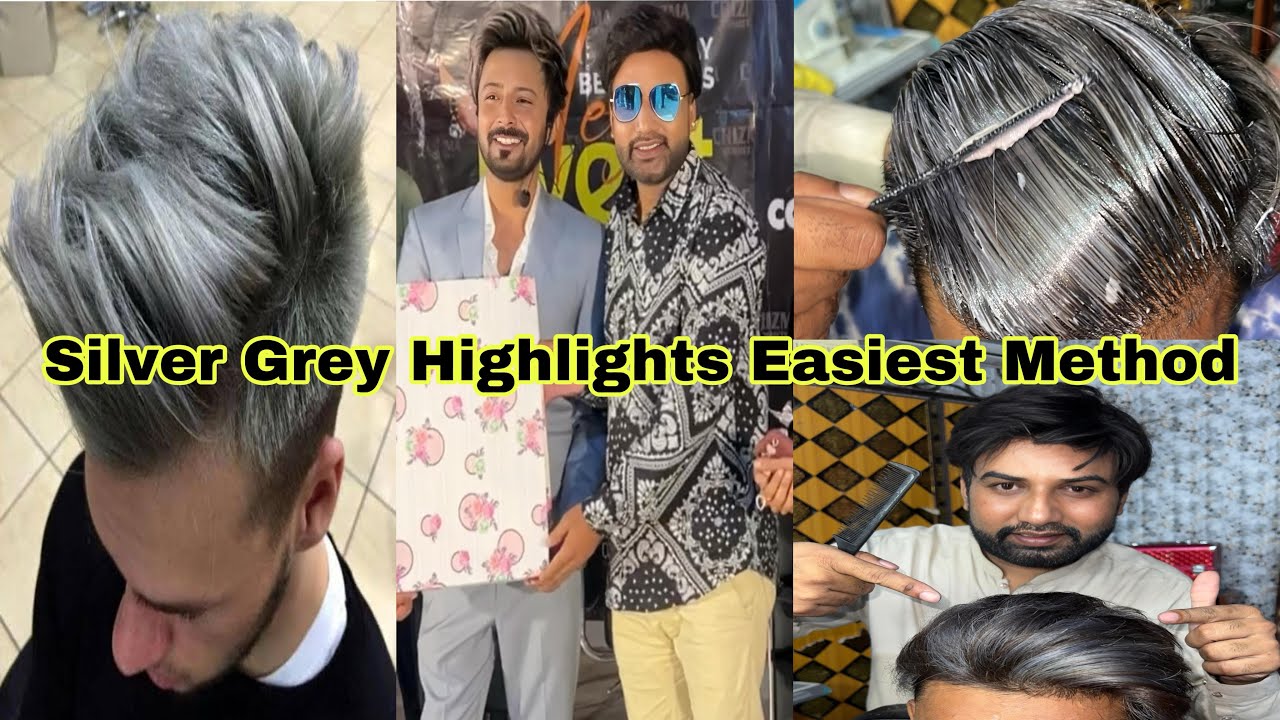
How to Transition Into Salt and Pepper Hair Gracefully
The 30–50% gray stage is what breaks most men. The distribution is still patchy, the temples are lighter than the crown, and every time you look in the mirror it feels like the gray won’t decide what it’s doing. I get clients through that stage every week — here’s the exact playbook I use.
Go short first, grow later. Ask your barber for a crew cut or textured crop at around 1″–1.5″ on top with a guard 2 or 3 fading into a soft taper on the sides. Shorter strands mix light and dark tones optically, so a scattered gray pattern reads as texture instead of patchiness. Once you cross about 60–70% gray and the blend evens out, you can start growing length back through a scissor-cut trim every 3 weeks.
Break with the dye cleanly. If you’ve been covering gray, do not try to fade the dye out gradually — the line between your dyed length and your natural roots always looks worse than a fresh cut. Book a short cut that removes most of the dyed hair in one sitting, then let the natural silver grow in from a clean start. I’ve had clients walk out of that appointment looking five years younger the same afternoon, because a crisp low fade with real silver on top sharpens the whole face in a way a flat dye job can’t.
Start purple shampoo the day the first silver strand shows up. Prevention is far easier than correction. Yellowing happens gradually from mineral deposits in tap water, UV, and product buildup — by the time you notice a brassy tint, it’s months of accumulation. Twice-weekly purple wash from day one keeps the silver clean and bright.
Tell your barber the plan. Say the words “I’m growing my gray in, please cut for the transition.” A good barber will keep the length uniform, avoid layered cuts that expose the patchiness, and adjust the neckline shape as the density of gray shifts.
What Is Salt And Pepper Hair?
Salt and pepper hair is the natural mix of gray, silver-white and darker (usually your original color) strands sitting side by side on the same head. It happens when melanocytes — the cells that pigment individual follicles — start shutting down one by one rather than all at once, so some hairs still produce color while others grow in clear and reflect as white or silver.
What that means practically: the texture on your head is no longer uniform. Gray strands are almost always thicker, drier and wirier than the pigmented ones next to them, which is why gray hair sticks up more, holds product differently, and needs its own routine. It’s also why a salt-and-pepper cut looks so much more three-dimensional than a single-tone dye job — light bounces off the silver strands and gets absorbed by the darker ones, giving a natural highlight effect no colorist can properly fake.
Classic Textured Crops For Salt And Pepper Hair
The textured crop is the single most-requested cut on my calendar in 2026, and on salt and pepper hair it’s almost cheating. The choppy, forward-swept fringe catches light on the silver strands while the darker ones sit underneath, so the whole crown reads with depth even under harsh overhead lighting.
Ask for 1.5″–2″ on top, point-cut through the ends for texture, and a guard 2 taper on the sides that softens into a natural neckline rather than a shaved skin fade. It suits oval, square and diamond faces best. To ask: “A modern textured crop, short and choppy on top, soft taper on the sides — I want the gray to show.” Style with a pea-sized amount of matte clay warmed between your palms, pushed forward and up from the roots, then air-dried. Total morning routine: under two minutes.

Sleek Business Styles For Salt And Pepper Hair
Anything with a defined side part, a clean taper and light shine takes ten years off a graying man in a suit. The reason is contrast: a sharp, polished silhouette signals that the silver is a deliberate style choice, not something the man gave up fighting. Below are the five variations I cut most often for clients in finance, law and consulting — pick whichever fits your face shape and hair density.
Two ground rules for all of them: keep your barber visits to every 3–4 weeks (business cuts show growth faster than casual ones), and swap gel for a water-based pomade — the sheen enhances silver, the flake-free finish keeps a boardroom clean.

Side Part With Tapered Sides
The single most flattering business cut on salt and pepper hair. Ask for 2″ on top, a hard part scored with a straight razor on your natural parting line, and a guard 2 taper — not a fade — on the sides so the graying temples blend naturally into the length above. The side part works on every face shape except very narrow oblong.
Style on damp hair: comb the parting in first, apply a dime-sized amount of light pomade with your fingers through the length, then finish with a fine-tooth comb pulled from the part outward and down. The comb tracks catch on the silver and give a subtle vintage sheen.

Slicked Back Undercut
The high-contrast option. Ask for the sides taken down to a guard 1 or 0.5 in a disconnected undercut, with 3″–4″ on top to slick straight back. On silver hair the contrast between the tight, almost-shaved sides and the flowing gray on top looks powerful under any light. Best on strong jawlines and oval or square faces — round faces can look shorter under it.
Blow-dry back off the hairline with a paddle brush, then work a strong-hold water-based pomade through the length root to tip. Slicking back tightly gives silver a near-metallic sheen. Touch-up: every 2 weeks for the sides, every 6 for the length.

Executive Contour With Natural Gray Flow
The choice for men who want executive polish without a hard geometric look. This is a slightly longer scissor-cut on top (2.5″–3″) that’s graduated to follow the natural curve of the skull, with tapered sides that dissolve gently into the length. The gray sits in soft movement rather than a fixed shape, which is more forgiving on thin or receding hair.
To ask for it: “A scissor-cut executive contour, follow the head shape, tapered sides — no fade, no hard part.” Style with a small amount of light cream on damp hair, blow-dried back and slightly to the side with a round brush for a lifted front.

Classic Pompadour With Silver Shine
The pompadour is the loudest thing you can do with salt and pepper hair, and if you can commit to it, it looks incredible. Ask for 4″–5″ on top, tapered sides (not shaved — you want the silver to run all the way down), and layered length so it can be swept up and back without collapsing under its own weight.
The build is what makes it: rough-dry with your fingers pushing the roots straight up, then blow-dry with a round brush from the front hairline back and up, section by section. Set with a matte clay first for lift, then a shine pomade on top for that catch-the-light silver finish. Not a low-maintenance cut, but silver in a proper pomp turns heads.

Gentleman’s Cut With Razor Part
The most understated of the five and probably the most photographed on Instagram right now. Same base as a side part with tapered sides, but the parting is scored with a straight razor — a clean, sharp line about 3–4mm wide that shows the scalp. On graying hair the razor line reads as deliberate craftsmanship rather than a lucky comb.
Ask for “a hard part, razor-scored, on my natural parting, with a guard 1 taper below the part line and length on top.” Get the part re-cut every 2 weeks — even 3–4mm of growth blurs the line and the whole cut loses its point.

Beard And Hair Combinations
Nine times out of ten a salt-and-pepper look falls apart because the beard and hair don’t agree with each other. A pure-black beard under gray hair looks pasted on; a silver beard under a jet-black dye job looks like you gave up halfway. The rule I give every client: the beard and the hair should sit within one “gray step” of each other.
If your hair is 60% gray and your beard is still mostly dark, keep the beard slightly longer than usual and don’t line it in too hard — the length lets the darker pigment dominate and the softer edge blends visually. If your beard grays faster than your head hair (common — beard follicles often go silver first), keep the beard shorter and neatly shaped, and consider a gray-blending beard wash to knock back any yellowing.

Product Recommendations For Silver Enhancement
Gray hair is a different animal to pigmented hair. Because the cuticle is more open and rougher, it holds product differently — heavy waxes weigh it down, alcohol-based sprays dry it out into wire, and yellow-toned oils muddy the silver. What follows is the exact five-product rotation I hand new salt-and-pepper clients.
General routine (all of them together take under three minutes a morning): a root-lift spray on damp roots before drying, matte clay or light pomade through the length depending on the style, and a drop of lightweight serum smoothed over the ends to control frizz on dry days.
- Root lift: spray on damp roots, blow-dry with a round brush pulling up and away
- Shine: a lightweight silicone-free serum, one drop rubbed between palms, smoothed over the ends only
- Texture: matte clay warmed between palms, pushed through damp hair, then air-dry or rough-dry
- Hold: water-based pomade for sleek styles — never petroleum, which coats gray and dulls the shine

Purple Toning Shampoos For Brightness
The single most important product in the routine. Purple pigment sits on the yellow end of the color wheel and neutralizes brassy tones on contact. Use twice a week — not more often, or you’ll actually turn the silver slightly lilac, which is a real thing that happens to over-eager first-time users.
Wet the hair, work the shampoo through to a full lather, then let it sit for a full 2–3 minutes before rinsing — the pigment needs contact time. Alternate with a sulfate-free daily shampoo on other wash days so the violet doesn’t build up. Look for “sulfate-free” and “for gray/silver hair” on the front label; avoid anything with amber or gold undertones in the formula.

Matte Clay For Natural Texture
Matte clay is my default finisher for textured crops, crew cuts and any messy short-to-medium style on gray hair. It gives strong, workable hold without shine, and the dry finish stops silver strands from looking greasy under indoor lighting.
Take about the size of a pea, warm it between your palms for a full 10 seconds until it turns glossy and pliable, then push it into towel-dried hair from the roots outward — not from the ends in, which is where beginners get flat crowns. Restyle throughout the day just by running dry fingers back through the hair.

Sea Salt Spray For Volume
Fine or thinning gray hair goes flat by lunchtime unless you build in some grit. A good sea salt spray does exactly that — the salt roughens the cuticle just enough to give strands friction against each other, so they hold shape and volume without needing heavy product.
Spray onto damp (not wet) hair, scrunch upward into the roots with your fingers, then diffuse-dry with the diffuser held close to the scalp. Best for longer styles, textured shags, and the modern-mullet look that’s carried over from 2025. Skip it on already coarse gray hair — it’ll go straw-like.

Shine Pomade For Sleek Finishes
Use a water-based shine pomade — never petroleum. Petroleum pomades coat the cuticle in a waxy film that dulls silver overnight and takes multiple washes to strip. Water-based rinses out in a single shampoo and lets the natural sheen of the gray come through.
Apply to towel-dried hair for the strongest hold or to dry hair for a softer, restyle-able finish. On slicked-back or side-parted styles it turns silver almost mirror-bright under any warm light. A jar lasts most clients 4–6 months.

Texture Powder For Lift And Definition
Texture powder is the one product that saves fine graying hair from going flat by 3pm. It’s a fine dry powder — usually silica-based — that sprinkles onto the roots and creates instant grip between strands. No product residue, no shine, no weight.
Tip your head forward, tap a small amount directly onto the roots at the crown and front, then massage vigorously with fingertips for 15 seconds to activate. The powder swells slightly on contact with scalp oils and lifts the roots. Perfect on a second-day hair reset, or under a matte clay for maximum height on a pompadour or quiff.

Ready to Find Your Perfect Cut?
You’ve read about the styles. Now find the one that fits YOUR face shape, hair type, and lifestyle.
FAQs
How Often Should I Trim Salt And Pepper Hair To Maintain Shape?
Most salt-and-pepper cuts hold their shape for 3–4 weeks. Gray strands are coarser and often grow faster than the pigmented ones next to them, so the cut can look uneven sooner than you’d expect. Fades and tapered sides need touch-ups every 2 weeks to stay sharp; longer scissor cuts and executive contours can stretch to 5–6 weeks if you’re disciplined about home styling. When in doubt, book the follow-up before you leave the chair — a fortnight is the honest interval for most business styles.
What Products Best Enhance Natural Silver Tones Without Yellowing?
A sulfate-free purple shampoo used twice a week, left on for 2–3 minutes, is the single most important product. Add a monthly clarifying shampoo to strip mineral deposits from tap water, and a UV-protection leave-in spray if you spend real time outdoors — sun oxidizes silver into yellow the same way it fades a car paint. Actively avoid anything with amber, gold or honey undertones on the label; those muddy the silver and are hard to reverse.
Should I Use Different Styling Techniques For Gray Hair Texture?
Yes — gray hair needs a lighter hand. Drop your blow-dryer to medium heat, always apply a heat protectant, and use a paddle or vent brush rather than a boar-bristle brush that can rough up the already-open cuticle. Finger-styling is genuinely better than combing for most textured crops and crops — it preserves the natural movement gray hair gives you for free. On sleek styles, comb through with product on damp hair, then leave it alone as it dries.
Can I Blend My Salt And Pepper Hair With Strategic Highlights?
You can, and if the transition is bothering you it’s a smarter middle ground than full dye. Ask a colorist for silver highlights or lowlights — not blond, not brown — placed to blur the transition line between your dark and gray sections. This is the “gray blending” technique that’s trending in 2026 for men. It grows out invisibly (no root line), needs a touch-up only every 3–4 months, and reads as natural. Find a colorist who explicitly does gray blending on men, not one who does full-cover men’s color.
Which Face Shapes Work Best With These Silver Styles?
Salt and pepper hair itself works on every face shape — the color is neutral. It’s the cut that has to match. Oval faces get the whole menu; round faces need height on top (pompadour, textured crop with lift) to lengthen; square faces soften with textured tops and shorter sides; long or oblong faces should avoid pompadours and go for side parts or executive contours that add width, not height. If you’re unsure of your shape, our haircut finder quiz matches you in 60 seconds.
At what age does salt and pepper hair typically start?
Most men see their first grays in the late 20s to early 30s, but a visible salt-and-pepper pattern usually lands between 35 and 45. Genetics do 80% of the work — if your father grayed early, expect to as well. I’ve had 22-year-old clients with a full silver temple and 55-year-olds with barely a strand of gray. Timing doesn’t matter; how you cut and style around it does.
Should I dye my salt and pepper hair or embrace it?
Embrace it. Full-cover dye needs re-doing every 3–4 weeks forever, the root grow-out line always looks worse than natural gray, and 2026 is the year salt and pepper became actively fashionable rather than merely tolerated. If you want a middle-ground compromise, ask a stylist about gray blending — it softens the contrast between your darkest and lightest sections without pretending the gray isn’t there.
Does salt and pepper hair require different products than regular hair?
Yes. Gray hair lacks melanin, and that makes the strands drier, coarser and more prone to yellowing. The switches to make: sulfate-free shampoo (prevents stripping), purple shampoo twice weekly (fights yellow), a light oil or serum (softens the wiry texture), and matte clay or a water-based pomade instead of gel (gel dulls silver and flakes on darker strands). Full routine documented in a proper grooming habits guide.
Was this article helpful?

Khamis Maiouf is a professional barber who graduated from Hinckley College in England with a Level 3 qualification in hairdressing. With over 20 years of experience, he is an award-winning barber who has mentored numerous students and styled thousands of clients. A recognised expert featured on StyleCraze (20M+ readers).
Credentials: Level 3 Hairdressing (Hinckley College, UK) • 20+ Years Professional Experience • Featured Expert on StyleCraze • Founder of Book of Barbering