

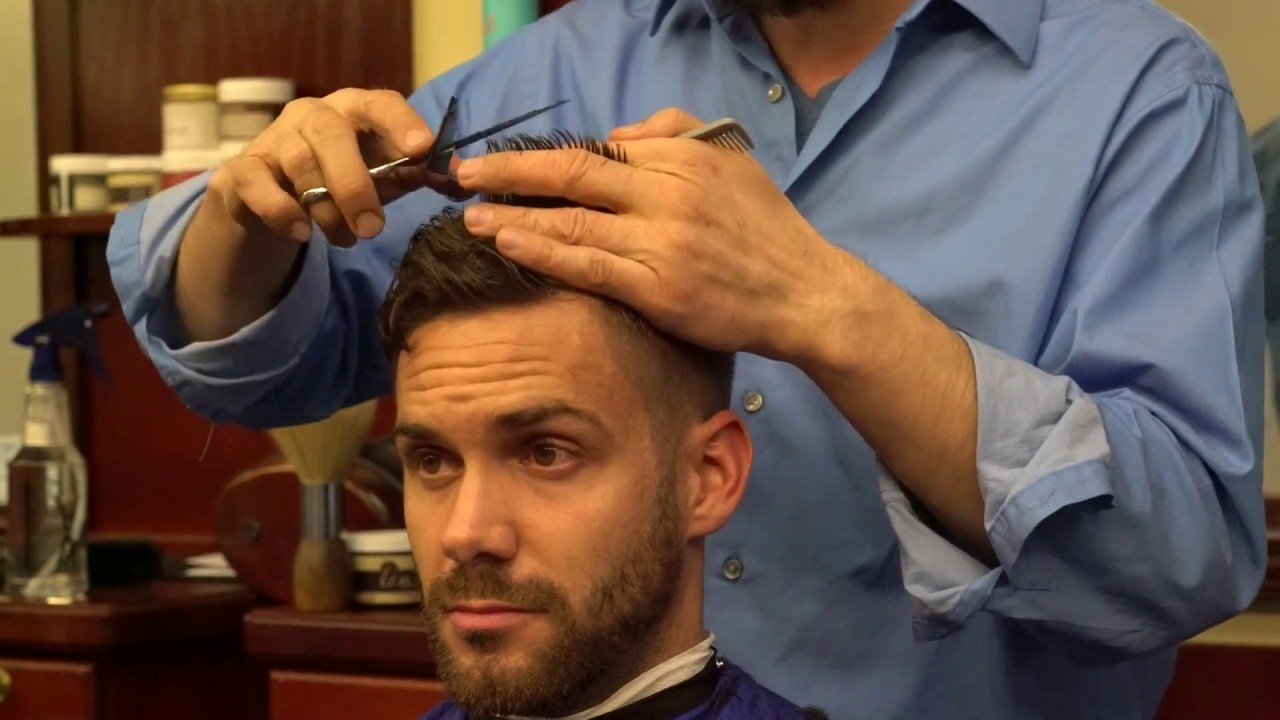
Last month a client sat down and asked for “something professional but not boring.” I grabbed the clippers and gave him a textured comb over with a mid fade — and his reaction told me everything. The comb over is the most versatile cut in men’s barbering because it adapts to any hair type, face shape, or dress code.
From classic side parts to bold skin fade combos, here are 15 comb over styles I cut regularly — with the fade type, length, and product details to get each one right.
Key Takeaways
- The comb over works with every hair type and face shape — it’s one of the most versatile men’s cuts available
- Your fade choice (low, mid, high, or skin) completely changes the look from conservative to bold
- Use pomade for a classic polished finish or matte clay for texture — always apply to damp hair, never dry
- Bring a reference photo to your barber and specify fade level, top length, and part type before the cut starts
- Most comb overs need trimming every 3–4 weeks, with hard parts needing touch-ups every 2 weeks
Traditional Side Part Comb Over
The traditional side part comb over remains the ultimate professional haircut for men seeking timeless sophistication. This style features a crisp part line with hair smoothly swept to one side, creating a polished appearance that commands respect. It works exceptionally well with straight to wavy hair and requires minimal morning styling time.
Slicked Back Comb Over
A slicked back comb over combines the classic comb over’s side direction with full backward flow for maximum impact. This sophisticated style exudes confidence and works particularly well for men with strong facial features. The key is using a high-hold pomade to maintain that sleek finish throughout the day while keeping natural movement.

Textured Comb Over
This modern interpretation adds deliberate texture and movement to the classic comb over formula. Instead of slick perfection, you get controlled chaos that looks effortlessly styled.
The textured approach works brilliantly with natural wave patterns and requires a matte clay or paste for that perfectly imperfect finish. It’s become the go-to for creative professionals wanting contemporary edge.

Disconnected Undercut Comb Over
The disconnected undercut comb over creates maximum contrast by eliminating any fade transition between the long top and buzzed sides. This bold statement cut features a sharp line of demarcation that emphasizes the swept hair on top. Popular among fashion-forward men, it requires confident styling and regular maintenance to keep those lines crisp.

High Fade Comb Over
The high fade comb over begins its dramatic taper well above the temples, creating bold contrast that demands attention. This contemporary cut emphasizes the styled hair on top while keeping the sides ultra-clean and maintenance-free. It’s particularly striking on men with darker hair colors where the fade gradient becomes more visible.

Skin Fade Comb Over
For the sharpest possible finish, the skin fade comb over tapers down to completely bare skin at the bottom. This ultra-clean technique creates the most dramatic contrast possible while maintaining sophistication on top. Regular touch-ups every two weeks keep this precision cut looking fresh, making it ideal for detail-oriented men.

Long Comb Over
The long comb over requires 4+ inches of length on top for dramatic sweeping potential. This flowing style creates movement and versatility, allowing for multiple styling options from sleek to tousled. Men with naturally thick hair benefit most from this length, as it provides enough weight to maintain the sweep without excessive product.

Short Comb Over
A short comb over keeps things neat and manageable with just 1-2 inches on top. This low-maintenance option still provides enough length for directional styling while requiring minimal morning effort. Perfect for busy professionals or anyone preferring a cleaner aesthetic, it works exceptionally well with fine to medium hair densities.
Medium Length Comb Over
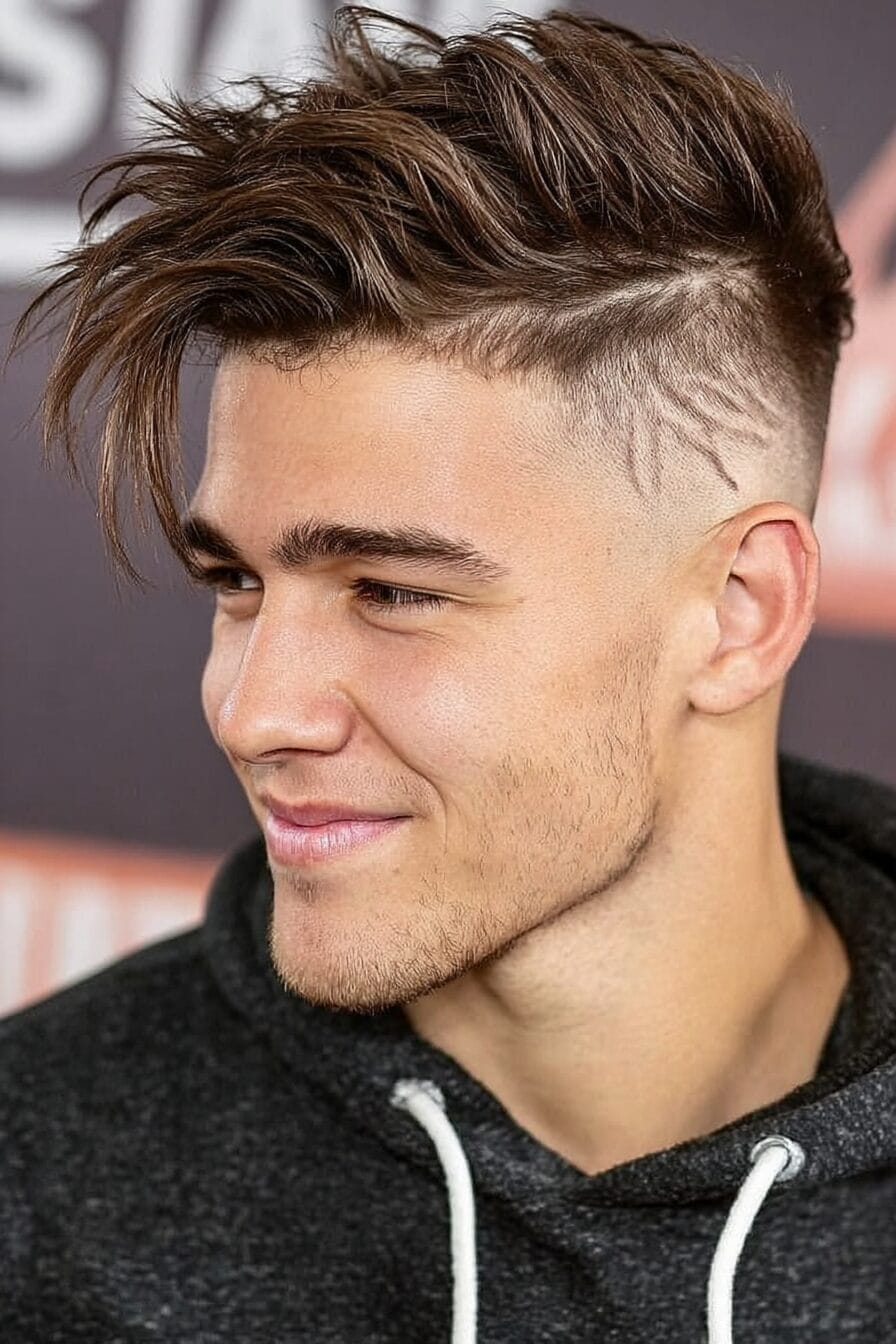
The medium length comb over hits the versatile sweet spot at 2-3 inches, offering maximum styling flexibility. This length allows for both casual and formal looks, adapting easily to different occasions with product changes. It’s long enough for texture and movement yet short enough to maintain easily, making it the most popular length choice.

Messy Comb Over
A messy comb over embraces controlled dishevelment for an effortlessly cool appearance. This relaxed interpretation uses texturizing products to create piece-y separation while maintaining the signature side sweep. It’s perfect for casual settings and men who prefer a less structured daily routine, requiring just a quick tousle with some sea salt spray.

Hard Part Comb Over
The hard part comb over incorporates a razor-shaved line for bold definition and modern edge. This precise parting creates an unmistakable guide for styling while adding contemporary flair to the classic cut. The shaved line typically needs refreshing every two weeks, making it ideal for men who enjoy regular barber visits.

Comb Over with Full Beard
Pairing a comb over with a full beard creates balanced masculinity that frames the face perfectly. The key is ensuring both elements are well-groomed, with the beard shaped to complement the hair’s directional flow. This combination works especially well for men with strong jaw lines who want to soften angular features while maintaining a rugged appeal.

Comb Over with Stubble
A comb over with stubble adds subtle texture and definition to the jawline without overwhelming the hairstyle. This combination strikes the perfect balance between polished and relaxed, making it ideal for smart-casual environments. The key is maintaining consistent stubble length that complements rather than competes with the hair’s styling.

Curly Comb Over
The curly comb over embraces natural texture while maintaining the signature swept direction. This style requires curl-specific products that define without weighing down the hair’s natural spring.
Working with your curl pattern rather than against it creates an effortlessly sophisticated look that’s both modern and timeless. Leave-in conditioners help maintain definition.
Not sure what your face shape is? Our Face Shape Detector figures it out in 4 quick questions.
Tapered Comb Over
The tapered comb over features a gradual length reduction without the harsh lines of a fade. This softer transition creates a more natural flow from top to sides, perfect for conservative environments or men preferring subtle styling. The taper technique works particularly well with lighter hair colors where stark contrasts might appear too severe.

How to Style a Comb Over
Getting the cut is half the battle — the other half is styling it right every morning. Here’s the routine I walk every client through before they leave my chair.
Step 1: Start with damp hair. Towel-dry after washing until your hair is about 80% dry. Completely wet hair dilutes product, and bone-dry hair won’t hold direction.
Step 2: Apply product to your palms first. For a classic polished finish, use a medium-hold pomade. For texture, go with a matte clay. Rub it between your hands until it’s evenly distributed — never apply a glob directly to your head.
Step 3: Comb from back to front. Push all your hair forward first, then comb it to the side following your natural part. This builds volume at the front instead of flattening everything down.
Step 4: Blow-dry for hold. Use a round brush and direct heat from roots to tips, following the direction you’re combing. This locks the style in place and adds volume that product alone can’t achieve.
Step 5: Finish with a light hairspray. A quick mist from arm’s length keeps everything in place through the day without making your hair stiff or crunchy.
How to Ask Your Barber for a Comb Over
Walking in and saying “give me a comb over” leaves too much to interpretation. Here’s how to communicate exactly what you want.
Specify your fade level. Tell your barber whether you want a low, mid, or high fade — and whether you want a skin fade or a tapered blend. This single detail changes the entire look of the cut.
State your top length. Use finger measurements or guard numbers. “Two inches on top” or “leave enough to comb over” gives your barber a clear target. Short (1–2 inches) is cleaner, medium (2–3 inches) is the sweet spot, and long (4+ inches) creates dramatic sweep.
Mention the part. Do you want a hard part (razor-shaved line) or a natural part (combed in)? A hard part looks sharper but needs maintenance every 2 weeks. Natural parts are lower-maintenance and grow out better.
Bring a reference photo. A picture eliminates 90% of miscommunication. Save 2–3 photos that match what you’re after and show them to your barber before the cut starts.
FAQs: Comb Over Haircuts
Is a comb over good for thinning hair?
Yes, a comb over can work excellently for thinning hair when styled correctly. The key is avoiding excessive length that emphasizes sparse areas.
A shorter comb over with texture creates the illusion of fullness, while matte products prevent the slicked-down look that accentuates thinning. Work with your barber to find the optimal length and consider adding a fade to create contrast that draws attention away from thinning areas on top.
How often should I get a comb over trimmed?
Most comb over styles require trimming every 3-4 weeks to maintain their shape and clean lines. Styles with fades or hard parts need more frequent maintenance, typically every 2-3 weeks.
The exact timing depends on your hair growth rate and how crisp you prefer your cut. Regular maintenance prevents the style from losing its structure and ensures you always look professionally groomed.
What face shape suits a comb over best?
Comb overs are remarkably versatile and can be adapted for any face shape. Oval faces can wear virtually any variation, while round faces benefit from added height through pompadour or quiff combinations.
Square faces look great with softer, textured versions that round out angular features. Oblong faces should avoid excessive height and opt for fuller sides. The key is customizing the cut’s proportions to complement your specific features.
What products work best for styling a comb over?
Product selection depends on your desired finish and hair type. Pomades provide high shine and strong hold for classic slicked styles. Clay and paste offer matte finishes with flexible hold for textured looks.
Cream products work well for natural movement with light hold. Fine hair benefits from volumizing mousse before blow-drying, while thick hair might need stronger waxes. Always apply product to damp hair for even distribution.
Is the comb over still in style?
Absolutely. The comb over has been one of the most requested men’s haircuts for over a decade, and it’s showing no signs of slowing down in 2026. The modern version has evolved beyond the slicked-down look — today’s comb overs feature textured styling, natural movement, and fade combinations that keep it looking fresh. As long as barbers keep finding new ways to blend fades and textures, the comb over will stay relevant.
What is the difference between a comb over and a side part?
A side part simply refers to where your hair divides — it’s a parting technique. A comb over is a full hairstyle where the hair is actively swept to one side with deliberate volume and direction. Every comb over has a side part, but not every side part is a comb over. The key difference is that a comb over involves combing and styling the hair over with product and intention, while a side part can be as simple as parting your hair naturally without any additional styling.
Was this article helpful?
Ready to Find Your Perfect Cut?
You’ve read about the styles. Now find the one that fits YOUR face shape, hair type, and lifestyle.

Khamis Maiouf is a professional barber who graduated from Hinckley College in England with a Level 3 qualification in hairdressing. With over 20 years of experience, he is an award-winning barber who has mentored numerous students and styled thousands of clients. A recognised expert featured on StyleCraze (20M+ readers).
Credentials: Level 3 Hairdressing (Hinckley College, UK) • 20+ Years Professional Experience • Featured Expert on StyleCraze • Founder of Book of Barbering