

A guy showed up last week with a photo of a crop top fade he wanted, but his barber had given him a completely different cut twice already — wrong fade height, wrong texture on top, and zero blending in the transition zone.
The crop top fade is one of the most requested styles I see in the chair, but getting it right depends on matching your fade height to your face shape and knowing exactly what to tell your barber before he picks up the clippers.
Not sure which style suits you best? Our Haircut Finder Quiz matches you with the right cut based on your face shape and hair type — takes 60 seconds.
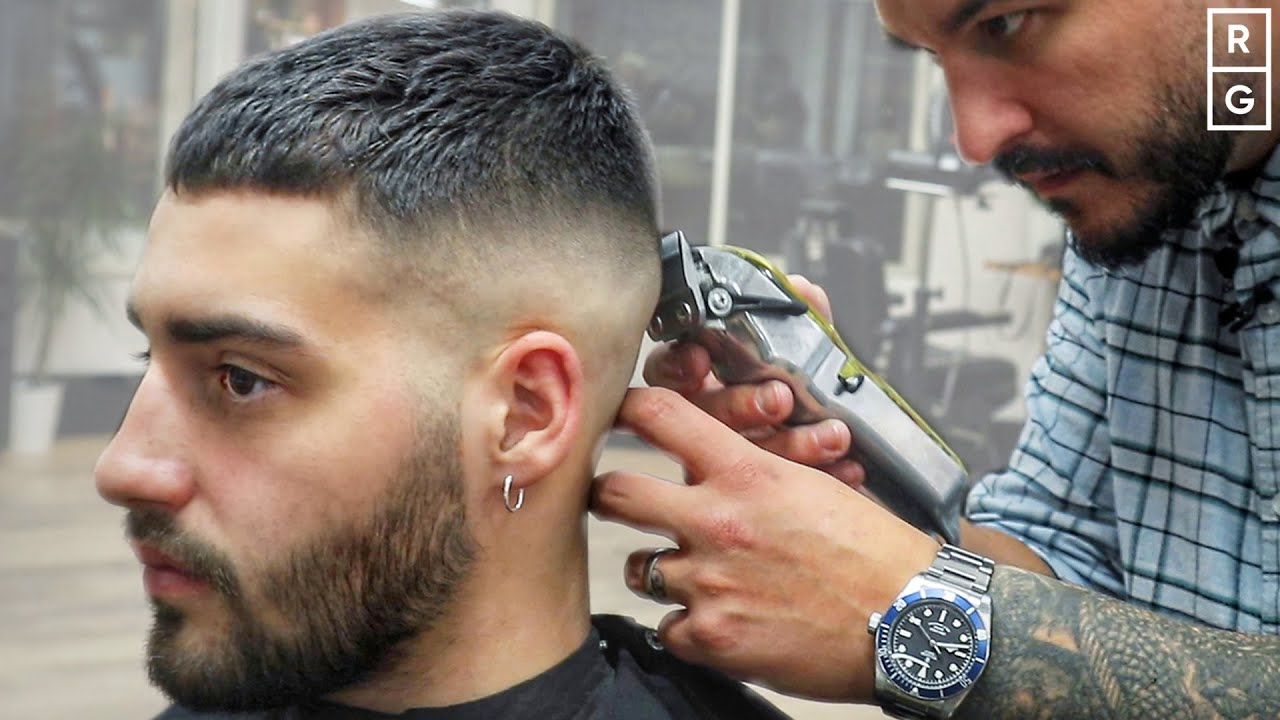
Key Takeaways
- The crop top fade combines a textured, forward-styled top (1-2 inches) with a graduated fade on the sides — choose low, mid, or high based on your face shape
- Always specify fade height, top length in inches, and guard numbers when talking to your barber to avoid miscommunication
- Curly hair should keep an extra half inch on top for volume; thin hair works best at one inch or shorter with matte clay
- Budget for barber visits every 2-3 weeks — the fade portion loses its gradient definition fastest
- Point cutting and texturing on top create natural movement without heavy product buildup
Fresh Crop Top Fade Fundamentals
A crop top fade starts with understanding three distinct length zones working together. The crown keeps 1-2 inches, sides taper from skin to guard #3.
Your barber maps these zones using your natural head shape as the guide. Each zone requires different cutting techniques for seamless blending.

Crop Top Fade Length Zones
The top zone extends from your front hairline to the crown’s highest point. Most crops maintain 1.5 inches here for optimal texture and movement control.
Side zones start at temple corners, wrapping around to the occipital bone. These gradually decrease from #3 guard to skin for that signature fade.

📏 Precision Measurements
Request specific guard numbers: #0.5 at the baseline, #1.5 at midpoint, #3 at the blend line. These measurements create the perfect gradient every single time.
Mark your preferred fade height using finger widths above the ear. Two fingers means low fade, four fingers creates mid-level impact.

Fade Gradient Essentials
Smooth gradients require overlapping guard passes at 45-degree angles. Your barber should work systematically, never rushing the blend zones between guards.
The magic happens in the transition area where guards meet. This zone needs extra attention with clipper-over-comb techniques for seamless results.
- Baseline: Start with #0 or #0.5 guard
- Midpoint: Blend using #1 to #1.5 guards
- Top transition: Connect with #2 to #3 guards

Crop Top Fade Texture Mastery
Texture transforms a basic crop into a statement cut that moves naturally. Point cutting creates separation while maintaining the structured crop silhouette.
The key lies in working with your natural growth patterns, not against them. Strategic texturing adds dimension without sacrificing the clean crop aesthetic.
Textured Crop Top Techniques
Point cutting at 45-degree angles creates natural separation throughout the crown. Your barber should lift sections vertically, cutting into the ends for movement.
Thinning shears remove bulk while preserving length on top. This technique works best on thick hair needing weight reduction.

Natural Crop Texture Enhancement
Work with your cowlicks by cutting them slightly shorter for better control. Natural wave patterns become features when cut at the right angles.
Straight hair benefits from razor texturing to add grip and dimension. This technique creates micro-layers that enhance styling product performance.

Product Application Methods
Apply matte clay to towel-dried hair using fingertip amounts only. Work product from roots forward, creating natural separation as you go.
Sea salt spray adds texture without weight for fine hair types. Spray lightly, scrunch upward, then finish with minimal clay for hold.
🧠 Expert Advice
Mix sea salt spray with matte paste on your palm before applying. This combo gives you texture and hold without the heavy product buildup that kills natural movement in crop styles.

⚠️ Common Mistake
Over-texturing the crown creates a fuzzy, unkempt appearance instead of controlled texture. Tell your barber you want “subtle texture” not “heavy choppy layers” to maintain the crop’s clean structure.

Popular Crop Top Fade Variations
Each fade height creates a distinctly different vibe with your crop top. Low fades offer subtlety, while high fades make bold statements.
Choose your variation based on professional requirements and personal style goals. The right fade height can completely transform your crop’s impact.
Low Crop Top Fade
The fade starts just above the ears, maintaining more coverage on sides. This conservative option works perfectly for office environments requiring professional presentation.
Low fades grow out gracefully, extending time between barber visits. You’ll get three weeks before needing touch-ups versus two.

Mid Crop Top Fade
Starting at temple height, mid fades balance boldness with versatility perfectly. This sweet spot suits most face shapes without overwhelming facial features.
The transition zone sits exactly where your head curves most dramatically. This natural placement makes blending easier and more consistent.

High Crop Top Fade
High fades begin above the temple corners, creating maximum contrast impact. This aggressive style demands confidence and frequent maintenance to look sharp.
Not sure what your face shape is? Our Face Shape Detector figures it out in 4 quick questions.
The exposed scalp area requires daily moisturizing to prevent dryness and flaking. Factor this extra care into your grooming routine.

🎯 Best For Each Type
Low fades suit round faces by adding vertical length through side coverage. Mid fades complement square jaws without overemphasizing angular features.
High fades work brilliantly on oval faces where proportions handle dramatic contrasts. Match your fade height to your face shape for maximum impact.

How to Ask Your Barber for a Crop Top Fade
Most crop top fade disasters happen because of miscommunication, not bad technique. I’ve seen guys ask for a “cropped fade” and end up with a crew cut because they didn’t specify the details that matter.
Here’s exactly what to tell your barber before he starts cutting:
- Fade height: Say “low fade” (above ears), “mid fade” (temple level), or “high fade” (above temples) — don’t assume your barber knows what you picture
- Top length: Specify in inches — “keep 1.5 inches on top” is clearer than “leave it a bit longer”
- Texture preference: Ask for “point cutting for texture” if you want movement, or “blunt cut” for a cleaner look
- Fringe direction: Tell them whether you want the fringe pushed forward, to one side, or cropped straight across
- Guard numbers: Request #0.5 at the baseline, #1.5 at midpoint, and #3 at the blend line for a standard gradient
Bring a photo showing the exact fade height and top texture you want. One photo saves ten minutes of back-and-forth and prevents the “that’s not what I asked for” moment when you see the final result.
Styling Your Crop Top Fade
Daily styling takes three minutes when you nail the technique and products. The crop’s structured nature means minimal effort yields professional results.
Consistency matters more than perfection with crop top fade styling routines. Develop muscle memory for your preferred finish.

Best Crop Top Fade for Your Hair Type
Your hair type determines which crop top fade variation will actually look good versus fighting your natural texture every morning.
Crop Top Fade for Curly Hair
Curly hair adds natural volume that makes the crop top look fuller without any product. I tell clients with curly hair to keep an extra half inch on top — the curls compress and look shorter than the actual length.
Ask for a skin fade or low fade to create maximum contrast between tight curls on top and clean sides. Avoid heavy thinning shears — curly crops need that volume to hold their shape.
Crop Top Fade for Thin or Fine Hair
Thin hair works surprisingly well with a crop top fade because the textured, forward-styled top creates the illusion of thickness. Keep the top no longer than an inch — any longer and gravity wins, making thin spots more visible.
A mid or high fade draws attention upward and away from thinning areas. Use a matte clay instead of gel — clay adds grip and separation without weighing fine hair down or making it look greasy.
Crop Top Fade for Thick Hair
Thick hair gives you the most options but also the most maintenance. Without proper thinning, a thick crop top looks boxy and heavy within two weeks of a fresh cut.
Ask your barber for thinning shear work throughout the crown and point cutting at the ends. This removes weight while keeping enough density for that textured, piecy look that makes crop tops stand out.
Crop Top Fade Maintenance Reality
Crop top fades demand regular upkeep to maintain their crisp, clean appearance. Budget for bi-weekly visits during months one through three.
Between professional cuts, small daily efforts preserve your investment significantly longer. Five minutes daily beats emergency fixes later.

Two-Week Touch-Up Schedule
Week two requires neckline cleanup and fade refresh at minimum. Your barber can knock this out in fifteen minutes.
Schedule standing appointments to maintain consistency and secure preferred time slots. Most shops offer maintenance packages with bundled savings.

Ready to Find Your Perfect Cut?
You’ve read about the styles. Now find the one that fits YOUR face shape, hair type, and lifestyle.
FAQs
How often to trim crop top fade?
Most crop top fades need professional touching every 2-3 weeks for optimal appearance. The fade portion grows out fastest, losing its gradient definition by week two.
Stretch to 4 weeks maximum if you maintain edges at home yourself. Beyond that, the style loses its characteristic sharpness completely.
Best crop top fade for thick hair?
Thick hair suits high crop top fades with aggressive texturing on top. The contrast between dense texture and clean fades creates stunning visual impact.
Ask for thinning shear work throughout the crown to reduce bulk. This maintains the crop shape while improving manageability.
Crop top fade growing out timeline?
Week 1-2: Perfect shape and fade gradient. Week 3-4: Fade softens but remains visible. Week 5-6: Transitions to standard short haircut.
Plan your cut schedule around important events, getting fresh cuts 2-3 days prior. This timing ensures peak sharpness when it matters.
Cost of crop top fade maintenance?
Initial cuts range $30-60 depending on location and barber expertise level. Maintenance touch-ups typically cost 50-70% of full cut price.
Monthly maintenance budgets average $60-100 for bi-weekly professional visits. Consider learning basic edge maintenance to reduce frequency.
What is the difference between a French crop and a crop top fade?
A French crop features a heavier, blunt-cut fringe that sits flat across the forehead, while a crop top fade has lighter, textured layers on top with more movement and separation. The fade element is optional on a French crop — many use a taper instead — but the graduated fade is the defining feature of a crop top fade.
Think of the French crop as the structured, polished version and the crop top fade as the textured, relaxed one.
Was this article helpful?

Khamis Maiouf is a professional barber who graduated from Hinckley College in England with a Level 3 qualification in hairdressing. With over 20 years of experience, he is an award-winning barber who has mentored numerous students and styled thousands of clients. A recognised expert featured on StyleCraze (20M+ readers).
Credentials: Level 3 Hairdressing (Hinckley College, UK) • 20+ Years Professional Experience • Featured Expert on StyleCraze • Founder of Book of Barbering