

Last month alone, three guys walked in asking for “that TikTok haircut with the straight fringe” — every single one meant the Edgar cut. It’s easily the most-requested style I see in younger clients right now, and for good reason. That sharp horizontal fringe paired with a clean fade hits a sweet spot between bold and wearable that most haircuts can’t touch.
But here’s what I always tell guys before they commit: there are way more Edgar variations than you’d think. The right one depends on your hair texture, face shape, and how much maintenance you’re willing to put in.
Key Takeaways
- The Edgar cut features a straight horizontal fringe with a fade — choose low, mid, high, or burst fade to control how bold the look is.
- Thick and straight hair give the cleanest fringe line, but curly and wavy textures can rock an Edgar with the right barber.
- Bring reference photos and specify your fade type, hair texture, and desired top length to avoid miscommunication at the barbershop.
- Maintenance is high — expect trims every 2–3 weeks to keep the signature fringe and fade looking sharp.
- Match your product to the variation: matte clay for textured looks, pomade for slick styles, sea salt spray for wavy versions.
Traditional Edgar
The traditional Edgar delivers the original blueprint with a perfectly straight fringe cut horizontally across the forehead. This classic version features a high bald fade that creates dramatic contrast against the textured top. The clean lines around the edges require precision cutting, making it essential to find an experienced barber who understands the cut’s geometric nature.

Textured Edgar
A textured Edgar softens the traditional look by adding choppy layers throughout the top section. This variation maintains the signature straight fringe but introduces movement and dimension that prevents the style from appearing too rigid. The added texture works particularly well for those with thick hair, creating a more relaxed vibe while preserving the cut’s distinctive silhouette.

Low Fade Edgar
The low fade Edgar starts its gradient just above the ears, offering a subtle transition perfect for professional environments. This conservative variation maintains the iconic fringe while keeping more length on the sides.
It’s ideal for those wanting to experiment with the Edgar style without committing to the dramatic contrast of higher fades. Many corporate professionals choose this version for its versatility.
Mid Fade Edgar
A mid fade Edgar strikes the perfect balance between bold and wearable, with the fade beginning at temple height. This versatile option suits most face shapes and provides enough contrast to make a statement without overwhelming your features. The moderate fade height allows for easy growing out if you decide to switch styles, making it an excellent first Edgar cut.

Fluffy Edgar
The fluffy Edgar incorporates substantial volume on top while maintaining the distinctive straight fringe shape. This modern interpretation uses layering techniques and texturizing to create height and movement.
Perfect for those with naturally thick hair, it requires blow-drying with a round brush to achieve maximum lift. The added volume creates a youthful, trendy appearance that’s currently flooding social media feeds.

Edgar Mullet
An Edgar mullet combines the sharp, clean front of an Edgar with extended length in the back. This hybrid style has become increasingly popular among fashion-forward individuals seeking something unique.
The contrast between the precise fringe, faded sides, and flowing back creates an eye-catching silhouette. It’s particularly effective for those wanting to stand out while maintaining the Edgar’s structured front view.
Curly Hair Edgar
The curly hair Edgar adapts the classic cut for natural curl patterns, creating incredible texture while maintaining the defined front line. This variation requires strategic cutting to work with your curls rather than against them.
The fringe might have slight waves but maintains its horizontal line, while the top showcases natural texture. Barbers often use specialized techniques to ensure the curls fall correctly without excessive styling.

Taper Fade Edgar
A taper fade Edgar features a gradual transition instead of an aggressive fade, creating a softer overall appearance. This subtle approach works exceptionally well for first-timers or those in conservative professions. The gentle graduation from the top to the neckline maintains the Edgar’s structure while offering a more refined aesthetic that ages well between cuts
Design Edgar
The design Edgar incorporates shaved patterns or geometric designs into the fade area for personalized artistic expression. These designs range from simple lines to complex patterns, allowing for complete customization.
Popular additions include stars, zigzags, or tribal patterns that complement the cut’s angular nature. This variation requires a skilled barber with steady hands and creative vision to execute properly.

Two-Tone Edgar
A two-tone Edgar uses contrasting colors to create visual interest between different sections of the cut. Common approaches include bleaching just the fringe, adding highlights throughout the top, or creating a stark contrast between natural sides and colored top. This bold choice amplifies the Edgar’s already striking appearance, making it perfect for those who love experimenting with color.

Platinum Edgar
The platinum Edgar takes the classic cut to new heights with bleached blonde coloring throughout. This dramatic transformation makes the sharp lines and geometric shape even more pronounced.
The light color creates stunning contrast against darker skin tones and requires regular toning to maintain its icy appearance. It’s become a signature look among influencers and musicians pushing style boundaries.
Edgar with Line Up
An Edgar with line up features razor-sharp edges around the hairline and temples for maximum precision. This variation emphasizes the cut’s geometric nature with crisp, straight lines that frame the face perfectly.
The enhanced edge work requires more frequent touch-ups but delivers an incredibly polished appearance. Many consider this the ultimate expression of the Edgar’s clean aesthetic.

Long Top Edgar
The long top Edgar extends length on top to 3-4 inches, providing extensive styling versatility while maintaining the signature straight fringe. This variation allows for different styling options throughout the week – slicked back for formal occasions or textured forward for casual settings. The added length requires more styling time but offers greater flexibility for those who like changing their look regularly.
Short Edgar
A short Edgar keeps the top at minimal length for ultimate low maintenance and a super clean appearance. This practical variation works perfectly for active lifestyles or hot climates where less hair is preferable. Despite the shorter length, the distinctive fringe and fade combination remain intact, proving the Edgar’s versatility across different hair lengths.

Messy Edgar
The messy Edgar intentionally dishevels the top section while maintaining clean faded sides. This controlled chaos creates an interesting juxtaposition between the precise fade and textured top.
Using matte clay or texture powder, the styling appears effortless despite being carefully crafted. It’s perfect for those wanting a more relaxed interpretation of the typically structured Edgar cut.
Edgar Faux Hawk
An Edgar faux hawk styles the top hair upward in the center while preserving the front fringe element. This dynamic variation adds height and drama to the traditional Edgar silhouette.
The mohawk-inspired styling works best with medium length on top and strong-hold products. It transitions easily from edgy daytime looks to bold evening styles with simple restyling.

Wavy Edgar
The wavy Edgar works with natural wave patterns to create organic texture and movement throughout the cut. This variation softens the typical Edgar’s sharp lines while maintaining its essential structure.
Not sure what your face shape is? Our Face Shape Detector figures it out in 4 quick questions.
The waves add dimension and visual interest, particularly when enhanced with sea salt spray or texture cream. It’s ideal for those with naturally wavy hair wanting to embrace their texture.

Burst Fade Edgar
A burst fade Edgar features a semicircular fade pattern that curves around the ears rather than following straight lines. This unique technique creates a distinctive silhouette that sets it apart from standard Edgar cuts.
The burst effect adds visual interest to the sides while maintaining the classic fringe and textured top. Many barbers consider this one of the most technically challenging Edgar variations.
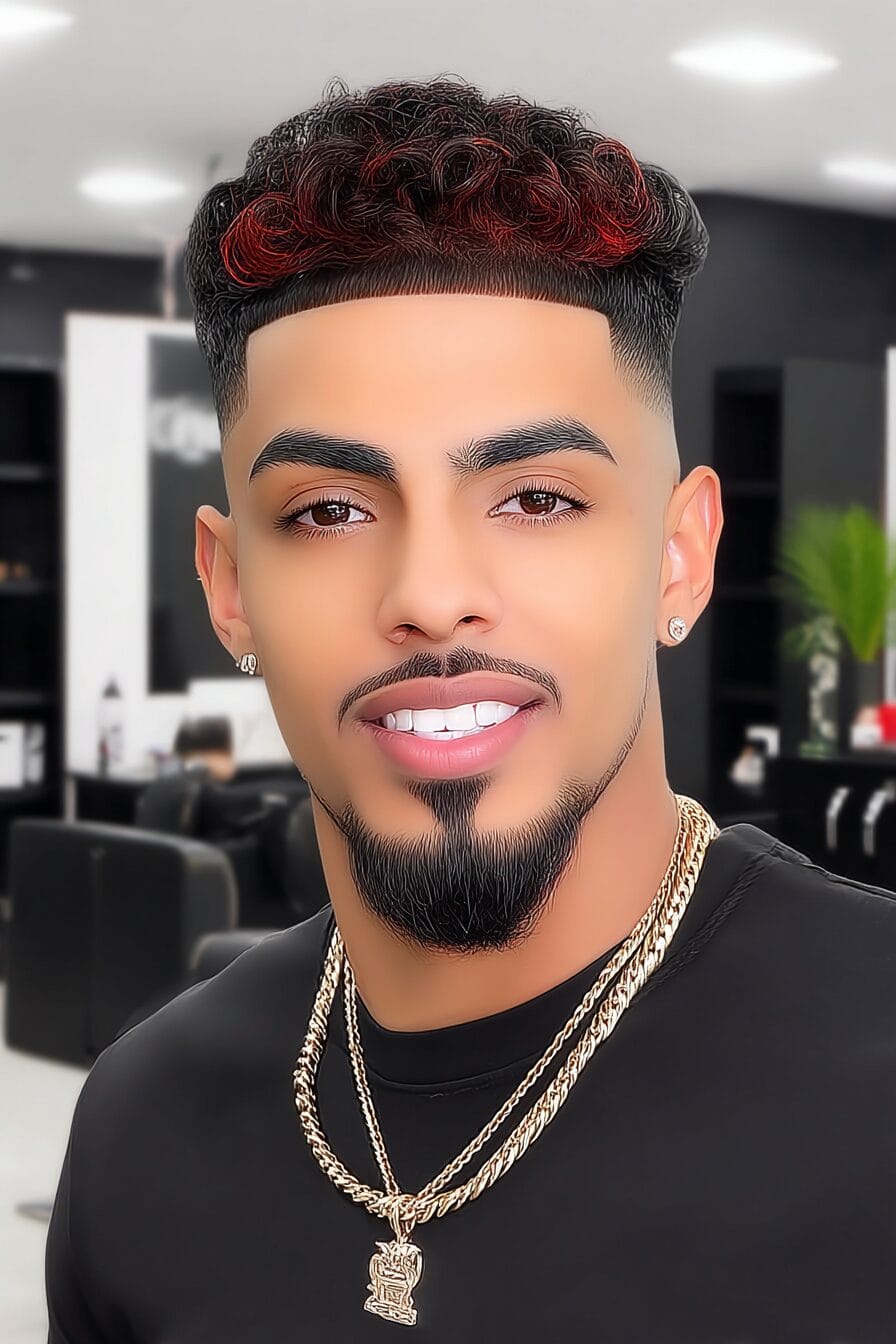
Edgar with Beard Fade
The Edgar with beard fade seamlessly blends the haircut’s fade into facial hair gradation for a cohesive, polished look. This sophisticated approach creates visual continuity from hair to beard, requiring precise blending techniques. The connected fade works especially well for those with full beards, creating a frame that enhances facial features while maintaining the Edgar’s distinctive characteristics.
Asymmetric Edgar
An asymmetric Edgar features an angled or off-center fringe that breaks from traditional symmetry. This unconventional twist adds artistic flair while maintaining the cut’s essential elements.
The angled fringe can be subtle or dramatic, depending on personal preference. This variation suits creative individuals looking to put their unique spin on the trending Edgar style while keeping its recognizable foundation.
🎬 Haircut Tutorial: EDGAR CUT | EASY TO FOLLOW STEPS
How to Ask Your Barber for an Edgar Cut
Walking in and just saying “give me an Edgar” leaves too much room for interpretation — I’ve seen guys end up with everything from a textured crop to a bowl cut. Here’s how to get exactly what you want.
Bring reference photos. Show your barber 2–3 photos of the exact variation you’re after. A fluffy Edgar and a short Edgar are completely different cuts, and a picture removes all guesswork.
Specify your fade type. Tell them whether you want a low fade (subtle, professional), mid fade (balanced), high fade (bold contrast), or burst fade (curved around ears). The fade makes or breaks the look.
Mention your hair texture. If you have curly or wavy hair, your barber needs to know upfront — the cutting technique changes completely. Straight hair gets point-cut for texture, while curly hair needs careful layering to maintain the fringe shape.
Know the guard numbers. Sides typically range from a 0 (skin fade) to a 2 guard, while the top stays 2–4 inches depending on the variation. If you want a fluffy Edgar, ask for at least 3 inches on top.
How to Style and Maintain Your Edgar Cut
After two decades behind the chair, the number one complaint I hear about Edgar cuts is the fringe losing its shape between visits. Here’s how to keep yours looking fresh.
Choose the right product for your variation. Matte clay works best for textured and messy Edgars — it adds grip without shine. For a slicked or polished look, use a medium-hold pomade. Sea salt spray is your friend if you’re going for the wavy Edgar, and a volumizing powder does wonders for the fluffy version.
Blow-dry matters more than you think. For any Edgar with volume (fluffy, long top, faux hawk), blow-dry the top forward and up with a round brush while the hair is still damp. This sets the shape and makes styling take half the time.
Schedule trims every 2–3 weeks. The straight fringe is the first thing that grows out and looks messy. Book your next appointment before leaving the chair — that’s the only way to keep the lines sharp consistently.
FAQs: Edgar Cut Haircuts
What face shapes work best with an Edgar cut?
The Edgar cut works exceptionally well with oval, square, and diamond face shapes. The straight fringe can help balance longer faces by creating horizontal lines, while the faded sides elongate rounder faces.
Men with prominent foreheads might want to adjust the fringe length for better proportion. The key is working with your barber to customize the fade height and fringe thickness to complement your specific features.
How often should I get an Edgar cut trimmed?
Edgar cuts require maintenance every 2-3 weeks to keep the lines sharp and fade fresh. The straight fringe grows out quickly and loses its precision, while the fade begins to blur after two weeks.
Some men stretch it to monthly visits, but the style looks best with frequent touch-ups. Budget for regular barbershop visits when choosing this high-maintenance style.
Can I style an Edgar cut differently for various occasions?
Absolutely. Despite its distinctive fringe, the Edgar offers surprising versatility.
You can slick the top back for formal events, add texture for casual outings, or spike it up for edgier looks. The key is choosing an Edgar variation with enough length on top for styling flexibility. Using different products – from pomade to clay – completely changes the cut’s appearance and vibe.
What’s the difference between an Edgar and a Caesar cut?
While both feature short, forward-styled fringes, the Edgar has a much sharper, straighter fringe line and typically includes a high fade or taper. The Caesar cut has a more natural, slightly rounded fringe with uniform length all around.
Edgar cuts are generally more dramatic and geometric, while Caesar cuts offer a softer, classic appearance. The Edgar also tends to have more contrast between top and sides.
Is the Edgar cut still trending?
Absolutely — the Edgar cut remains one of the most popular men’s hairstyles heading into 2026. What started as a niche style rooted in Mexican-American barbershop culture has gone fully mainstream, largely thanks to TikTok and Gen Z. The style keeps evolving with new twists like the fluffy Edgar and Edgar mullet, so it’s far from fading out.
How much does an Edgar cut cost?
An Edgar cut typically costs between $25 and $50 at most barbershops, depending on your location and the barber’s experience level. In larger cities or high-end shops, expect to pay $50 to $75. More complex variations like the design Edgar or burst fade Edgar may cost extra due to the precision and time involved.
Was this article helpful?
Ready to Find Your Perfect Cut?
You’ve read about the styles. Now find the one that fits YOUR face shape, hair type, and lifestyle.

Khamis Maiouf is a professional barber who graduated from Hinckley College in England with a Level 3 qualification in hairdressing. With over 20 years of experience, he is an award-winning barber who has mentored numerous students and styled thousands of clients. A recognised expert featured on StyleCraze (20M+ readers).
Credentials: Level 3 Hairdressing (Hinckley College, UK) • 20+ Years Professional Experience • Featured Expert on StyleCraze • Founder of Book of Barbering