

Most guys walk in asking for “just a high and tight” and end up with a buzz cut they didn’t want. The high and tight fade is a specific cut—military precision up top, clean skin fade on the sides—and getting it right comes down to your face shape, hair density, and which of these 9 variations you ask for.
Not sure which style suits you best? Our Haircut Finder Quiz matches you with the right cut based on your face shape and hair type — takes 60 seconds.
Key Takeaways
- The high and tight fade features buzzed sides fading from skin to a clear weight line above the ears, with 1-2 inches on top
- 9 variations exist—from the standard military cut to modern versions with hard parts, drop fades, and textured tops
- Oval and square faces suit this cut naturally, but every face shape works with the right fade height and top length adjustment
- Maintenance is easy: touch-ups every 2-3 weeks, and most buzz-top versions need zero styling products
- Pair it with a well-shaped beard—short stubble or clean edges complement the precision of the fade
What Is A High And Tight Fade?
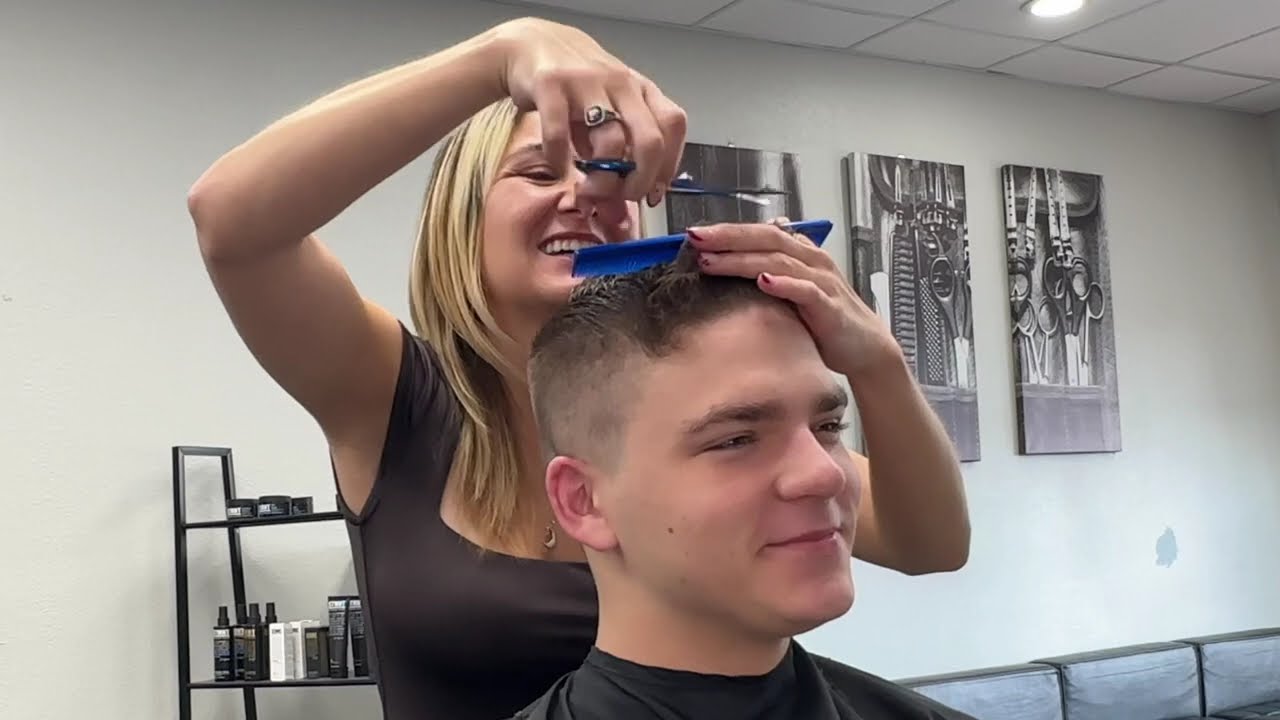
The high and tight fade combines buzzed sides with a dramatic fade starting well above your ears. This military-born take on the high and tight leaves approximately 1-2 inches on top while taking the sides down to skin or near-skin level.
Your barber creates the signature look by establishing a clear weight line around your head’s upper third. The fade blends from this line down to your shortest guard length, creating that unmistakable clean-cut appearance.
Classic High And Tight Variations
Standard High And Tight
The standard version features a #2 guard on top with sides faded from #1 to skin. Your barber maintains uniform length across the crown, creating a flat, table-like surface.
This original military specification works best for straight, medium-density hair. The contrast between top and sides stays moderate yet distinctly professional.

Semi-High And Tight
This softer interpretation keeps slightly more length through the parietal ridge area. Your fade starts about an inch lower than the traditional placement.
Business professionals prefer this version because it maintains the clean aesthetic while appearing less severe. The extra coverage helps round faces achieve better proportional balance.

High And Tight With Hard Part
Adding a razored part line transforms the basic cut into a sharp, contemporary statement. Your barber carves a distinct channel along your natural part.
The hard part adds definition and helps direct longer top sections. Position it off-center for maximum impact with your face shape.

Fade Heights And Blend Zones
Mid-Fade High And Tight
Despite its name, the mid-fade version still maintains high placement but extends the blend zone. Your fade begins at the temples’ upper edge and gradually descends.
This option suits guys with prominent ears or irregular head shapes. The extended transition softens harsh angles while preserving military sharpness.

Drop Fade High And Tight
The drop fade curves downward behind your ears, following your head’s natural contour. This creates a rounded silhouette that complements the angular top section.
Athletic builds benefit from this dynamic variation. The curved fade line adds movement and prevents the cut from appearing too boxy.

🧠 Expert Advice
Request your fade height by pointing exactly where you want the weight line—never assume your barber knows your preference. Most high and tights start two fingers above the ear top, but adjusting even half an inch dramatically changes the final look.
Top Length
Buzz Cut Top High And Tight
The buzz cut top uses a single guard length across the entire crown area. Your barber typically applies a #3 or #4 guard for subtle texture.
This low-maintenance option requires zero styling products. Weekly touch-ups keep the length consistent and prevent awkward grow-out phases.

Crew Cut High And Tight
Crew cut styling graduates the top length from front to back. Your barber leaves up to an inch at the hairline while tapering shorter toward the crown.
The graduated length allows for slight styling versatility. Apply matte clay for texture or pomade for a sleeker finish.

Flat Top High And Tight
The flat top demands precision cutting to achieve its signature horizontal plane. Your barber uses clippers and scissors to create a perfectly level surface.
Dense, straight hair produces the best flat top results. The style requires professional maintenance every 10-14 days to preserve its geometric shape.

Textured Top High And Tight
Point cutting and texturizing shears add choppy, piece-y definition to the top section. Your barber removes weight strategically to create natural movement and separation.
Wavy or thick hair benefits most from texturizing techniques. The added texture prevents helmet-like heaviness while maintaining the military foundation.
Military Regulation Styles
Marine Corps High And Tight
Marine regulations specify zero fade on sides with no more than three inches on top. The fade must start above the temple’s uppermost point.
Your barber should create an almost vertical wall between top and sides. This extreme contrast defines the Marine Corps aesthetic and projects maximum discipline.

Army Regulation High And Tight
Army standards allow slightly more length variation but maintain strict taper requirements. The sides must gradually blend without obvious lines or shelves.
Not sure what your face shape is? Our Face Shape Detector figures it out in 4 quick questions.
Your cut needs to present a neat, conservative appearance. The top can reach four inches if it doesn’t touch your ears when combed.

Age-Appropriate Variations
Teen High And Tight Fade
Teen versions often incorporate trendy elements like designs or extreme fades. Your barber can push creative boundaries while maintaining the core structure.
School dress codes may restrict certain variations. Always verify acceptable styles before requesting aggressive fades or visible designs.

Professional High And Tight
Professional adaptations maintain conservative lengths and subtle fading. Your barber keeps everything neat without drawing unnecessary attention in corporate settings.
The fade starts slightly lower for a less severe appearance. Top length stays moderate to project competence without aggression.

Mature High And Tight Style
Mature clients benefit from softer fade transitions that complement graying hair. Your barber adjusts the contrast to flatter silver tones.
Slightly longer guards prevent scalp show-through as hair naturally thins. The adjusted proportions maintain youthful energy without appearing age-inappropriate.

Ready to Find Your Perfect Cut?
You’ve read about the styles. Now find the one that fits YOUR face shape, hair type, and lifestyle.
High and Tight Fade With a Beard
The high and tight fade creates one of the strongest contrasts you can pair with facial hair. That clean, tight fade line draws the eye straight to your jawline—which is exactly where a well-shaped beard takes over.
Short stubble (3-5mm) works as the go-to pairing because it mirrors the tight, controlled energy of the fade. You get contrast without competing textures. For guys growing a fuller beard, keep the cheek line sharp and the neckline defined—the structured fade demands equally structured edges on your facial hair.
Longer beards (1-2 inches) can work, but only if the beard itself is well-maintained. An unkempt beard next to a precision fade looks like two different people. The shorter your sides, the cleaner your beard edges need to be.
Round-faced guys benefit most from this combo. The high fade elongates your head while a pointed or tapered beard adds vertical length to your jaw. Square and oval faces can run any beard length—just keep the transitions clean.
Best Products for a High and Tight Fade
Most high and tight fades need almost nothing on the sides—they’re too short for product. Your styling focus goes entirely to whatever length you’ve got on top.
For buzz-length tops (#3-#4 guard), skip products entirely. Your hair is too short for anything to grip, and product just makes it look greasy. Once you’re working with half an inch or more, matte clay gives you texture and hold without shine—perfect for the military-clean aesthetic this cut is known for.
Crew cut or textured top versions benefit from a lightweight pomade or styling cream. Work a pea-sized amount between your palms and apply to towel-dried hair. For more ideas on styling short hair, match the product finish to your setting—matte for casual, slight shine for formal.
One product every high and tight client should invest in: SPF scalp spray. Those faded sides expose a lot of skin, especially on a skin fade or zero guard. Sunburned scalp peeling through a fresh fade is not the look you’re going for.
FAQs
How Often Should I Get My High And Tight Fade Touched Up?
Most guys need touch-ups every 2-3 weeks to maintain the sharp contrast. If you have darker, faster-growing hair, weekly visits keep the fade looking fresh.
Your specific schedule depends on your hair growth rate and personal standards. Some perfectionist visit their barber weekly, while others stretch it to a month.
What’s The Difference Between A High And Tight And A Regular Fade?
A high and tight specifically features an extremely high fade line with minimal top length. Regular fades can start anywhere and accommodate any top style.
The military heritage of the high and tight demands precise proportions. Regular fades offer more creative freedom and personalization options.
Can I Maintain A High And Tight Fade At Home Between Barber Visits?
You can clean up your neckline and around your ears with clippers. However, attempting to touch up the actual fade usually creates visible lines.
Invest in quality clippers with multiple guards for basic maintenance. Save the fade work for your barber to prevent irreversible mistakes.
Which Face Shapes Look Best With A High And Tight Fade?
Oval and square faces naturally suit the high and tight‘s proportions. Round faces benefit from the added height, while oblong faces need careful length management.
Every face shape can wear this cut with proper adaptations. Your barber adjusts fade placement and top length to optimize your specific features.
What Guard Sizes Create The Perfect High And Tight Fade?
Start with a zero or #1 at the bottom, blend through #2, then establish your line. The top typically uses #3-#5 depending on desired contrast.
Your hair density and color affect ideal guard selection. Experiment with combinations until you find your perfect balance of contrast and coverage.
Is a High and Tight the Same as a Buzz Cut?
A buzz cut uses one guard length all over your entire head—same length on top, sides, and back. A high and tight keeps length on top and fades the sides down to skin or near-skin. The key difference is that dramatic contrast between top and sides that defines the high and tight fade.
How Do I Ask My Barber for a High and Tight Fade?
Tell your barber you want a high and tight with a fade, then get specific: what guard on top (#3-#5), how high the fade starts (above or at the temple), and whether you want a skin fade or a #1 at the bottom. Point to exactly where you want the weight line—bringing a reference photo eliminates guesswork and ensures you both agree on the final result.
Does a High and Tight Fade Work With Curly Hair?
A high and tight fade works well with curly hair—the natural texture adds volume and interest on top that straight hair can’t replicate. Your barber may need to adjust the blend zone since curly hair creates more visual weight. Ask for a slightly longer guard on top (#4-#5) to let your curls define themselves, and keep the fade line crisp to contrast against the texture.
Was this article helpful?

Khamis Maiouf is a professional barber who graduated from Hinckley College in England with a Level 3 qualification in hairdressing. With over 20 years of experience, he is an award-winning barber who has mentored numerous students and styled thousands of clients. A recognised expert featured on StyleCraze (20M+ readers).
Credentials: Level 3 Hairdressing (Hinckley College, UK) • 20+ Years Professional Experience • Featured Expert on StyleCraze • Founder of Book of Barbering