

— Award-Winning Barber · 20+ Years Experience · Level 3 Qualified
After cutting thousands of fringe styles over my 20+ year career, I can tell you this: the right fringe haircut does more for a man’s face than any other single cut. It hides a big forehead, sharpens a round jaw, and gives you instant structure with almost zero styling effort.
Below I’ve pulled together the 20 fringe variations I cut most often in my chair, covering every hair type and face shape so you can walk into your next appointment knowing exactly what to ask for.
Key Takeaways
Not sure which style suits you best? Our Haircut Finder Quiz matches you with the right cut based on your face shape and hair type — takes 60 seconds.
- Fringe haircuts work for every hair type — straight, wavy, curly, and even thinning hair benefit from the right fringe variation
- Low-maintenance options like the French crop and Caesar cut need under five minutes of daily styling
- Pairing a fringe with a fade or undercut on the sides adds contrast and keeps the look modern
- Most fringe styles need a trim every 2-3 weeks to stay sharp — book your barber on a recurring schedule
- Use texture paste over pomade for fringe styles — lighter products prevent the hair from falling flat
Best Fringe Haircut for Your Face Shape
Choosing the wrong fringe for your face shape is the number one mistake I see guys make. After two decades of matching cuts to faces, here’s my breakdown of what actually works.
If you have a round face, go for an angular fringe or a textured side-swept style that adds vertical length and slims the cheeks. A blunt, straight-across fringe will only emphasize the width — avoid it. Guys with oval faces hit the genetic jackpot and can pull off virtually any fringe, from micro to curtained.
For square faces, a textured or messy fringe softens the strong jawline without hiding it. The key is keeping some irregular movement up top so you’re not doubling up on hard angles. If your face is long or oblong, a heavier, blunt fringe creates a horizontal break that visually shortens the face — pair it with a mid fade to keep the sides tight.
Heart-shaped faces look best with a curtained or graduated fringe that adds width around the temples. And if you have a diamond face, a side-swept fringe balances narrower forehead and chin proportions beautifully. Whatever your shape, bring a reference photo to your barber and ask them to customize the fringe length and density to your specific proportions — a good barber will adjust the cut by millimeters to get it right.
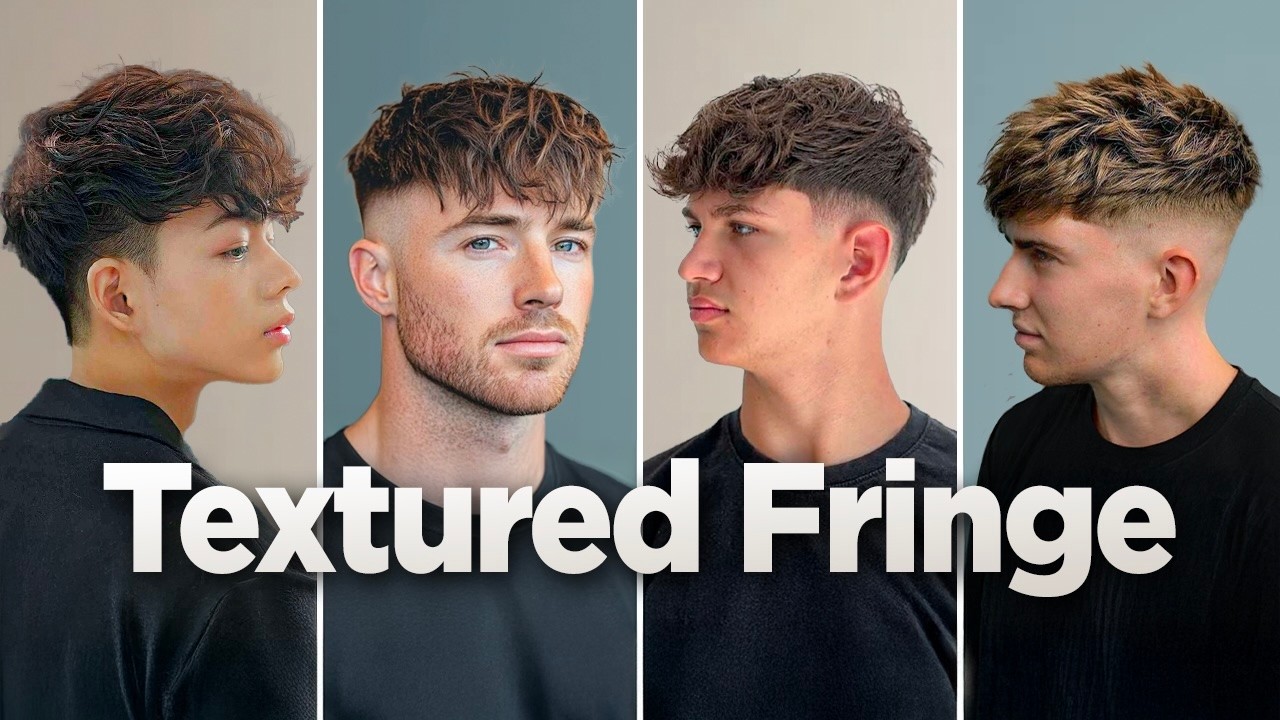
Textured Fringe
The textured fringe combines choppy, piece-y bangs with natural movement for an effortlessly cool vibe. This versatile style works with most hair types and requires minimal styling—just work in some texture paste and go. Perfect for guys who want dimension without the commitment of precise styling.
Blunt Fringe
A blunt fringe makes a bold statement with its straight-across cut and defined edge. This style demands confidence and works best with straight to slightly wavy hair that can hold the clean line. It’s particularly striking on angular face shapes where it creates interesting geometric contrast.

Side-Swept Fringe
This side-swept fringe angles elegantly across the forehead, creating flattering asymmetry. The diagonal flow softens strong features while adding sophistication to any look. Works brilliantly for professional settings where you need polish without sacrificing personality.
French Crop
The French crop features a short textured fringe paired with precisely faded sides for a clean, contemporary look. This low-maintenance powerhouse has become the go-to for busy professionals who need style that lasts from boardroom to bar. The contrast between textured top and crisp sides creates instant structure.

Caesar Cut
Named after the Roman emperor, this Caesar cut maintains uniform length with a short horizontal fringe. The simplicity makes it ideal for men with thinning hair or receding hairlines, as the forward-styled fringe provides coverage. Requires minimal styling—just towel dry and you’re set.
Messy Fringe
The messy fringe embraces controlled chaos with tousled, irregular pieces that look effortlessly undone. This style thrives on texture and movement, making it perfect for guys with naturally wavy or thick hair. Currently trending among creative professionals who want approachable edge without trying too hard.

Angular Fringe
An angular fringe cuts a sharp diagonal line across the forehead for maximum impact. This geometric approach suits men with softer features who want to add definition and edge. The precise angle requires regular trims to maintain its striking silhouette, but the payoff is undeniable presence.

Curtained Fringe
The curtained fringe parts naturally in the center, creating face-framing layers on both sides. This romantic style has exploded in popularity thanks to its versatility—you can sweep it back for formal occasions or let it fall naturally for casual cool. Works beautifully with medium to long hair lengths.

Micro Fringe
A micro fringe sits dramatically short on the forehead, barely grazing the hairline. This avant-garde choice demands confidence and regular maintenance but delivers unmatched originality. Best suited for oval or heart-shaped faces where the abbreviated length won’t overwhelm features.

Layered Fringe
This layered fringe uses multiple lengths to create depth and dimension across the forehead. The graduated layers add movement and prevent the heavy, helmet-like appearance that can plague thicker hair. Stylists love this option because it adapts to virtually any face shape while maintaining natural flow.

Long Fringe
The long fringe extends to eye level or below, offering maximum styling versatility. You can sweep it aside for a mysterious vibe or push it back for a completely different look. This length requires commitment to styling but rewards you with endless possibilities—from grunge to sophisticated.

Short Cropped Fringe
A short cropped fringe keeps things minimal and clean with precise lines and reduced length. This military-inspired option works exceptionally well with buzz cuts or crew cuts, adding just enough detail without overwhelming the simplicity. Under five minutes of morning styling required.

Medium Textured Fringe
The medium textured fringe hits the sweet spot between short and long, offering maximum versatility. With enough length to style multiple ways but short enough for easy maintenance, it’s become the default choice for men exploring fringe styles. Works with virtually any hair texture when cut properly.

Graduated Fringe
A graduated fringe features length that gradually increases from center to sides, creating a natural arch. This subtle variation flatters round faces by adding vertical emphasis while maintaining softness. The gradual transition makes growing it out easier if you decide to change styles.
Choppy Long Fringe
This choppy long fringe combines irregular lengths with artistic layering for a rock-inspired aesthetic. The intentionally uneven pieces create movement and texture that photographs beautifully. Popular among musicians and artists who want their hair to reflect their creative energy.
Curved Fringe
A curved fringe follows the natural arc of your forehead, creating a softer, more organic appearance. This rounded shape works particularly well with longer face shapes, adding width and balance. The curve requires precision cutting but delivers a uniquely flattering frame.

Spiky Fringe
The spiky fringe features textured pieces styled upward and forward for dynamic energy. This playful style works best with shorter hair lengths and strong-hold products. Currently popular among younger professionals who want personality without sacrificing workplace appropriateness.
Asymmetrical Fringe
The asymmetrical fringe uses deliberately uneven lengths to create visual interest and break conventional symmetry. This artistic approach suits confident men who view their hair as self-expression. Each cut is unique, making it perfect for those wanting a truly personalized style that stands out.

FAQs: Fringe Haircuts
How do I know if a fringe will suit me?
Consider your face shape and forehead size first. Longer faces benefit from horizontal fringe styles that add width, while round faces look great with angular or side-swept options.
Not sure what your face shape is? Our Face Shape Detector figures it out in 4 quick questions.
Your hair texture matters too—straight hair holds blunt cuts well, while wavy hair naturally creates textured fringes. Book a consultation with your barber to discuss options before committing.
How often should I trim my fringe?
Most fringe styles need trimming every 2-3 weeks to maintain their shape, especially shorter or more precise cuts. Longer, textured fringes can stretch to 4 weeks between trims.
Regular maintenance prevents that awkward in-between phase and keeps your style looking intentional. Many barbers offer quick fringe trim services between full cuts.
What’s the best way to style a fringe?
Start with damp, towel-dried hair and apply a lightweight styling product suited to your desired finish. Use a blow dryer on medium heat with a round brush or your fingers to direct the fringe into place.
Finish with a small amount of texture paste or pomade for hold and definition. The key is using minimal product to avoid weighing down the hair.
Can I pull off a fringe with thinning hair?
Absolutely. Certain fringe styles like the Caesar cut or French crop actually help disguise thinning areas by bringing hair forward.
Avoid heavy, blunt fringes that require density to look full. Instead, opt for textured, choppy styles that create the illusion of thickness through movement and layering. Your barber can customize the cut to maximize coverage.
What is the difference between a fringe and bangs?
In my shop, clients ask for both terms and they mean the same thing — hair that falls over the forehead. “Bangs” is the American English term while “fringe” is used in the UK and Australia. The only real difference is regional vocabulary, not the cut itself. I personally prefer “fringe” because it covers the full range of styles from micro cuts to long curtain looks without the feminine association some guys attach to the word “bangs.”
Can I get a fringe haircut with curly hair?
Absolutely — some of my best fringe work is on curly-haired clients. The key is cutting the fringe longer than you think you need because curls shrink up significantly when dry.
I typically cut curly fringes about 30% longer than straight-hair fringes and use point cutting to remove bulk without destroying the curl pattern. A textured or messy fringe works particularly well with natural curls since the movement is already built in. Pair it with a taper fade on the sides for a clean, modern finish.
How do I keep my fringe from going flat during the day?
Flat fringe is almost always a product or technique problem, not a hair problem. I tell my clients to blow dry the fringe forward on medium heat while it’s still damp, then finish with a matte texture paste worked between the fingertips — not the palms. Avoid heavy pomades or gels that weigh the hair down. If your fringe still falls flat by midday, try a volumizing powder at the roots for invisible lift that lasts all day.
Was this article helpful?
Ready to Find Your Perfect Cut?
You’ve read about the styles. Now find the one that fits YOUR face shape, hair type, and lifestyle.

Khamis Maiouf is a professional barber who graduated from Hinckley College in England with a Level 3 qualification in hairdressing. With over 20 years of experience, he is an award-winning barber who has mentored numerous students and styled thousands of clients. A recognised expert featured on StyleCraze (20M+ readers).
Credentials: Level 3 Hairdressing (Hinckley College, UK) • 20+ Years Professional Experience • Featured Expert on StyleCraze • Founder of Book of Barbering