
Every week, a client sits in my chair and asks some version of the same question: “What can I actually do to fill in my beard?” They have usually already tried growing it out for a month, got frustrated with the patches, and shaved it off. The cycle repeats because they are treating a long-term process like a short-term experiment.
Beard growth remedies fall into three categories: natural topical treatments, clinical interventions, and lifestyle adjustments. Some have genuine science behind them.
Others are marketing dressed up as medicine. The difference matters, because spending six months on a remedy that was never going to work is six months you could have spent on one that might.
Want to know which beard style actually works with your face? Take the Beard Style Quiz — 5 questions to find out.
This guide covers every viable beard growth remedy individually — what it does, how to use it, what the evidence says, and how long you should expect to wait for results. I have recommended many of these to clients over the years, and I will be direct about which ones deliver and which ones are not worth your time or money. If you want to understand the stages your beard goes through as it develops, our beard growth stages and timelines guide covers that in detail.
Key Takeaways
- The only beard growth remedy with strong clinical evidence is minoxidil — it works for about 80% of men, but it takes 3–6 months of daily use to see results.
- Natural oils like castor and rosemary may help, but the evidence is limited. They’re worth trying because they’re cheap and low-risk — just don’t expect dramatic changes.
- No supplement alone will grow a beard. Biotin, zinc, and vitamin D support hair health, but only if you’re actually deficient.
- Lifestyle matters more than most guys think — sleep, exercise, stress management, and quitting smoking all directly affect hair follicle function.
- If your beard is patchy after 6+ months of consistent care, it may be genetics. Derma rolling combined with minoxidil is the strongest non-surgical option for filling in thin areas.
The Science Behind Beard Growth
Before spending money on any remedy, you need to understand what actually drives facial hair growth. Two factors matter more than anything else: dihydrotestosterone (DHT) and follicle sensitivity.
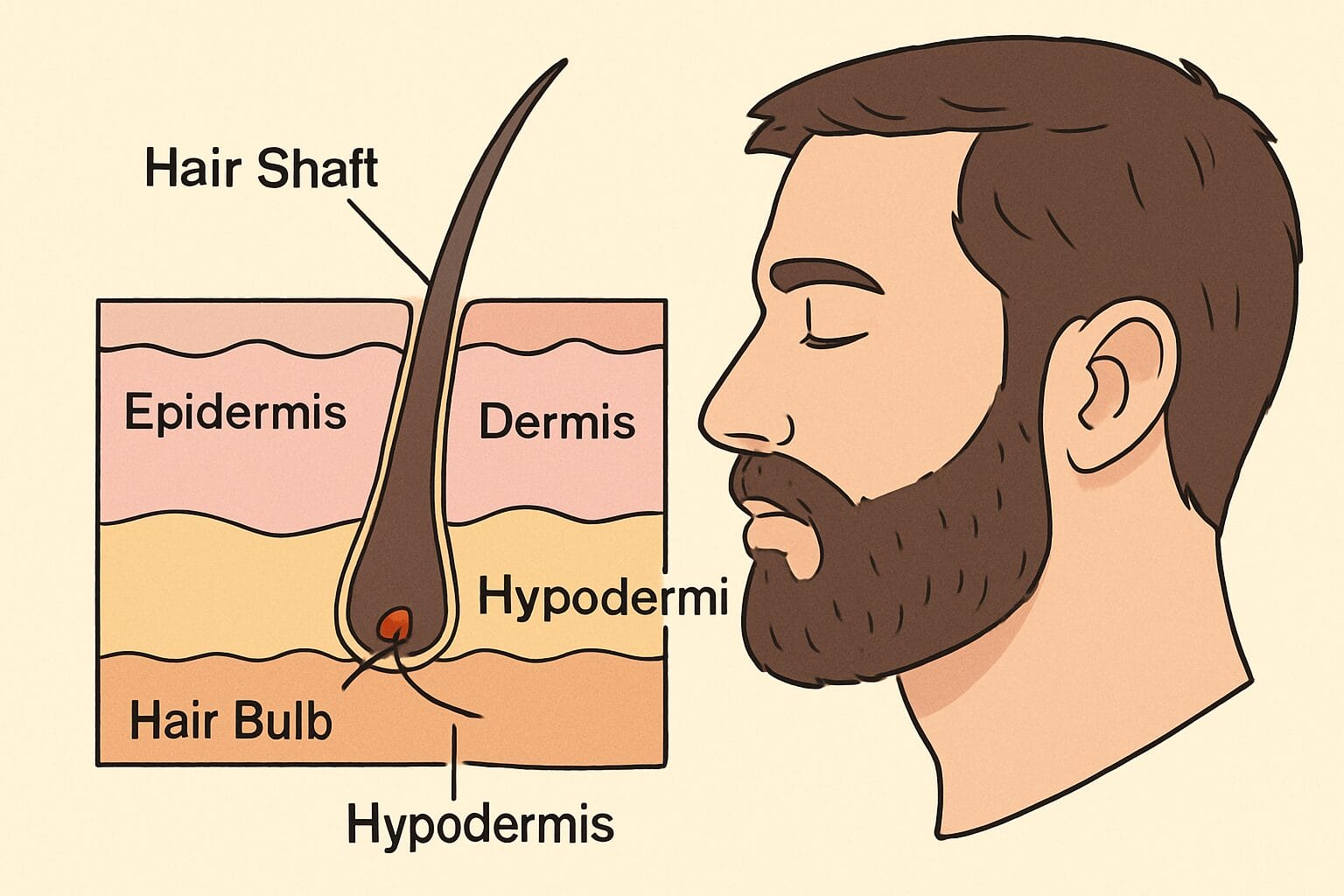
DHT is an androgen hormone derived from testosterone. It binds to receptors in your facial hair follicles and signals them to produce thicker, darker terminal hairs.
The catch is that your follicles need to be genetically sensitive to DHT for this to work. A man with high DHT but low follicle sensitivity will still have a patchy beard. A man with moderate DHT but highly sensitive follicles may grow a full beard by his early twenties.
This is your genetic ceiling — the maximum density and coverage your beard can achieve based on your DNA. No remedy can create follicles that do not exist.
What remedies can do is activate dormant follicles (vellus hairs that have not yet transitioned to terminal hairs), improve blood flow to existing follicles, and optimise the hormonal environment for growth. For a deeper look at how genetics and growth patterns interact, our beard growth patterns guide covers the full picture without duplicating what we cover here.
Natural Oil Remedies

Natural oils are the most accessible starting point. They are affordable, widely available, and carry minimal risk. However, the evidence for direct beard growth stimulation varies significantly between oils — and two commonly recommended oils may actually work against you.
Oils That May Help

- Castor oil contains ricinoleic acid, which has anti-inflammatory properties and may improve blood circulation to the follicles. It is the most commonly recommended natural beard growth oil and has been used for decades, though direct clinical studies on beard growth specifically are limited. Apply 3-5 drops to the beard area and massage in for 2-3 minutes before bed. Wash out in the morning. It is thick and sticky, so a little goes a long way.
- Coconut oil is rich in lauric acid, which penetrates the hair shaft more effectively than most oils. Its primary benefit is conditioning — it reduces protein loss from the hair strand, keeping existing beard hairs healthier and less prone to breakage. It will not stimulate new growth, but it creates a healthier environment for the hairs you already have.
- Jojoba oil closely mimics the natural sebum your skin produces, making it an excellent moisturiser for the skin beneath your beard. Healthy, well-moisturised skin supports healthier follicle function. It is lightweight, absorbs quickly, and does not clog pores — making it suitable for daily use.
- Peppermint oil has the strongest evidence for stimulating new growth among essential oils. A 2014 study on mice found that peppermint oil significantly increased dermal thickness, follicle number, and follicle depth compared to other oils tested. It works by improving blood circulation to the follicles. Always dilute peppermint oil in a carrier oil — 2-3 drops per tablespoon of jojoba or coconut oil — as it can irritate the skin when applied directly.
- Tea tree oil is primarily anti-inflammatory and antimicrobial. It will not stimulate growth directly, but it keeps the skin beneath the beard clean and healthy, which prevents conditions like folliculitis and beardruff that can impede growth. Use 2-3 drops diluted in a carrier oil. If your beard itches during the early growth stages, tea tree oil helps — our guide to stopping beard itch covers additional solutions.
Oils to Avoid for Beard Growth

This is where most beard growth guides get it wrong. Two of the most frequently recommended oils for hair growth — pumpkin seed oil and rosemary oil — can actually inhibit beard growth.
Both contain compounds that block the enzyme 5-alpha reductase, which converts testosterone into DHT. Research shows rosemary extract can reduce 5-alpha reductase activity by up to 95% in laboratory settings, and pumpkin seed oil’s phytosterols have a similar inhibitory effect.
Blocking DHT is excellent for preventing scalp hair loss — which is why these oils are popular in the hair loss community. But DHT is the hormone that drives beard growth.
Applying DHT blockers to your face is counterproductive. If you see pumpkin seed oil or rosemary oil listed in a “beard growth” product, understand that the science works against the claim. Use them on your scalp if you want, but keep them off your beard.
Clinical Remedies

Clinical remedies have stronger evidence behind them but come with side effects, cost, and commitment. These are the options to consider if natural oils and lifestyle changes are not producing results after three to six months.
Minoxidil

Minoxidil is the most widely used clinical treatment for beard growth, though it is important to note it is not FDA-approved for facial hair — this is an off-label use. Originally developed as a blood pressure medication, its hair growth effects were discovered as a side effect. It works by widening blood vessels beneath the skin, increasing blood flow and nutrient delivery to hair follicles, and extending the anagen (growth) phase of the hair cycle.
For beard growth, the standard protocol is 5% topical minoxidil (available as Rogaine or generic equivalents) applied twice daily to the beard area. Use roughly 1ml per application — most droppers or foam dispensers are calibrated for this amount. Apply to clean, dry skin, massage gently for 30 seconds, and leave it on for at least four hours before washing your face.
The timeline is gradual. During months one to two, you may see fine, light vellus hairs appearing.
Temporary shedding around month two to three is common and is actually a sign the treatment is working — old hairs are pushed out as the follicles reset. By months three to six, vellus hairs begin transitioning to darker, thicker terminal hairs. Noticeable density improvement typically becomes visible around months four to six, with continued improvement up to 12-16 months.
Side effects include skin dryness, redness, and itching at the application site (the most common complaints), unwanted hair growth on areas adjacent to the application zone, and in rare cases, heart palpitations or dizziness from systemic absorption. The foam formulation tends to cause less skin irritation than the liquid because it contains no propylene glycol. Men with cardiovascular conditions should consult a doctor before starting minoxidil.
The critical caveat: if you stop using minoxidil before the vellus hairs have fully transitioned to terminal hairs, new growth is likely to reverse. Most anecdotal reports suggest that once hairs have become fully terminal — thick, dark, and coarse — they tend to remain even after discontinuing treatment. This transition typically requires 12-24 months of consistent use, though individual results vary significantly.
Derma Rolling (Microneedling)

A derma roller is a handheld device covered in tiny needles that create controlled micro-injuries in the skin. These micro-injuries trigger the body’s wound-healing response, increasing collagen production, blood flow, and growth factor release at the treated area. When used on the beard area, this can stimulate dormant follicles and improve the skin environment for growth.
While you’re working on filling in thin spots, check out these patchy beard styles that look great even with uneven coverage.
Use a 0.5mm needle depth for beard growth — this is deep enough to stimulate the dermal papilla (the base of the hair follicle) without causing excessive pain or scarring risk. Roll the device across the beard area with moderate pressure, making 10 passes in each direction — horizontal, vertical, and both diagonals.
The skin will be pink or lightly red afterward, which is normal. Use the derma roller twice per week with at least 48 hours between sessions to allow healing.
The most effective use of derma rolling is in combination with minoxidil. Microneedling increases topical product absorption by up to 40% according to dermatological research.
Apply minoxidil 12-24 hours after derma rolling — never immediately after, as the micro-channels make the skin more permeable and increase the risk of systemic absorption and irritation. Disinfect the roller with isopropyl alcohol before and after each use, and replace the roller every two to three months as the needles dull.
PRP Therapy

Platelet-rich plasma (PRP) therapy is a clinical procedure where your own blood is drawn, processed to concentrate the platelets, and injected into the beard area. Platelets contain growth factors that stimulate hair follicle activity. It is performed by a dermatologist and typically requires three to four sessions spaced four to six weeks apart, followed by maintenance sessions every six to twelve months.
Once you’ve achieved the coverage you’re after, explore our full beard styles guide to find the shape that suits your face best.
PRP has promising early research for scalp hair regrowth, and some practitioners offer it for beard enhancement. However, beard-specific studies are limited.
Each session costs £300-£600 ($400-$800), making it the most expensive remedy on this list. Results are gradual and typically visible after two to three sessions. Consider PRP if minoxidil has not produced sufficient results after 12 months, or if you prefer a treatment that does not require daily home application.
Supplements

Supplements can support beard growth if you are deficient in specific nutrients, but they are not magic pills. If your diet already covers these nutrients adequately, supplementing further is unlikely to produce visible beard changes. Here is an honest assessment of each.
- Biotin (Vitamin B7), 2.5mg daily: Biotin supports keratin production — the protein that makes up hair. Deficiency causes brittle hair and slowed growth. However, true biotin deficiency is uncommon in men with a balanced diet. If you are deficient, supplementing will help. If you are not, additional biotin has not been shown to accelerate beard growth beyond your baseline. Note: biotin can interfere with certain blood test results, so inform your doctor if you are supplementing.
- Vitamin D, 1,000-2,000 IU daily: Vitamin D receptors are present in hair follicles, and deficiency is linked to alopecia. Men in northern climates or who spend most of their day indoors are frequently deficient. A blood test is the only way to confirm deficiency — supplementing blindly is common but not always necessary.
- Zinc, 15-30mg daily: Zinc plays a role in hair tissue growth and repair, and in maintaining the oil glands around follicles. Deficiency is linked to hair loss. Oysters, red meat, and pumpkin seeds are the richest dietary sources. Supplementing beyond the recommended daily amount can cause nausea and actually impair immune function, so do not exceed 40mg daily.
- Iron: Iron deficiency is one of the most common nutritional deficiencies globally and is linked to hair thinning. However, iron supplementation without confirmed deficiency is not recommended — excess iron can be harmful. Get a ferritin blood test before supplementing.
- Omega-3 fatty acids, 1,000-2,000mg daily: Omega-3s support scalp and skin health by reducing inflammation. Fish oil or algae-based supplements provide the EPA and DHA forms that the body can use directly. The evidence for direct beard growth stimulation is limited, but the anti-inflammatory benefit supports overall follicle health.
The bottom line on supplements: get a blood panel done before spending money on pills. If your levels are normal, supplements will not push beard growth beyond what your genetics and hormones allow.
Diet

Your body builds hair from the nutrients you consume. A diet lacking in protein, healthy fats, and micronutrients will slow growth regardless of what you apply topically.
The key foods for beard support include salmon and fatty fish (omega-3s), eggs (biotin and protein), spinach and leafy greens (iron and folate), sweet potatoes (beta-carotene, which the body converts to vitamin A for sebum production), berries (vitamin C for collagen), nuts and seeds (zinc and vitamin E), and avocado (healthy fats). Avoid excessive processed sugar and heavy alcohol consumption, both of which can impair nutrient absorption and testosterone production. For a detailed dietary plan for beard growth, our how to grow a beard guide dedicates a full section to nutrition.
Lifestyle Factors

Lifestyle adjustments will not transform a patchy beard into a full one on their own, but they optimise the hormonal environment that supports whatever growth your genetics allow. These are free, carry no side effects, and benefit your overall health beyond just your beard.
Exercise

Resistance training — particularly compound movements like squats, deadlifts, bench press, and overhead press — temporarily elevates testosterone levels. High-intensity interval training (HIIT) has a similar effect.
If growing a denser beard is your goal, our guide to the thick beard covers the best styles and maintenance tips once your growth fills in.
The testosterone boost from a single session is modest and temporary, but consistent training over months contributes to a higher baseline. Aim for three to four resistance sessions per week with at least one HIIT session. Avoid overtraining, which elevates cortisol and can suppress testosterone.
Sleep

The majority of your daily testosterone production occurs during deep sleep. Studies consistently show that men who sleep fewer than five hours per night have significantly lower testosterone levels than those who sleep seven to eight hours.
Poor sleep quality — frequent waking, disrupted REM cycles — has a similar effect even if total hours are adequate. Prioritise 7-8 hours of quality sleep per night. This is one of the most underestimated factors in beard growth.
Stress Management

Chronic stress elevates cortisol, a hormone that directly competes with testosterone. Prolonged high cortisol can push hair follicles into the telogen (resting) phase prematurely, slowing or stopping growth. The remedy is not a specific supplement — it is addressing the source of stress and incorporating regular recovery through exercise, adequate sleep, and deliberate downtime.
Smoking
Smoking reduces blood flow to the skin and impairs nutrient delivery to hair follicles. It also increases oxidative stress, which damages the follicle environment.
Not sure what your face shape is? Our Face Shape Detector figures it out in 4 quick questions.
If you are investing time and money in beard growth remedies while smoking, you are working against yourself. Quitting is the single most impactful lifestyle change for skin and hair health.
Beard Oil vs. Growth Serums

These are frequently confused, and the distinction matters for your expectations and your wallet.
Beard oil is a conditioning product. It moisturises the beard hair and the skin beneath it, reduces itch, softens coarse strands, and adds a healthy sheen. It does not stimulate new growth.
Ingredients are typically carrier oils — jojoba, argan, sweet almond — with optional essential oils for fragrance. Beard oil makes your existing beard look and feel better, which is valuable, but it is not a growth remedy. For more on conditioning, our soften beard naturally guide covers the full routine.
Growth serums are formulated with active ingredients intended to stimulate follicle activity — minoxidil, biotin, caffeine, peptides, or a combination. They are applied to the skin rather than the hair and are designed to influence the growth cycle at the follicle level. Quality varies enormously across brands.
A growth serum containing minoxidil as its active ingredient has clinical backing. A serum relying solely on “proprietary botanical blends” without disclosing concentrations is likely overpriced beard oil in different packaging. Check the ingredient list before buying and look for clinically studied active ingredients at effective concentrations.
Realistic Timelines

One of the biggest reasons men abandon beard growth remedies prematurely is unrealistic expectations. Most remedies require months of consistent use before visible results appear. This table gives you honest timelines for each approach.
| Remedy | First Signs of Change | Noticeable Results | Full Assessment Period |
|---|---|---|---|
| Castor oil | 4-6 weeks (softer skin and hair) | 2-3 months (healthier appearance) | 6 months |
| Peppermint oil | 4-8 weeks | 3-4 months | 6 months |
| Minoxidil (5%) | 1-2 months (vellus hairs) | 4-6 months (terminal transition) | 12-16 months |
| Derma rolling + Minoxidil | 1-2 months | 3-5 months | 12 months |
| PRP therapy | After 2nd session (8-12 weeks) | After 3rd session (12-18 weeks) | 6-12 months |
| Biotin supplement | 4-8 weeks (if deficient) | 3-4 months (if deficient) | 6 months |
| Lifestyle changes (exercise, sleep, diet) | 6-8 weeks | 3-6 months | 6-12 months |
Commit to any single remedy for at least its full assessment period before concluding it does not work. Switching remedies every few weeks guarantees you will never see results from any of them.
When Remedies Are Not Enough

If you have committed to minoxidil for 12+ months, optimised your diet and lifestyle, and still see minimal growth, the issue may be medical rather than cosmetic. At this point, consider the following steps.
See a dermatologist. Conditions like alopecia barbae (an autoimmune condition that causes beard hair loss), hypothyroidism, and hormonal imbalances can all suppress beard growth regardless of what remedies you use. A dermatologist can diagnose these and prescribe targeted treatment.
Get your testosterone and DHT levels tested. A simple blood panel reveals whether your hormone levels fall within the normal range. Low testosterone is treatable under medical supervision, though testosterone replacement therapy is a significant medical decision that should not be taken lightly or self-prescribed.
Consider a beard transplant. Follicular unit extraction (FUE) beard transplants take hair follicles from the back of the scalp — where hair is genetically resistant to DHT — and transplant them to the beard area. Results are permanent because the transplanted follicles retain their donor characteristics.
Costs range from £3,000-£8,000 ($4,000-$10,000) depending on the number of grafts. Recovery takes one to two weeks, and full results are visible at 9-12 months. This is the final option when remedies and lifestyle changes have been exhausted.
Myths Worth Busting

Shaving Does Not Stimulate Growth
This is the most persistent beard myth. Shaving cuts the hair at the surface, creating a blunt tip that feels coarser when it grows back — but the strand itself has not changed in thickness, colour, or growth rate.
The follicle beneath the skin is entirely unaffected by what happens to the hair above it. Shaving your patchy beard repeatedly will not fill in the gaps. The only thing that fills in gaps is time, hormones, and follicle maturation.
Testosterone Supplements Alone Do Not Work
Over-the-counter “testosterone boosters” — typically blends of tribulus, fenugreek, D-aspartic acid, and zinc — have minimal to no proven effect on actual testosterone levels in men who are not clinically deficient. Even if they did raise testosterone slightly, it is DHT and follicle sensitivity — not raw testosterone — that drives beard growth.
Taking testosterone supplements without medical supervision is both ineffective for beard growth and potentially harmful. If you suspect low testosterone, get tested by a doctor.
🎬 The Only Ultimate Beard Tutorial You’ll Ever Need
Frequently Asked Questions
Does minoxidil work for beard growth?
Research and widespread anecdotal evidence suggest minoxidil can increase beard density, though it is an off-label use not FDA-approved for facial hair. Most users see initial vellus hair growth at one to two months and noticeable terminal hair improvement at four to six months. Results vary based on individual enzyme activity, and new growth may reverse if treatment is stopped before hairs fully transition to terminal.
What vitamins help beard growth?
Biotin (B7) supports keratin production, Vitamin D influences follicle cycling, and zinc aids hair tissue repair. However, supplements only produce visible results if you are deficient in these nutrients.
A blood test is the only way to confirm deficiency. A balanced diet covering protein, healthy fats, and micronutrients is more effective than supplementing blindly.
Can castor oil grow a beard?
Castor oil conditions the skin and beard hair, may improve blood circulation to follicles through its ricinoleic acid content, and creates a healthier growth environment. However, there are no clinical studies proving it directly stimulates new follicle growth. It is a worthwhile addition to your routine for overall beard health, but should not be relied on as a standalone growth remedy.
Does biotin help with beard growth?
Biotin helps if you are deficient — it supports the keratin protein structure that makes up hair. True biotin deficiency causes brittle hair and slowed growth, and supplementing corrects this. If your biotin levels are already normal, additional supplementation has not been shown to accelerate beard growth beyond your genetic baseline.
What foods promote beard growth?
Foods rich in protein (eggs, lean meat, fish), healthy fats (salmon, avocado, nuts), and key micronutrients (spinach for iron, sweet potatoes for vitamin A, berries for vitamin C) support the hormonal and nutritional environment your follicles need. No single food will transform a patchy beard, but a consistently nutrient-dense diet removes dietary deficiency as a limiting factor.
Should I avoid rosemary oil on my beard?
Yes. Rosemary oil inhibits 5-alpha reductase, the enzyme that converts testosterone into DHT.
While this is beneficial for preventing scalp hair loss, DHT is the primary hormone that drives facial hair growth. Applying a DHT blocker to your beard area may reduce the hormonal signal your follicles need to grow. The same applies to pumpkin seed oil. Use these on your scalp if needed, but keep them off your face.
How Long Do Beard Growth Remedies Take to Work?
Most beard growth remedies take 3 to 6 months of consistent daily use before you see noticeable results. Minoxidil typically shows initial fuzz within 4–8 weeks, with real coverage by month 3–6. Natural oils and supplements work more slowly — expect 6 months minimum to judge whether they’re making a difference. Derma rolling results usually appear after 8–12 weeks when combined with a topical like minoxidil. The key is consistency — skipping days resets your progress and makes it impossible to judge whether a remedy is working.
Was this article helpful?
Find Your Perfect Beard Style
You’ve seen the options. Now find the one that actually suits YOUR face shape and growth pattern.

Khamis Maiouf is a professional barber who graduated from Hinckley College in England with a Level 3 qualification in hairdressing. With over 20 years of experience, he is an award-winning barber who has mentored numerous students and styled thousands of clients. A recognised expert featured on StyleCraze (20M+ readers).
Credentials: Level 3 Hairdressing (Hinckley College, UK) • 20+ Years Professional Experience • Featured Expert on StyleCraze • Founder of Book of Barbering