

Nine out of ten guys walk into my chair asking for a fade — and most end up in the wrong one for their face. The taper fade is the cut I quietly guide them into instead, because it does the thing they actually want (clean, sharp, current) without the parts they don’t (a hard skin ring around the head that swallows small faces, and a grow-out that looks patchy after ten days).
This year the low taper is running away with the year. Every barbershop feed and group chat keeps landing on the same shape — a soft, matte, low-set fade sitting under a natural-textured top. If you’re only going to learn one fade to ask for in 2026, this is it.
- A taper fade is a gradual clipper blend, not a full skin fade — it keeps softness at the ears and neckline while still looking sharp.
- The low taper is the defining shape of 2026: matte finish, natural top, no aggressive contrast.
- Fade heights go low, mid and high — lower means more conservative and office-friendly, higher means more contrast.
- Skin, drop, shadow and burst are variations of the same taper technique, not different haircuts.
- Grows out cleaner than a skin fade — a good taper stretches to 3–4 weeks between visits.
Most guys request this cut wrong at the shop — they say “taper fade” and leave the height, the finish, and the top length to the barber’s guess.
The difference between a clean blend and a choppy mess almost always comes down to knowing which taper you actually want before you sit down.
Not sure which style suits you best? Our Haircut Finder Quiz matches you with the right cut based on your face shape and hair type — takes 60 seconds.
What Is A Taper Fade?
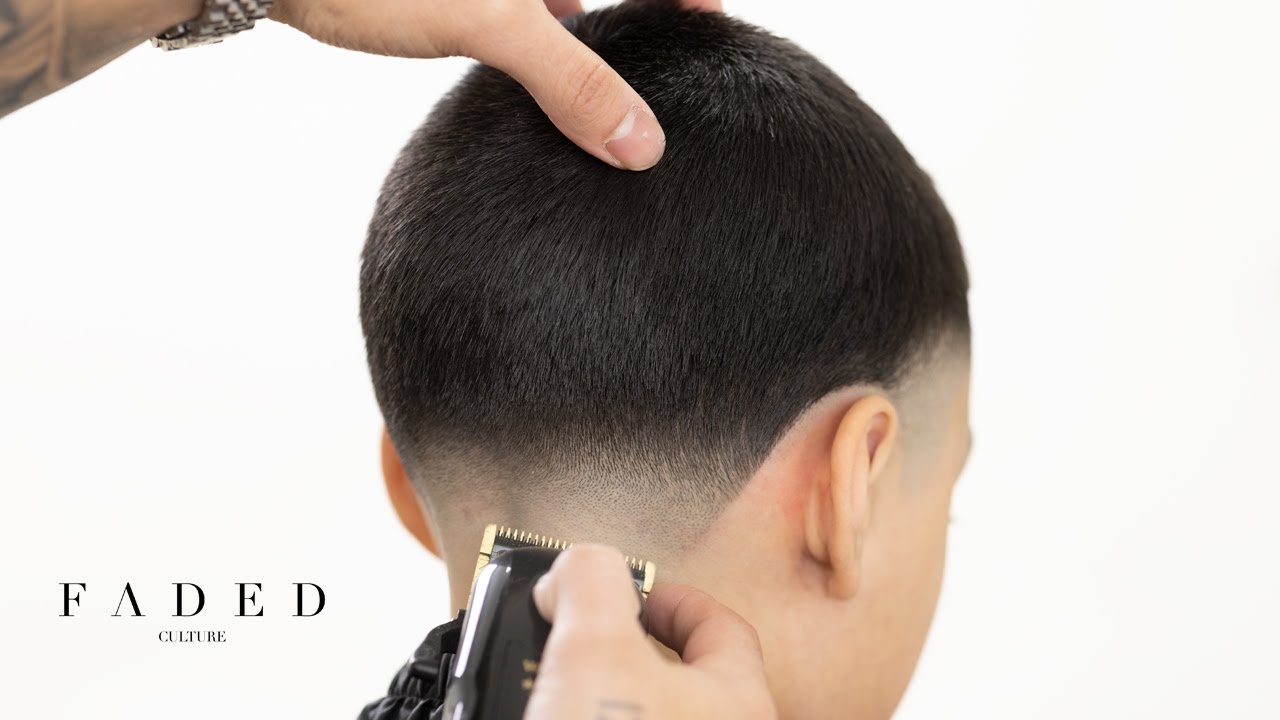
When I say taper fade, I’m talking about a clipper blend that gets progressively shorter from the top down without necessarily hitting skin. That’s the distinction I make in the chair every day: a taper doesn’t have to go to zero, a fade often does, and when you combine the two you get the middle-ground look most guys are actually after — a whisper of skin transition at the sideburn and nape, but no bald ring around the head.
The blend itself is a stack of clipper passes with different guard sizes. On a standard low taper I’ll usually start around a #3, drop to #2, then a #1, then a half-guard or the naked blade at the very bottom — and I flick each pass upward so the lines melt into each other. That’s what a barber means by “seamless”: from a metre away you shouldn’t be able to see where one guard ended and the next started.
- Taper: length gets shorter as you move down the head
- Fade: length disappears into skin
- Taper fade: a taper that finishes with a small fade at the sideburns and nape
- Works on straight, wavy, curly and coily hair types with only guard adjustments

Classic Low Taper Fades
The low taper is the request that walked into my chair more than any other fade this year. Nothing dramatic — just a whisper of shortening that starts around the top of the ear and glides down. It sits so low on the head that from the front it looks like you barely have a fade at all, just clean sides, which is exactly why office guys, dads, and anyone over 30 keep asking for it.
If you’re new to fades, this is the one to ask for first. It’s forgiving, it grows out gracefully, and if you don’t love it you can shift up to a mid or a high the next visit without a big recovery cut.

Low Skin Taper Fade
This is the low taper taken all the way down to a bald finish at the very bottom — but only for the last inch of skin above the ear and along the neckline. The rest of the head stays covered, so you get sharpness at the perimeter without the exposed scalp of a full skin fade.
Ask for it as “a low taper, skin at the bottom, natural on the sides.” I’ll usually run a #2 into a #1 into a bald finish, all inside the bottom half-inch. It suits guys with reasonable head shape and no dramatic scarring around the neckline, because when you finish to skin every imperfection reads.

Low Drop Taper Fade
A drop taper is a low taper with a curve. Instead of running in a straight band around the head, the fade line dips down behind the ear before rising again at the back — it follows the natural curve of the skull, which is why it flatters round and oval face shapes better than any other taper shape.
Drop shapes have taken over TikTok and Instagram grids this year and I get why: it looks intentional without being loud. Tell your barber to “drop the line behind the ear” if you want the curve obvious, or “soft drop” if you want it subtle.

Low Shadow Taper Fade
A shadow fade is what I call the taper that never touches skin. It gets very low — often a #0 or a 0.5 guard at the base — but always leaves a faint stubble of hair behind. From a metre away it looks like a skin fade; up close, it’s soft.
This is the version I recommend to guys with visible scalp marks, uneven pigmentation, or thin hair around the temples, because that residual shadow disguises everything a skin fade puts on display. It also grows out slowest of the low taper family, which is good news for anyone stretching visits.

Mid-Level Taper Fade Variations
A mid taper starts the blend at temple height — right where your head begins to curve. It gives more contrast than a low taper without going into full high-fade territory, and it’s the fade I lean on when a guy wants his top to look thicker. Clearing space around the temples makes the hair on top read denser by comparison.
Mid tapers are also the easiest of the three to keep in shape between visits. You can clean the neckline yourself with a small trimmer and buy an extra week before your barber notices.

Mid Skin Taper Fade
The mid skin taper is one of my most-requested cuts year in and year out. The fade line sits at temple height and finishes to skin at the bottom, so it reads sharp and modern without shaving off the whole side of the head.
Guys with round faces should think twice here — because the fade starts at the widest point of the head, it can accidentally emphasise round cheeks. Oval, square and diamond faces wear it best. Ask for a #3 top blend, #2 down to #1, then skin from mid-temple down.

High Skin Taper Fade
A high taper starts the blend above the temple, closer to the parietal ridge — that curved spot on the upper side of your head. It’s the most dramatic taper without crossing fully into a skin-fade look, and it strips visual weight off the sides, which is why it’s the classic “give me something fresh” request.
It needs a top with actual length to work. A high taper on short hair just looks like a botched fade. If you have less than two inches on top, sit this one out and start with a mid.

High Bald Taper Fade
This is a high taper that finishes to a full bald blend at the bottom — the closest thing to a proper bald fade you can get while still calling it a taper. The distinction is soft: on a bald fade the top of the fade line usually sits higher and the blend is compressed; on a high bald taper the blend runs a longer distance so the transition feels less abrupt.
It’s the version 2026’s wave of retro-athlete and warrior-cut styles keeps landing on — heavy top, clean bottom, tight neckline. Pairs beautifully with a slight beard fade if you want the shape to carry across the jawline too.

Taper Fades With Textured Crops
If there’s one combination that has run away with 2026, it’s a taper fade under a textured crop. Every barber I follow is posting the same shape — matte, tousled, forward-fringe top with a soft taper at the sides. It replaced the slick-back-and-skin-fade combo that dominated the early 2020s and, honestly, it’s a relief. The crop suits more face shapes and hides more receding hairlines than any single haircut I’ve cut in twenty years.
I explain this to nearly every guy under 40 who sits in my chair right now. If you haven’t tried the crop yet, this is the section that changes your mind.

French Crop Taper Fade
A French crop is a short, forward-styled top with a blunt fringe cut straight across the forehead. Pair it with a taper fade and you’ve got the cleanest low-maintenance look going. It works especially well on guys with high foreheads or a mature hairline because the fringe hides both.
I usually leave 1.5 to 2 inches on top, scissor-cut the fringe flat, and finish with a low or mid taper depending on how bold the guy wants to go. Matte paste, dime-sized, is the only product needed.

Textured Crop Low Taper
Textured crop is looser than a French crop — the top is choppy, longer at the front, and styled forward with your fingers rather than a comb. Under a low taper it’s the shape most guys are chasing this year.
Ask your barber to point cut the top rather than blunt cut it — that’s where the texture comes from. Sea salt spray works better than paste for this look because you want lift, not shine. Aim for 2 to 3 inches on top and don’t over-comb it in the morning.

Messy Crop Mid Taper Fade
Same concept as the textured crop but longer, messier, and paired with a mid taper for a bit more contrast. This is the cut for the guy who wants the modern crop look without appearing too styled. It’s forgiving of second-day hair — actually looks better on day two than day one.
It’s what I recommend to guys with thicker, coarser textures who fight volume. The mid taper thins the sides and lets the top breathe.

Short Crop High Taper
A short crop is anything under 1.5 inches on top, and under a high taper it becomes the most maintenance-free grown-up haircut going. This is what I cut for surgeons, pilots, and guys in helmet-heavy jobs — barely any product, no comb, back on the road in 30 seconds.
The high taper adds shape so it doesn’t look like you buzzed the whole head. Ask for it on a #2 or #3 top, high taper down to skin at the neckline, French neckline — that’s rounded rather than squared. Very close cousin of a buzz cut but with actual shape.

Taper Fades For Different Hair Types
A good taper adapts to whatever’s growing on top of it — you just shift guard sizes and adjust where the blend starts. Straight hair takes the fade cleanly. Curly and coily hair need a slightly longer bottom guard so the shrinkage of the coils doesn’t leave you looking bald where you didn’t want it. Wavy hair falls between the two. Anyone telling you a taper only works on one hair type is guessing.
Curly Hair Taper Fade
On curly hair I keep the sides longer than I would on straight hair — usually a #1 or #2 minimum at the bottom, never full skin — because curls spring back and expose more scalp than the number on the guard suggests. Under a taper, curls on top read denser and the fade at the sides frames them properly.
Guys with type 3 and type 4 hair should specifically ask for a “curly-friendly taper” — most barbers who cut curly hair regularly know exactly what that means. Sponge or brush the top on wet hair, air dry, done.

Wavy Hair Taper Fade
Wavy hair is my favourite texture to fade because it hides the little imperfections in a blend — the S-shape of the waves visually softens any transition. On wavy hair I’ll take a mid taper right down to a #0.5 or skin without hesitation.
On top I’ll leave 2.5 to 3 inches and encourage the waves with a durag routine or wave-brushing. Sea salt spray or a light cream — never wax — because you want the waves to move, not lock in place.

Straight Hair Taper Fade
Straight hair is where you can go boldest with a taper, because there’s no coil shrinkage to worry about. A low or mid skin taper looks its cleanest on straight hair. The trade-off: you can also see every mistake in the blend, so pick a barber whose fades you’ve seen on straight-haired customers before booking.
Any styling that adds texture on top helps. A rough dry with your fingers, a small amount of matte paste, and messy is the goal — never slick, unless you specifically want that old-money look.

Ready to Find Your Perfect Cut?
You’ve read about the styles. Now find the one that fits YOUR face shape, hair type, and lifestyle.
FAQs
How Often Should I Get My Taper Fade Touched Up?
Most taper fades hold their shape for two to three weeks before the blend starts to blur. Skin fades and high tapers grow out faster and need refreshing weekly to bi-weekly if you want to keep the crisp edge.
Your hair growth rate and fade height decide the exact schedule. Low tapers and shadow fades will stretch to four weeks between cuts without looking messy if you can clean the neckline yourself.
What’s The Difference Between A Taper And A Fade?
A taper gradually reduces length while keeping some hair coverage throughout, whereas a fade blends the hair all the way down to skin, creating stronger contrast than a pure taper.
Modern barbering combines the two — that’s why we say “taper fade“. A pure taper never reaches skin, and a pure fade always does. The taper fade lives in the middle, which is why it’s the most versatile of the three.
Can I Get A Taper Fade With Thinning Hair?
Thinning hair actually benefits from a strategic taper fade because the shape adds structure and creates the illusion of density where the hair still lives. Low tapers with longer guards let you keep coverage while still looking styled.
Avoid a high skin fade if you’re thinning — it emphasises sparse areas by putting them next to shaved scalp. Your barber can move the fade line lower or shift to a shadow finish so nothing pales in contrast.
Which Guard Numbers Work Best For Taper Fades?
Standard taper fades typically start with a #3 or #4 guard and step down through #2, #1 and #0.5. If you want skin, the last pass is with a naked blade or a trimmer around the sideburn and nape.
Your hair density decides which guards blend best. Coarse hair often needs half-guard increments to avoid choppy lines, while finer hair blends cleanly with whole-number jumps.
How Much Should A Quality Taper Fade Cost?
A professional taper fade runs from $25 to $75 depending on your city and the barber’s experience. Premium shops in bigger cities charge $50 to $100 for master-level fades, and detailed razor work or designs push the price higher.
Anywhere under $20 usually means a rushed blend — you can see it in the choppy transitions. It’s the one line item in male grooming where paying a bit more shows on your head every single day.
Was this article helpful?

Khamis Maiouf is a professional barber who graduated from Hinckley College in England with a Level 3 qualification in hairdressing. With over 20 years of experience, he is an award-winning barber who has mentored numerous students and styled thousands of clients. A recognised expert featured on StyleCraze (20M+ readers).
Credentials: Level 3 Hairdressing (Hinckley College, UK) • 20+ Years Professional Experience • Featured Expert on StyleCraze • Founder of Book of Barbering