

Every week, at least one client sits down and shows me a K-pop idol’s two block haircut on their phone. Most of the time, the barber they went to before gave them a mushroom cap instead of the sharp disconnect they wanted.
The two block is one of the most requested yet most commonly botched haircuts in modern barbering. The difference between a clean two block and a bad bowl cut comes down to sectioning precision, disconnect placement, and knowing which variation actually suits your face shape and hair type.
Not sure which style suits you best? Our Haircut Finder Quiz matches you with the right cut based on your face shape and hair type — takes 60 seconds.
Key Takeaways
- The two block haircut splits hair into two distinct zones — long top and short sides — with a visible disconnect that defines the style
- Sectioning placement is everything — position the disconnect line 1-2 inches above your ears for classic proportions
- Face shape determines which variation works best: round faces need height, square faces need softer texture, oblong faces should limit top length
- Bring Korean reference photos to your barber and specify exact guard numbers — “short on the sides” isn’t specific enough
- Budget for side trims every 2-3 weeks — two blocks grow out faster than most cuts
Two Block Haircut Foundation
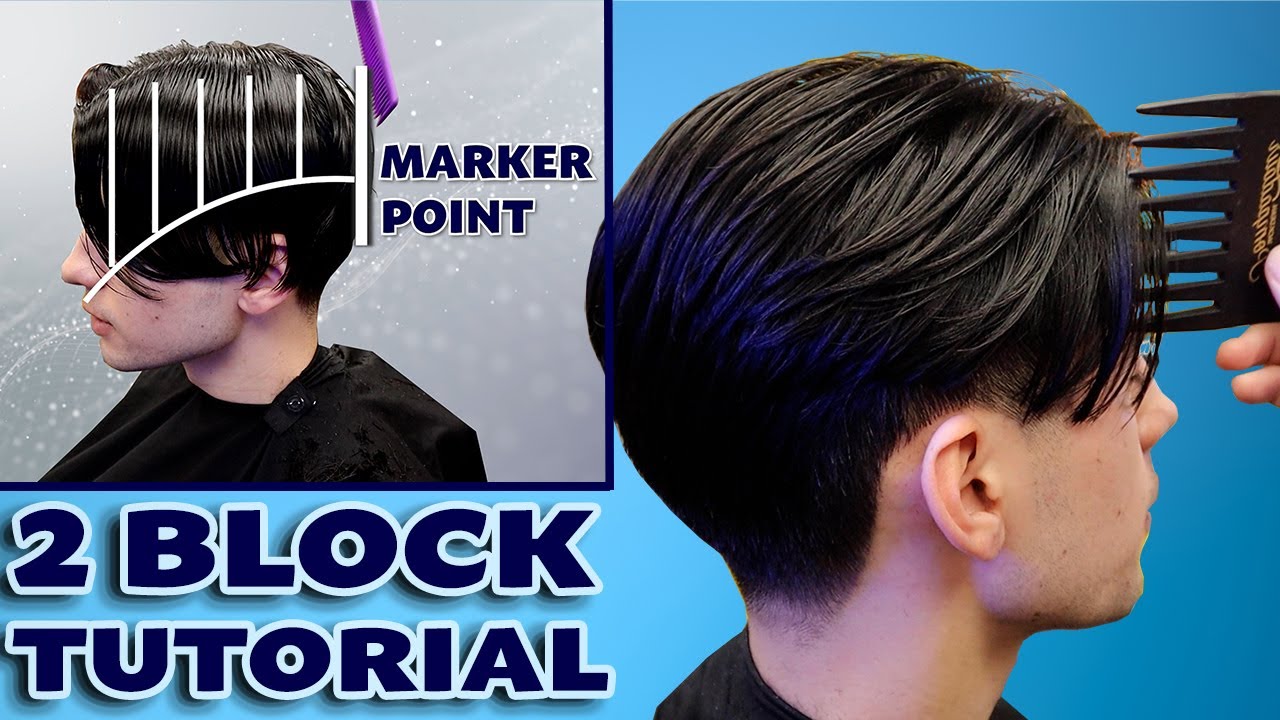
The two block creates dramatic contrast by keeping the top long while cutting sides and back ultra-short. This Korean barbering technique divides hair into two distinct zones.
Your barber establishes the foundation through precise sectioning that runs horizontally around your head. The placement of this division line determines whether you get subtle sophistication or bold contrast.
- Top zone: Maintains 3-5 inches for volume and movement
- Bottom zone: Tapers from skin to #2 guard
- Key benefit: Works with any hair texture or density

Two Block Sectioning Basics
The horizontal parting line starts behind your temples and curves around to meet at the occipital bone. This creates the signature two-tier silhouette that defines the cut.
Position this line 1-2 inches above your ear tops for classic proportions. Higher placement creates more drama while lower placement offers subtle contrast perfect for conservative environments.

📏 Critical Measurements
Measure from your natural hairline to establish proper top section depth—typically 4-6 inches back. The side sections should sit precisely at temple height.
Your occipital bone marks the back transition point where both sections meet. Keep this junction clean and defined to prevent the dreaded mushroom effect that ruins two blocks.

Two Block Disconnect Points
The disconnect happens where long top hair meets short sides without blending. Sharp disconnects create bold contrast while graduated disconnects offer softer transitions.
Position disconnects slightly above ear level for balanced proportions. The back disconnect should align with your occipital curve to maintain structural integrity throughout growth cycles.

Perfect Two Block Sectioning
Precision sectioning separates amateur cuts from professional two blocks. Your barber must establish clean, consistent lines that maintain their shape between appointments.
The sectioning pattern determines how your hair falls naturally and influences daily styling requirements. Proper technique ensures even weight distribution across all zones.

🧠 Expert Advice
Ask your barber to section while hair is wet and combed in your natural growth pattern. This reveals the true fall line and prevents awkward gaps when you style at home. Mark reference points with clips before cutting begins.

Two Block Parting Lines
Create the primary parting using a tail comb from temple to temple, following your head‘s natural curve. This line should sit parallel to your eyebrows when viewed from the side.
Secondary partings divide the top section for graduated length variations. These subtle divisions add movement without compromising the two block’s clean aesthetic.

Sectioning for Thick Hair
Thick hair requires lower disconnect placement to prevent excessive bulk at the transition zone. Section 1.5 inches above the ears rather than the standard 2 inches.
Create additional horizontal sections within the top zone to remove weight systematically. This prevents the helmet effect while maintaining the two block’s signature shape.

Sectioning for Fine Hair
Fine hair benefits from higher disconnect placement that maximizes the appearance of density. Position your section line 2.5 inches above ear tops.
Keep sections wider to preserve every strand of volume-creating length. Avoid over-texturizing the transition zone since fine hair shows gaps more readily than thick hair.

Two Block Texture Techniques
Texture modification transforms a basic two block into a customized masterpiece. Your hair’s natural texture determines which techniques deliver optimal results.
Smart texturizing enhances movement while maintaining structural integrity. The goal is controlled chaos on top with military precision below.
Professional two blocks require texture work every 3-4 weeks to maintain their shape and movement.

Straight Hair Two Block
Straight hair needs aggressive texturizing to create movement and prevent the flat-top effect. Point cutting adds vital texture without sacrificing length.
Your barber should focus texturizing on the crown and front sections where movement matters most. Keep the perimeter weight intact to maintain the strong two block silhouette.

Wavy Hair Two Block
Wavy hair naturally provides the texture and movement that two blocks require. Minimal texturizing preserves your waves while removing bulk from problem areas.
Focus thinning shears on the disconnect zone to smooth the transition. Leave natural wave patterns intact on top for effortless styling that works with your texture.

Coarse Hair Adjustments
Coarse hair demands strategic bulk removal to achieve the two block’s clean lines. Slide cutting techniques thin without creating visible texture marks.
Channel cutting through the interior removes weight while maintaining surface smoothness. This invisible texturizing prevents the poofiness that plagues coarse-haired two blocks.

Two Block Length Combinations
Length ratios between top and sides determine your two block’s overall aesthetic. Classic proportions follow specific mathematical relationships.
Modern variations push these boundaries while maintaining structural balance. The key is ensuring your chosen ratio complements your face shape and styling routine.
- Conservative: 3:1 ratio maintains subtle contrast
- Standard: 5:1 ratio creates noticeable definition
- Bold: 8:1 ratio demands attention
- Extreme: 10:1 ratio for maximum impact

Classic Two Block Ratios
Traditional Korean two blocks maintain a 5:1 ratio between top and side lengths. This proportion creates dramatic contrast without appearing unbalanced.
The classic ratio works universally across face shapes and hair types. Top sections stay 4-5 inches while sides maintain 0.5-1 inch for timeless appeal.

Modern Two Block Variations
Contemporary two blocks experiment with extreme ratios reaching 10:1 or higher. These avant-garde proportions require confident wearing and frequent maintenance.
Asymmetric ratios add artistic flair by varying proportions between left and right sides. This creates visual interest while maintaining the fundamental two block structure.

Korean Two Block Standards
Korean barbering established specific two block standards that define authentic execution. These guidelines ensure consistency across different barbers and regions.
Understanding Korean standards helps communicate your vision accurately. Most Western barbers need detailed explanation to achieve authentic Korean two block proportions.
Not sure what your face shape is? Our Face Shape Detector figures it out in 4 quick questions.

Professional Two Block
Office-appropriate two blocks maintain conservative 3-4 inch top lengths with subtle disconnects. Sides blend gradually from #2 to #4 guards.
This refined version works in strict corporate environments while maintaining style credibility. The key is impeccable maintenance that prevents any hint of shagginess.

Casual Two Block Options
Casual variations embrace natural texture with minimal styling requirements. Top lengths stay moderate at 3-4 inches for easy maintenance.
If you want a similar disconnected aesthetic with less upkeep, the eboy haircut shares the textured look but grows out more gracefully between appointments.
These relaxed two blocks work with air-drying and light product application. The emphasis shifts from perfect styling to effortless texture that moves naturally throughout your day.

🧠 Expert Advice
Show your barber photos of Korean two blocks specifically, not Western interpretations. Korean standards use different proportions and disconnects than European versions. Request “Korean-style sectioning” for authentic results and bring multiple reference angles.

Two Block Face Shape Guide
I’ve cut two blocks on every face shape imaginable, and the single biggest factor in whether it looks right is adjusting the proportions to your bone structure. Here’s what works based on what I see in the chair every day.
Oval faces have the most flexibility — nearly any two block variation looks balanced. You can go dramatic with a high disconnect or subtle with a graduated transition. Focus on the style you like rather than worrying about proportions.
Round faces benefit from added height on top. Keep sides tight at a #1 or #2 guard and style the top with volume to elongate your face. Avoid leaving too much weight on the sides — it widens your silhouette and fights the whole point of the cut.
Square faces look best with textured, slightly messy tops that soften angular features. A graduated disconnect works better than a hard line here. If you go too sharp on the sides and too structured on top, it creates a boxy look that amplifies angles instead of balancing them.
Oblong or long faces need restraint on top length. Keep the top at 3 inches max and add side volume through a higher disconnect placement. Too much height makes a long face look even longer — the goal is horizontal balance, not vertical emphasis.
Not sure what your face shape is? Use our Face Shape Detector to find out in 4 quick questions before booking your appointment.
Two Block Maintenance Reality
Two blocks demand more maintenance than traditional cuts due to their precise proportions. Growth quickly disrupts the critical balance between sections.
Realistic maintenance planning prevents frustration and ensures consistent appearance. Budget both time and money for regular upkeep before committing.

Two Block Touch-Up Schedule
Sides require trimming every 2-3 weeks to maintain crisp contrast. Top sections need reshaping every 4-5 weeks to prevent weight accumulation.
For comparison, a high taper fade needs even more frequent touch-ups since the transition zone is fully exposed.
Full recuts happen every 6-8 weeks to reestablish proper proportions. Stretching appointments longer sacrifices the two block’s defining characteristics.

DIY Two Block Trims
Basic side maintenance between appointments extends your two block’s lifespan. Invest in quality clippers with multiple guards for controlled trimming.
Focus only on obvious overgrowth below the disconnect line. Never attempt to reshape the top section or adjust the disconnect yourself—these require professional expertise.

Two Block Styling Methods
Proper styling transforms a good two block cut into a great finished look. Product selection and application technique determine your daily success rate.
Master one reliable method before experimenting with variations. Consistency beats complexity when you’re rushing through morning routines.

Two Block Product Selection
Clay or paste products provide the matte finish and flexible hold that two blocks require. Apply to damp hair for even distribution.
Avoid heavy waxes that weigh down the top section and destroy volume. Light-hold products work better than strong-hold options since two blocks rely on cut structure.

Ready to Find Your Perfect Cut?
You’ve read about the styles. Now find the one that fits YOUR face shape, hair type, and lifestyle.
How to Ask Your Barber for a Two Block
Most guys walk in and say “I want a two block” without realizing that covers about 50 different looks. Here’s how to actually get what you want.
Bring Korean reference photos. Western barbers often interpret “two block” as a basic undercut. Show them Korean-style two blocks specifically — front, side, and back angles if possible. Styles like the Jimin hairstyle or Taehyung haircut work as great visual references.
Specify your disconnect level. Tell your barber whether you want a hard disconnect (sharp contrast, no blending) or a graduated transition (softer fade into the top). This single detail changes the entire character of the cut.
Give exact guard numbers for the sides. Don’t say “short on the sides.” Say “#1 guard” or “#2 guard” or “skin fade.” The difference between a #1 and a #3 on the sides completely changes how dramatic your two block looks.
Discuss top length and styling. Tell your barber how long you want the top (in inches) and how you plan to style it — swept back, side-parted, comma fringe, or textured and messy. This determines how they layer and texturize the top section.
FAQs
How often trim two block?
Trim sides every 2-3 weeks to maintain sharp contrast and clean lines. Schedule full recuts every 6-8 weeks for reshaping.
Faster-growing hair needs weekly side touch-ups. Slower growth extends to monthly appointments, though contrast suffers between visits.
Two block vs undercut difference?
Two blocks disconnect horizontally around the entire head while undercuts focus on sides and back. Two blocks maintain longer consistent top lengths.
Undercuts often feature shorter tops with gradual length variations. Two blocks emphasize dramatic contrast through uniform top sections meeting buzzed sides.
Best two block for thin hair?
Position disconnects higher at 2.5 inches above ears to maximize density appearance. Keep sides at #3-4 guards rather than skin fades.
Request minimal texturizing to preserve every strand. Use volumizing products and blow-dry techniques to enhance the illusion of thickness.
Two block maintenance cost?
Budget $30-60 monthly for basic maintenance trims at standard barbershops. Premium salons charge $80-120 monthly for full-service maintenance.
DIY side trims between appointments reduce costs by 30-40%. Factor in quality styling products adding $15-25 monthly to your grooming budget.
How do you style a two block haircut at home?
Start with towel-dried hair and apply a heat protectant spray. Blow dry the top section using a round brush, lifting at the roots for volume while directing hair in your chosen style direction. Finish with a small amount of matte clay or styling paste worked through the top for texture and hold. The sides should lay flat naturally — if they stick out, a touch of pomade keeps them down between trims.
Was this article helpful?

Khamis Maiouf is a professional barber who graduated from Hinckley College in England with a Level 3 qualification in hairdressing. With over 20 years of experience, he is an award-winning barber who has mentored numerous students and styled thousands of clients. A recognised expert featured on StyleCraze (20M+ readers).
Credentials: Level 3 Hairdressing (Hinckley College, UK) • 20+ Years Professional Experience • Featured Expert on StyleCraze • Founder of Book of Barbering