

Most guys walking into my chair want something sharp enough to turn heads but versatile enough to wear to work. For Black men, the high fade delivers exactly that — it frames your natural texture, whether that’s tight coils, waves, or locs, and creates that crisp contrast that makes every style look intentional.
Whether you’re choosing your first fade or upgrading your current look, this guide covers every style in our complete Black men’s haircuts guide — with specific advice for your hair texture and face shape.
Not sure which style suits you best? Our Haircut Finder Quiz matches you with the right cut based on your face shape and hair type — takes 60 seconds.
- The high fade starts above the temples — it creates maximum contrast that works with all Black hair textures, from tight coils to locs.
- Skin fades need touch-ups every 1-2 weeks; taper fades can stretch to 3-4 weeks depending on your growth rate.
- For receding hairlines, choose a high taper fade over a skin fade — it keeps more coverage at the temples without exposing the hairline.
- Oval and square face shapes carry the high fade best; if you have a round face, ask your barber to avoid starting the fade too high.
- Always tell your barber your maintenance schedule upfront — it determines whether they blend for weekly freshness or longer wear.
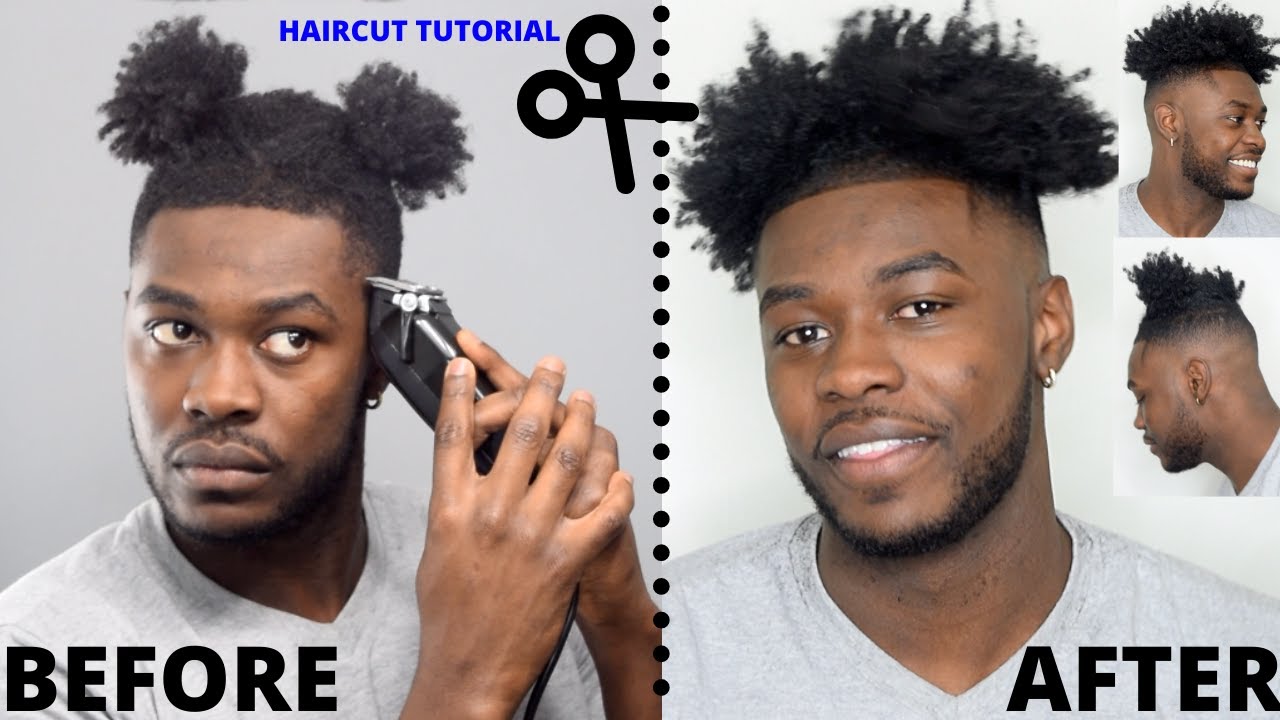
Classic High Fades
Classic high fades remain the foundation of modern barbering. These timeless cuts deliver sharp, professional results.
Each variation offers distinct advantages for different hair types and personal styles. Your barber can customize the blend to match your specific needs.
- Skin fade: Starts at zero for maximum contrast
- Bald fade: Seamless blend from scalp to top
- Taper fade: Gradual transition for conservative looks
- Drop fade: Curves behind the ear dramatically

Clean High Skin Fade
The clean high skin fade starts at absolute zero, creating maximum contrast against longer top sections. This bold choice requires confidence and regular maintenance.
Barbers use foil shavers to achieve that glass-smooth finish at the baseline. The transition must be flawless to avoid visible lines.

High Bald Fade With Line Up
Combining a bald fade with precise edge work creates the sharpest look possible. Your hairline becomes a geometric masterpiece.
The lineup requires steady hands and perfect symmetry. Most barbers spend extra time perfecting those crisp corners and straight edges.

Traditional High Fade Taper
This conservative option blends from a #1 guard instead of skin. Office-friendly yet stylish, it bridges professional and personal aesthetics.
The gradual blend appears softer while maintaining clean definition. Many professionals choose this for important meetings or presentations.

Textured Top High Fades
Textured tops paired with high fades celebrate natural hair patterns. These styles maximize volume while maintaining clean sides.
The contrast between tight sides and full tops creates stunning visual impact. Proper moisturizing keeps both sections looking fresh.

High Fade With Afro
The afro-fade combination creates maximum height and drama. Your natural texture becomes the star while sides stay meticulously groomed.
Pick your afro out evenly to maintain shape between cuts. The high fade keeps maintenance manageable by reducing bulk.

High Fade With Twist Out
Twist outs showcase defined curl patterns against clean-faded sides. The twists create uniform spirals that catch light beautifully.
Twist damp hair with quality curl cream for best results. Unravel carefully to preserve pattern integrity without causing frizz.

🧠 Expert Advice
Moisturize textured hair daily, especially where it meets the fade line. This transition zone experiences maximum stress from length differences. Use leave-in conditioner on longer sections and light oil on faded areas to prevent dryness and breakage.
High Fade With Natural Texture
Embracing your natural texture requires minimal manipulation. The high fade frames your authentic hair pattern beautifully.
Simply wash, condition, and apply light product. Let your hair air-dry or diffuse gently to preserve natural movement.

Wave-Enhanced High Fades
Wave patterns combined with high fades create mesmerizing visual effects. The clean sides amplify your wave definition.
Consistent brushing and proper products develop deeper waves. Durags worn overnight compress and set patterns permanently.

Modern High Fade Styles
Contemporary high fades incorporate current trends and cultural influences. These bold choices make strong personal statements.
Modern styles often combine multiple techniques. Your barber should understand how different elements work together harmoniously.

High Fade With Dreads
Dreadlocks paired with high fades create striking contrasts. The clean sides emphasize your locs’ texture and movement.
Maintain fade crispness while locs mature. Regular retwisting keeps roots neat where they meet the faded sections.

High Fade With Braids
Braided tops offer protective styling with visual appeal. High fades keep the overall look fresh and contemporary.
Various braid patterns work—cornrows, box braids, or freestyle designs. Moisturize your scalp regularly to prevent dryness under braids.

High Fade With Flat Top
Flat tops require precision cutting and regular maintenance. The high fade modernizes this classic military style.
Your barber needs experience with flat top techniques. The level surface must remain perfectly horizontal from all angles.

Edge Work And Finishing
Perfect edges transform good fades into exceptional ones. These finishing touches require precision and regular maintenance.
Different edge styles suit different face shapes. Your barber should recommend options that enhance your features.

High Fade With Crisp Line Up
Crisp lineups create geometric precision around your hairline. Every angle appears intentional and sharp.
Natural hairlines rarely form perfect shapes. Strategic lineup work enhances what nature provided without looking artificial.
High Fade With Natural Hairline
Natural hairlines celebrate your authentic growth pattern. The high fade frames without altering your hairline.
This approach works best with strong, even hairlines. Minor cleanup maintains neatness without creating harsh lines.

High Fade With Rounded Edges
Rounded edges soften angular faces and aggressive fades. The curves create approachable, friendly aesthetics.
Your barber should follow your natural hairline’s curve. Forcing unnatural rounds appears obvious and requires constant maintenance.
Not sure what your face shape is? Our Face Shape Detector figures it out in 4 quick questions.

High Fade With Sharp Corners
Sharp corners at temples create bold, masculine frames. These aggressive angles demand confidence and upkeep.
Corner placement affects your entire face shape. Higher corners elongate, while lower corners widen your appearance.

Which High Fade Works for Your Face Shape
Not every fade hits the same on every face. After years of cutting, here’s what I tell clients when they sit down and ask what will suit them — check out our complete face shapes guide for men for the full breakdown.
Oval face: You have the most flexibility. A high skin fade with any top style looks clean and balanced. Go as dramatic as you like.
Square face: High fades add height without widening, which plays to your strong jaw. Keep the top longer to elongate slightly. Avoid very tight line-ups that emphasize width.
Round face: Be cautious about starting the fade too high. A mid-to-high fade that begins at or just above the temples works better — it adds height without making your face look wider. A flat top or afro with volume on top is ideal here.
Diamond face: Wide cheekbones mean you want to avoid adding width at the sides. A high skin fade that removes bulk works well. Keep the top tight or go for a low-volume texture.
Oblong/rectangular face: Your face already has length, so avoid adding too much height on top. A high fade with a textured crop or waves on top keeps it balanced.
If you’re unsure, bring a photo of the style you like and let your barber assess your face shape in person. That conversation takes 30 seconds and saves a bad cut.
Ready to Find Your Perfect Cut?
You’ve read about the styles. Now find the one that fits YOUR face shape, hair type, and lifestyle.
FAQs
How Often Should I Get My High Fade Touched Up?
Most high fades need professional touch-ups every 2-3 weeks to maintain crispness. Your hair growth rate and desired sharpness determine exact timing.
Faster-growing hair or perfectionist standards require weekly visits. Slower growth or relaxed preferences can stretch to monthly appointments. Budget accordingly.
What’s The Difference Between A High Fade And A Mid Fade?
High fades start 2-3 inches from your crown, typically above the temples. Mid fades begin at temple level, roughly ear height.
The starting point dramatically changes your look’s aggression level. High fades appear bolder and more dramatic than conservative mid fades.
Can I Get A High Fade With Any Hair Texture?
High fades work with all hair textures—straight, wavy, curly, or kinky. Your barber adjusts techniques based on your specific texture.
Coarser textures may need different clipper guards or techniques. Communication about your hair’s behavior helps achieve optimal results.
How Much Does A Quality High Fade Cost?
Quality high fades range from $25-75 depending on location and barber expertise. Complex designs or celebrity barbers command premium prices.
Factor in frequency when budgeting—a $30 cut every two weeks costs $60 monthly. Some shops offer maintenance packages.
What Should I Tell My Barber For The Perfect High Fade?
Specify where you want the fade to start and your preferred blend style. Bring reference photos showing your desired outcome.
Mention your maintenance commitment and styling routine. Good barbers adjust their technique based on your lifestyle and capabilities.
What Face Shapes Work Best With a High Fade?
Oval and square face shapes carry high fades most naturally, as they can handle the dramatic contrast without looking unbalanced. Round faces work best with a mid-to-high fade starting at the temples — avoid going too high, as it widens the silhouette. Diamond faces benefit from a clean skin fade that removes side bulk. If you’re working with an oblong face, ask your barber to limit volume on top and let the fade do the framing.
How Long Does It Take To Grow Out a High Fade?
A high fade takes 4-8 weeks to fully grow out, depending on your hair growth rate and how aggressive the original fade was. The awkward phase hits around weeks 3-4, when the sides are growing in but haven’t blended yet. Most clients come in for a maintenance shape-up at week 2-3 to keep it looking intentional during the grow-out. If you’re growing it out for a specific reason, tell your barber — we can blend strategically to make the transition look cleaner.
Was this article helpful?

Khamis Maiouf is a professional barber who graduated from Hinckley College in England with a Level 3 qualification in hairdressing. With over 20 years of experience, he is an award-winning barber who has mentored numerous students and styled thousands of clients. A recognised expert featured on StyleCraze (20M+ readers).
Credentials: Level 3 Hairdressing (Hinckley College, UK) • 20+ Years Professional Experience • Featured Expert on StyleCraze • Founder of Book of Barbering